poetry, Uncategorized

Readers: I need your vote!

 http://deepsouthmag.com/2012/11/vote-on-pushcart-prize-nominations/

It is my great honor to announce that I am being considered for Pushcart Prize nomination. Loyal blog followers, readers, and lovers of the written word, I humbly ask for your vote. Please visit the link above and cast your vote for Lovebug Seasons, my poem that is being considered for Pushcart nomination.

Thank you to all my supporters — your backing and your kindness mean so much to me. While writing can sometimes be a lonely endeavor, knowing that you are out there, reading my words and appreciating them, makes a great difference. You are valued more than you’ll ever know.

poetry, Uncategorized

The Poet’s Black Friday Wish List

 Poets have slightly different holiday tastes than do Average Joe and Plain Jane. On my list this year, I have all sorts of things that the “normal” folks probably would not think to ask for, but then, eccentricity becomes an expectation once you’ve told people that you’re a writer. For better or worse, here’s a list of a few things I’d like to get, and probably, some of your writer friends would like also:

1. The Best American Poetry 2012: This year’s collection, compiled and edited with the help of Mark Doty, has quite a few poets I admire personally, including my own writing mentor, Erica Dawson. Reading good work often leads to writing good work.

2. The 6.5 Habits of Moderately Successful Poets. This is another book in the category of “things I’ve been meaning to read, but haven’t.”  After reading the reviews, I’m pretty convinced I should at least familiarize myself with it.

3. Cool new bookends. I have this affinity for bookends — there’s a certain stability and finality that they convey, I suppose. Antique stores and online vendors alike offer great opportunities to pick up a piece of history while keeping one’s texts ship-shape. There’s also this air of refinement that bookends offer, and I suppose that’s another draw for me. I like classy touches, and bookends fall into that category often.

4. Fine writing instruments. My all-time favorite vendor for Waterman pens has to be Levenger. I don’t usually plug businesses here, but over the years, Levenger has provided me with reliable, aesthetically pleasing fountain pens and a plethora of cool “writer toys” that remain meaningful even today. The pen I typically use to start drafts (a Waterman Phileas) came from there probably about ten years ago, and the briefcase I use for all things writing-related is also a Levenger product. If you haven’t paid them a visit yet, I highly recommend it. The writer in your life will thank you.

5. Gift card #1: Staples. If you’ve been a regular reader of mine, you probably know by now about my unhealthy obsession with office supplies. My favorite store is definitely our local Staples. From paper clips to printer cartidges, Staples allows me to feed my fetish for writerly goods.

6. Gift card #2: B&N. Sorry, other booksellers. I’m a fan of Barnes and Noble’s brick-and-mortar establishments. Somehow, they’ve managed to preserve that certain air of old-school bookstores while staying current with technology and trends. And before my writer friends get upset with me for not patronizing my local small, independent bookstore, allow me to say that here in my location, we unfortunately don’t have such an animal. To use an old football idiom, here in my town you have to “go big or go home.” It’s BAMM or B&N, and the people under the green awning have better customer service skills and actual knowledge of their wares.

7. Gift card #3:   Apple. I love my iPad. I like my apps, my games, my music, and my movies. I try not to write using my iPad, simply because it’s so recreational — there are too many distractions there. But for everything else in my life, the iPad is a wonderful tool. I use it in the classroom, at home, on vacations, and in workshops, seminars, and classes. For everything that’s NOT writing-related in my life, my iPad is the perfect companion. (No, I was not compensated for saying this — it’s just true).

8. Vinyl records: I love the sound of music on vinyl. There’s such a history and an art that goes with listening to an honest-to-goodness record. Mostly, I use my record player for classical music. I have all my other media players for more contemporary stuff — PC, iPad, etc. do a perfectly good job with modern music, but for Handel’s Messiah and Arthur Fiedler’s Boston Pops, I gotta have my vinyls. Call me antiquated if you will.

9. Coffee. Not the stuff in a blue can from the grocery store, the good stuff. Yes, I grind my own beans. And yes, I do have three separate coffeemakers in my house: French press, percolater (percolator?), and finally, Keurig single-serve. I typically use the big French press for company, the percolator for Sunday mornings when everyone is having coffee, and the Keurig for everyday, nothing-special single cups. That hackneyed expression about “a little blood in my caffeine stream” holds true here. Coffee is my gasoline.

10. Gift subscriptions to my favorite magazines. By keeping in touch with what’s happening on the literary front, I’m better equipped when sending out submissions and manuscripts. The great thing about getting subscriptions for Christmas is that the gift is enduring — every time a new issue arrives, I’m reminded of the person who kindly thought of me and my ambitions.

So, there you have it — one Florida poet’s guide to giving for the coming holiday season. If you’re out fighting the insane crowds today, good luck. And here’s hoping that you get everything on your wish list, as well.

poetry, Uncategorized

A Southern Thanksgiving Poem

“Thanksgiving in the woods” has been a family tradition of ours for generations.

In just two more days, one of my family’s favorite holidays will finally be here. Thanksgiving is probably the second-most American holiday right after the Fourth of July. Recently, a couple of journals have published my piece “Family Gathering”: The Marjorie Kinnan Rawlings Journal of Florida Literature ran it first, with Deep South Magazine following suit just the other day. For my readers’ enjoyment, I am posting a copy of the piece here, since it has found a home twice now. Happy Thanksgiving everyone, and God bless you and yours on this fabulous, historic holiday! 


Family Gathering

Dedicated to all my country cousins


In those Thanksgiving woods we were grateful
by nature, we were farm kids – mud-made
battle plans detailed our attack:

Mounting our gallant oak-limb steed,
we hurled barrages of pine-cone grenades
followed by Sabal Palm frond spears,
then went hand-to-hand with sword sticks
in the friendly fire of safe conflict.

Wounded, the unnamed invisible invaders
cowardly crossed the creek, high-tailed
into town, where all of our dangers went
to regroup and plot their revenge against
us, the adults of tomorrow.

poetry, Uncategorized

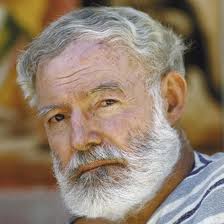
Hemingway’s Distance

 When the great author of The Old Man and the Sea was in Michigan, he wrote about Paris. Likewise, when he was in Paris, he wrote of Michigan. In speaking with other poets and writers, I have found there to be a common link among creative types: The farther (in every sense of that word) we are from our dearest subjects, the stronger our writing about it becomes.

For instance, when I return to my family homestead many miles south of here, I am not automatically inspired to compose lines about it. The spirit of the place is too strong, too close. Also, the peace I experience there is too great for the fevered activity of poetry composition. The old place’s effect is soporific on my muse, but once I’ve left and I’m on the road or even back at my current suburban home, then the poetic flood begins to rise. Images, sensations, memories, and the whole of the family farm experience (past or present) sets itself heavily on my writing mind.

Time also serves as a literary “distance” filter: Consider Wordsworth’s famous lines above Tintern Abbey, written five years after the visit took place. By having hindsight, the truest and most poem-worthy elements of an experience can rise like sweet cream to the surface of our consciousness. The traumas and impressions of the present are intensified by having some chronological separation. Only the strongest details remain after delay. Sometimes this separation can be mere hours, other ideas may require years for processing. It all depends upon the severity and sincerity of the inspiration in question.

I am not advocating the idea that writers shouldn’t “strike while the iron is hot,” however. If one is overcome by the NEED to write at a moment, then by all means, don’t let that desire cool in apathy. The Beats would tell us that our first thoughts are our best thoughts, but the discerning voices before and after that generation would advise us to refine those first thoughts into something far more elegant.

The big picture is just this: If you want to create truly reflective writing, then some form of distance is necessary. It doesn’t always have to be as radical as Michigan to Paris, but stepping back from the subject is advisable for any creative endeavor. If you don’t believe me, just ask “Papa.”

poetry, Uncategorized

The Expected Rejection

I’ve written before about my “rejection practices,” but this little tidbit deals more with a specific type of rejection: the expected one from the MAJOR magazine.

Today in the mail, I got a rejection slip from a powerhouse national magazine whose literary prominence is known far and wide. No personalized notations were on this slip, and of course, I hadn’t really anticipated any. My main motives for annual submissions to huge magazines with slush piles the size of Everest are twofold, really: 1. Doing so keeps me humble, and 2. It gives me some sense that my work has been in front of influential editors, even if they did reject it.

This next statement sounds terribly snobbish, but honestly, the proficient poet becomes accustomed to better-than-average acceptance rates from smaller literary magazines. When one sends work predominantly to fledgling journals and up-and-comer markets, acceptance and kind words become a fairly regular occurrence, with a few apologetic rejections along the way. Editors, for the most part, are appreciative to receive your work, and you as the writer are pleased to be published. It’s a great relationship, and one I never take for granted.

On the flipside of this publishing coin, however, is the danger of egotism. After so many acceptances, the writer’s head can grow quite large if not checked. Something has to level out the mountaintop experiences of mutliple publications in smaller journals to maintain balance. Rejection from The New Yorker, The Atlantic, or other major publications helps to keep the poet realistic and attached to modest roots. Granted, any rejection helps to accomplish this, but the coldly impersonal rejection slip from enormous national publications is the best of all ego-crushers. No explanation, no “we really liked this, but…” statements, just a flat-out “NO,” worded as generically and insensitively as possible. Tough luck, Mr. Wordsmith…no dice. (EDITORS: Please don’t interpret this graf as a request for more rejections; I have enough for a while, thanks.)

Certain writer friends of mine have this conspiracy theory that  big-time mags rotate off the poems of about 12 different renowned writers each year, and that any submission from someone without name recognition is immediately dismissed without a second thought. For now, I remain optimistic that editors and publishers are serious when they state in their guidelines that they are “devoted to discovering new voices.” Truthfully, if I were in their positions and I had to choose between rockstar fellowship winners or Joe Blow the small-town unknown, I’d probably make the same decisions they did: Publish the identifiable, decline the struggling. Empathy doesn’t make the rejection sting less, but at least it allows some justification.

My hope, of course, is that one day the tide of rejection from the “big boys” will stop, and I will finally be among the elite who manage to have their work carried in the prestigious pages of historic, culture-defining publications. For now, my small-time successes (see prior posts) sustain me and encourage me to keep going. Equally appreciated are the small magazine editors who reject work with thoughtful feedback, as well as the ones who accept my work with gratitude. Some of the best critiques I have ever received have been from the desks of truly devoted editors at college or “little” magazines. Their input has been invaluable, and hopefully, their refining suggestions will lead to bigger and better things as time progresses. For now, I have work to improve and send out, and for tonight, that’s enough.

poetry, Uncategorized

Integrity: When did it stop mattering?

 Recently, I’ve had more than one run-in with editors and publishers who say they’ll do one thing, and then they don’t. It’s disappointing, not only because my work hangs in the balance, but also because their behavior is indicative of a much larger cultural problem: the loss of character.

At one time, those who broke promises and failed to meet their obligations were castigated by the larger whole of society. People operated with the expectation that when someone said they would do something, it would indeed be done. Accountability was high, and our products and businesses reflected the ideals of quality and honesty. Contracts were a mere formality. But this post is no rant in favor of regression or even reminiscence. It’s a call to activation and engagement.

Today, integrity has become a buzzword for political campaigns and other self-enhancing promotions. We have handed over the mantle of consumer advocacy to organizations and  toothless watchdogs who, in turn, also serve themselves more than the concerned individual. Those who speak up and voice their frustrations are seen as rude or strange, and all the while competitors abroad are seizing on our loss of commercial moral fibre.

Here is my promise to you, readers: I  am awaiting word from at least three different literary magazines that have failed to make good on their publication promises. They have repeatedly missed deadlines, and their response to these infractions has been a sort of beligerent indifference laced with adolescent-sounding excuses. If these editors and publishers continue to fail in the fulfillment of their duties, I will happily publicize their lack of integrity, not only here in this little blog, but also through Duotrope, Submittable,  and other writing-submission-related sites. I do this not out of mean-spirited blackmail, but out of respect for other writers and creators who deserve to have their work treated with professionalism.

Again, I am disappointed that my encounters with these magazines has had to take such an ugly turn. A little bit of character and communication could have gone a long way, but instead, I’m left now with the job of staging a one-man rebellion. I would ask you to join me in this fight. No more laziness, no more dishonesty, no more apathy. It’s time to regain the sense of right that we once demanded. Today is the day to begin.

poetry, Uncategorized

Politics and Poetry

 Today is Election Day. In a vast departure from my usual blog fare, I am writing today about my political leanings. Prepare to be offended. You may stop reading here if you believe this post will make you angry.

As a group, poets have always been pretty politically active. Usually, that activism has been of the Berkeley-inspired sort, with Allen Ginsberg appearing naked or George Saunders writing tongue-in-cheek about being Ayn Rand’s lover (see the latest New Yorker).

Artists and poets have historically professed to being open-minded and accepting of all. And yet, watch what happens in writing groups or seminars when a conservative voice enters the picture. Suddenly that open-mindedness is nowhere to be found, and ugliness quickly enters the scene. All the anti-bullying rhetoric that these same “compassionate” people spout daily somehow gets forgotten in the barrage of name-calling and slur-shouting. Hypocrisy at its finest. It’s as though people who vote Republican or even conservatively Independent aren’t welcome in the “literary clubhouse.” The children already inside have posted a poorly lettered sign that reads, “No Patriots Allowed.” After all, patriotism is a notion that shows some kind of loyalty or devotion; strictly verboten ideas to the hedonists, nihilists, atheists, and radicals who nailed together the clubhouse in the first place.

This statement takes me back to a few years ago when a friend of mine was banned from a coffeehouse for reading a poem that the business owner considered “too right-wing.” What happened to freedom of speech there? Does it only apply to my liberal friends? Why is burning a flag okay, but expressing legitimate concern over our national debt suddenly taboo? The questions could go on and on.

Certainly conservatives are not exempt from the hand of this accusation, either. “The Ol’ Boy Club” has been around for generations, and there is good reason why the artists and creatives of our society felt the need to become a clique of outsiders in the first place. Now the outsiders, however, are those within the arts who cherish ideas like religious liberty, traditional family values, a strong military, the right to life, the freedom to defend one’s home and family, or giving just and swift punishment to those who commit heinous acts against innocent others. These are the very tenets that our ancestors fought and died for, writer and reader friends.

For a moment, however, let’s leave behind any issue that is not directly related to writing and the arts. Let’s assume that today when you go to the polls, you want to vote for the candidate who has done the most to support these two ideas. One candidate leveraged the arts into prominence, supporting music and creativity-based programs in schools while supporting business and individual liberties. The other candidate slashed 13 percent of funding from the National Endowment for the Humanities AND from the National Endowment for the Arts. You do the math.

The polls will open in about half an hour here. I plan to make my vote count. I hope that you plan to do the same, friend. And I hope that my assertive utilization of the First Amendment has not in any way negatively impacted your view of me as a writer. At the end of the day, what really counts is my performance, not my politics.

poetry, Uncategorized

Daniel Pink’s Theories and NaNoWriMo

I have never participated in National Novel Writing Month, and I do not plan to do so this year. I actually kind of object to the whole concept. I know: It works for a lot of people who ordinarily would not find the impetus to sit down and write 1,600 words per day (or whatever the “magic number” is). At the end  of one month, they find that they have created a lot of prose. Good for them.

Moreover, there are many success stories from writers about the manuscripts they created during this time of forced productivity. Several NaNoWriMo authors have found their books picked up by publishers, and some have even won awards. I congratulate them. But this post really isn’t about how NaNoWriMo works for other people. It’s about how it works for me, personally. Call it selfish if you will, but I think enough people share my quandary to warrant exploration of the topic.

When I was in my first round of grad school, I became an amateur philosopher for a while in the quest to make a John-Nash-like “new discovery,” only in the field of education rather than mathematics. I read works by Paolo Freire, John Dewey, Lev Vygotsky, Aristotle, and more modern names like Malcolm Gladwell and Daniel Pink. I related to Pink’s research because he consolidated and clearly stated exactly what I, and others like me, had known innately all along: We don’t do well what we aren’t motivated to do, and we aren’t motivated by a lot of things that corporate America has always used.

Pink identifies main “drivers” like autonomy, mastery, and purpose. Here is where my objections to NaNoWriMo come into play: Once I sense that something is “mandatory,” and I sense that it has been made that way by something or someone beyond myself, immediately I resist. I have had to overcome this instinct in the workplace and in graduate-level study — there are certain mundane tasks that others assign me that simply must be done, and so, my compliant “good soldier” self must supersede my most ingrained instincts to rebel against the compulsory. It is difficult, at best.

Why, then, if I know that I am “programmed” to shun the mandatory, would I choose to ruffle my own proverbial feathers? NaNoWriMo is a choice that quickly devolves into a chore. Engineered and engaged in by others, the purpose of NaNoWriMo is defeated by its “club-like” nature. When a self-improvement task begins to develop organizational properties, I then begin to hear its death knell. The only structure that truly succeeds is one decided upon by the individual, and in this case, the individual has given over that control to a group’s expectations instead. Failure for me as a writer would be inevitable. Some may call this assertion stark pessimism, but my own intrapersonal understandings tell me that it is valid. I have engaged in enough metacognition to know that my “rebel writer” within would sabotage any attempt by outside forces to control or “streamline” my creativity.

In addition, I could much more easily be devoting that time to endeavors I not only choose, but also design for myself. My fulfillment will be higher, my sense of accomplishment will be greater, and my enjoyment will make the tasks intrinsically rewarding. This reasoning is largely why I am a poet. My greatest contentment is found within the self-made structures, routines, and practices of an independent poetry writing life. I will probably never be a millionaire due to this simple satisfaction, but in the pursuit of my passions, I will be exponentially happier than I would be under the stressors and rigid constraints of affluence.

No, readers. I will not be participating in NaNoWriMo. When at last I sit down to begin “the great American novel,” it will be because the muse and my heart have impelled me to do so, not because I allowed a conjured-up contest to crow-bar its way into my creativity. Daniel Pink is right, and my right-brained life proves his correctness time and time again. I choose to succeed in my own way. How about you?


poetry, Uncategorized

A Poem for Halloween

I don’t usually publish my work on this blog unless it’s been accepted somewhere else, but for this particular holiday, I felt inspired to post the following for all the parents of trick-or-treaters out there like me:


Spirit Encounter


I could have worried that cold Hallows Eve
when we made it home from trick-or-treating
and there was that owl: unafraid, peering
from my dark study’s square window ledge.
I didn’t though. He was small, not at all

like those somber-faced great horned harbingers
of storybook lore – all death and wisdom –
more like a clay pot waiting for flowers,
an earthen vessel sheltered and shrouded
by warm bricks, mortar holding frosted glass.

Crouching like pranksters, slow-creeping as frightened field mice, we inched toward him.
Whispering, pointing, my two sons –
zombie and doctor – wanted him to fly.
He didn’t though. His nocturnal eyes turned

toward us, pleading, it seemed, to remain
in that safe alcove on the cusp between
thoughts and a threatening night.
We headed inside with our pumpkins full
of treasure from our neighborhood.

His silhouette stayed, backlit in yellow
shining streetlamp shades – a happy shadow
sighing, cooing: soothing us into
deepest contented-dream slumber where we
could not worry until All Saints’ morning.

poetry, Uncategorized

The MFA — “Legitimizing” writers

I’ve always been a writer. Even when I was very young, I would write fantastic stories about spies and detectives, and as I matured, so did my writing tastes and styles.

At this point, I proudly call myself a poet. I’ve had work published pretty regularly, I have a book of my own out there, and while poetry doesn’t keep the lights on and the kids fed, it does contribute something to my existence (see prior posts). With that being said, I always felt that it was pretty important to have something that proved my “writerness” more than just bylines and a strong publication history. Hence, my enrollment in the University of Tampa’s Master of Fine Arts in Creative Writing program.

Yes, I know many of my writer friends out there will quickly jump to the assertion that you don’t “need” a piece of paper proclaiming that you are indeed a writer. With that said, however, the benefits of the MFA program have so far been many and great: I’ve been able to meet and speak with renowned writers, I’ve gotten an inside view of the publishing industry, and my own abilities have become refined as a result of my enrollment.

For some writers, the MFA works. Others believe that a good writing critique group can yield the same outcomes. I disagree. Your writers’ group probably will not  get you introduced to the likes of Philip Levine or Lucille Clifton. If it does, I’d love to know what group you’re attending.

Likewise, it seems that an awful lot of very well-intended people who have been told they have “talent” wind up in writing clubs or groups that are community-based. They bring in their latest piece about granny’s quilt or pappy’s old dawg and expect it to be given the same level of thought as work by Chaucer, all because their ailing mother gave them high praise for rhyming the words “bone” and “home.” Perhaps I’m being a bit snarky here, but I’ve seen this happen.

You get what you pay for, folks. The MFA is an investment in a writing career. If you desire for your writing to be a serious part of your life and not just a hobby, then a degree is the path to that reality. If you’re satisfied being a local celebrity and the “big fish in the small pond,” then maybe a writers’ group is best. As for me, I plan to keep plugging away at the ole sheepskin. One year down, one to go!