poetry, Uncategorized

Politics and Poetry

 Today is Election Day. In a vast departure from my usual blog fare, I am writing today about my political leanings. Prepare to be offended. You may stop reading here if you believe this post will make you angry.

As a group, poets have always been pretty politically active. Usually, that activism has been of the Berkeley-inspired sort, with Allen Ginsberg appearing naked or George Saunders writing tongue-in-cheek about being Ayn Rand’s lover (see the latest New Yorker).

Artists and poets have historically professed to being open-minded and accepting of all. And yet, watch what happens in writing groups or seminars when a conservative voice enters the picture. Suddenly that open-mindedness is nowhere to be found, and ugliness quickly enters the scene. All the anti-bullying rhetoric that these same “compassionate” people spout daily somehow gets forgotten in the barrage of name-calling and slur-shouting. Hypocrisy at its finest. It’s as though people who vote Republican or even conservatively Independent aren’t welcome in the “literary clubhouse.” The children already inside have posted a poorly lettered sign that reads, “No Patriots Allowed.” After all, patriotism is a notion that shows some kind of loyalty or devotion; strictly verboten ideas to the hedonists, nihilists, atheists, and radicals who nailed together the clubhouse in the first place.

This statement takes me back to a few years ago when a friend of mine was banned from a coffeehouse for reading a poem that the business owner considered “too right-wing.” What happened to freedom of speech there? Does it only apply to my liberal friends? Why is burning a flag okay, but expressing legitimate concern over our national debt suddenly taboo? The questions could go on and on.

Certainly conservatives are not exempt from the hand of this accusation, either. “The Ol’ Boy Club” has been around for generations, and there is good reason why the artists and creatives of our society felt the need to become a clique of outsiders in the first place. Now the outsiders, however, are those within the arts who cherish ideas like religious liberty, traditional family values, a strong military, the right to life, the freedom to defend one’s home and family, or giving just and swift punishment to those who commit heinous acts against innocent others. These are the very tenets that our ancestors fought and died for, writer and reader friends.

For a moment, however, let’s leave behind any issue that is not directly related to writing and the arts. Let’s assume that today when you go to the polls, you want to vote for the candidate who has done the most to support these two ideas. One candidate leveraged the arts into prominence, supporting music and creativity-based programs in schools while supporting business and individual liberties. The other candidate slashed 13 percent of funding from the National Endowment for the Humanities AND from the National Endowment for the Arts. You do the math.

The polls will open in about half an hour here. I plan to make my vote count. I hope that you plan to do the same, friend. And I hope that my assertive utilization of the First Amendment has not in any way negatively impacted your view of me as a writer. At the end of the day, what really counts is my performance, not my politics.
poetry, Uncategorized

Making “the Small Time”

Last night, I was privileged to attend Writer’s Harvest 2012, an event at University of South Florida. People paid $5 at the door, or brought three canned goods to help feed the hungry. In exchange, listeners and participants got to hear readings from the likes of Jeff Parker and poet Traci Brimhall. The hall where the event was being held was standing-room only. Of course, this was in Tampa, where the literary arts have a pretty loyal following.

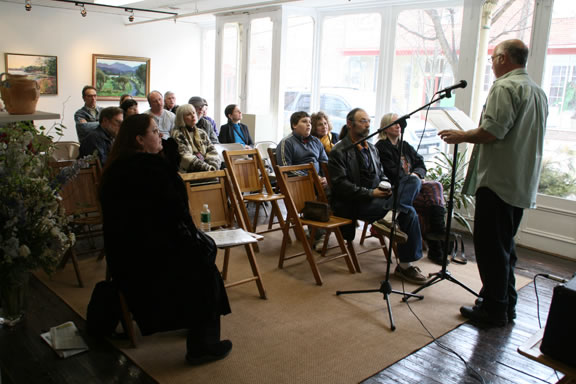
In smaller towns like mine, poetry readings are generally greeted by a handful of patrons who feel an “obligation” to support writing and culture in general. That being said, these “few but proud” gatherings have their own unique benefits. For one, small gatherings allow greater intimacy with the work presented. The poet can speak about the writing and be understood well, and usually, the readings are far more personal. Addressing a hall full of 500 people might be a rush, but it loses some of its closeness. Both the work and the artist are “drowned out” somewhat by the environment.

Comparing venues and styles of presentation caused me to think a little about the up-and-comers (like yours truly) who have to fight for their space in the limelight. Library and coffeehouse readings are great, and having a loyal little flock appreciate your work is nice. But at the end of the day, making the small time is exactly that — small. We poets are not unlike aspiring country crooners: Like them, we have to “pay our dues” in the dives and the honky-tonks of literature — the shabby cafes and tiny conference rooms where a handfull of people can begin to spread the word.

There are no backlit marquees or laser-printed fliers proclaiming the greatness of the small-town writer. This is why so many scribblers migrate to locales like New York City, where, with any luck, one’s work can be heard and experienced by larger crowds and potential game-changers for one’s writing career. However, throwing fate to a place populated by similar dreamers and doers has its own hazards. All of the old “fish bowl” cliches have some element of truth; one can be a big fish in a small pond or a smaller fish in a larger pond. It depends on your desires.

Personally, I would prefer not to be a fish at all. I write because I like to, I read because I love the music of language, and I appreciate people who appreciate my work. Whether that’s a crowd of 5 or 5,000, I’m simply happy to be the attended voice. Yes, I’d like one day to move beyond “the small time,” but for now, with my situation in life, I’ll take the sporadic applause of a few over the ovations of masses. There’s time for both yet.

poetry, Uncategorized

Bookstores, Amazon, and Other Such Things

So, I went to my local bookstore today to purchase one of the texts I need for my MFA readings. This book happens to be by our newest poet laureate, Natasha Trethewey. I perused the one measly section of poetry books tucked into a single section of a poorly lit aisle, only to discover that, not only was Trethewey’s work unavailable, but so was work by other established and well-known poets. This lackluster selection inspired me to visit the “customer service” desk of the establishment in question.

“May I help you sir?” the somewhat bothered clerk asked.

“I believe you can. I’m looking for a volume by Natasha Trethewey, the poet laureate.”

“Who?” she hooted, blinking repeatedly from behind extra-large lensed glasses. “Oh, let me look it up.”

Her fingers dashed across the keyboard, entering letters then backspacing furiously in frustration.

“Can you spell that?” she finally requested.

“T-R-E…” I went on, giving her the name in its entirety, letter by carefully pronounced letter.

“Oh, Natasha!” she said, as if the two of them had been classmates in another life.

Here came the kicker: “We had two copies by her, but they’ve both been sold.”

SERIOUSLY??? The woman is the poet laureate of the United States, and you have TWO copies of her work in inventory? Now, mind you, this so-called bookstore can boast countless aisles of Twilight toys and fairy princess bookmarks, but GOD FORBID they actually carry work of literary value. I maintained a poker face, took a deep breath, and then administered some kind advice:

“You may want to think about getting some more. She’s very popular right now,” I said.

“Oh, well uh, would you like to order one?” she offered, still rapid-fire blinking.

“No, that’s okay. Just thought I’d check,” I answered. “Thanks anyway.”

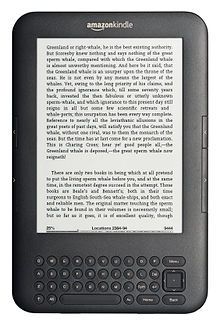
As brick-and-mortar bookstores bemoan the loss of business to megalithic online entities (Amazon, etc.), encounters like these only encourage consumers to seek out alternatives that are less inconvenient, i.e. internet buying. Listen up, literature vendors: If you want to sell books, stop sitting around sipping lattes and whining about how the big, bad capitalist machine is eating up your sales. Stock your shelves, know your stuff, and offer service with a smile. For today, I’m ordering the Kindle version of the book I needed — cheaper, faster, and easier.