 FLteacherpoet555
What a beautiful journal! The free e-edition is very nice, but I would encourage my readers to purchase the print edition — it’s worth the price, and small presses can use all the support they can get in these times! Thank you to the editors of The Wayfarer, whose skills and sharp eyes made this edition a visual feast as well as a fulfilling reading experience.The Wayfarer magazine
the writing life
A Quick Thank-you and A Longer Thought
 To those of you who have eagerly taken advantage of my free book weekend offer, I offer my deep gratitude. Your acceptance of my work shows that you believe it has potential. For this vote of faith, I thank you. Other followers who have not yet seized the opportunity to get your free Kindle copy of Growing Moon, Growing Soil: please do so! I’d hate to tell my writer friends that I couldn’t even GIVE AWAY my poems…how embarrassing.
On a separate note, I’ve been reading a lot of advice lately from writers who encourage others to “write about those things that you would never want to write about.” This near-cliche is usually followed by an admonition to confess fears, secrets, undisclosed parts of one’s past, etc. in the name of soul-cleansing and “honest art.”
Here’s where I disagree with these well-meaning pseudo-sages: Writing poetry is supposed to make the world a little better, a little more beautiful, or a little more meaningful. Some things simply don’t need exploration in poetry, however. Remember how, in junior high writing classes, they taught us to “consider our purpose and our audience?” That rule hasn’t changed. What audience is going to want to read about how you wouldn’t wear sandals to the beach because of toenail fungus? More broadly, why write about the baser matters of life when there’s so much beauty, so much history, so much grander inspiration to seize?
Maybe my gripe here comes from a biblical background: Philippians 4:8 comes regularly to my mind while writing. I use it as a test to see if my poetry bears relevance and worth. That verse reads, “Finally, brothers and sisters, whatever is true, whatever is noble, whatever is right, whatever is pure, whatever is lovely, whatever is admirable–if anything is excellent or praiseworthy–think about such things.” I feel an obligation as a poet to produce work that causes people to contemplate life using these criteria. Mind you, this doesn’t mean that my poetry always is autobiographical or just about the “warm fuzzies.” But, if I can get people to think in a way that this verse speaks of, even if it’s using something made up (like Christ’s parables), I’ve done my job.
Often, contemporary poetry elicits thoughts that meet some of these qualifications, but certainly not all. Keats’s Grecian Urn aside, truth is not always beauty. I know that’s unpopular talk in our culture today, with Facebook and other social media serving as conduits of over-sharing and gross uber-transparency. Where, however, is the beauty in rape? In murder? In cannibalism? This series of questions beckons back to undergraduate courses in ethics and philosophy, but no matter what school of thought you follow, you must confess: Some factual things do not pass the test for beauty, even if “beauty” is subjective (or, to quote an old aphorism, “in the eye of the beholder.”) If beauty is a matter of perspective, then certainly some twisted minds will find reasons to admire all forms of ugliness. Still, “Truth is beauty, beauty, truth” might make good verse, but too many great minds, both in and out of the humanities, have discredited it over the centuries.
Likewise (on the reverse side of this same coin), something can be lovely without necessarily being pure — think about those intricate bacteria you viewed beneath a microscope during high school science labs. Beautiful? You bet. Pure? Not in the least. My theological friends will tear apart this argument, no doubt, noting that human or scientific truth, beauty, nobility, etc. are not the issues about which Paul was writing. His aims were higher than enlightening our temporary mortal existence. I get that, but his words make a pretty great checklist for poets to strive toward also. In fact, it wouldn’t hurt for artists of every genre to contemplate the audience effect achieved in Paul’s terms. Imagine the renaissance we could ignite if painters, sculptors, dancers, writers, photographers, and other creatives used Philippians 4:8 as their common assessment rubric. What bright, radiant, vibrant works could result!
I’ll step down off my soapbox now. Some things just need airing, and tonight, this little rant happened to be one of them. I hope, once again, I haven’t distanced too many of my fans or followers with this post. I would love to hear opposing or coinciding viewpoints in comments below, and PLEASE remember to take advantage of FREE BOOK WEEKEND (details below). Good night, dear readers.
Hometown Fellowship — A guide to being inspired where you are

Recently, I decided to invest in my writing using a different method. Plenty of my writer friends pay some high-priced writing retreat or conference a handsome sum for the sake of privacy and different surroundings. Still others win residencies at noted creative spaces like Yaddo or The Studios of Key West. My objective was to experience this same “getaway” mentality without the hassle of airlines, rental cars, or questionable bathrooms.
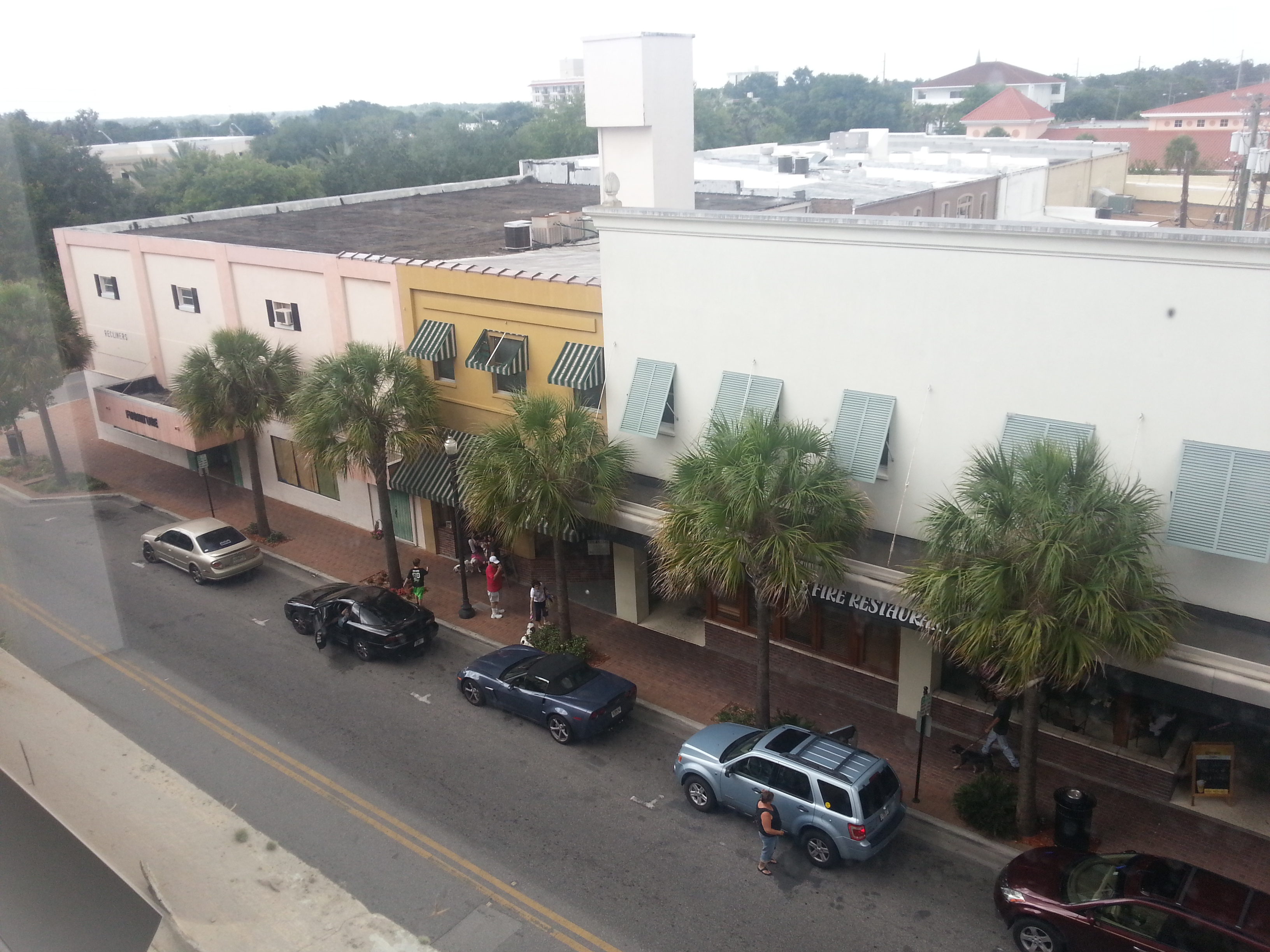
I decided, simply, to invest recent prize winnings of mine in a “loft.” Here in my city, we have lots of historic buildings downtown with inexpensive space for rent. My thought was, by providing myself with a different perspective on a usual place, my writing would be renewed. So far, the new view has generated one piece, and I’m hoping, of course, for more.
I also gave myself a deadline and a project: for three months, I will use this office space as a creative venue outside my usual lake-view “writing room.” During that time, my plan is to produce a chapbook-size accumulation of work inspired by this new locale. Notice, I did not say “at least 20 poems,” or “at least 30 pages,” or any other precise measurement. By leaving the project somewhat open-ended, I have allowed myself the luxury of defining my own parameters as time proceeds. After all, I’ve only paid for three months here, and using the space judiciously is imperative.
By giving ourselves, writers and artists, permission to invest in our passions, we are assuring at least some level of productivity. There is also a tradition to be observed here: plenty of poets, novelists, and creatives have similarly allowed themselves the liberty of “lofts” or “studios” over the centuries. The views from these spaces have produced some of our greatest masterpieces. If I can achieve even some small slice of that same motivation, my objective will be achieved.
In the meantime, I would ask my fellow right-brainers to consider something similar if they’re in a funk or need a breath of fresh air. A small getaway can result in the greatest returns, I’ve found. Hopefully, my little experiment will pay several creative dividends as the months pass. Updates, as usual, will follow.
Epiphany #5: The Emersonian Epiphany
 You knew it had to show up sooner or later, reader. What better way to conclude a series on epiphanies than with the one thing that has inspired countless poets over centuries? Nature, when all else fails, returns us to our basest and most earnest humanity. In nature, we find a little of what has motivated all those poets who have come before us. Moreover, who can resist the mesmerizing wonder of a spider repairing a dew-dropped web, or a leaf reflecting with the orange of seasonal light? Nature, for certain, holds both scientific mysteries and spiritual inspiration, even for the most adamant cynic.
Why else would so many poets “go for a walk” when words fail them? Why is it that, when we wish to “escape” our civilized routines, we inevitably turn to remote greener locales as our getaway? Yes, the view in wilderness is different from our common existence, but there’s also a matter of instinct at work here: As living, breathing organisms, we have an inchoate desire to connect with the raw and unmodified elements of a more primal, unspoiled world. I know. Some of you are shaking your heads, yelling “Just give me my Ritz-Carlton, my Starbucks, my iPhone and my Land Rover!” That’s okay. Deny it all you want, metropolitan, but deep within you, beyond that glossy, technology-loving veneer, you too have a drive to connect with nature. We all do.
Poets, of course, have historically been more susceptible to this drive than others less sensitive. Every crackle of a branch, every rustle of a leaf, every soft flit in the brush is amplified to the artist, and so, nature becomes a sense-heightening experience. This fact drives the plethora of residencies, fellowships, and conferences held in splendorous locations amid mountains, forests, lakes, and canyons. Knowing full well that artists, and especially poets, cannot resist the draw of God’s inimitable creation, organizers and program developers often choose serene vistas for optimum imagination engagement. It just makes sense.
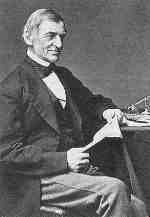
The writer’s versions of Daniel Boone and Davy Crockett, Ralph Waldo Emerson and Henry David Thoreau embodied the Naturalist aesthetic, and in so doing, fathered a movement followed even today. We can look at formalists, modernists, post-modernists, Language poets, or the broad spectrum of other “schools” that exist out there, but within each one, there is influence that stems from the natural world, no matter how slight. Some may justify this influence by stating the obvious: The world is all around us; of course it’s going to drive artistic work! True, but in a world dominated by steel, circuits, satellites, and fiber optics, why would we continue to devote our attentions to things less shiny, less electronic, or less progressive? You, reader, know why. Whether you believe evolution and adaptation are to credit, or whether you believe in a more supernatural cause, the truth is undeniable — nature is as much a part of us as our flesh, our blood, our very DNA. To get outside our limited perspective, we must literally and figuratively get outdoors.
As I draw this series to a close, I would ask my followers and readers to respond to one simple question: What is it that gives you revelation? How do you generate or receive epiphanies of your own? Your thoughts and comments, as always, are appreciated. And until next time, get outside!
The First Line Epiphany

Scholars might argue with me, but I would be willing to bet that an awful lot of William Shakespeare’s writing began when he had a sudden realization of a great first line.
We poets know how it is: You’re mowing your yard, taking out the trash, or doing some other mundane chore when suddenly WHAM-O — a great first line just sort of strikes like lightning. You write it down in your pocket notebook, and when you come back to it later, that first line serves as a catalyst for some much bigger piece.
Sometimes these first lines survive in the final draft, sometimes they don’t. No matter why those primary words strike us as they do, they almost always reap great rewards. Even if those initial ideas get culled, the work they produce tends to be refreshing, inspired, and original.
Sometimes the first lines occur because of weird word combinations; things like “nuclear neurology” or “concrete coffee” tickle our fancy. Other times, it may be a random statement from a stranger that rings with a certain poetic something.
One time, a student of mine informed me that “The ice cream trucks in our neighborhood only play Christmas carols.” While the exact iteration of his words didn’t survive in my later poem’s final draft, the concept of a summertime ice cream truck tooling about playing “Jingle Bells” was too irresistible to refuse. It became “Merry Summer,” a sonnet-like piece written from the perspective of a boy waiting to hear the warbled yuletide tunes of the dirty, somewhat questionable ice cream truck.
First line epiphanies are some of my favorites. There’s always such a bright hope and a brilliant promise that comes with an entire line coming into consciousness. When we have a start, we’re obliged to build toward an end. Think I’ll go mow the lawn and see what strikes…
Gone Digital
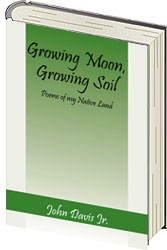 Hello, loyal readers. This is just a quick post to let you all know that my book, Growing Moon, Growing Soil: Poems of my Native Land, is now available as a Kindle edition. The digital version is far less expensive than the original paperback, but it maintains the character and artistry of the printed page. Please see the link below, and purchase your copy today! All proceeds will go toward advancing the literary arts in central Florida. Thank you as always for your support!
Insomnia: The writer’s best frenemy
- Plenty has been written about writers and their lack of sleep. But since I’m awake anyway, I thought I might as well tackle the issue also.
Yes, being awake at 3 a.m. has its advantages — the house is quiet, and if I really need to get some writing or editing done, there is no quieter time. Everyone else is “a-snooze in their beds,” as Dr. Seuss would say, and meanwhile, my grey matter is churning and firing more thoughts than its daytime counterpart could ever conceive.
However, the price will come in the sunlit hours — my teaching will be less enthusiastic, or too much coffee will make me jittery/cranky/irascible/jumpy. I’ve heard all the remedies, from herbal supplements (melatonin once broke me out in a rash more severe than chicken pox) to yoga relaxation techniques. And there’s nothing more irritating than a hangover induced by over-the-counter sleep aids, by the way. The plain truth is, my mind wants to be up, and so my body follows.
Insomnia is a bit of a blessing curse — some of my best stuff gets written in the wee hours, and I guess there is an established literary tradition to be followed here. Poets across centuries have endured the same nightly conflict: get up and scrawl out what could be great revelation, or stay in bed, tossing and turning in the torture of some undocumented epiphany. Truthfully, it isn’t always some kind of great inspiration that rouses me. Some nights, it’s just “awakeness.” No pressing thoughts about pieces, deadlines or work-related matters; just the old thinker cycling thousands of disconnected, unrelated images through my mental cinema.
If I were to be perfectly forthright with myself, I suppose I allow insomnia to recur because it has its creative payoff. While other writers are snugly tucked in dreamland, here I am, cranking out poetry and prose. Sure, there are studies and advisory epistles that show how lack of sleep affects performance, thought clarity, and other aspects of life, but in the end, when I have a newly completed piece or an expertly edited work of my craft, I’m willing to endure a few yawns throughout the day. Time to go brew up a pot of the good stuff — have a good morning, friends.
The Blessing and Curse of Subjectivity
 Again I find myself apologizing for a rather extended absence from the blogosphere; I just completed another intense 10-day residency in University of Tampa’s Master of Fine Arts in Creative Writing program. During those days, I was privileged to sit in workshops with fellow writers and hear their opinions and suggestions regarding my work. Some, as you might imagine, were quite good. They made my work more concise, clearer, and cleaner. Other suggestions were less fruitful, demonstrating only that the reader was unfamiliar with certain literary tools/devices, or that they simply had divergent poetic sensibilities from my own.
For poets, both the pleasure and the problem come from the realm of subjectivity. Over the last three semesters for instance, I’ve had three different writing mentors. All three are well-known and celebrated contemporary poets with extensive publication histories, award-winning books, and other laurels. Each one has brought a new and valuable gift to the table, and each one has had his or her own personal preferences about what poetry should look like, sound like, feel like, and be. Mentor One had different “rules” than Mentor Two, and Mentor Three has already discarded some of Mentor Two’s hard-and-fast standards. Some like language poetry, others despise it, favoring neo-modernism instead. The list goes on and on.
These vast variations among “experts” have led me to one solid conclusion: Poetry is entirely subjective. This is not a new truth. In fact, it’s one that we were advised about from the very get-go of this MFA program. But the reality of subjectivity is just now beginning to truly evidence itself for me personally. What one editor loves, another hates, and what one professor praises, another scorns. The same could be said of my fellow students in the program — because poetry doesn’t really play by any concrete rules, one workshop participant can be just as right as another in saying yea or nay to different constructions, images, parallels, or rhymes. Some reasons for critiques have a stronger tradition than others, but nobody gets excluded from having his or her say-so.
As a right-brained creative, I like the abstract notion that poetry can be perceived and valued in so many different ways. However, as a rule-follower and a structure-lover, I find myself desiring certain definitive, concrete absolutes within poetry simultaneously. It’s a perilous and paradoxical predicament, and not unlike those faced by certain other professions — what one doctor sees as incredible treatment, another calls quack medicine. What one lawyer claims is an excellent defense, another decries as logical fallacy. Those of us in the arts, however, are especially prone to the whims of individuals’ opinions: People at the top of the literary food chain have absolute mindsets about what makes great work, and woe to the poor soul whose words fail to comply with those perceptions.
The happier side of this question coin, though, is certainly worth examination: If a reader LOVES your writing, he or she will tend to LOVE it completely. Fan followings are created upon this same psychology. There exists very little grey area between the emotional responses caused by a poem. Either the reader identifies with it and embraces it after a couple of read-throughs, or he or she casts it aside as unworthy. Sure, some folks will say, “Well, I like this piece, but it’s not the poet’s strongest,” but at the end of the day, they still follow your progress and like your Facebook page. One less-liked piece won’t totally alter overall perception (unless you really step in some deep kimchi).
The question poets are tasked with asking ourselves is this: Is subjectivity our friend or foe? The answer, I believe, is “Yes.” The artistic tastes, whims and preferences of other individuals result in publication, awards, fellowships, and the other markers of a writing life. Equally, those same sentiments result in harsh critical reviews, rejection letters, and workshop ugliness. Working in the humanities demands understanding and contending with humanity — its flaws, its beauty, and yes, its unpredictable subjectivity.
Laura’s line breaks: A guide to the writing life

As both a connoisseur and writer of poems, I spend some of each day reading work by poets both canonized and contemporary. Recently, my daily reading included the works of Laura Riding (Jackson). Riding’s poem, “The Troubles of a Book” seems on its surface to be a meditative piece. It examines the life of one book, its pros and cons, and the psychology and humanity that effects texts’ perception by readers.
A more analytical look at this piece, however, yields some interesting messages. Particularly, the line breaks of the poem give some sage advice, no matter how unintentional this effect may have been. From the outset of the poem, the reader is greeted with “be nobody unwritten unread” as the final words of the first four lines. This little full-word acrostic makes a fine admonition to anyone pursuing a literary life. Certainly, authors of any genre should aspire to be both well-read and well-written. Did Riding mean for us to use these “power position words” in such a way? Maybe not, but you can bet that she recognized them as meaningful terms, and knew they fit well where they were when she wrote them.
Moving forward in the piece, the reader will notice the last three lines ending with “liveliness with bookishness,” yet another good maxim for those in the literary realm. History is full of examples of authors whose work flourished, not because they sat brooding behind a desk somewhere, but because they took Carpe Diem to heart. Hemingway ran with bulls in Spain, London froze in the Yukon, Frost absorbed culture in England, Dickinson…. oh, wait. Never mind about that last one. Maybe not every author has to mix their bookishness with liveliness, but it’s still a good idea.
One other example of Riding’s line breaks and their instructional insinuations can be found in her piece, “The World and I.” About halfway through the poem, Riding ends three lines with “sense! meaning knowing,” a statement that can be interpreted infinitely if given enough cognition. Authors of every genre should aspire for their writing to make sense, of course, and their work should provide both meaning and knowing, but beyond that checklist, this line-break message could also be seen as something of an instruction to writers: For our work to truly shine, we have to be sensitive to meanings and knowledge that others take for granted. A crooked exit sign, for example, is something more to the poet than to the electrician. Whereas Joe Average sees a problem to be fixed, the poet sees symbolic potential and possible warning.
Admittedly, I may be “stretching” the capacity of Riding’s diction here, but if we as writers can gain guidance, even if it’s unscrambled from the letters on a bubble gum wrapper, then we are better for it. Maybe Laura didn’t mean for us to read her poems like a map, but sometimes the best directions are ones that we decipher all by ourselves.
A great big THANK YOU
 To all those who voted for the Pushcart Prize nomination of my poem “Lovebug Seasons” through Deep South magazine, I extend my humblest gratitude. Every vote mattered in the end, and when the numbers were tallied, your support helped pull me through. I am honored by your faith in and appreciation of my work. At the end of the day, awards are nice, but knowing that your community and your audience value your voice is even nicer. Again, THANK YOU.
 John Davis Jr. -- Author