
 FLteacherpoet555
I like April. Spring has fully sprung here in Florida, school is wrapping up for the kiddos, and of course, it’s National Poetry Month. One would think that an entire month devoted to my chosen genre would come with joy and excitement exclusively, but to be honest, this month is a bit of a double-edged sword. Like Black History Month and Women’s History Month before it, National Poetry Month comes with an insidious underlying assumption: Here’s this highly specialized thing that we should give a month to, but nothing further.
Sure, that’s never stated outright, but ask around your “ordinary” friends, and you’ll find out that while April’s set-aside status for poetry is honoring, it is also limiting. There are so many worthwhile organizations that engage the masses with messages of poems and poets during April, that once it’s over, many individuals breathe a collective sigh of relief: “Oh thank goodness. Now I don’t have to think about poetry anymore.”
Of course, this attitude is detrimental to my genre. Ideally, poetry should be given equal footing with its prose brothers, fiction and nonfiction. But walk into any bookstore and you’ll see the truth of American perceptions: one meager, disorganized shelf that contains Billy Collins, Sharon Olds, Mary Oliver, and a bunch of old dead (though respectable) poets. The physical space is a symbol for average people’s notions of how poetry should be treated — included, but severely limited.
And it is this limitation that National Poetry Month has unfortunately come to represent: “OK, here’s a month where we can pay lip service to a genre that many people hate because it requires them to think. Then we can move on with business as usual.” Poetry is having to wage the same war for recognition that various people groups have had to fight before. Have “history months” of various stripes helped that endeavor? Perhaps. In American schools, we see more emphasis on diverse histories as opposed to the whitewashed versions of yesteryear. And those histories are especially highlighted during months that are set aside for their recognition.
In some respects, however, specialized “months” for things are like the handicapped parking spaces of the calendar. It’s an unpleasant, abrasive truth, but think about it: Because certain subjects are considered less “able” than others, they are condescendingly given their own little segregated portions of the year. Do those spaces help? Certainly. But along with them often comes an inherent, regrettable attitude of alienated superiority from unaffected others. And it is this attitude we must fight to change, for poetry, for people, and for the future.
The great beauty of poetry is that it fits nicely into any other subject: Science, Math, Geography, Languages, History, and the list goes on. Name a subject, and there’s poetry that pertains to it. But so long as we confine poetry to 30 days out of the year, we are continuing to insinuate that it’s a members-only establishment.
Like the history of African-Americans, women, and other previously overlooked groups, poetry likewise must move beyond the borders of its designated (assigned?) month. Thankfully, there are plenty of organizations and individuals ensuring that such an evolution happens. We see poetry on public transportation, in areas of mass transit, on billboards, and in more everyday venues. This kind of proliferation is definitely necessary.
Poets and lovers of the written word, we cannot comfort our consciences with the idea that the Poetry Foundation or The Academy of American Poets will dual-handedly raise poetry to a place of prominence in our culture’s collective psyche. All of us, every individual, must raise our voices and our verses beyond April. Let us begin today.

 Writing is full of superstitions. There are accounts of authors who only use a certain brand of typewriter, who write only at one certain time of day, who sip only one certain brand of coffee or tea with one certain number of creams/sugars/whatevers in it.
 If you have been following this blog for the last few days (or longer), you know about my
  Regular readers may recall in mid-November that I was lamenting copious recent rejections and doubting my own ability as a poet. I feared I had “
 Recently I’ve been rejected. A lot. As in, even the Armpit of Nowhere Review won’t publish my work.
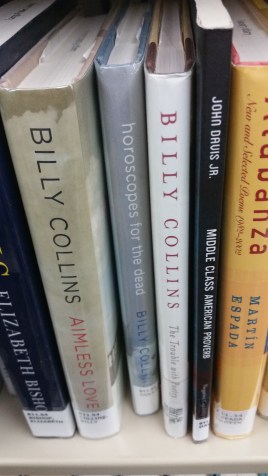 While browsing the local library nearest my university the other day, I stumbled across one of my books neatly tucked between other collections of poetry by some very well-known names in the literary realm. I’ve always been honored to see my work juxtaposed with that of “name-brand” poets, and I’ve even caught myself saying in those brief author’s bios that lit mags make you write: “His work has been published alongside that of [well-known literary icon] in [equally well-known literary journal].” I’m going to stop doing that, and here’s why:

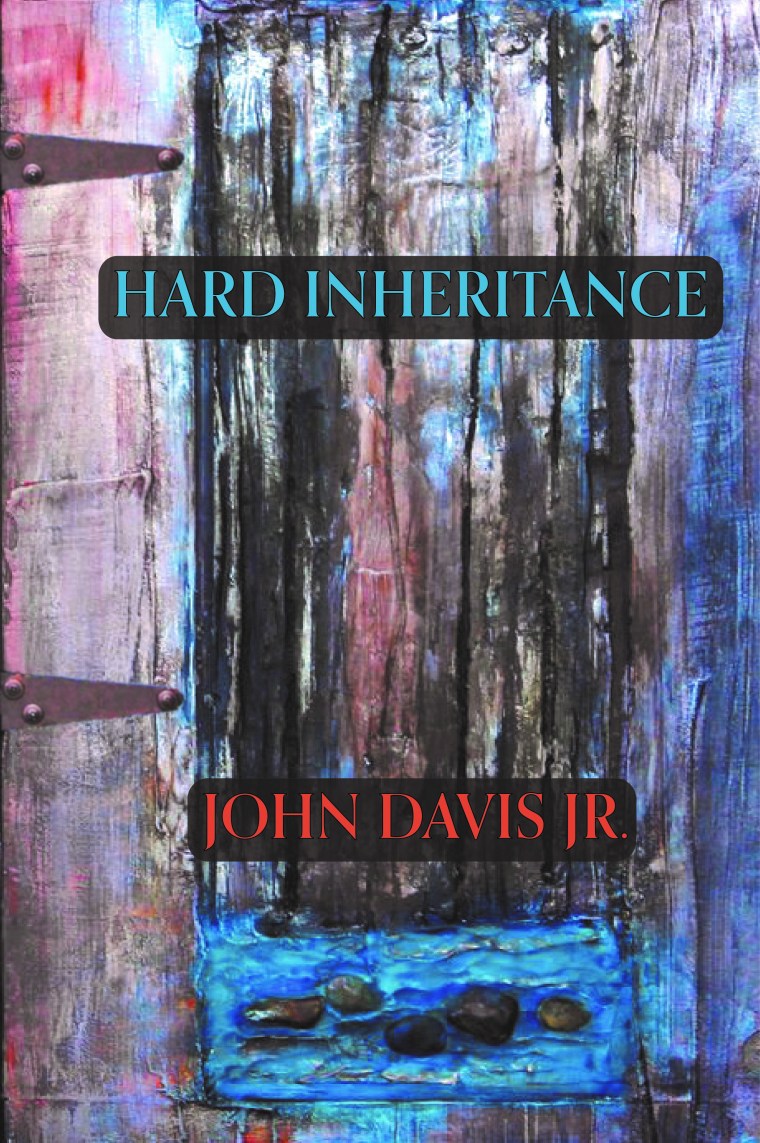 In one week, I will be launching my latest collection,
  John Davis Jr. -- Author