We always picked on my grandmother about her birthday falling on the day after Halloween. One year, she got a leftover witch cake from the Publix bakery to help her celebrate. Of course, she also claimed that All Saints Day was fitting and appropriate for her birthday — “I’m a saint, after all,” she would say, winking at whomever she was talking to.
My grandmother was one of many family members who introduced me to books and a love of reading at an early age. Every day at my appointed toddler nap time, she would read me the same Sweet Pickles book: Goose Goofs Off. It was about a goose (shocking, right?) who decided to put off doing all her chores. The procrastinating protagonist’s classic line was: “I’m taking it easy today; I’ll do it tomorrow.” Her laziness creates havoc in the story, causing a mailman to slip on ice cream among other mishaps. But in the end, Goose’s neighbors are kind to her and allow her to join their party, despite her sloppy work ethic.
How my poor grandmother did not tire of this story I’ll never know. But the daily reading of it became ritual, like church on Sundays or bath-time before bedtime. And her reading was expressive, engaging, and funny — a happy preamble for midday sleep. Occasionally, she might read me other stories during parts of the day that were unoccupied by Play-Doh art, Bob Barker’s “The Price is Right” (which I called “the come-on-down show”), or playing outside. But Goose? She was a sacred landmark in our days at home.
In 2011, my grandmother passed away, but her legacy of loving literature lives on. This Saturday, the day after Halloween, on what would have been my grandmother’s 104th birthday, my middle-grades novel, Vidge Floyd and the Secret Frequencies, will be released for sale. I cannot think of a more fitting date for this book to come into the world. It will be available as a paperback, in hardcover, and as an ebook (a concept my grandmother would have mistrusted at first, loving traditional books as she did). In fact, you can preorder the Kindle version of the ebook here: Vidge Floyd and the Secret Frequencies. Honestly, though, I think my grandmother would like for you to wait on the “real” book — one that can go in your bookshelf or on your nightstand. And who knows? Maybe this fun fiction debut will wind up becoming a favorite of a young reader in your family. She’d like that, too.
Photo by Ray Bilcliff on Pexels.com — Beautiful native Florida as it should be.
My newest poetry collection is in the hands of many potential publishers: Small presses, contest judges, and university press editors are all considering it as we speak. I’m especially proud of this one. Its quality, organization, and message make it a strong book, and once it’s out in the world in its finished form, I feel certain that it will make a difference. One of its prevailing themes is land loss. The question many of the poems attempt to answer is this: What do we lose when native acreage in its natural state becomes housing developments, mining leases, or euphemistically named “solar farms?”
Here in Florida (and in the southeastern U.S. at large), more wild spaces are being pushed out in favor of generic, boxy homes with zero lot lines and oppressive HOAs. Subdivisions aren’t the only culprit, but they are the ugliest. And this isn’t a new occurrence, of course — Big developers and other commercial interests have been devouring woodlands for decades. But now more than ever, as country disappears, we are also losing its customs, practices, understandings, and the pioneer breed of people that once thrived amid an untainted Sunshine State. Historic greenspaces are being eradicated, and with them, the common sense one needs to live within an unbridled ecosystem, one replete with unique animals, plants, and bodies of water. In this way, Florida is a microcosm of our nation’s lower-right region, where woods are increasingly shoved aside so that more dull concrete monoliths can rise.
Readers who know me understand I do not consider myself an environmental crusader. I would call myself moderate when it comes to “green” causes. I believe in a healthy balance of business and conservation. But as my beloved state deforms into a hideous plain of beige construction and shiny black panels, I cannot stand idly by. We turn to poetry when significance demands it: funerals, weddings, commemorations, and similar occasions. Now, we need it to stand up and register an emphatic rejection of bulldozers and big money. Narrative is a powerful weapon, and the small poem-stories within my latest book comprise an arsenal. They commemorate and celebrate a place and people we are losing. They preserve the diligence and ingenuity of past generations while offering an objective look at our asphalt-smothered present. And they cherish a way of life that some may consider rustic, even quaint.
Nonetheless, these poems are needed for our times. What better way to pedestal a crisis than by expressing it in the one form closest to the sacred? Though some may say that poetry is a rarefied art enjoyed by a slim minority, it is also true that this genre is the one most sought after in our inherently human moments. As earth and knowledge perish in the name of “growth,” crafted language is one part of a much larger solution. My hope is that this book provides an emotional journey rather than a sermon. And when the reader finishes the final page, perhaps some inchoate desire for a purer land, one closer to our ancestors and our Creator, will take root.
Everywhere we look, there are mentions of artificial intelligence (AI), robotics, and their implications for the future. News stories and social media feeds predict a heyday of ease and comfort as we assign more and more mundane tasks to technology (the art that accompanies this post was created by AI). In contrast, we’re also given the dark prophecies of Asimov and Bradbury come to life: When our computerized creations become so sentient that they can resent us, how will we control them?
More realistically, however, people are rightfully concerned about their jobs: Cashiers are already becoming obsolete, data entry by remote workers is becoming a relic, and countless other positions previously filled by people are slated to go extinct in the next few years. How, then, do we reckon with this revolution?
As the father of two older boys, one in college and one about to go there, I’m relieved that both of them have chosen irreplaceably human endeavors for their futures: One is in theatre, and the other plans to pursue architecture. These are professions that AI will never be able to fully usurp. After all, theatre is among the humanities, a select group of art forms and practices marked by their innate reliance upon authentic emotion and genuine experience. Our hamartia, the human condition, is ironically our greatest strength when it comes to livelihoods that are AI-proof. Architecture will be helped by AI, certainly, but to design and create livable spaces that consider the needs of complex people, we need human minds and hearts. Ask AI to design a mid-20th Century ranch house like the one on The Brady Bunch, and you’ll probably get a reasonable facsimile. But ask AI for a blueprint of a home that considers the individual needs of 21st Century family members, and confusion results — the blinking cursor begins to smoke.
As a teacher, I’ve already encountered the challenge of getting students to write rather than use ChatGPT or some similar product. For now, AI-generated writing is fairly easy to spot: Its reliance upon certain words and phrases, its preference for sterile-sounding language, and its occasional errors about obvious matters all make it detectable, even without running an essay or paper through an online checker or two. Combine those facts with a vast divergence from a student’s in-class writings, and AI use becomes obvious. But we know that technology consistently advances, and as time elapses, the fakes will become harder to spot, especially as classrooms become more tech-dependent. This is why some teachers and professors have gone back to old-school blue books, those lined-paper pamphlets of an earlier era, for class writing. And while I see the nostalgic appeal and hard-nosed devotion to justice driving such a practice, I also see its inherent temporary nature. Returning to number two pencils and canary yellow legal pads may get us by for a while, but students, parents, and clients of the new age won’t tolerate this Luddite approach for long. We need to find the middle ground between total AI reliance and achieved, owned learning quickly. Compromises like “You may use an AI editor for the writing you have authored independently in class” serve as a good start. This technique prepares students for the world to come without damaging their acquisition of knowledge. Further, they learn by seeing the corrections made by QuillBot, Grammarly, and other language-fixers. And if these products make a mistake as they sometimes do, so much the better. That’s where the real learning begins — technology has never been and will never be infallible, and the sooner students grasp this truth by experience, the better off they will be.
As a poet, I’m not worried about AI. I’ve seen the replica-poems it produces, and while some sound good on the surface, a closer look reveals that same artificial shimmer visible in the art that I’ve used above. Something’s missing; there’s a bad aftertaste like that of saccharine diet sodas from the seventies. An astute reader can tell that the cane sugar of the human touch is missing from this thing’s formula, whatever it may be. The “experiential resonance” — the sense that an event or product is organic — just isn’t there. Call it instinct if you will, but a reasonable human being can tell the difference between the things we do and make and the contrived, data-driven simulacra of thought-approximating algorithms. An initial, superficial “Oh, that’s lovely!” soon becomes an “Oh, this isn’t what I thought it was.” And that kind of deflating disappointment will toll the end of our infatuation with AI. Like any other once-novel discovery, this, too, will lose its luster.
So, what’s the big picture? The AI “scare” is similar to that of Y2K: Yes, we should consider it, but no, it isn’t Armageddon. As we prepare and adapt, we will add it to our toolboxes, become indifferent to it, and move on. Just as we healed the hole in the ozone layer, just as we eliminated acid rain, and just as we defeated diseases of long ago, we will coexist with this latest change until it no longer seems intriguing or threatening. We could easily theorize a future dystopia like those seen in science fiction, but it’s more likely that balance will prevail as it always has. For parents, teachers, and creators, AI is nothing to obsess over. Put simply, it’s just another thing. And if history has taught us anything, it’s that things are perishable.
As World Poetry Day arrives (today!), and National Poetry Month waits just around the corner (April), I thought I’d offer a brief missive on literary matters both personal and universal:
Most people are poets to one degree or another, though some don’t like to admit it. When you walk outside and feel the temperature in the morning, your response to it is the beginning of poetry. The texture of the air on your skin, the combination of sunlight, birdsong, and environmental noise, and the state of the world around you (your seasonal lawn, the road nearby, the leaves that have fallen on your driveway)…these things are the earliest signals that your mind wishes to celebrate life by composing a poem. Most people immediately shut down this impulse with negative self-talk: “I’m not a poet,” or “That’s what somebody else would do,” or “That stuff’s too deep for me.” The truth is, we all want to record and respond to the world around us in artistic words; some folks just lean into that longing more than others.
There’s also that dreaded mental reservation called imposter syndrome. “I don’t know enough/haven’t done enough/can’t compete with experts” hinders so many earnest efforts. Nobody is the greatest at something the first time they try it, and there are plenty of metaphors and parables extolling the virtue of practice and patience. Being unwilling to try something because of initial frustration is ordinarily a child’s reaction, but in the adult world, too many creators quit before they’ve properly begun. Nowhere is this fact more evident than in poetry — the persistent thrive, even if they aren’t that great.
I won’t name names here, but walk into your mainstream bookstore and you’ll find the one shelf called a “poetry section” filled with poorly designed and badly written tomes by people whose greatest claim to fame is that they’ve penned trite cliches or radical malarkey for the last 25 years or more. And those “books” are placed alongside Dickinson, Shakespeare, and Frost. This literary injustice is a turnoff to those who may be considering writing well-crafted verses of their own, and it should be. But this sad fact should also be a motivator for producing better work for our current age. Make poetry great again!
So, how do we overcome a closed mindset regarding poem writing? The first step is to get inspired. Sometimes a little help can go a long way, and toward that end, I recently began a new mini-workshop by mail called “Metacreativity: The Process Behind the Poetry.” In this monthly letter, I offer one poem of mine, the backstory behind it, and the process it went through before becoming its final version. Sometimes seeing into someone else’s creative process inspires others to use their own, and this little communication allows readers to do exactly that. I also include a more traditional poetry prompt in every letter, and sometimes I add a QR code that links to an audio recording of the monthly poem. I also include news about my upcoming appearances, book signings, and other events when appropriate.
I’d love to add more subscribers to my growing roster for Metacreativity. Now more than ever, we need fresh voices putting more relevance into our world through poetry. And as celebrations of poetry begin in this first quarter of 2025, I hope you’ll join me in spreading good words. Whether it’s buying a fresh book of poetry or trying your hand at a sonnet, spring is a perfect time to appreciate beautiful language.
As the age of screens and endlessly blinking text continues, there is a need for a return to the gracious, studious, and considerate world of letters. That’s right, the kind that come in your physical mailbox. You get to hold in your hand an artifact — a piece of living history sent to you by someone who cared enough to share with you something about their life. That’s why I’ve abandoned Substack altogether in favor of a new, better, more human alternative: StampFans.
Using this service, I will be able to send you, my subscriber, some rich insights on poetic life. Each month, you will receive a letter that contains one of my poems, an explanation of its inspiration, and some details about its actual creation (number of drafts, materials used, etc.). I’ll also be including announcements about upcoming publications, appearances, workshops, and similar engagements. As a teacher, I’d love to receive something like this from my favorite poets. I’d use it in my classroom regularly, and I hope other educators feel the same way.
While I’d hoped that my presence on Substack would be as successful and meaningful as my time on WordPress has been, I’ve learned the hard way that the audience for poetry is much more receptive to personal, physical communication than it is to just another online presence. With this in mind, please subscribe to my StampFans so that you too can receive good news, good reading, and something more uplifting than junk mail. I promise that your modest investment will be richly rewarded. I eagerly await your subscription, and I can hardly wait to share this window into my work with all my WordPress family! Thank you in advance for your support of Metacreativity: The Process Behind the Poetry .
Recently, two poet friends of mine expressed an interest in completely giving up on all things literary. Their latest poems were consistently rejected, they weren’t inspired to create new work, and frankly, they weren’t seeing the benefit of engaging in the one thing they previously enjoyed. It happens to us all.
Inspiration isn’t something you can fake; that is, you can’t force a creative epiphany or revelation. But you can create optimal conditions for these kinds of “sparks” to occur. That’s why I created Socratic Journaling in the first place — my students approached the blank page with dread, and they needed a push to get something going. And while simple prompts can often generate work that feels forced or generic, arriving at a subject on one’s own can yield pieces that are authentic and rewarding.
Enter the Socratic Journal — a workbook intended to get people thinking about themselves, their minds, and their experiences. By creating ladders of inquiry, creativity naturally flows from the mind as answers and questions feed off one another. And those questions and their answers often reveal to the writer previously unexplored topics, good for essays, poems, and a variety of other products.
I even had one student, a high school girl, who still claims Socratic Journaling changed her life. It allowed her to think about her own thinking so much that she figured out her issues and personal problems without other helps ( disclaimer: if you are suffering from a serious psychological illness, always consult a professional). But by writing out our thoughts, our big inquiries, and our desires in a systematic fashion, sometimes more than creative inspiration can occur. Knowing ourselves better is a reward of its own.
Whether you’re a writer, a teacher, or simply someone who’d like to learn more about yourself, the Socratic Journal is a wonderful resource to help you get unstuck, both creatively and mentally. Summer is a great time for self-exploration and understanding, and by asking and answering the big questions, who knows what improvements might occur? Give it a try!
Hello, followers, friends, fans, and family — This is just a quick post to let you know that my latest piece can now be found at The Common (both in print and online):
 FLteacherpoet555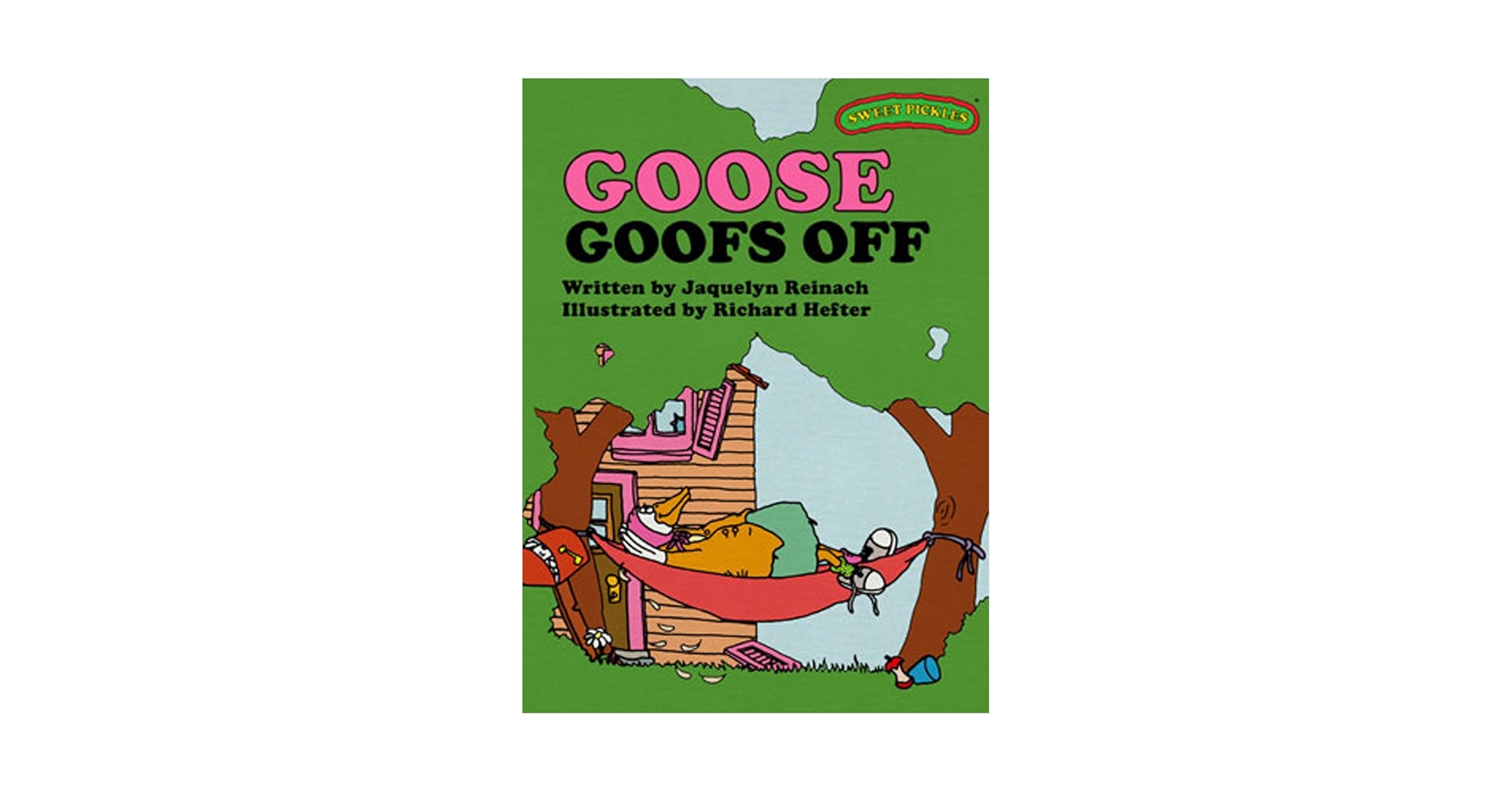


 John Davis Jr. -- Author