We always picked on my grandmother about her birthday falling on the day after Halloween. One year, she got a leftover witch cake from the Publix bakery to help her celebrate. Of course, she also claimed that All Saints Day was fitting and appropriate for her birthday — “I’m a saint, after all,” she would say, winking at whomever she was talking to.
My grandmother was one of many family members who introduced me to books and a love of reading at an early age. Every day at my appointed toddler nap time, she would read me the same Sweet Pickles book: Goose Goofs Off. It was about a goose (shocking, right?) who decided to put off doing all her chores. The procrastinating protagonist’s classic line was: “I’m taking it easy today; I’ll do it tomorrow.” Her laziness creates havoc in the story, causing a mailman to slip on ice cream among other mishaps. But in the end, Goose’s neighbors are kind to her and allow her to join their party, despite her sloppy work ethic.
How my poor grandmother did not tire of this story I’ll never know. But the daily reading of it became ritual, like church on Sundays or bath-time before bedtime. And her reading was expressive, engaging, and funny — a happy preamble for midday sleep. Occasionally, she might read me other stories during parts of the day that were unoccupied by Play-Doh art, Bob Barker’s “The Price is Right” (which I called “the come-on-down show”), or playing outside. But Goose? She was a sacred landmark in our days at home.
In 2011, my grandmother passed away, but her legacy of loving literature lives on. This Saturday, the day after Halloween, on what would have been my grandmother’s 104th birthday, my middle-grades novel, Vidge Floyd and the Secret Frequencies, will be released for sale. I cannot think of a more fitting date for this book to come into the world. It will be available as a paperback, in hardcover, and as an ebook (a concept my grandmother would have mistrusted at first, loving traditional books as she did). In fact, you can preorder the Kindle version of the ebook here: Vidge Floyd and the Secret Frequencies. Honestly, though, I think my grandmother would like for you to wait on the “real” book — one that can go in your bookshelf or on your nightstand. And who knows? Maybe this fun fiction debut will wind up becoming a favorite of a young reader in your family. She’d like that, too.
Photo by Ray Bilcliff on Pexels.com — Beautiful native Florida as it should be.
My newest poetry collection is in the hands of many potential publishers: Small presses, contest judges, and university press editors are all considering it as we speak. I’m especially proud of this one. Its quality, organization, and message make it a strong book, and once it’s out in the world in its finished form, I feel certain that it will make a difference. One of its prevailing themes is land loss. The question many of the poems attempt to answer is this: What do we lose when native acreage in its natural state becomes housing developments, mining leases, or euphemistically named “solar farms?”
Here in Florida (and in the southeastern U.S. at large), more wild spaces are being pushed out in favor of generic, boxy homes with zero lot lines and oppressive HOAs. Subdivisions aren’t the only culprit, but they are the ugliest. And this isn’t a new occurrence, of course — Big developers and other commercial interests have been devouring woodlands for decades. But now more than ever, as country disappears, we are also losing its customs, practices, understandings, and the pioneer breed of people that once thrived amid an untainted Sunshine State. Historic greenspaces are being eradicated, and with them, the common sense one needs to live within an unbridled ecosystem, one replete with unique animals, plants, and bodies of water. In this way, Florida is a microcosm of our nation’s lower-right region, where woods are increasingly shoved aside so that more dull concrete monoliths can rise.
Readers who know me understand I do not consider myself an environmental crusader. I would call myself moderate when it comes to “green” causes. I believe in a healthy balance of business and conservation. But as my beloved state deforms into a hideous plain of beige construction and shiny black panels, I cannot stand idly by. We turn to poetry when significance demands it: funerals, weddings, commemorations, and similar occasions. Now, we need it to stand up and register an emphatic rejection of bulldozers and big money. Narrative is a powerful weapon, and the small poem-stories within my latest book comprise an arsenal. They commemorate and celebrate a place and people we are losing. They preserve the diligence and ingenuity of past generations while offering an objective look at our asphalt-smothered present. And they cherish a way of life that some may consider rustic, even quaint.
Nonetheless, these poems are needed for our times. What better way to pedestal a crisis than by expressing it in the one form closest to the sacred? Though some may say that poetry is a rarefied art enjoyed by a slim minority, it is also true that this genre is the one most sought after in our inherently human moments. As earth and knowledge perish in the name of “growth,” crafted language is one part of a much larger solution. My hope is that this book provides an emotional journey rather than a sermon. And when the reader finishes the final page, perhaps some inchoate desire for a purer land, one closer to our ancestors and our Creator, will take root.
As the age of screens and endlessly blinking text continues, there is a need for a return to the gracious, studious, and considerate world of letters. That’s right, the kind that come in your physical mailbox. You get to hold in your hand an artifact — a piece of living history sent to you by someone who cared enough to share with you something about their life. That’s why I’ve abandoned Substack altogether in favor of a new, better, more human alternative: StampFans.
Using this service, I will be able to send you, my subscriber, some rich insights on poetic life. Each month, you will receive a letter that contains one of my poems, an explanation of its inspiration, and some details about its actual creation (number of drafts, materials used, etc.). I’ll also be including announcements about upcoming publications, appearances, workshops, and similar engagements. As a teacher, I’d love to receive something like this from my favorite poets. I’d use it in my classroom regularly, and I hope other educators feel the same way.
While I’d hoped that my presence on Substack would be as successful and meaningful as my time on WordPress has been, I’ve learned the hard way that the audience for poetry is much more receptive to personal, physical communication than it is to just another online presence. With this in mind, please subscribe to my StampFans so that you too can receive good news, good reading, and something more uplifting than junk mail. I promise that your modest investment will be richly rewarded. I eagerly await your subscription, and I can hardly wait to share this window into my work with all my WordPress family! Thank you in advance for your support of Metacreativity: The Process Behind the Poetry .
To my subscribers, friends, and fans: Sorry for the notable quiet over the last few months, but I’ve been hard at work on something new and fantastic which I’m sure you’ll enjoy. Read on…
My newest poetry book manuscript has at last come together, and I’m delighted with it. Featuring many poems that have been previously published in esteemed journals like The Common, Tupelo Quarterly, and elsewhere, this (currently) 70-page collection represents a return to themes that deserve further exploration: History, Work, Upbringing, Fatherhood, Maturity, Nature, and Faith all make appearances as they have in previous collections of mine, but this time, there are added bonuses. Without saying too much, I can promise you that there is something in this collection for everyone.
I am presently querying publishers and seeking the best fit for this newest book, and as soon as I’ve reached an agreement, I’ll be sure to post the good news here. For now, I’d like to wish everyone a happy National Poetry Month! Keep reading, and thank you for your support!
This year’s National Poetry Month poster from the Academy of American Poets
The logo and motto of Tupelo Quarterly, a fine magazine for writers
Recently, the esteemed literary journal Tupelo Quarterly featured both a portfolio of my newer poems and a phenomenal review of The Places That Hold — my latest book. In addition, editor Virginia Konchan (a marvelous poet herself) wrote a spectacular introduction to my work published in the online pages of a journal I’ve long respected and admired. Here are links to all three of these well-presented items:
My humblest and sincerest gratitude goes out to Virginia Konchan for her sensitive and perceptive reading of my work, and I’d also like to offer wider thanks to the good people at Tupelo Quarterly for their attention to my latest efforts. Poets wouldn’t thrive without literary magazines, and certainly, this one is a standard-bearer for others to emulate. I hope that my sincere appreciation gets their endeavor at least a few more page visits — drop in and check them out!
The audio clip above is from the sunporch I’ve turned into my own personal writing studio. My family and I moved from our previous home in Riverview (on the outskirts of Tampa) to a new-old place in Carrollwood, one of the historic neighborhoods in the heart of Tampa. The commute to my workplace is shorter, the house itself is smaller (both boys are going off to college in short order, so who needs a big house), and the HOA headaches and zero lot lines are a thing of the past.
We traded all that for history, love, and beauty. As you probably heard in the audio, the new place (built in 1965) is surrounded by bird-filled oaks and magnolias. Their sounds infiltrate the sunporch writing studio every morning as I open the windows, turn on a couple of tower fans, and greet the day with words.
Having just returned from a month-long NEH-funded residency where I studied and wrote about one of my favorite Southern authors, Flannery O’Connor, I’m ready to get back to my usual routine. I loved sitting on the porch of Andalusia (Flannery’s home in Milledgeville, GA), writing poems from a rocker she herself may have written from long ago. But there’s something about abiding in one’s own space and observing personal rituals that helps foster productivity. I’m a fan of beginning the day with cognitive pursuits; geniuses like Frank Lloyd Wright endorse the practice, and I’m a morning person, so it works.
Some of you may have listened to all the birdsong and cicada noise in the audio and thought, “How does he concentrate with all that racket?” Answer: It’s never distracting when the sounds are from nature. At my previous home, my family and I contended with the exhaust-pipe roar of drag racers, the loud feuding of across-the-street neighbors, occasional gunshots, the ceaseless drone of lawn mowers, and the midnight cries of nearby young families’ infants. I may have had my own study at the old house, but to call it that would have been euphemistic at best.
When I compare that tiny square upstairs room to my present place, I have to roll my eyes and chuckle a little. I’ll take Old Florida over new development any day. I can hardly wait to see how this affects my poetry; stay tuned for updates, readers. There’s about to be a golden era of creativity.
The title of this post is a question I often receive. Whether it’s in a writing workshop, a traditional classroom, or simply in casual conversation, people regularly inquire about the origin of creative ideas. Second only to this question is, “What do I write about if I’m not inspired?” Today’s post is an effort to answer both of these common quandaries with a single practice: Socratic Journaling.
Anyone who has spent a moment or two in school knows about the Socratic Method — that time-honored practice of invoking thought through questioning. First mastered by its namesake, Socrates, the method has served educators well over the years. And even today, we can use it to generate great ideas and to “get unstuck” in creative writing using a technique I pioneered over the course of 15 years.
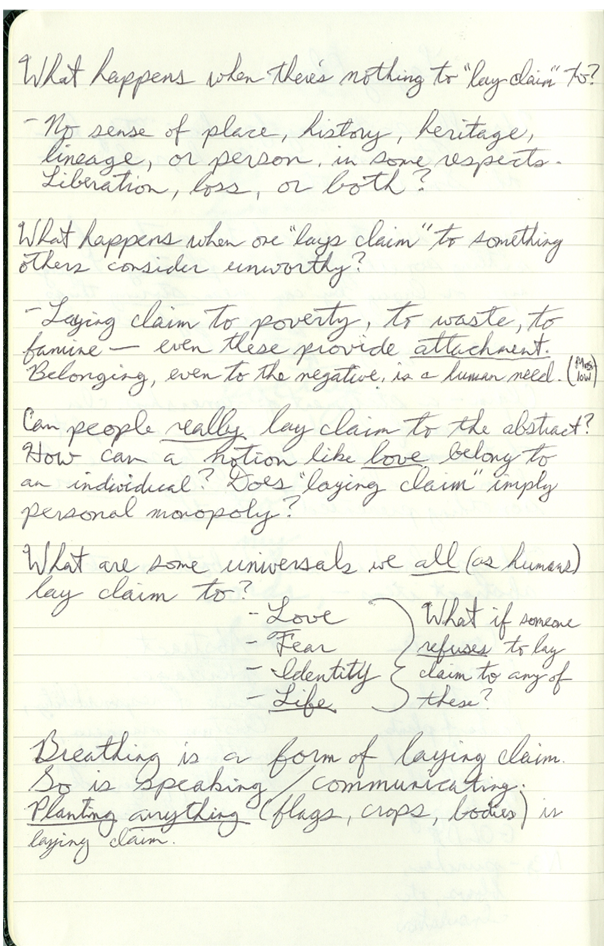
Socratic Journaling works like this: A writer begins with a “big” question (ideally, this should be one that is fairly philosophical or abstract) and answers it swiftly, almost without thinking. That fast answer then leads to another question, which leads to another answer that also then gets questioned. This process repeats until the writer finds within their questions and answers a subject to write about. See the example of Socratic Journaling below to get a better idea of what this process looks like:
A sample of my own Socratic Journaling that eventually led to a poem that was published.
In the sample above, I examined the nature of a simple phrase I heard growing up: “Laying Claim.” I thought the expression was odd, and so I gave it a thorough analysis through the wringer of Socratic Journaling. The result was a poem that integrated many of these initial wonderings and supplemented them with strong imagery. Occasionally, the act of asking and answering and asking repeatedly yields something different:
A response to a curiosity I had about sash weights in old farmhouse windows. This, too, became a longer poem later.
Drawings, scraps of curious artifacts, and other non-text items can often wind up in the pages of a good Socratic Journal. Historical notes, scientific questions, and even the logging of sensory impressions can serve as good kindling for the fire of creativity. By asking and answering sequentially, we break the often self-imposed limitations on our inspiration. This practice represents a kind of liberation, an unmooring from the safe harbor of pragmatism, and a break from mundane normalcy.
The great American poet Theodore Roethke once advised young poets to “…live in a state of constant astonishment.” Socratic Journaling aids in this quest for seeing wonder in everyday life. As the holidays arrive, what better gift could someone give than inspiration? I have collected and published some of the biggest “starter questions” for creatives of all sorts in the workbook pictured above. To give the thinker in your life a real present, spend $10 and watch their inspiration thrive as they encounter The Socratic Journal. Not only will you be providing the recipient hours of creative engagement, you’ll also be helping out a poet and educator who has some holiday bills of his own to pay.
Obviously, I’m a big believer in Socratic Journaling, not just because it has worked for me as a creative over the years, but because it has served so many of my students so well. When young writers especially feel mental drought, this practice stimulates them back into productivity. And if it works for the young, it can work for the…shall we say, mature? Give this a try. You won’t regret it. Thinking more deeply and more creatively is an incredibly rewarding experience, and The Socratic Journal can get you there. Click the link below to get your copy:
I’ve been telling myself my age this year is inconsequential. Benjamin Franklin says otherwise.
At the age of 46, Benjamin Franklin flew his famous kite, proving that lightning is an electrical discharge. Why does this matter? From my poet’s perspective, 46 seems relatively unimpressive — a sort of in-between age where people go along and get along until something better (or worse) happens. In other words, I’m pretty indifferent to turning 46 today, and I’m glad I stumbled upon the above historical fact to change my attitude.
If one of our founding fathers was still thinking, still pioneering, still researching at 46, then there’s no reason for me to slow down or “ride the year out” complacently. Even now, I have in mind a concept for my next collection of poems. The pieces I’ve written and had published lately reveal to me a common thread, and it is this common thread I intend to use as I begin to think about assembling the next book.
I am beginning research right now on a particular era in Florida history — one dominated by intriguing characters, wild landscapes, natural (and man-made) dangers, and a whole culture of its own, complete with songs, traditions, and superstitions. By the time I’m done, the poems driven by this other time and its people will be (I hope) truly original and extraordinary. I hesitate to say more since over-talking a project can often kill its spirit.
But I tell you, my readers, about this venture because on this birthday, I’m also requesting a small gift. I have set up a Patreon Page where anyone can donate to help fund the research for this important book. When you go there, you’ll learn more about the book itself, its purpose, and its potential. I sincerely hope you’ll pay a visit to the page and help make this new collection’s research possible. As many of you know, I am no longer employed by a university, which means securing research funding is up to me individually, and this is my small way of beginning that process.
Some people have said that giving through Patreon presents them with challenges, so here’s another possibility: If you read over the description of my new project there and want to give another way, you can use PayPal (@poetjohndavisjr) or Venmo (@John-Davis-1204). These other forms of donation will also be used toward my ongoing research through the Florida State Archives, the Lawton Chiles Center for Florida History, and other venues.
With luck and strong support, my 46th year can be my very best. I plan to use my charge of inspiration to produce my most relevant and best-written work yet. My kite is in the air and the key is attached. Let’s see what strikes.
Sometimes, a publisher just doesn’t do enough for a deserving author. Photo by George Milton on Pexels.com
My publisher is exemplary. Since publishing The Places That Hold with Eastover Press in December of last year, I’ve seen my work publicized, advertised, marketed, and recognized in ways no other book of mine has ever been. Some of this positive buzz is my doing as the author, but much of it is the direct result of the good people at the press itself. I’ve recommended that the editor and publicist do a conference talk on how small presses can keep their authors satisfied and their relationships productive. That’s how good they are.
All the above being said, I feel like I’m a little spoiled. I see authors whose work I admire and respect receiving little to no support. Fellow author “Chris” wrote a splendid collection of poems a while back and published it through a small independent press that runs an annual contest with a hefty submission fee. I think the book may have been their contest winner, in fact, though it’s hard to tell from the publisher’s near-secretive presentation of the book. Today, I looked for a copy of Chris’s collection at the “big boy” bookstores online, and they have no trace of it. I’ve seen no print ads for it, heard no talk of it, and, aside from a brief and subtle mention on the publisher’s website, there’s been no noticeable promotion of it via social media or other online sources. The tough part of this invisibility is, I know this author’s work to be truly worthwhile, and if his publisher had done just a little more, we’d all be talking about his poems right now. It’s a shame.
What else? It helps to have an editor whose work ethic is similar to your own. I grew up in a rural area known for farming, and I was taught early and often the value of honest labor. Someone who didn’t put their back into their work wasn’t much account, my grandparents believed, and even though the kind of work I do today is less muscular, I remain convinced that true diligence has value. Thankfully, my publisher’s people don’t see their press as some little throwaway sideline venture for an additional revenue stream. They pour their love into it, and that translates to giving it 100 percent. Their authors (like me) reap the rewards of their commitment and devotion to good literary business practices. I suspect certain rival presses are hoping to succeed on auto-pilot, as their business model has demonstrated a lax, even indifferent, attitude toward their products and producers.
At an after-reading get-together with several writer friends recently, I heard one say, “I do almost all of my own publicity and scheduling. [The publisher] just put my work into book form and hopes I’ll do the rest.” I remained silent. I didn’t want this person to feel bad, but it was hard not to brag on my publisher. And honestly, I think my friend’s experience has been similar to that of many indie authors today: Find some publisher who accepts your work, and then prepare to do all the legwork on your own just as though you self-published. Accept whatever terms appear in the contract because literary publishing is such a subjective and tough racket. Give up; conform to the expectation of being “the poor artist.” To be fair, this friend has done Zoom readings, library gigs with similar authors, and a range of other book-related activities, but he’s had to fight tooth-and-nail to get these opportunities. A professional publisher eases that struggle, and mine has done exactly that.
When I was submitting The Places That Hold to potential publishers, there were some well-meaning acquaintances who said, “Don’t you want to go for a big-name place this time? Haven’t you published enough with these small presses?” I was flattered by their faith in my poetry, but I also had a vision in mind that excluded Random House, Houghton Mifflin Harcourt, or even W.W. Norton, a big publisher renowned for their support of poets.
There were also some who advised against a “newer” press, citing statistics that independent book publishers often fold within a year or two of opening (been there, done that, know better). Eastover Press was still fledgling at that time, and these admonishers of mine worried about its sustainability. What the pearl-clutchers didn’t realize was that I knew some of the faces behind the masthead. I knew they would approach my book and their others with tenacity, quality, care, and a spirit of earnest work. My decision has paid off.
In late July, The Places That Hold will receive another award. This time, the Florida Authors and Publishers Association will be giving it a medal (I’ll know the details at the actual awards ceremony). The book has already earned one medal at the Florida Book Awards. It has been featured on podcasts, websites, and in publications large and small. And the good news keeps rolling in.
Novices: When your book is ready, trust a publisher that sees the endeavor of literature the way you do. If your work is truly remarkable, the press you decide upon will give it wings or bury it. Choose wisely.
Experts tell us the GDP is great and unemployment is at an all-time low. Sounds wonderful, but let’s be honest: Average families like mine are struggling under the weight of exorbitant gas prices, record inflation, and severe stock market decline. The international conflict between Russia and Ukraine has impacted our dinner tables and our wallets, and the socioeconomic fallout from years of COVID has exacerbated the dilemma.
But this is not a political post, nor is it one that casts aspersions on any one political figure. The reasons for our current crisis are multi-faceted and intricately complex, requiring well-reasoned solutions from sharp minds. Should our leaders be doing more to fix our situation faster? Absolutely. The true heavy lifting in any notable society is done by the middle class, history shows us, and financially crippling this major swath of America is negligent, derelict, and cruel. Let readers place the blame where they will.
What is a poet to do under such monetary burdens? The same thing he always does: Write. That’s right — Money aside, I’m keeping at it. I am doing it, however, in a way that stretches dollars and makes cents (pardon the terrible dad-joke pun). What does this kind of penny-pinching “poeting” look like? Here’s a quick list:
1.) Hometown “residency:” Rather than taking a prestigious (see also: expensive) spot at some big-name writers workshop or conference, I’m writing nearby. My MFA alma mater is close to my home, and I’m able to use its spaces for submission work, writing, correspondence, and promotion. In previous blog posts, I’ve described a hometown residency model that leverages separate space apart from one’s home; this practice very much follows that same advice. I’ve minimized gas expenditure (visiting the university while my son is completing summer enrichment courses at his school in the vicinity), and I’ve become more intentional about the use of my time. I have a plan that accommodates inspiration.
2.) Using summer downtime wisely: Yes, I know — not everyone has the luxury of unoccupied summer days. I used to be one of those souls working year-round with less-than-occasional vacations, so stay with me. When I’m not doing family stuff, I’m seeing about the “business side” of writing. You know: Checking Submittable repeatedly, scoping out new markets via Duotrope, sending out applications for various awards or programs, and generally seeing about writing-related tasks apart from the writing itself, which requires serious time and deeper thought.
3.) Seeking fellowships, grants, and endowments: I’ve been fortunate. Over the years, I’ve attracted a happy little following to my work, and some of these people are quite generous. Recently, a benevolent donor funded a week’s stay at Rockvale Writers’ Colony in Tennessee, where I’ll be headed in late July to begin work on my latest project. I’m also asking supporters to fund research for my upcoming work via my Patreon page. This next book will be a powerful statement, and I’m hopeful a kind few supporters will provide the means for me to do intensive research at the Florida State Archives in Tallahassee. See Patreon for more details. But the big picture is just this — art takes financial support, and finding that support is doable with diligence.
So, there you have it — Three things that an artist (even a word-artist) does when things get tight. This period of sparsity will pass like others have, but in the meantime, there’s work to be done. As the old song says, lift that barge, tote that bale. Sooner or later, it’s bound to pay off.
 FLteacherpoet555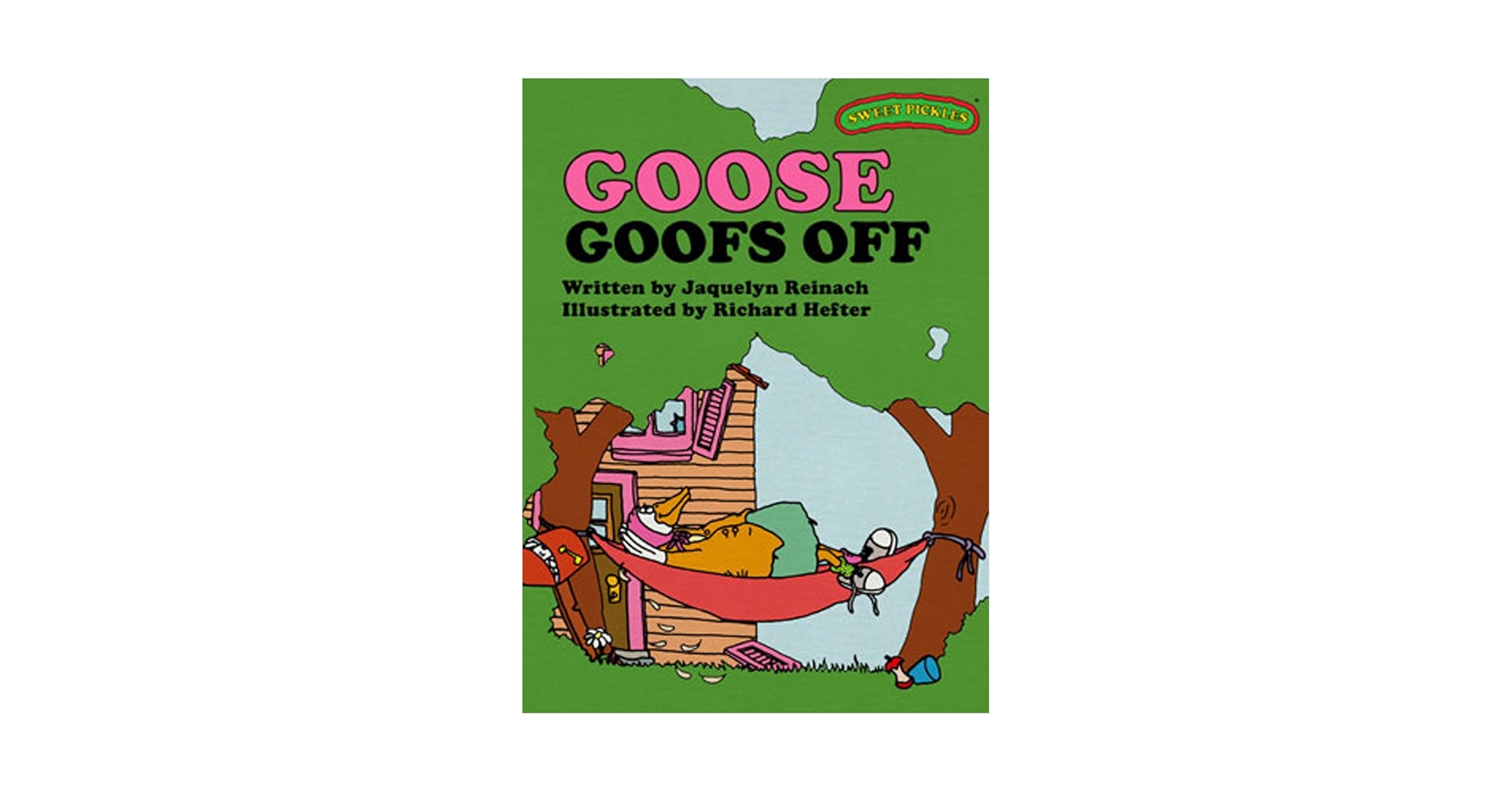









 John Davis Jr. -- Author