poetry, Uncategorized

A New Meaning for “Writing Rut”

Fall in Florida is difficult for visitors to detect. We don’t have glorious leaf color changes, the temperature doesn’t dip drastically, and more often than not, our autumn feels like extended summer to those from beyond the state line. But natives and those who have lived here for decades can feel the subtle changes: Lower humidity makes the air a bit less sticky. Breezes begin to border on full-blown wind. And then there’s the change in sounds — the trees themselves, as the weather grows drier and slightly cooler, take on a different pitch as their boughs are swayed by a new incoming season. Birds’ songs grow a bit more excited and resonant as they prepare for a colder period yet to come. No, Florida’s version of fall might not be as visually grand as the displays in other parts of the country, but it’s a poet’s best friend. It requires heightened sensitivity, and is perfect outdoor weather for time in nature’s splendor.

All this reflection takes me back to my boyhood and adolescence, when fall also meant deer hunting season. This post is no rant for or against the act of hunting, but is instead intended to give a new definition for a very old term: For hunters, the word “rut” means that animals are seeking mates and are active in the woods. They forage, they frolic, they are generally more lively during mating season or “rut” than they are during more docile times of the year. Much like some big game animal, I’ve noticed that I also am enlivened by this time of year. Its different sensations and its invigorating climate make my “poetic brain” shift into overdrive. My wife has noticed this over our 10 years together; fall means that my writing takes a front seat.

So, rather than being a victim to a “writing rut” under its old definition — a time of hindered or stilted writing production due to “writer’s block” or other problems — perhaps we as poets and writers need to reclassify this term. Take a lesson from the hunters: Rut is a time for greatest activity, and so, let’s proceed into this autumn’s mating season of ideas with utmost optimism and highest ambitions for our work. Good luck, and here’s hoping you “bag” a few “trophies” along the way.

poetry, Uncategorized

You win some, you lose some…

Some days you have to ask yourself, “Is it really worth it?”


Recently I received a letter in the mail informing me that I had (yet again) not been selected as the winner of a recent writing contest. Not a great surprise; I’m pretty used to getting bad news from publishers. This particular one, though, had my hopes really high — the contest judges were known for favoring my type of poetry, I had closely studied past winners and their work, and in general, I had prepared myself to take on this contest with the dead-level best of my abilities.

So much for that. In response to this letter, I took some of my own advice and revamped the manuscript, added in newer, even more high-quality works where they best fit, and spruced up the formatting a wee bit. I don’t anticipate that these changes will ensure my victory over 500 or 1,000 other entries, but at least I feel better about the whole situation. I am, by the way, submitting the manuscript to two other contests in response to this news also. Down, but assuredly not out.

I suppose the point of this post is, if you’re going to be a poet, you have to take the bad with the good. As my mentors would say, be persistent and don’t get discouraged. When you know your work is good, it’s bound to find a home somewhere. Pardon me while I go get this beautiful collection ready for its next journey. I’ve got work to do.

poetry, Uncategorized

Mailbox Excitement

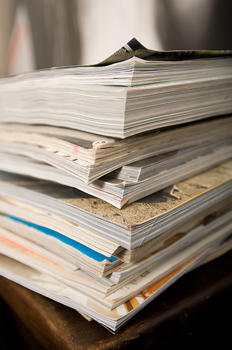
I admit it: I have a few reflexes left over from childhood. One such reflex is the automatic happiness that I feel when I reach into my mailbox and find the latest writing magazine has arrived. I recall as a child the days that magazines like Highlights or Boys’ Life would show up, and the sense of relevance that the delivery conveyed to me. I was not just anybody, I was a subscriber. Not everyone received mail, after all, and getting something delivered just to me was a special experience.

Today I celebrate the mail’s arrival for different reasons; it’s nice to get something other than a bill or junk mail, and equally, I know that my favorite writing mags will be loaded with opportunities for contests, publication, and the latest news about who is doing what in the literary realm.

Today, for instance, my latest Poets and Writers magazine arrived, and on its cover was Natasha Trethewey, our current poet laureate. Not only does her radiant countenance make a nice coffee table decoration, but the information I receive from P&W goes a long way to helping me achieve my goals as a writer. I don’t mean this to be a plug for their magazine only; I receive similar benefits from other publications, as well. However, I spend real time examining P&W, as opposed to glancing over the other mags for things I consider relevant.

Recently, I added the digital edition to my print subscription so that I can enjoy it wherever I may be. Now I have double the reasons to look forward to mail time.

Some things stick with a child forever — receiving something to read in the mail is certainly one of those, and it heartens me to know that my two boys enjoy getting reading material in the mail as much as I still do. As the media tells us that the USPS is on the verge of bankruptcy, I am saddened to consider a day when a walk to the mailbox is no longer part of life’s routines. The possibility and optimism of opening that little door every day is something I know that will miss, and I feel certain that others will, too.

poetry, Uncategorized

Hello, Neighbor

ImageImage

As a child, I watched Mister Rogers’ Neighborhood. It came on right after Sesame Street, which I sometimes watched, sometimes didn’t. But Mister Rogers offered children an avenue to escape — his land of make-believe, arrived at by way of the jingly-jangly trolley, may have been one of the first places that I understood the importance of using my own imagination.

The point of this post, however, is not merely to reminisce about television programming from my primary years. Instead, it is intended to reveal an epiphany about modern-day popular poets. Specifically, Billy Collins as an example. Many critics have lauded Collins’s efforts at raising public awareness of poetry. By that same token, many have criticized him for “oversimplifying” poetry, or making it “too accessible.” No matter how you feel about his contributions, however, Collins has that same presence, that same certain at-ease mystique that Fred Rogers had those many, many years ago: When you listen to Collins read, it is as though you, the listener, are having an across-the-fence conversation with a favored neighbor. His occasional dry wit and all-American approach make him a hit with universal audiences.

Just as Mister Rogers shed his formality upon entering his time with young viewers, donning sneakers and a cardigan instead of his preaching coat and dress shoes, it feels as if Collins is shedding the academic veneer so often kept up by other contemporary poets. He is here simply to speak with you, his listener, and perhaps his reader. It is this convincing stage initmacy that makes America love Billy Collins, just as parents and children adored the beloved Mister Rogers for so many decades. That sense of “everything’s okay” that pervaded the imaginary land of make believe equally is exhibited in the voice and presence of America’s former poet laureate. And in an age so full of insecurity and ugliness, time spent in the comfort and beauty of poetry’s surety is certainly time well spent.

poetry, Uncategorized

Simultaneous Submissions and Such

Flooding the market has its ups and downs

As an active working writer, I confess: I simultaneously submit work all over the place. A lot of journals these days have woken up to the fact that authors are going to be sending their work to multiple places at various times, and therefore, editors have broadened their horizons about simultaneous submissions — manuscripts sent to more than one venue at a time.There are a few journals’ bosses that still frown on this practice however; they assume that you must value their opinion so much that you would NEVER send your work to someone else at the same time. This elitist and frankly inefficient mentality is a holdover from a more Guttenbergian time, when “gentlemen” were expected to give their exclusive attention to one press at a time. Rarely do things operate in such a way today, though. Journaleers who expect writers to give them some kind of preferential treatment are as obsolete as tophats and typewriters.Recently, I submitted some pieces to a publication that included among its guidelines the statement, “We prefer no simultaneous submissions.” In my cover letter, I told the editors forthrightly that the pieces were being “shopped around” to other publications — if they want my work, they’ll have to come to grips with the fact that I have bills to pay and I operate largely on a “first-acceptance, first-dibs” basis. This isn’t some kind of snobbishness on my part; it’s just sound business practice. I want my work out there efficiently and presented well. Whoever does that the fastest and the best is the proverbial “winner.” If writers have to grapple with competition from others, why shouldn’t editors and publishers as well?Granted, the aforementioned publication might frown upon someone so recklessly disregarding their preferences, but at the end of the day, I know I have to face myself as a professional poet, and sometimes that means going against the grain. Here’s hoping I haven’t burned a vital bridge in the process…

Uncategorized

Rejections and Acceptances

As a young poet, I remember “swearing off” journals that didn’t accept my work. Some, I was gracious enough to grant a “three strike” rule: If they rejected me three times, then I was done with them. But the big picture was just this: I held grudges and gave the mental ax to any publication that didn’t think my work suited their editorial needs.

Today I’ve risen above that kind of pettiness, but I still harbor a few of my old prejudices about journals that don’t greet me with an eloquent acceptance letter. After all, rejection is hard to take — veteran or novice makes no difference. It just so happens that I have developed a system for dealing with rejections these days:

1. When a rejection arrives, and I know the submitted work has true literary merit, I will immediately submit somewhere else.

2. If the rejection is worded in an ugly, condescending, or rude manner, then yes, I “swear off” that journal. I don’t want to be published by people who are high-minded or rude to others. Obviously, I suspend this rule for longstanding, proven journals of cultural worth. Abrupt rejections are expected from places that have made themselves landmarks in the literary landscape. They’ve earned the right to a degree of snobbishness through their history and contribution.

3. If the rejection is well thought-out and the editor has encouraged me to submit again earnestly, then I will wait for a while and try them again, if it’s a journal that I admire or one for which I feel my work is well-suited. These places are few and far between, however.

In the same vein as these rules, I also have a rule about re-submitting to journals that have published me previously: I believe in waiting at least one year before submitting to places that have published me previously. It gives the editor a breather from my work, and it also allows me to seek out other venues for my work besides those that I know are “poet-friendly.”

I believe that every writer should have some set rules about dealing with rejections, whether they mimic those above, or whether they are completely opposite of the opinions asserted here. Only through persistence and critical analysis can writers reap rewards from even the sting of rejection. It’s part of the life, and the sooner one knows how to process it, the better things become.

Uncategorized

Honesty and Poetry

ImageAt what point is poetry TOO honest? Here’s a question I’ve been struggling with lately. There are some things that people just don’t want to know, and yet, poets have always had the propensity to “overshare” every tiny scrap of minutiae that inhabits their lives. In a sense, it’s what we do.

Recently I wrote a poem that I know would be horribly unpopular with the modern literati because of its right-centric viewpoint and brazen language. What’s more, I’ve considered deleting the poem altogether just because it’s so blunt. Yet there’s always been room in poetry for verses that shriek personal truth — I’m just not certain that this piece is one I would personally be comfortable putting out there for the world to read. Yeah, I know; now you’re curious, right?

A couple of years ago, a friend of mine was banned from reading his poetry at an area coffeehouse near where he lives because he used politically incorrect language in his writing. People got offended (gasp!) and the owner of the joint “disinvited” this friend, telling him that his poetry should conform to the hyperliberal ethos of his establishment. Now granted, people could read explicit poems about sodomy and BDSM all night and feel free to do so, but a well-written poem from the other end of the political spectrum was grossly unwelcome. It seemed that open-mindedness was only extended to those whose viewpoint would meet with “house rules.” Hypocrisy at its finest. 

Questions for readers to ponder today: At what line does poetry become too revealing? Is there such a line, or is it only when we flirt with danger that real and raw emotional writing occurs? Is there room in today’s literary realm for voices of dissent from both sides of the proverbial aisle? Your comments appreciated.

poetry, Uncategorized

Pen Names and Identity

A week or so ago, I began contemplating using a pen name for manuscript submission. This move, I thought, would follow in a great literary tradition of authors whose work I admire. In consulting with my mentor through UT’s MFA program, however, several points were raised that I felt bore repeating here:

1. Using a pen name could mean that people won’t identify “the real you” with your work. That is, your persona or pseudonym receives the credit. Much like the ventriloquist plagued by the reputation of his puppet, authors too sometimes become overshadowed by the power of their pen name.

2. A pen name can serve as a hiding spot or a shield. Some people may consider this a good thing, but in the end, pen names can sometimes cause writers to avoid accountability for their words by blaming this “imaginary friend” of sorts. Comfort and liberation can come from this idea, of course, but at what price?

3. When people go into the bookstore, do you want them looking for work by (your name here), or do you want them seeking words by this moniker? True, you and your pseudonym may be one and the same, but there’s always that lurking barrier that arises through the use of another identity. In this society where we value openness and sincerity, pen names impart a certain shade or veil that readers today don’t necessarily enjoy.

In the end, of course, I decided against my proposed pen name. It was, at best, a passing fancy, and one best left in the annals of my writing history. If some day I decide to change course, I’ll probably take the Nora Roberts route: Let people get to know “the real me” first, then later write under an assumed name that everyone knows is mine in the first place. For the time being, I’m just me. As common and as average as my name is, it’s still mine.