Recently I’ve been expanding my cadre of skills, and as part of that ambition, I’ve started teaching poetry courses on Skillshare, a site where people quite literally share their skills. My first session is a “Reader’s Digest” version of a larger workshop I usually do for Firehouse Cultural Center, and it features photographic poetry prompts from my good friend Jim Futrell. (It’s also free, so no risk if you hate it) 🙂
I’m providing a link to my first attempt at this in the hopes that some of you will take a look at my ekphrastic poetry guidance and try out the exercise that I’ve posted there. It should be fun! Here you go:
In a few days, I’ll be headed to the dairy state of Wisconsin. I’ve never been there before, and this time, I’m going to be leading poetry workshops, giving craft talks, and even leading a fishing expedition and playing a little guitar (see prior blog entries for details).
While my wife has family in Wisconsin, my impressions of it have been largely shaped by a public school education and media stereotypes: I expect a place where the Packers are revered, cows are in abundance, “Butter Burgers” are considered a delicacy, and the English is tinged with a certain Nordic-based dialect. It will be interesting to see how my expectations are met or disproved.
One thing that I’m most looking forward to is the change of perspective that always accompanies travel. It’s nice to enter that head-space where everything is different and new, where you feel like an observer and guest instead of a traffic-slogging native just trying to survive the daily grind. Travel always means renaissance — a new beginning for thought and creativity.
It will also be nice to go somewhere that requires a shorter flight and a shorter drive. As much as I enjoyed (and was changed by) my family’s adventure to Lisbon, Portugal in 2016, I merely tolerated the 16-hour flight it necessitated. My sons were champs about it, and my wife loves anything that means an excursion is underway. Me? Not so much. I like leg room and unlimited mobility.
And my Wisconsin experience is not slated to be “the norm:” I won’t be visiting The Dells or posing alongside statues of football greats. Instead, I will be in isolated community (a seeming oxymoron, I know, but stay with me). My fellow writers and I will be housed at the Marywood Franciscan Spirituality Center, which is a pastoral setting deep in the woods. I’ll be near Trout Lake (which I hope lives up to its name), and the feeling of the whole experience will be significantly more tranquil than touristy.
So, here’s hoping that this brief time away yields some much-needed mental clutter removal and a little broader understanding of our country, as well. Just as my earlier summer sojourn into Appalachia allowed me some solitude for literary endeavors, this adventure should reignite my teaching passion while presenting chances to reflect. I plan to keep accounts of my trip here, so stay tuned…
A statue of Robert Frost, one poet whose legacy I admire.
I am mentoring a young writer, and I am grateful for her willingness to accept critiques and guidance. This woman is truly interested in making her unique work the best it can be while exploring the masterpieces of prior poets. Her outlook and attitude are precisely what they should be to achieve learning. She is well on her way to the next step in her maturity as a poet.
Too often, writing mentorships can evolve into counterproductivity for a number of reasons, beginning with a mentee’s desire to precisely emulate a mentor’s path. The truth is, no matter how badly we may wish to trace the steps of others, our journeys, literary or otherwise, will forever be our own.
Over the last twenty years or so, I’ve admired a number of poets whose trails have been admirable: They’ve won awards, published in esteemed venues, taught in prestigious institutions, and achieved many of the milestones that poets (rightly or wrongly) value. As a much younger man, I wanted to try to walk in the footsteps of those who had done the things I wanted to do and had been to the places I wanted to go, even going so far as to seek their same publishers or apply to their same fellowship opportunities.
I found, however, that those things weren’t right for me. Just as my mentors had experiences and encounters that were suitable to them as individuals, I likewise needed to forge my own path. Some authors are meant for the lights of New York City; I am not. Some authors revel in writing the grotesque and the disturbing; I do not. And still some authors hide from their readers and the public in general; I will not. I believe in celebrating the simple, recording the beautiful, and engaging earnestly with others. Some of my mentors have shared these traits, and some have not.
And while I’m grateful to have learned from a variety of literary personalities, I would be foolish to think that my road will look exactly like theirs. To extend the metaphor, my two-lane country gravel path is a far cry from their eight-lane high-speed interstates, and that’s really okay. This loud, bumpy ride I’m on has its own charms.
I hope that my current mentee finds her own way. If some of my voyage becomes hers, that’s fine. But each of us must blaze our own course. The fellow wayfarers who go before us, join us, or follow us just make the trip more interesting. Fare thee well, readers — enjoy the journey.
There’s been a lot of bad press about Catholicism lately, but then, there’s been bad press about pretty much anything having to do with God, religion, or faith, so that stands to reason. Anytime the media get a whiff of something potentially salacious or scandalous, it becomes a headline (I should know; I started out as a newspaper reporter many years ago). And this isn’t to excuse the egregious behaviors of offenders; victims deserve to be heard and justice deserves to be rendered in cases where horrors occurred. But I’d like to take a moment to take a look at the redeeming side of a denomination not my own.
I was born in St. Vincent’s Medical Center in Jacksonville, Florida the day after America’s Bicentennial. Forty-one years and three months prior to that event, my stepdad (who recently passed away) was also born there. The lovely Catholic hospital had crucifixes in every room, and the presence of nuns was a silent reassurance to patients including my mother, who was and is a dyed-in-the-wool Southern Baptist. So, my life began as a consequence of Catholic benevolence, among other factors.
Fast-forward 10 years. I am sitting in my fifth grade class, and it is the last time school will appeal to me until I hit age 30. The reason I still semi-like school in 1986 is mostly because of my teacher, a phenomenal educator/second-mom who happened to be Catholic. Even with all my issues (and there were many), I was still treated by her as though I had rich potential for great things — musically, creatively, and academically. In her fair but compassionate eyes, she saw a student who desired attention, so she made me the “leader” of class songs. She saw a boy who was drawn to more sensitive endeavors like story writing, so she gave me time to pursue them. My school life was made more tolerable, even enjoyable, because of a Catholic educator who chose to work in a rural public school as her mission field.
Jump now to my adulthood: While attaining two graduate level degrees in subjects I actually like (education and creative writing), I attend the Glen West Workshop in Santa Fe, New Mexico — a city populated by statues of St. Francis on numerous corners and where the famed Loretto Staircase is found. The workshop is run by IMAGE Journal, whose editor at that time was (and still is?) Catholic. I am attending the workshop on a scholarship, donated generously by a local Catholic family. Without their assistance, I would have been sitting at home, twiddling a number two pencil, and wishing I could be among like-minded poets.
While I’m at The Glen, I meet a charming woman who is in the process of becoming a Franciscan Sister. We chat over matters ranging from theology to literature, and we participate in workshops that refine our writing while celebrating faith. I attend a homily given by a Benedictine monk, and it makes me think deeply, reflect upon my own beliefs, and inquire further.
Another year passes, and the woman I met at The Glen is now a full-fledged Franciscan Sister of Perpetual Adoration. She messages me online to tell me that America magazine (a Catholic publication) is holding a poetry contest. She thinks my work might be a good fit. I submit a little something. My poem “Skeletal Prayer” takes runner-up, and I’m elated. The news of the win comes at a time when I’m thinking about abandoning poetry altogether, so I keep going. What’s more, my financial adviser sees the poem and sends me hearty congratulations. Life is good and getting better.
And now, to the present: In 10 days, I will be presenting poetry workshops and craft talks at Marywood Franciscan Spirituality Retreat Center in Arbor Vitae, Wisconsin. This invitation to teach and write is the result of meeting the aforementioned Franciscan Sister some years ago. It should be an interesting time; I’m learning what a Taize service is (since I’ll be playing a little guitar for it), and again I find myself standing at the intersection of Faith, Art, and Mystery. I can hardly wait to try my hand at this new experience.
My life has been repeatedly and favorably influenced by Catholic forces well beyond my control. As I teach my college students Flannery O’Connor short stories and draw inspiration from minds like G.K. Chesterton, I’m reminded that, even though my Protestantism may be firmly intact, it is only because of Catholicism that my birth, my education, and my literary life have been what they are. And for that truth, I am continually grateful.
43 is not a big deal. 43 is ho-hum, I’m not 40 anymore but not old enough to get a senior coffee at McDonald’s. 43 is having risen to middle management only to find that it’s not paradise, but you need the paycheck, so, well, here you are, and at least you’re experienced enough to know what to do.
When you add the digits of 43 together, you get 7, which is supposed to be a lucky number. Also, 43 happens to be my old rural route school bus number. Being 43 means having been bald long enough not to care and actually preferring your head that way. 43 apparently means developing grays in your remaining “horseshoe,” though, and in sporadic clumps that exactly reflect the degree of stress from two sons: right side of the head = oldest, left side of the head = youngest. I’ll let you guess which gray patch is bigger.
43 means most of the people in the generations before yours are now gone from your life or are headed that way, and you better know how to handle it. Grief doesn’t get any easier, but by now you’ve had to be involved with the nuts-and-bolts of people’s passing and so you know what’s coming from a practical standpoint. It still sucks, though.
43 is wondering about the retirement fund, holding on to a final few lifelong dreams that haven’t yet been achieved, and praying that the kids get hefty scholarships for college. 43 is thinking about who you might eventually become as a grandparent, then quickly throwing that thought aside while assuring yourself you’re too young to think that way. “Isn’t there some work I need to do?” you ask.
43 is regular dentist visits, cardio, and worrying about whether diet soda causes dementia. But it’s also the place that the older generation calls “the prime of your life,” that space where you can make your biggest difference since you’ve been around long enough to gain a little wisdom, but you’re not so old that you’ve burned out.
43 means deciding whether to be “the company man” like others before you, or continuing to change employers every few years just to keep things interesting. Do they still give out gold watches for years of service? Do you even want one? Decisions, decisions…
Maybe above all else 43 means having the maturity to think about what 43 means. You’ve learned to reflect, to think about your thinking, and to be thankful for the path so far. And barring unforeseen circumstances, you’ve got a good bit of road ahead, so you might as well get busy.
Not too long ago, someone told me to quit submitting my work to small journals. “I’ve never even heard of half of these,” he lamented. “Your work deserves to be in bigger places — you know, like The New Yorker or something.”
Don’t get me wrong: I’m among the great morass of writers submitting their poetry to The New Yorker every year. It’s almost like a custom of sorts. I send something, and six months later, I get their standard rejection. C’est la vie.
But to completely abandon the small, independent magazines to exclusively focus on getting published in “major” venues would be both foolhardy and counterproductive. Small journals have, for decades, provided my work with a home that has become gratifying in different ways.
One of the greatest rewards of “submitting small” occurs when that tiny publication really takes off. Take, for example, Deep South magazine. Erin Z. Bass, who has become a friend of mine, started this little venture years ago when I was still getting my feet wet in the literary realm. She published some of my fledgling work, and since that time, she’s provided a home for some of my more mature poems as well. It’s been great to see how her magazine has thrived, covering food, culture, literature, and the broad array of southern life topics. With pride, I tell people I’ve been published there. Had I kept my work for some “bigger” magazine, I never would have been part of this success story.
Smaller journals also nominate for awards. Not that big publications don’t, mind you, but more often than not, I’ve found my work gets nominated for prizes when it’s been published in little places. These journals’ editors appreciate the well-crafted line, the strong image, and the dexterity of wordplay. As a result, they will often nominate work exhibiting these qualities for the Pushcart Prize, Best of the Net, and other recognition. I’ve always enjoyed the potential of having my work nominated unexpectedly. It’s a pleasant surprise and one of the perks of doing this work.
Finally, the literary community only works when we all pull together. What if everyone strictly contributed to mega-zines? The little voices that are so necessary to a civilized and well-read society would dry up, and we would all be forced to consume the standard tastes of a select few big shots. Boring! The little journals ensure that the broadest diversity of voices is presented. Let’s face it: Not everyone is going to love poems about rural life, generational customs, and historic landmarks, and yet this is what much of my work addresses. Without the small mags, these creations would remain safely tucked away inside my laptop. But instead, there are editors out there who recognize value in a breadth of experiences: urban, suburban, and yes, rural.
I will continue submitting my work to the up-and-coming journals. They do good things. Certainly, I’ll take my shot with the “name brand” magazines as well — it’s part of being a writer. But don’t expect me to withhold good work from a place just because it’s not as lauded as the monolith publications. If we’re eager to hear from a wide variety of experiences, the small magazine must thrive. And it’s up to writers to help it do exactly that.
In the Christmases of my youth, my dear (now deceased) Aunt Martha always bought me a yearly subscription to a very popular writing magazine. Novice scribblers religiously scoured its pages for insights to getting published, receiving recognition, and of course, winning those all-important writing competitions. Article titles included such enticements as: “10 Secrets to Crafting a Contest Winner” and “Win That Award! Top Writers Tell You How.”
In the body of such articles, glittering generalities and pseudo-motivation reigned. Typical promises: If inexperienced writers simply use Times New Roman 12-point font, keep their cover letters brief, and “write with their heart,” they will magically become gold-medalist poets/short story writers/novelists/whatever. Other suggestions included such wisdom as, “Be sure to center and boldface your title” and (perhaps my favorite) “Don’t thank the contest sponsor or judge; it shows a lack of confidence.” Gee, thanks.
The unfortunate truth is, no one approach (or set of rules) will guarantee a contest win — ever. The world of publishing is incredibly subjective. What one editor or judge loves, another will hate (and vice-versa). You can “always submit your best,” as the old saw goes, and still come up empty-handed when the laurels are passed around. Such is writing life.
Just as writers learn to expect rejection, we also learn to live with losses. Defeat is especially disheartening if you paid a big submission fee. Of course, the good side of this issue contains another truth: Stick around long enough, and sooner or later you’re bound to win a few. Even little contests feel big when your work has won, and it’s gratifying to learn that someone somewhere (even at the tiniest of journals) has appreciated your work enough to award it.
I’ve been writing “real” poetry for about 20 years now, and in that time, I’ve had the joy of being nominated for the Pushcart Prize five times. My 2014 book, Middle Class American Proverb, was nominated for both the American Book Award and the Florida Book Award. Yet for all these nominations, I’ve never quite ascended to the winners’ platform. I guess I could throw myself a pity party and moan, “Always the bridesmaid, never the bride,” but truthfully, I appreciate just being nominated. In retrospect, a small-town poet like me getting Pushcart nods and similar tokens is a pretty big deal. Sure, I’d like to win one day, but poetry is a marathon, not a sprint or a dash.
And of course, this isn’t to say I haven’t won my fair share of contests. Going all the way back to 2002, I won the Wesley Ryals Writing Award for Poetry from my first alma mater, Florida Southern College. Later on, I was among the winners of the Robert Frost International Poetry and Haiku Contest put together by The Studios of Key West. My work has won me scholarships and partial scholarships to places I would never have traveled otherwise. I’ve also been a runner-up in America magazine’s Foley Poetry Contest. So, I’ve done all right. And if you stick around, you probably will, too.
Another advantage of time: I’ve served as a journal editor and a contest judge over the years, and those roles allowed me to see things from the viewpoint of a decision-maker. It’s tough to cull out writing that is “soooo close,” but inevitably it happens. Here again, what I liked wasn’t necessarily what others liked. The things I rejected would have been accepted by someone with different tastes. But in the end, someone has to be declared winner. Sometimes, just knowing you’re a finalist, a semifinalist, or an honorable mention can be motivation, and that happens quite often when your work is satisfactory.
Keep going, writer. Don’t get seduced by “secret formulas” or “sure-fire ways to success.” There’s a reason that the magazine my Aunt Martha gifted me every year recently filed for Chapter 11 Bankruptcy. The allure of pretty-sounding logical fallacies and empty promises can only be sustained so long. For the devotee of words, everything will eventually happen the way it’s supposed to. That includes winning contests, getting published, and achieving other milestones. Don’t quit. Persist. That’s how you win.
Recently I had a piece published by a journal that is edited by someone who has received, shall we say, “mixed responses” from the literary community. This editor’s political and religious views are certainly not “mainstream” in the poetry world, for certain.
That being said, I love this editor’s written work and [their] journal’s style. The fact that this person has been berated for unconventional beliefs is inconsequential to me as a writer. If anything, I admire the editor more for that willingness to stand on principles, whether I agree with them or not.
Nonetheless, I’m aware that in the future, my work being published by the editor’s journal may be a “dark mark” against my name. Guess what? I don’t care.
Too often writers inform their choices based on what is “acceptable.” I have reached a magical middle age where such considerations don’t enter my radar anymore. Good journal? Submit. Bad journal? Don’t. It’s really that simple. I don’t base my submissions on who nominates how many for which awards. I don’t look at percentages of rejections or acceptances. I don’t even give an inkling to a publication’s “prestige.” I send my work to places I respect. The end. Accepted? Hooray! Rejected? Keep going.
“But don’t you want to be on ‘the right side of history?'” my socially concerned friends may ask. My answer: Not especially. The annals of literature contain heroes and villains alike — those we’ve forgiven and those we haven’t. If I’m eventually judged by the same politically correct mob that hates the Fugitives but adores Ginsberg, so be it. Their sensitivity to prevailing mores has blinded them to a great span of sterling work, and frankly, my words aren’t for them anyway.
My poems speak of old-fashioned values, hard work, forgotten places, and flawed people. These topics exclude me from certain bookshelves, and that’s okay. Furthermore, it’s equally okay that my work is published in places that may one day “fall from grace.”
For today, my poetry is there, chosen by an editor who might or might not share my vision of the world. If that bothers you, dear reader, please heed this message: None of us is perfect. Let’s forego the hypocrisy of pretending that any man-made philosophy is fallacy-free and just enjoy the show. History will write (and right) itself.
I’ve written before about how this year will be one where I spend some time in other locales for the good of my writing (see “My Hemingway Summer” — an earlier post on this blog). When I travel even short distances for writing purposes, my brain begins making observations and connections that it typically doesn’t make during my everyday routine. For example, during residencies for University of Tampa’s MFA program, I would find deeper significance in even the tiniest of details around me. A pile of bricks I passed daily on my way to workshop became a poem. The creak in the stairs of Plant Hall wound up documented in another piece. Every minute detail seemed to come alive with literary potential.
The same thing happened when I traveled to Lisbon, Portugal in 2016 (Disquiet International Literary Program), to Amherst, Massachusetts in 2015 (Juniper Writers Institute),and to Santa Fe, New Mexico in 2013 (Glen West Writers Workshop). But all the inspiration in the world is worthless without the right tools to take advantage of it. So without further ado, here’s my list of necessities for the writer on the road:
1.) Small pocket notebook with cheap ballpoint pen: I stole this idea from one of my mentors, Peter Meinke. He has always advised poets young and old to carry something with them to record inspirations. First lines, striking images, and clever turns of phrase are just a few of the things I find myself scribbling into my small pocket notebook, and that happens more frequently when I travel.
2.) White, college-ruled legal pad and good fountain pen: When the inspiration strikes and the ideas are flowing into developed, coherent stanzas, this set of tools becomes my go-to. Whether I’m at a hotel room desk, a coffee shop, or in the middle of the woods, the old standby of writing by hand on a good, stiff pad remains an important part of my creative process. I may have mentioned it a time or two previously, but for fountain pens, I prefer Waterman Phileas models. A good ink in a unique color also helps — see Levenger.
3.) The latest copy of Poets and Writers magazine: When the muse has cooled and I’m thinking about more logistical matters (where to submit, what contests to enter, etc.), I like to peruse the pages of P&W. Their interviews are excellent, their prompts timely, and their resources consistently useful. Maybe it’s a Luddite reflex to prefer the paper copy of the magazine to the digital version, but it’s nice to be able to annotate, highlight, and even tear out pages when needed.
4.) A traveling library of a few essentials: There are some poets whose work manages to inspire me again and again: Robert Wrigley, Rodney Jones, Claudia Emerson, Maurice Manning, Kevin Young, and C.D. Wright, to name just a few. I usually pack a few volumes of poetry I admire to look over when I’m between sessions. Sometimes I read them for leisure, and other times I’m performing serious critical analysis. Either way, they work their magic.
5.) Technology? Well, maybe just a little… Before anyone gets the idea that I scribble monastically on parchment with a quill, let me say that I like my tablet-laptop combo as much as the next guy. But I try to steer clear of the screen as much as possible when traveling for writing purposes. Only when I’m truly ready to create a final draft of something or when I feel that courtesy dictates I should check email do I return to the glowing square of distraction. In the evenings when there’s time, I might post a few social media updates just to keep friends happy. But the whole notion of getting away is, well, getting away. I don’t even use the same brand of soap I do at home when I’m on the road. I want a complete contrast with my normal life. Toward this end, I also abandon unnecessary technology use. It cuts down on procrastination, and it lets me see the world around me more organically.
So, there you have it. Five things (or groups of things) I tend to carry with me on writing adventures. I’d be interested to hear in the comments what items you just can’t live without when you attend a retreat, conference, workshop, or seminar. Do you prefer a particular brand of coffee? Is there a doodad or whatnot you superstitiously pack? Whatever it is, I wish you great travels and great writing in the future. Here’s hoping for a highway full of words to fill our pages.
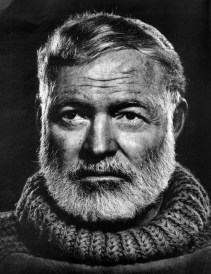
When I was a younger man, I desperately wanted to be the next Ernest Hemingway of poetry: a rugged outdoorsman and adventurer extraordinaire who happened to scribble meaningful words. I think every writer goes through that phase sooner or later. George Saunders, for example, regularly confesses to a time in his life when he was striving for his prose to mimic that of “Papa.”
I haven’t fought any bulls or driven any ambulances overseas, and surprisingly enough, even though I reside in the Sunshine State, I have never landed a giant blue marlin (or any other large saltwater fish, for that matter). However, once in a great while, I encounter an opportunity that combines Hemingway’s two great loves: travel (usually in natural settings) and writing.
Such was the case in 2016, when I spent 16 days in Lisbon, Portugal. From the food to the language to the music to the memorable landmarks, that city and its surrounding areas made me feel like the reincarnation of some Lost Generation member — enjoying the days and nights in a European setting, chatting casually about artistic concerns with like-minded others. Even now, certain Lisboan influences still enter my work from time to time.
And this summer presents a similar (though more domestic) opportunity. For one week in early summer, I will be attending a writer’s retreat in the Cumberland Gap area of Tennessee. The natural splendor of the area combined with solitude should produce some favorable results. My plan is to work on poetry for half the week and prose for the other half, but we’ll see what the muses have in mind. I have two manuscripts in the works, and there’s no telling where creative isolation may lead.
Another perhaps more Hemingway-esque event that I’ll be helping lead this summer can be found at the Marywood Writers Retreat in the Northwoods of Wisconsin. While there in July, I’ll be leading poetry workshops and also serving as an unofficial fishing guide — A “fish with the poet” event has been planned, and, having never fished in Wisconsin previously, I’m excited by the prospect. Granted, I’ve caught plenty of bass, bluegill, sunfish, catfish, and other freshwater species south of the Mason-Dixon, but that’s a whole other world, from what I’ve been told. (Note to anglers — please feel free to drop good fishing advice in the comments section below if you’ve got it. I’ll trade you my “best” poetry advice.)
But whether I’m reeling in the big one or attempting to pen a masterpiece, I am hopeful that the spirit of Hemingway — the spirit that seizes the world by its lapels — will work its magic. And I hope that you too, reader, will find joy and inspiration as warmer months finally arrive. To good times and good writing: Cheers!
 FLteacherpoet555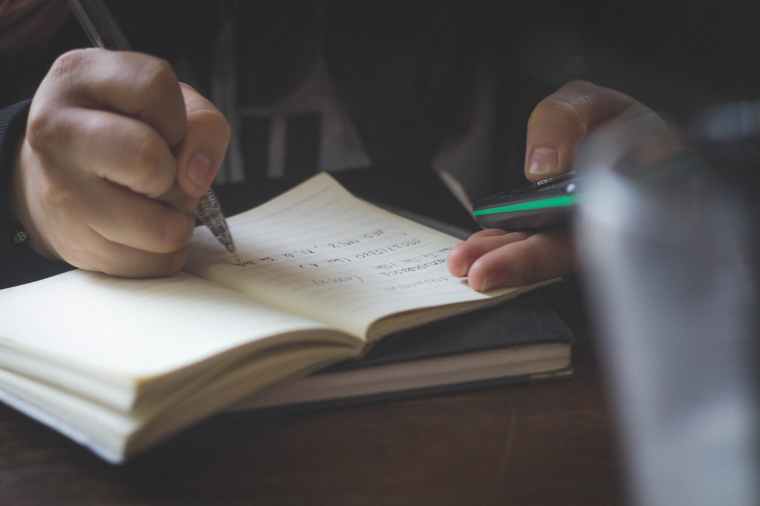

 A statue of Robert Frost, one poet whose legacy I admire.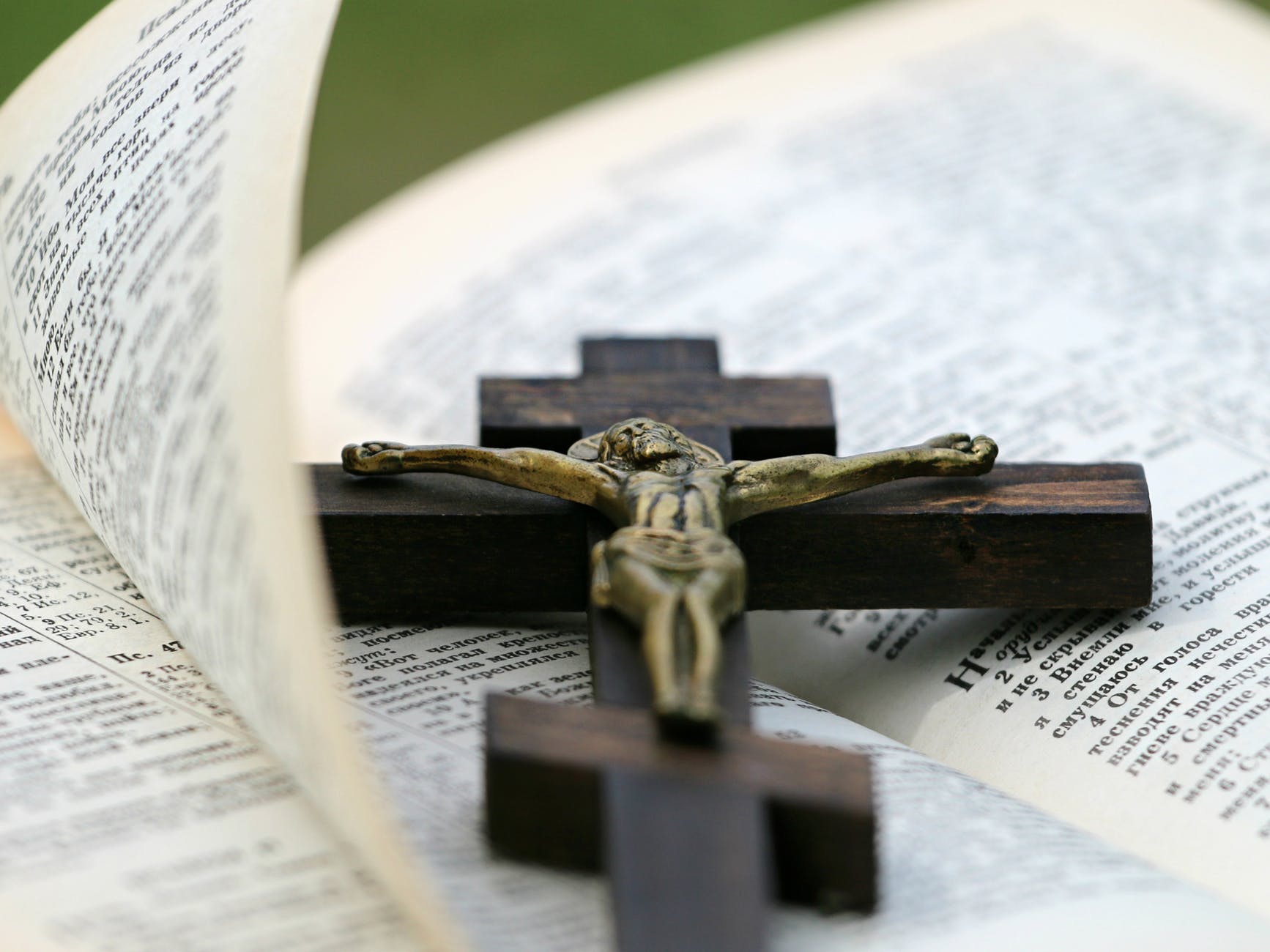


 When I was a younger man, I desperately wanted to be the next Ernest Hemingway of poetry: a rugged outdoorsman and adventurer extraordinaire who happened to scribble meaningful words. I think every writer goes through that phase sooner or later. George Saunders, for example, regularly confesses to a time in his life when he was striving for his prose to mimic that of “Papa.”
 John Davis Jr. -- Author