We always picked on my grandmother about her birthday falling on the day after Halloween. One year, she got a leftover witch cake from the Publix bakery to help her celebrate. Of course, she also claimed that All Saints Day was fitting and appropriate for her birthday — “I’m a saint, after all,” she would say, winking at whomever she was talking to.
My grandmother was one of many family members who introduced me to books and a love of reading at an early age. Every day at my appointed toddler nap time, she would read me the same Sweet Pickles book: Goose Goofs Off. It was about a goose (shocking, right?) who decided to put off doing all her chores. The procrastinating protagonist’s classic line was: “I’m taking it easy today; I’ll do it tomorrow.” Her laziness creates havoc in the story, causing a mailman to slip on ice cream among other mishaps. But in the end, Goose’s neighbors are kind to her and allow her to join their party, despite her sloppy work ethic.
How my poor grandmother did not tire of this story I’ll never know. But the daily reading of it became ritual, like church on Sundays or bath-time before bedtime. And her reading was expressive, engaging, and funny — a happy preamble for midday sleep. Occasionally, she might read me other stories during parts of the day that were unoccupied by Play-Doh art, Bob Barker’s “The Price is Right” (which I called “the come-on-down show”), or playing outside. But Goose? She was a sacred landmark in our days at home.
In 2011, my grandmother passed away, but her legacy of loving literature lives on. This Saturday, the day after Halloween, on what would have been my grandmother’s 104th birthday, my middle-grades novel, Vidge Floyd and the Secret Frequencies, will be released for sale. I cannot think of a more fitting date for this book to come into the world. It will be available as a paperback, in hardcover, and as an ebook (a concept my grandmother would have mistrusted at first, loving traditional books as she did). In fact, you can preorder the Kindle version of the ebook here: Vidge Floyd and the Secret Frequencies. Honestly, though, I think my grandmother would like for you to wait on the “real” book — one that can go in your bookshelf or on your nightstand. And who knows? Maybe this fun fiction debut will wind up becoming a favorite of a young reader in your family. She’d like that, too.
As the age of screens and endlessly blinking text continues, there is a need for a return to the gracious, studious, and considerate world of letters. That’s right, the kind that come in your physical mailbox. You get to hold in your hand an artifact — a piece of living history sent to you by someone who cared enough to share with you something about their life. That’s why I’ve abandoned Substack altogether in favor of a new, better, more human alternative: StampFans.
Using this service, I will be able to send you, my subscriber, some rich insights on poetic life. Each month, you will receive a letter that contains one of my poems, an explanation of its inspiration, and some details about its actual creation (number of drafts, materials used, etc.). I’ll also be including announcements about upcoming publications, appearances, workshops, and similar engagements. As a teacher, I’d love to receive something like this from my favorite poets. I’d use it in my classroom regularly, and I hope other educators feel the same way.
While I’d hoped that my presence on Substack would be as successful and meaningful as my time on WordPress has been, I’ve learned the hard way that the audience for poetry is much more receptive to personal, physical communication than it is to just another online presence. With this in mind, please subscribe to my StampFans so that you too can receive good news, good reading, and something more uplifting than junk mail. I promise that your modest investment will be richly rewarded. I eagerly await your subscription, and I can hardly wait to share this window into my work with all my WordPress family! Thank you in advance for your support of Metacreativity: The Process Behind the Poetry .
To my subscribers, friends, and fans: Sorry for the notable quiet over the last few months, but I’ve been hard at work on something new and fantastic which I’m sure you’ll enjoy. Read on…
My newest poetry book manuscript has at last come together, and I’m delighted with it. Featuring many poems that have been previously published in esteemed journals like The Common, Tupelo Quarterly, and elsewhere, this (currently) 70-page collection represents a return to themes that deserve further exploration: History, Work, Upbringing, Fatherhood, Maturity, Nature, and Faith all make appearances as they have in previous collections of mine, but this time, there are added bonuses. Without saying too much, I can promise you that there is something in this collection for everyone.
I am presently querying publishers and seeking the best fit for this newest book, and as soon as I’ve reached an agreement, I’ll be sure to post the good news here. For now, I’d like to wish everyone a happy National Poetry Month! Keep reading, and thank you for your support!
This year’s National Poetry Month poster from the Academy of American Poets
Not my house, but wouldn’t it be nice? Photo by Sami Aksu on Pexels.com
When I attended the Glen West Writers Workshop in Santa Fe, New Mexico back in 2013, I remember being shocked at the lack of air conditioners. Surely, I assumed, I’m going to roast at night. My charitable hosts told me to keep the unscreened windows open (which my Floridian brain immediately equated with MOSQUITOES), and I’d be more than cool enough. There were trays of lavender in the windowsills to keep out the scorpions. I took them at their word, and sure enough, evening temperatures dropped to a comfortable (even chilly) low, and no insects or lobster-looking arachnids entered. Also, being far out in the New Mexico steppe meant no human intruders tried any funny business.
When I was a boy, my family and I travelled to North Carolina to visit some family members near Highlands. There also, I was told to sleep with the windows open and things would be cool enough. Granted, these windows had screens, but an eager listener could still hear all the nocturnal sounds of the mountains, including owls, rustling varmints, and the occasional stir of trees as breezes came and went. It was one of the most peaceful feelings I recall.
It was not uncommon for me to sleep with my tent windows totally unrolled to expose the screens when I was becoming an Eagle Scout. In Florida, every little whiff of passing air helps tame the intense humidity during most of the year, and a completely zipped-up tent is really nothing more than a sweat lodge. Sleeping with the window flaps down allowed me to see stars and listen for racoons, bears, opossums, or other night visitors in camp. I still slept well, and I remember feeling very close to nature, despite what many would have considered exposure and vulnerability.
Why, you might ask, am I recalling these episodes? The other night, I went to bed without closing my sun porch windows. One would think that such an oversight would result in burglary or other potential dangers. But no, when I came out onto the sun porch the next morning to do a little writing, things were dewy and even a little cool (by Tampa standards), but nothing had been disturbed. The sensation of the porch brought to mind all the other times I’d been allowed to keep windows open at night, and it conjured up an apt metaphor:
In his book From Where You Dream, Robert Olen Butler speaks of writing during that state between sleeping and waking. In other words, write as soon as you get up to tap into that portion of your brain where dreams originate. I believe that the converse of this is also true: When one lies down at night, deflating from the events of a day, the brain begins its filmstrip of previous images and important snatches of things noticed. That is, our “windows are open” in a sense. We are able to vividly piece together disparate ideas by sensing the outside world in a distanced but connected way. Neurologists and psychologists agree, and the emerging brain science behind creativity indicates that people entering or leaving the REM stage of sleep are most capable of allowing the brain to resolve issues the fully conscious mind cannot. This is also why some forms of meditation are effective for helping the mind filter matters down to their essence.
As a writer, I’d like to have my “windows open” all the time. That way, I could channel inspiration and figure out how things are connected more immediately. But to live in such a constantly enlightened state would probably be too sublime — it would remove the challenges that form human experience as we know it. Robert Penn Warren once said, “How do poems grow? They grow out of your life.” Having occasional “windows-open-at-night” moments is satisfactory; too many would make them mundane, not unlike living where you vacation.
For now, I’ll take the infrequent moments of epiphany. They’re what make life as a writer unpredictable and entertaining. And besides, I can’t sleep with the windows open all the time — it’s Florida, after all, and the whisper of A/C and the tick of a ceiling fan have their own certain charms.
Recently, while I was at a month-long literary function, I had a gentleman approach me after I’d read my work one evening. He bashfully said, “Don’t take this the wrong way, but you don’t present as a poet. No one would ever guess that you write poetry.” By this, he meant that I don’t look like the poet-type, which in his mind included “nonstandard” clothing, diverse choices regarding hairstyle, piercings, tattoos, and other hackneyed hallmarks of eccentric artists. He also probably meant that I don’t sound like a modern poet, given my native Floridian dialect, one which people often mistake for an accent found elsewhere in the South (I’ve heard guesses ranging from Georgia/Alabama to Texas; it’s always fun).
He went on to compliment my work, praise my reading, and buy my most recent book, all of which I appreciated. But his other words stuck with me; what (if anything) should I be doing to brand myself better as a poet? Would such a choice put my audience more at ease with me? Should I adapt to the common appearance code expected from literary individuals? After allowing these inquiries to rest a while in the recesses of my brain, I came to a conclusion.
In an age consumed by ideas of identity and persona, I choose to remain the most all-encompassing version of myself. Yes, I’m a poet, but I also “wear the hats” of husband, father, teacher, pretty fair gardener, and many, many other roles. Not all of these need to be on display all the time to assure the general public that what they see is what they get. The literary community has long prided itself on embracing differences; one wonders if this attitude includes someone who dresses like a banker, talks (a little) like a cowboy, and is built like a manual laborer. Is there room at the table for one who chooses to look more like Billy Collins and less like Post Malone?
My “average” appearance for readings and events.
For all its good intentions, the writerly crowd still struggles with a one-sided view of diversity. Many patrons of the arts still look to skin hue, pronoun choice, and other superficial indicators to determine if someone meets their criteria for “creative.” There is some fun in defying these expectations, but there is also concern that we remain in an era where, despite hue and cry for “acceptance,” some members of a reading audience determine works’ worth by the author’s aesthetic choices.
As an educator, I have a piece of advice I offer to high school students who are attempting to express their individuality through fashion choices, body changes, and attention-getting behaviors: “Nonconformity is the greatest conformity here. Yes, you’re different…just like everybody else.” This often grates on the sensitivities of adolescents who feel certain they’ve struck true originality gold, but it remains true. Altering the cover of your book isn’t going to edit its contents. I don’t plan to change mine anytime soon.
The title of this post is a question I often receive. Whether it’s in a writing workshop, a traditional classroom, or simply in casual conversation, people regularly inquire about the origin of creative ideas. Second only to this question is, “What do I write about if I’m not inspired?” Today’s post is an effort to answer both of these common quandaries with a single practice: Socratic Journaling.
Anyone who has spent a moment or two in school knows about the Socratic Method — that time-honored practice of invoking thought through questioning. First mastered by its namesake, Socrates, the method has served educators well over the years. And even today, we can use it to generate great ideas and to “get unstuck” in creative writing using a technique I pioneered over the course of 15 years.
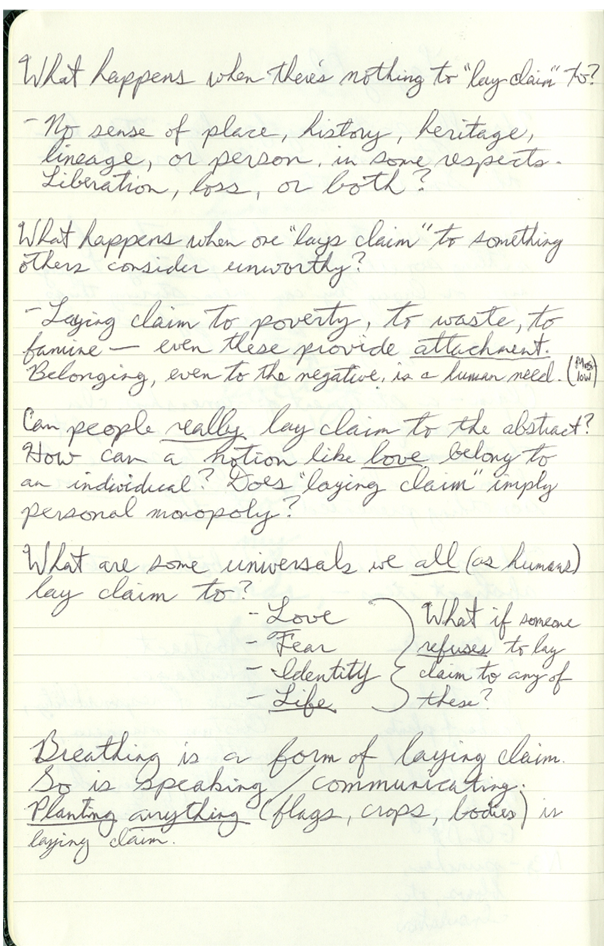
Socratic Journaling works like this: A writer begins with a “big” question (ideally, this should be one that is fairly philosophical or abstract) and answers it swiftly, almost without thinking. That fast answer then leads to another question, which leads to another answer that also then gets questioned. This process repeats until the writer finds within their questions and answers a subject to write about. See the example of Socratic Journaling below to get a better idea of what this process looks like:
A sample of my own Socratic Journaling that eventually led to a poem that was published.
In the sample above, I examined the nature of a simple phrase I heard growing up: “Laying Claim.” I thought the expression was odd, and so I gave it a thorough analysis through the wringer of Socratic Journaling. The result was a poem that integrated many of these initial wonderings and supplemented them with strong imagery. Occasionally, the act of asking and answering and asking repeatedly yields something different:
A response to a curiosity I had about sash weights in old farmhouse windows. This, too, became a longer poem later.
Drawings, scraps of curious artifacts, and other non-text items can often wind up in the pages of a good Socratic Journal. Historical notes, scientific questions, and even the logging of sensory impressions can serve as good kindling for the fire of creativity. By asking and answering sequentially, we break the often self-imposed limitations on our inspiration. This practice represents a kind of liberation, an unmooring from the safe harbor of pragmatism, and a break from mundane normalcy.
The great American poet Theodore Roethke once advised young poets to “…live in a state of constant astonishment.” Socratic Journaling aids in this quest for seeing wonder in everyday life. As the holidays arrive, what better gift could someone give than inspiration? I have collected and published some of the biggest “starter questions” for creatives of all sorts in the workbook pictured above. To give the thinker in your life a real present, spend $10 and watch their inspiration thrive as they encounter The Socratic Journal. Not only will you be providing the recipient hours of creative engagement, you’ll also be helping out a poet and educator who has some holiday bills of his own to pay.
Obviously, I’m a big believer in Socratic Journaling, not just because it has worked for me as a creative over the years, but because it has served so many of my students so well. When young writers especially feel mental drought, this practice stimulates them back into productivity. And if it works for the young, it can work for the…shall we say, mature? Give this a try. You won’t regret it. Thinking more deeply and more creatively is an incredibly rewarding experience, and The Socratic Journal can get you there. Click the link below to get your copy:
Lately, I’ve been looking over some of the writing I did at Rockvale Writers’ Colony during the summer. As I’m doing so, I’ve discovered that some of the poems I created were more for myself than for publication. This is as it should be, I suppose. When one goes on a retreat for creative purposes, usually there’s a project in mind (as there was this time), but also, the getaway serves as a kind of “reset” switch for the creative brain. One such “just for me” poem came from the experience of wading Flat Creek:
Flat Creek at Dusk
All day, cicadas have echoed each other, but now their calls grow soft as the warren-drawn rabbit: brown omen of evening. Otters have stopped their playing, the small black fish have gone, limestone bed rocks settle their quarrels as clear and shallow water darkens.
Creek, I have felt your cool across my hike-tired toes, pressed your slick moss with aching soles, and wondered how many have trod your stony, whispering trail before me — another pilgrim feeling Tennessee beneath bare flesh smoothed by water.
It is likely I will never submit this piece to a journal or contest. I will probably refrain from including it in a packet of poems to an editor or publisher. This poem was a visceral response to a single and solitary experience, and it is precisely the kind of personal writing I referred to above. It isn’t intended for a large audience, but rather, it allowed me to be more present in the moment I encountered. Writers’ retreats often have this effect: They center the author, providing balance through seclusion. I am thankful for the time I spent at Rockvale Writers’ Colony, and one day, I may return. For now, the returns keep pouring in. I have a set of poems I “intended” to revise and perfect during my time there, but I also have these little treasures that allow me to return to a particular experience and feel that response to it again and again.
Sometimes people ask, “What good is it to go to a writers’ colony?” The evidence you see here is the answer. Time spent there is an investment that can never become lost or depreciated. Well after the stay is over, creativity continues to grow and flourish. Thinking back on the place and the emotional resonance of it gives the writer a small taste of peace, and often that taste is enough to open the channels of thought and innovation. Peace, after all, is a priceless and timeless gift.
I’ve been telling myself my age this year is inconsequential. Benjamin Franklin says otherwise.
At the age of 46, Benjamin Franklin flew his famous kite, proving that lightning is an electrical discharge. Why does this matter? From my poet’s perspective, 46 seems relatively unimpressive — a sort of in-between age where people go along and get along until something better (or worse) happens. In other words, I’m pretty indifferent to turning 46 today, and I’m glad I stumbled upon the above historical fact to change my attitude.
If one of our founding fathers was still thinking, still pioneering, still researching at 46, then there’s no reason for me to slow down or “ride the year out” complacently. Even now, I have in mind a concept for my next collection of poems. The pieces I’ve written and had published lately reveal to me a common thread, and it is this common thread I intend to use as I begin to think about assembling the next book.
I am beginning research right now on a particular era in Florida history — one dominated by intriguing characters, wild landscapes, natural (and man-made) dangers, and a whole culture of its own, complete with songs, traditions, and superstitions. By the time I’m done, the poems driven by this other time and its people will be (I hope) truly original and extraordinary. I hesitate to say more since over-talking a project can often kill its spirit.
But I tell you, my readers, about this venture because on this birthday, I’m also requesting a small gift. I have set up a Patreon Page where anyone can donate to help fund the research for this important book. When you go there, you’ll learn more about the book itself, its purpose, and its potential. I sincerely hope you’ll pay a visit to the page and help make this new collection’s research possible. As many of you know, I am no longer employed by a university, which means securing research funding is up to me individually, and this is my small way of beginning that process.
Some people have said that giving through Patreon presents them with challenges, so here’s another possibility: If you read over the description of my new project there and want to give another way, you can use PayPal (@poetjohndavisjr) or Venmo (@John-Davis-1204). These other forms of donation will also be used toward my ongoing research through the Florida State Archives, the Lawton Chiles Center for Florida History, and other venues.
With luck and strong support, my 46th year can be my very best. I plan to use my charge of inspiration to produce my most relevant and best-written work yet. My kite is in the air and the key is attached. Let’s see what strikes.
Sometimes, a publisher just doesn’t do enough for a deserving author. Photo by George Milton on Pexels.com
My publisher is exemplary. Since publishing The Places That Hold with Eastover Press in December of last year, I’ve seen my work publicized, advertised, marketed, and recognized in ways no other book of mine has ever been. Some of this positive buzz is my doing as the author, but much of it is the direct result of the good people at the press itself. I’ve recommended that the editor and publicist do a conference talk on how small presses can keep their authors satisfied and their relationships productive. That’s how good they are.
All the above being said, I feel like I’m a little spoiled. I see authors whose work I admire and respect receiving little to no support. Fellow author “Chris” wrote a splendid collection of poems a while back and published it through a small independent press that runs an annual contest with a hefty submission fee. I think the book may have been their contest winner, in fact, though it’s hard to tell from the publisher’s near-secretive presentation of the book. Today, I looked for a copy of Chris’s collection at the “big boy” bookstores online, and they have no trace of it. I’ve seen no print ads for it, heard no talk of it, and, aside from a brief and subtle mention on the publisher’s website, there’s been no noticeable promotion of it via social media or other online sources. The tough part of this invisibility is, I know this author’s work to be truly worthwhile, and if his publisher had done just a little more, we’d all be talking about his poems right now. It’s a shame.
What else? It helps to have an editor whose work ethic is similar to your own. I grew up in a rural area known for farming, and I was taught early and often the value of honest labor. Someone who didn’t put their back into their work wasn’t much account, my grandparents believed, and even though the kind of work I do today is less muscular, I remain convinced that true diligence has value. Thankfully, my publisher’s people don’t see their press as some little throwaway sideline venture for an additional revenue stream. They pour their love into it, and that translates to giving it 100 percent. Their authors (like me) reap the rewards of their commitment and devotion to good literary business practices. I suspect certain rival presses are hoping to succeed on auto-pilot, as their business model has demonstrated a lax, even indifferent, attitude toward their products and producers.
At an after-reading get-together with several writer friends recently, I heard one say, “I do almost all of my own publicity and scheduling. [The publisher] just put my work into book form and hopes I’ll do the rest.” I remained silent. I didn’t want this person to feel bad, but it was hard not to brag on my publisher. And honestly, I think my friend’s experience has been similar to that of many indie authors today: Find some publisher who accepts your work, and then prepare to do all the legwork on your own just as though you self-published. Accept whatever terms appear in the contract because literary publishing is such a subjective and tough racket. Give up; conform to the expectation of being “the poor artist.” To be fair, this friend has done Zoom readings, library gigs with similar authors, and a range of other book-related activities, but he’s had to fight tooth-and-nail to get these opportunities. A professional publisher eases that struggle, and mine has done exactly that.
When I was submitting The Places That Hold to potential publishers, there were some well-meaning acquaintances who said, “Don’t you want to go for a big-name place this time? Haven’t you published enough with these small presses?” I was flattered by their faith in my poetry, but I also had a vision in mind that excluded Random House, Houghton Mifflin Harcourt, or even W.W. Norton, a big publisher renowned for their support of poets.
There were also some who advised against a “newer” press, citing statistics that independent book publishers often fold within a year or two of opening (been there, done that, know better). Eastover Press was still fledgling at that time, and these admonishers of mine worried about its sustainability. What the pearl-clutchers didn’t realize was that I knew some of the faces behind the masthead. I knew they would approach my book and their others with tenacity, quality, care, and a spirit of earnest work. My decision has paid off.
In late July, The Places That Hold will receive another award. This time, the Florida Authors and Publishers Association will be giving it a medal (I’ll know the details at the actual awards ceremony). The book has already earned one medal at the Florida Book Awards. It has been featured on podcasts, websites, and in publications large and small. And the good news keeps rolling in.
Novices: When your book is ready, trust a publisher that sees the endeavor of literature the way you do. If your work is truly remarkable, the press you decide upon will give it wings or bury it. Choose wisely.
 FLteacherpoet555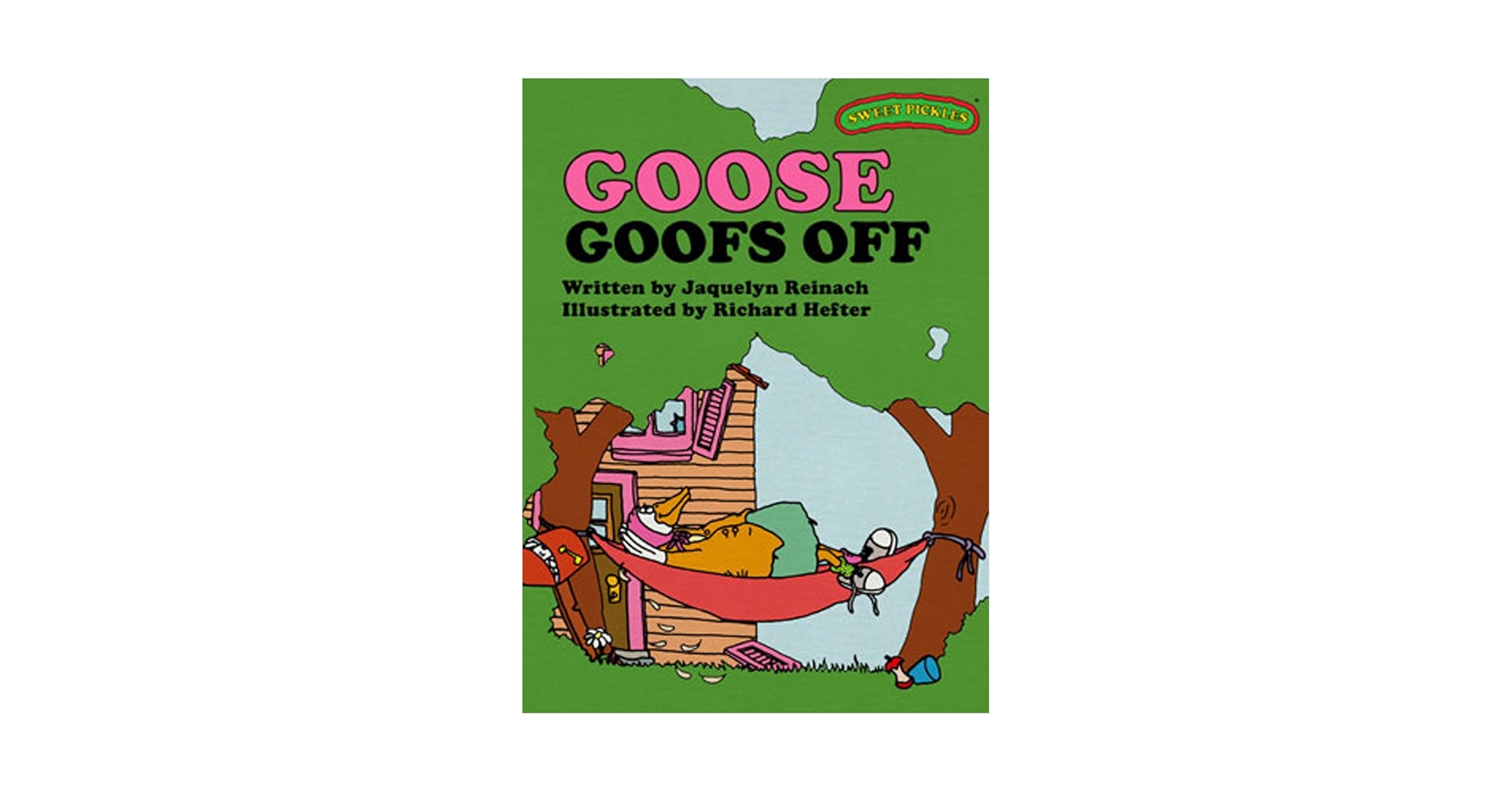








 John Davis Jr. -- Author