poetry, publishing, writers, writing

The Personal Touch Still Matters

“This is a very, very fine poem. I just wanted to call you and let you know that we’ll be including it in our July issue. Thank you for sending it to us.” …And my day was made.

It isn’t every day one receives a phone call from the editor of a literary journal, especially one as busy as The American Journal of Poetry, founded and operated by Robert Nazarene (who called me) and James Wilson. Readers may recognize these two esteemed gentlemen as the former editors of MARGIE, a literary magazine that was legendary in its time for inclusion of high-quality and award-winning material.

Their July issue of AJP will include such renowned poetry giants as Mark Jarman, Alice Friman, and Tony Hoagland — and it will also include yours truly. The fact that my work is being published alongside these poets and others I deeply respect would have been enough to send me over the moon. But the fact that the editor reached out by phone, a nearly unheard-of act of kindness in the poetry realm, was the icing on the proverbial cake. His praise of my work combined with his personal interest spoke volumes about his work ethic and his dedication to an oft-underappreciated task.

So as you’re reading over the ugly remarks about editors on sites like Duotrope, bear in mind that there are still a few out there who do the task in a timely and proficient manner. Some even care enough to make phone calls, and by doing so, rekindle the fire of poetic passion beneath skeptical and world-hardened writers. Even in a time dominated by online submission trackers and digital everything, the personal touch still matters. Thank you to those gatekeepers and decision-makers who continue to do their jobs in a way that enhances the humanity of the literary community. Now more than ever, you’re needed.


life, poetry, publishing, Uncategorized, writers, writing

The Big Announcement

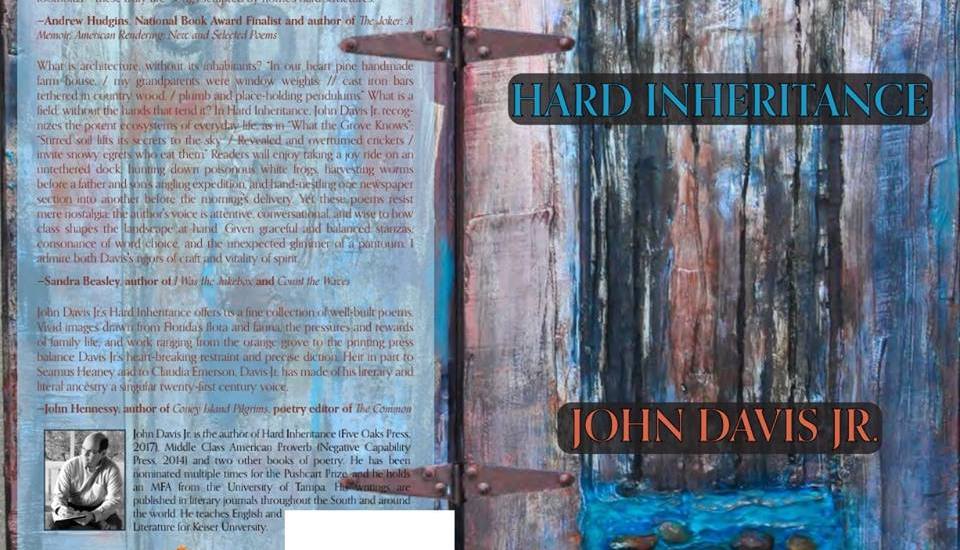
After years of writing and months of preparation, Hard Inheritance is now available! Just in time for the holiday season, this new volume contains works first published by such literary powerhouses as Nashville Review and similar respected journals.

Perhaps more importantly, though, it is a testament to life lived in rural Florida. Following in the footsteps of its older brother, Middle Class American Proverb, Hard Inheritance offers readers a glimpse into the trials, joys, and landmark events of time spent in places that barely get their own map-dot. Moreover, it presents a portrait of such places’ people — the hard, the charitable, the native.

Notable southern poet Andrew Hudgins says this about Hard Inheritance:

“The poems in Hard Inheritance are set firmly in the poet’s ‘ancestral terrain’ of small-town Florida. The landscape is lovingly but unsentimentally brought to the page, and it is peopled by the poet’s family, friends, and fellow parishioners. … These truly are ‘songs sculpted by home’s hard structures.'”

And award-winning poet Sandra Beasley adds:

“What is architecture, without its inhabitants? ‘In our heart pine handmade farm house, / my grandparents were window weights: // cast iron bars tethered in country wood, / plumb and place-holding pendulums.’ What is a field, without the hands that tend it? In HARD INHERITANCE, John Davis, Jr. recognizes the potent ecosystems of everyday life, as in “What the Grove Knows”: “Stirred soil lifts its secrets to the sky. / Revealed and overturned crickets / invite snowy egrets who eat them.” Readers will enjoy taking a joy ride on an untethered dock, hunting down poisonous white frogs, harvesting worms before a father and son’s angling expedition, and hand-nestling one newspaper section into another before the morning’s delivery. Yet these poems resist mere nostalgia; the author’s voice is attentive, conversational, and wise to how class shapes the landscape at hand. Given graceful and balanced stanzas, consonance of word choice, and the unexpected glimmer of a pantoum, I admire both Davis’s rigors of craft and vitality of spirit.”

I’m incredibly excited by this new release, and I hope you’ll pick up a copy to fill a stocking or to surprise that word-lover on your list. Get one for yourself, while you’re at it. Here’s wishing everyone the warmest of holiday seasons! Happy Reading!

BUY HARD INHERITANCE HERE: Link to purchase the book


life, teaching, Uncategorized, writers, writing

A plea for my students

If you read these posts regularly, you know I’m not in the habit of asking for things. I believe that people read what I write because they want to receive something, not necessarily give something. But today I approach all of my site followers with a simple request.

This year, my creative writing students will be writing and making (binding) their own novellas. For that to happen, we need a bunch of supplies. In fact, more supplies than my little department budget will allow me to afford. To address this issue, I’ve started a DonorsChoose page that allows my friends, family, followers, and others to donate to this cause.

I’d deeply appreciate any donations you can offer. They don’t have to be big. In fact, if each follower of this blog gave $1, I’d reach my goal by day’s end. If you are fortunate enough to be able to give more, please do so. My student writers are incredibly gifted, and they deserve this opportunity.

Summer School
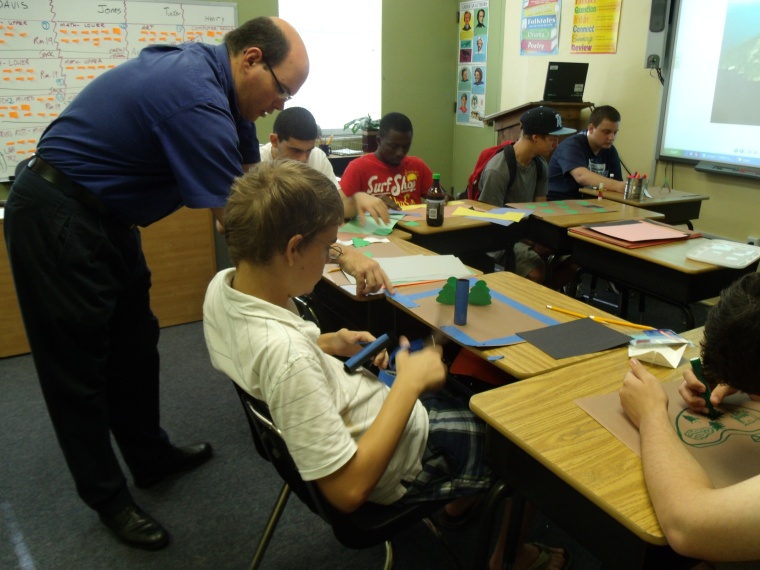
A group of my students complete a literacy project connected to short stories we’d read.

To help out these budding Hemingways, Dickinsons, and Shakespeares, please follow this link:

https://www.donorschoose.org/project/novella-notebooks/2080290/?rf=link-siteshare-2016-07-teacher-teacher_3033778&challengeid=20799041

My students thank you, I thank you, and literature’s future thanks you. Let’s make something special happen for these kids!

life, poetry, Uncategorized, writers, writing

Reflecting on Lisbon: Community Lessons

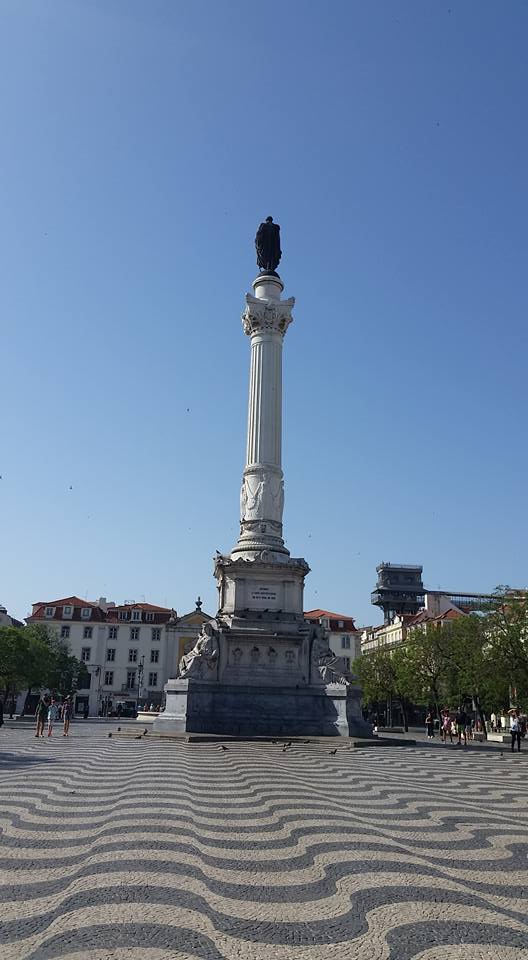
Lisbon statue 1I recently spent 16 days in the city of Lisbon, Portugal as part of the Disquiet International Literary Program. Having had enough time to process everything I encountered there, I’ve come to some conclusions. There’s a lot that towns and cities can learn from looking at the Lisbon model. I’d like to highlight a few of the things that Lisbon is doing right, and offer some possible applications for other cities in the process:

  1. Art and History are everywhere. No matter where you go in the city of Lisbon, there’s a reminder that it is filled with the ghosts of great figures. From statues in central plazas to museums throughout the city, Lisbon is constantly telling visitors that its past is worth exploring. In addition, the beautiful tiles that accentuate buildings and make up the myriad sidewalks add to the city’s aesthetics and artistry. Tile is nearly synonymous with Lisbon, and its artisans use this medium incredibly.
  2. Guests are received warmly, and are therefore eager to return. My wife and boys and I had a local family we didn’t even know help us with our heavy luggage all the way from the metro station to our apartment (a long and mostly uphill hike). This family asked nothing in return, and offered us their phone number should we need other help while in the city. Residents: Doing your part to make out-of-towners feel welcome will produce returns! The warmth of Lisbonites in nearly every venue made the city hospitable, a home away from home.
  3. Lisbon capitalizes on its celebrities. Every city has a few key figures who have done well in a variety of areas — whether they’re Olympic athletes, known scholars or authors, or other headline-makers, “celebrities” come in a variety of forms. For Lisbon, writers like Fernando Pessoa, Luis Vaz de Camoes, and other literary minds comprise the majority of their well-known figures. In small towns like the one where I was brought up, Tom McEwen (a sports columnist), Dr. Leffy Carlton (a noted physician), and Myrtie Strickland (a lifelong local educator) were considered “celebrities.” Giving these people their place in the sun, much like Lisbon does with Pessoa and Camoes, establishes a sense of local pride and accomplishment.
  4. Not only are bookstores not dead, they are vital to a thriving community culture. Bookstores, or Livrarias as they are known in Portuguese, are instrumental in stimulating and nurturing the intellectual life of Lisbon. They are also ubiquitous. No matter what street you’re on, you’re within walking distance of a bookstore there. Most evenings, you can find a reading, an author event, a book signing, or another similar engagement taking place at one or more of the livrarias. The oldest bookstore in the world, now known as Bertrand, is also found in Lisbon, and its history contributes to the city’s overall sense of modern antiquity.
  5. Having a community trademark helps perpetuate an image. For Lisbon, the aforementioned tiles are its signature. For smaller cities, maybe it’s a natural feature like lakes, certain plants, or mountains. But no matter what a place chooses for its associated image, it’s important for leaders to brand their location using what it’s known for best. Even if you’re “the caladium capital of the world” like Lake Placid, Florida, or “the city of oaks and azaleas” like nearby Bartow, every place has something special to claim.

    Certainly, there are other things that Lisbon does right. In our little apartment every evening, we could hear music from the local plazas wafting in through our open windows. Sometimes, there was big-band era brass, while other nights gave us Fado (the “Portuguese Blues,” as some incorrectly call it). Occasionally, an Avett-Brothers-style folk band singing in Portuguese would lend us their talents. But no matter the type of music, it was a comfort. Even without air conditioning, our little rental place was inviting and cool each night, thanks in part to the sounds of local musicians.

    I suppose some of Lisbon’s success would be hard to imitate elsewhere. But every city, every town, every area has its own fair share of history, beauty, and culture to share with others. In the end, that sharing attracts visitors, and municipalities could do far worse than to follow the example set by Lisbon.

poetry, Uncategorized, writers, writing

The Beauty of Lisbon, Portugal

lisbon rooftop

The rooftops of Lisbon are a sight to behold! This shot from the top of the Hotel de Chiado, where the opening reception for the Disquiet International Literary Program is taking place, says it all.

Lisbon peacock

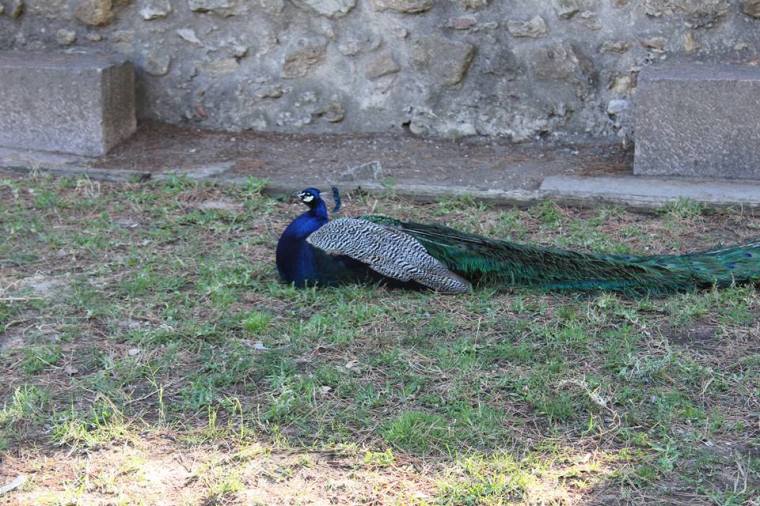
While walking the grounds of the Castela de St. Jorge in Sintra, this peacock stole the show. The castle is huge, and there will be more photos of it in future posts. Stay tuned!

Lisbon statue 1

One of the many beautifully tiled plazas here in Lisbon. Statues of artists and writers are everywhere!

life, poetry, Uncategorized, writers, writing

More than Organisms

vitruvian-300-333Recently, I attended a lecture by a respected writer who posited that we should write about the obscene, the vulgar, the disgusting, and the revolting. He said that his logic for this encouragement depended not upon shock value, but rather, upon the notion that all such things were true. Specifically, he called writers in the seminar to write about their bodily functions, sexual encounters, hidden diseases, and sources of physical shame. This, he said, would lead to writing that was absolute truth, and would liberate writers from their self-consciousness. Likewise, such writing would reach an audience that has apparently been searching for such literature — in his mind, there exists a group of people who want to know that others do, in fact, excrete waste, cavort recklessly, and wrestle with modern-day plagues (and desire to read about it). Perhaps so.
My response to the notion that we should write ugliness, though, is this: We are more than organisms, and because we are, we should elevate ourselves and our art above the crass. This statement is not intended as condescension or old-school literary snobbishness, but, somewhat ironically, as a statement of truth. Stay with me here:

As the leaders of all other species, and as cognitive, reflective, intellectually astute creatures, we should use our creative and mental faculties in the most supreme way possible. Keats was not wrong when he equated truth with beauty, even though his definition may have been an oversimplification. Yes, there is more to truth than just beauty, but as highly developed beings, we should seek the best and finest truths rather than those which debase or denigrate. St. Augustine, Martin Luther, and countless others (including the Romantics) have reached this conclusion well before our time.

To write about subjects primitive, desperate, and scatological can sometimes be a fun and bawdy diversion, but devoting oneself to these lesser ideas renders literature into the equivalent of monkey-flung feces, to borrow an image from the aforementioned speaker. Some will call this assertion elitism, and maybe it is. But if we are to leave a legacy of thought, shouldn’t we aspire to greatness rather than the sewer? Shouldn’t we leave behind something more than our literal behind?

All this theoretical explication probably won’t change the downward spiral of gutter-dwelling “literature” that is being written. I get that. But if one person lifts clearer eyes to consider things less coarse, less brutal, and less detestable, then this small epistle hasn’t been in vain. As writers, we don’t have to be Pollyanna, falsely portraying a world that is all sunshine and daisies; in fact, we have an obligation not to. But likewise, we don’t have to decrease our own personal and cultural worth by slinging words that glorify the gross and reprehensible. We are more than organisms.We are wonderfully made, and that wonder should shine in all we write.

life, poetry, Uncategorized, writers, writing

Seeking the China Tree

cypress

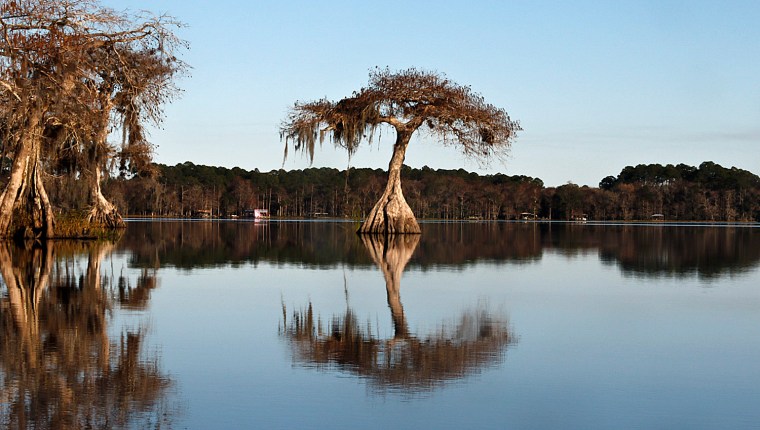
Only by climbing to the top of my grandparents’ magnolia could I see it: Far off in the west, craning above a humdrum horizon of pines and oaks, there was what I called “The China Tree.” In retrospect, it was probably just an oddly-shaped cypress, but its shadow pressed against sunsets made me think of Oriental landscapes and scenes from books and paintings I’d encountered as a boy.

While still a child, I vowed to seek the tree one day — I’d strike out on a hike to find its magnificent shape beyond the neighbors’ fields, and rest only once I’d stood at its proud, ancient trunk. The tree was a conquest-in-waiting, a thing of distinct beauty and history beckoning above and well beyond all that was common. And I told myself I would be its discoverer.

From my favorite thinking spot, the barn roof, I couldn’t see the tree’s paisley canopy; there were too many power lines and old chimneys blocking the view. But from the barn’s apex, I could ask myself: How will you know when you’ve found it? My answer as an adolescent was full of hubris — I’ll just know. Something that big, something that rare can’t be easily mistaken.

When I last returned to my grandparents’ farm, my boys and I climbed the old magnolia again, and I noticed that the China Tree was gone. Taken by hurricanes or hungry chainsaws sometime during my adult absence, its silhouette no longer marked the horizon. It saddened me, as I never pursued that quest I’d promised myself, and moreover, my sons would never know that landmark.

Maybe, though, in a more figurative way, I’ve been on the China Tree journey my whole life: I wanted to seek it for its beauty, its history, and its difference from everything around it. Is that not what the life of a poet is?

As one who has chosen the unconventional path toward a goal that many don’t understand, I believe that even today, I am seeking the China Tree. Yes, now it is more symbolic than literal, and maybe it’s a little harder to see — after all, the pines and oaks of grown-up obligations tower thick and high, and some days, it’s tough to discern my target.

Yet the ultimate objective remains the same: Find beauty, find history, find originality. With these missions in mind, I renew myself to the path ahead of me. The China Tree has not yet been fully discovered, and I will stop only once I can rest at its majestic foot. Time to press onward.

poetry, publishing, teaching, writers, writing

Catching up with a Great Mentor

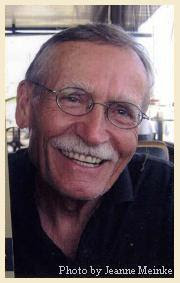
peter meinkeRecently I had the privilege of driving our state’s poet laureate to and from my employer school for a special reading and appearance. Peter Meinke, author of multiple volumes of poetry and prose, professor emeritus for Eckerd College, and long-time St. Petersburg resident, was one of my mentors in University of Tampa’s MFA program, and before that, he edited my work and instructed me at other workshops around Florida. If you take a look at my book, Middle Class American Proverb, you’ll see that one of the blurbs on the back is from Peter, as well. His advice helped form my personal aesthetic, and his appreciation of forms helped give me a bigger poet’s toolbox.

Conversations with Peter are always interesting because he’s been in the literary game long enough to have stories aplenty about the teaching and writing life. He’s worked with some of the biggest and most recognizable names in the poetry community, and he’s won a plethora of awards, although he’d never brag. In many ways, Peter is what I would consider “the poet’s poet.” So to be driving this gentleman to and from his home was a real treat for an emerging writer.

I had the opportunity to talk with Peter about some of my recent endeavors, poetic and academic alike. I mentioned that I’d applied for a few different things (programs and such), and he replied, “You know, sometimes you get struck by lightning. Something just comes to you out of the blue when you least expect it. Somebody calls you up, and you can hardly believe it.” He talked about a few of his own such experiences, and then finished up with, “…but you have to put yourself out there.”

We chatted a while about some of the folks we both knew — where they were, how they were doing, who had vacated or filled positions here or there. It was richly rewarding to converse with someone who shared a common vocabulary and a common set of interests.

As usual, Peter’s appearance was met with applause and appreciation. Students and community members lined up for his book signing afterward, and he took pictures with several of my awe-struck pupils. The night was memorable, successful, and enjoyable for us all.

On my way back to my own home after dropping Peter off, I was filled with the hope that one day, I too could provide the gift of experience to some up-and-comer. As great as poetry is, passing its “fever” on to others is even greater. And therein lies the quiet strength of our state’s poet laureate: his legacy of learning and love of language. Might we all aspire to leave similar tracks for others to follow.

life, poetry, writers, writing

In Praise of Being “Mainstream”

The Cast of


As a kid growing up in the 80s, my television family was the Seavers, not the Cleavers. Every boy my age wanted to be Kirk Cameron (Mike Seaver of Growing Pains), or maybe Michael J. Fox, who played Alex P. Keaton in Family Ties. Shows like these made it seem cool to be like those families and their kids, for certain.

In today’s literary community, aspiring toward a more traditional type of success has been replaced by a phobia about being “too mainstream.” I was reading an article just the other day by a respected author who lamented that her life was “becoming too mainstream,” which she defined by tasks like going to the grocery store, washing dishes, and tending to the relationships beneath her roof.

Sadly, being responsible and attempting to live a reasonable, self-sufficient life are both ideas that have been denigrated by various media in recent years. The notions that we should work ethically, raise a family, seek advancement in a single field, and aspire toward something greater than self-satisfaction are frowned upon by a vocal minority. There are those, after all, who believe such ideas to be too old-fashioned, too whitebread, or too puritanical for the twenty-first century.

But this isn’t a political post. I’m here to defend the value of the mainstream in our literature, specifically. There is beauty in the common, after all, and while socio-cultural activists may be trying their hardest to redefine what constitutes “the norm,” Joe and Jane Average still know that their lives — complete with light bills, plumbing repairs, and runny noses — have wonder, merit, and poetry in their seemingly mundane routines. Eschewing the everyday limits the scope and reach of our literature.

What’s more, by omitting mainstream details, artists portray a fallacious picture of what our world is really like: Rather than giving readers honest visions of life, many are seeking shock value, or perhaps some abstract, inauthentic version of their environment. In the end, both of these motives generate lies — creative, occasionally beautiful lies, perhaps, but lies nonetheless. While I’m no Realist (artistically speaking), I also don’t believe that writers should fear the mainstream. Give us the sidewalk cracks, the wasps and overdue notices in the mailbox, the wiffle ball stuck in the backyard oak tree. There is poetry in all these things, and there is life.

Being mainstream, by the way, isn’t all that bad, you’ll find. Parenthood and the obligations of marriage, career, and family life remain sources of great inspiration, just as they did in prior generations. Maybe it’s not new, it’s not avant-garde, and it’s not the “artist thing to do.” But I’ll take it any day over the exotic or the crazy. To be clear, I’m not saying “mainstreaming” is for everyone. However, I am saying that in going about the business of writing, we as authors should not be scared of that which seems standard. For it is the run-of-the-mill that yields the exceptional, the original, and the special. And that, writers, is what we’re after — the diamond in the rough, the pearl inside the oyster, and the rainbow out of the gray. Without the ordinary, there can be no extraordinary.

poetry, publishing, writers, writing

On the Color of Names

Asian-sounding Pen Name Gets White Guy in Trouble

So, I read the story linked to above from the Washington Post. Here’s my two cents, for what it’s worth:

As a plainly named, semi-average white guy, I too have considered using a name that sounds “less Caucasian.” In today’s literary marketplace, it sometimes feels like people with humdrum, plain-Jane names get overshadowed by those without them, no matter what the ethnicity, gender, or background in question may be.

“Oh, to be a Li-Young Lee, a Marina Tsvetaeva, or a Yusef Komunyakaa!” say the Joe Smiths of the writing world. Of course, poets’ names are not their strength (although the aforementioned ones, especially, are impressive and beautiful sounding). It is the authors’ fine work that has earned them their spot in the literary marketplace. Their awards are many, and rightfully so. It is not a matter of name alliteration, length, or origin that has raised them to prominence; it is the quality of their writing, and a strong history of artistic contribution.

Statistics from a number of sources show us that writers from historically underrepresented communities still struggle to get their work in front of readers, and the good folks at Vida: Women in Literary Arts have demonstrated the imbalance between published male writers and their female counterparts. Nonetheless, when one opens a copy of Poets and Writers, AWP Chronicle, and other trade pubs that scribblers like me regularly receive, the most highly publicized writers can seem to be comprised of those with extraordinary and uniquely identifiable names, no matter what their color or creed.

Consider if you will the glossy back cover of the September 2015 issue of The Writer’s Chronicle: There, in a full-color ad for Grand Valley State University’s Poetry Night 2015, are Kwame Dawes and Aimee Nezhukumatathil. I wish I could be at the advertised event, not because I want an excuse to form such lovely names more often, but because these are exceptional writers. Inside the back cover, a full-page ad for the Sanibel Island Writers Conference (another event I wish I could attend this year) proclaims the presence of Edwidge Danticat, another brand-name poet whose work is as striking as her name, if not moreso. A quick flip through the magazine reveals Nikki Giovanni, Ravi Shankar, Minal Hajratwala, Luisa Igloria, and Natasha Trethewey, among other names like poems.

Admittedly, my name has sometimes raised an editor’s eyebrow or two because “John Davis Jr.” could belong to someone of any number of races. Sure, it’s a white guy’s name, but it could belong to someone of African-American descent, Native American descent, or any one of many other races, I’ve found. A quick run of my name through Google reveals a rainbow of people from all walks of life. Some are realtors, some are doctors, and one even ran for president in 2012. I’ve had editors presume I was African-American because my name reminded them of another famous “Davis Jr.” — Sammy Davis Jr. No joke. I didn’t mind the confusion, nor did I take offense. But then, I’m a member of this country’s majority. My people are not disenfranchised, nor have they faced excessive hurdles in society. And maybe that’s why Michael Derrick Hudson’s decision irks me.

It irks me for the same reasons that dialect-discrimination irks me, actually. I’ve had plenty of people assume over the years (based upon my size, appearance, and Floridian accent) that I am ignorant. “Dumb Southerner” is the label some have attached without knowing my full story. They hear my use of the colloquial “y’all” and jump to their conclusions, which are, ultimately, dead wrong. Yes, my family has farmed for three generations (at least). But we’ve also been educators, doctors, lawyers, professors, and Air Force pilots, just to name a few other roles. I don’t appreciate others assuming we’re hillbillies any more than writers of Asian descent appreciate “Yi-Fen Chou.”

So what’ll it be, Mr. Hudson? You think your name sounds too Anglo-Saxon? Oh, gosh. Better fix that right up. You’ll never get published now. It’s not like Billy Collins, Ted Kooser, C.K. Williams, or — let’s go back a ways — Edgar Allan Poe, Robert Frost, or W.B. Yeats have had any luck. I can see your quandary, what with all the illogical repression of white male names and voices, It’s clearly a wonder that your work has managed to see the light of day.

But I get it. I really do. All those delicious-sounding syllables from diverse cultures are out there, just waiting to be exhaled. And they’re tempting. I know they are. That, however, doesn’t make them yours to appropriate. Might I be so bold as to suggest Mr. Hudson read an excellent essay by Henry Louis Gates Jr. entitled “What’s In a Name?” I assign it to my students regularly. When you read it, consider yourself Mr. Wilson, Michael. For in essence, you have called Asian and Asian-American writers everywhere “George.” And that’s not okay.