life, poetry, teaching, Uncategorized, writing

What Robots and AI Can’t Replace

Everywhere we look, there are mentions of artificial intelligence (AI), robotics, and their implications for the future. News stories and social media feeds predict a heyday of ease and comfort as we assign more and more mundane tasks to technology (the art that accompanies this post was created by AI). In contrast, we’re also given the dark prophecies of Asimov and Bradbury come to life: When our computerized creations become so sentient that they can resent us, how will we control them?

More realistically, however, people are rightfully concerned about their jobs: Cashiers are already becoming obsolete, data entry by remote workers is becoming a relic, and countless other positions previously filled by people are slated to go extinct in the next few years. How, then, do we reckon with this revolution?

As the father of two older boys, one in college and one about to go there, I’m relieved that both of them have chosen irreplaceably human endeavors for their futures: One is in theatre, and the other plans to pursue architecture. These are professions that AI will never be able to fully usurp. After all, theatre is among the humanities, a select group of art forms and practices marked by their innate reliance upon authentic emotion and genuine experience. Our hamartia, the human condition, is ironically our greatest strength when it comes to livelihoods that are AI-proof. Architecture will be helped by AI, certainly, but to design and create livable spaces that consider the needs of complex people, we need human minds and hearts. Ask AI to design a mid-20th Century ranch house like the one on The Brady Bunch, and you’ll probably get a reasonable facsimile. But ask AI for a blueprint of a home that considers the individual needs of 21st Century family members, and confusion results — the blinking cursor begins to smoke.

As a teacher, I’ve already encountered the challenge of getting students to write rather than use ChatGPT or some similar product. For now, AI-generated writing is fairly easy to spot: Its reliance upon certain words and phrases, its preference for sterile-sounding language, and its occasional errors about obvious matters all make it detectable, even without running an essay or paper through an online checker or two. Combine those facts with a vast divergence from a student’s in-class writings, and AI use becomes obvious. But we know that technology consistently advances, and as time elapses, the fakes will become harder to spot, especially as classrooms become more tech-dependent. This is why some teachers and professors have gone back to old-school blue books, those lined-paper pamphlets of an earlier era, for class writing. And while I see the nostalgic appeal and hard-nosed devotion to justice driving such a practice, I also see its inherent temporary nature. Returning to number two pencils and canary yellow legal pads may get us by for a while, but students, parents, and clients of the new age won’t tolerate this Luddite approach for long. We need to find the middle ground between total AI reliance and achieved, owned learning quickly. Compromises like “You may use an AI editor for the writing you have authored independently in class” serve as a good start. This technique prepares students for the world to come without damaging their acquisition of knowledge. Further, they learn by seeing the corrections made by QuillBot, Grammarly, and other language-fixers. And if these products make a mistake as they sometimes do, so much the better. That’s where the real learning begins — technology has never been and will never be infallible, and the sooner students grasp this truth by experience, the better off they will be.

As a poet, I’m not worried about AI. I’ve seen the replica-poems it produces, and while some sound good on the surface, a closer look reveals that same artificial shimmer visible in the art that I’ve used above. Something’s missing; there’s a bad aftertaste like that of saccharine diet sodas from the seventies. An astute reader can tell that the cane sugar of the human touch is missing from this thing’s formula, whatever it may be. The “experiential resonance” — the sense that an event or product is organic — just isn’t there. Call it instinct if you will, but a reasonable human being can tell the difference between the things we do and make and the contrived, data-driven simulacra of thought-approximating algorithms. An initial, superficial “Oh, that’s lovely!” soon becomes an “Oh, this isn’t what I thought it was.” And that kind of deflating disappointment will toll the end of our infatuation with AI. Like any other once-novel discovery, this, too, will lose its luster.

So, what’s the big picture? The AI “scare” is similar to that of Y2K: Yes, we should consider it, but no, it isn’t Armageddon. As we prepare and adapt, we will add it to our toolboxes, become indifferent to it, and move on. Just as we healed the hole in the ozone layer, just as we eliminated acid rain, and just as we defeated diseases of long ago, we will coexist with this latest change until it no longer seems intriguing or threatening. We could easily theorize a future dystopia like those seen in science fiction, but it’s more likely that balance will prevail as it always has. For parents, teachers, and creators, AI is nothing to obsess over. Put simply, it’s just another thing. And if history has taught us anything, it’s that things are perishable.

life, poetry, publishing, teaching, Uncategorized, writers, writing

The Joy of Writerly Objects

With all due respect to Marie Kondo and other “organization” experts, I’m not making my space utterly devoid of stuff. Here’s why: Stuff has history. Stuff is full of inspiration, and sometimes it can make us think in ways we ordinarily wouldn’t. And finally, stuff has meaning. If a thing has beauty as well as function, then it ceases to be what some experts would call “clutter.”

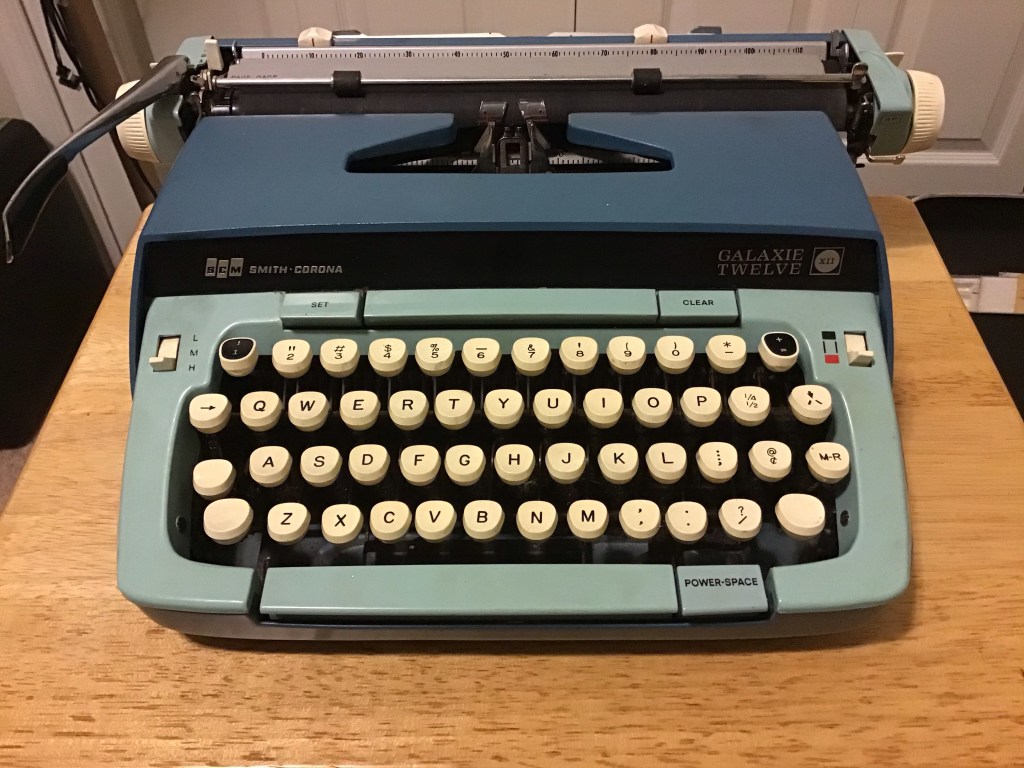
My Smith-Corona Galaxie Twelve typewriter. Molon Labe, home arrangement experts. I dare you.

Now before you call Hoarders and report me, let me say that there’s an extent to everything. My study is not overflowing with so much junk that I can’t even move, let alone think. But I do have a number of objects that I keep because of their inherent aesthetic value. Here, I’d like to talk just a little about the items I hold dear as a writer, and how my practice might suffer without them.

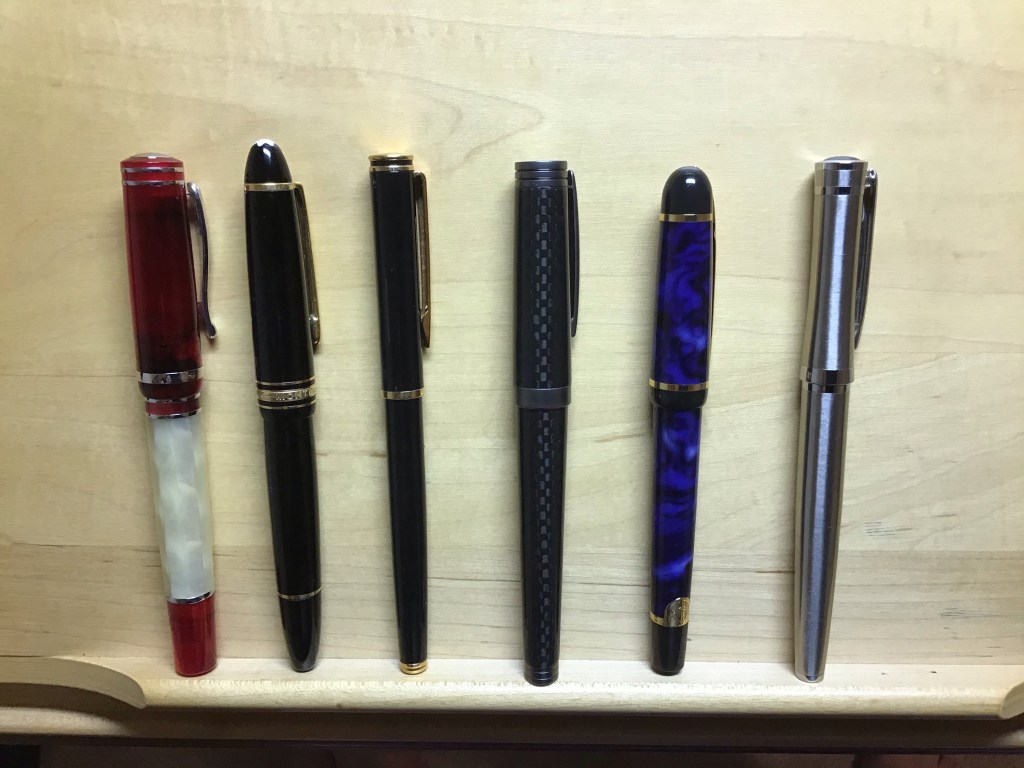
An assortment of fountain pens by Waterman, Montblanc, Levenger, and other makers. Vital to step one of poem creation.

Good pens are the frontline workers of the creative life. When smooth ink is flowing freely, filling good paper with artfully rendered words, the whole experience of writing is improved. I prefer old-school fountain pens because they connect me to generations of great minds well before our all-things-temporary present. Watching a crafted nib do its work motivates a writer to do his work in an equally elegant way. On my podcast, I talk about how connecting to things by touch can result in artistic revelation, thereby generating more output (writing or otherwise). Good fountain pens are probably the prime examples of this idea in action, and they’re good for Socratic Journaling, another idea explored on my podcast.

Uncle Hy’s ashtray — historically used in the evenings, when he’d puff on his pipe after reading the paper.

Some of the stuff I keep has sentimental value. My Great Uncle Hy was a swell guy — he was a businessman through and through, and over his lifetime, he did well for himself. One relic of his that I’ve kept is the translucent heavy green glass ashtray he used when smoking his after-dinner pipe. While I’m not a smoker myself, I use it these days to hold the aforementioned fountain pens and other office sundries. It catches the light the same way it did when I was a boy and became fascinated by its color and brilliance. The memory of Uncle Hy and his industriousness keeps me going when I feel like slacking off.

The compass box — just because it’s cool.

Some things call out to you when you see them. Such was the case when I saw this little faux ivory box at The Oxford Exchange in downtown Tampa. It holds paper clips and thumbtacks mostly, but it also reminds me to stay true in my direction. Its weight is pleasantly permanent, and opening it is always an experience filled with possibility, even though I’m well aware of what’s inside. There’s a kind of Indiana Jones mystique about it, so yes, it stays.

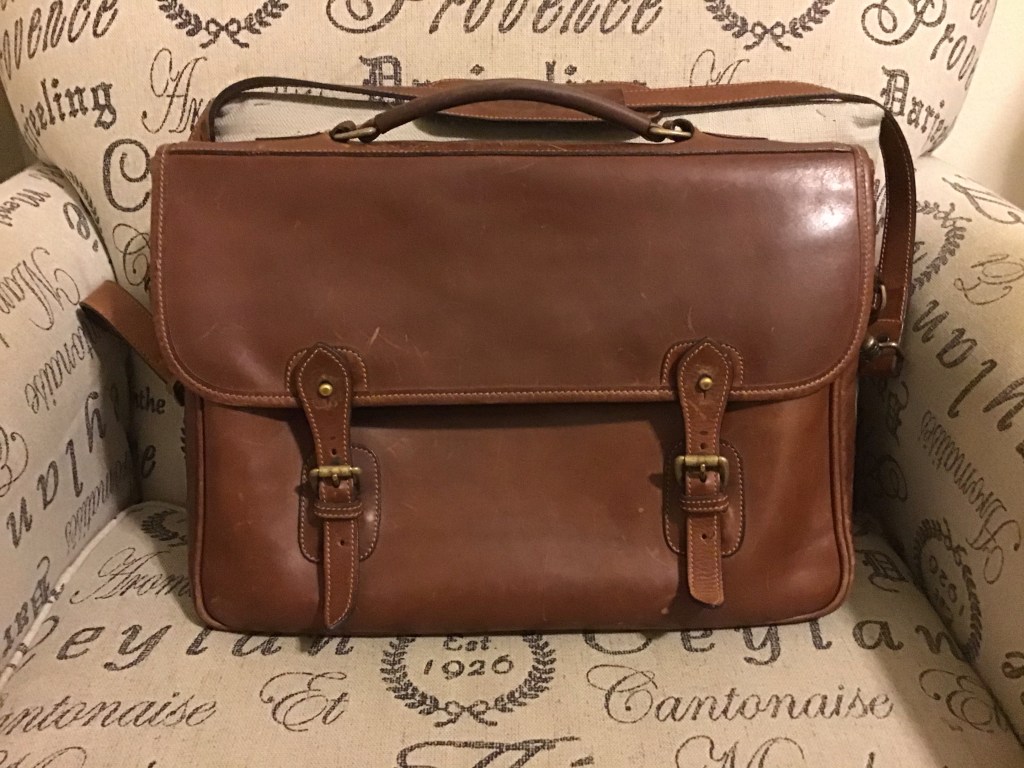
This briefcase has so many stories behind it…

My leather briefcase was given to me by my mother after I received my first master’s degree. Over the years, it has been to Lisbon, Portugal, Santa Fe, New Mexico, and lots of other spots. It holds everything I need, and frankly, it has become an extension of me — rare is the day when I walk onto campus without it. It even smells like literature.

So there you have it — an assortment of objects and keepsakes that make my literary life a little more inspiring. Minimalists and Feng Shui practitioners take note: These items might not be totally utilitarian, but they absolutely influence my creative process. Maybe you’ll say I should be willing to part with some of what I’ve mentioned here — my reasoning is too maudlin or clingy for your taste. Therein lies the beauty of stuff: Shakespeare was right when he said, “Beauty is in the eye of the beholder.” I enjoy beholding everything you’ve seen here. End of story.

Are there things that you can’t part with? Items that you’d feel a little more empty without? Use the comments section below to tell about your most cherished or prized creative possession…

life, teaching, Uncategorized, writing

Dear Teacher: Thoughts on a New School Year

It’s that time again: Parents prepare to send their kids off to school for the next go-round, hoping that this year will be the best so far. Teachers eagerly decorate classrooms, plan vivid and engaging lessons, check class rosters, and pick apart data.

As someone who spent 15 years in the secondary classroom before moving into higher ed, I distinctly recall all the dreamy potential that this time of year can represent for parents, students, and teachers — it’s a blank slate, a fresh start, and a million other tabla-rasa cliches rolled into one. It is hope and nerves. It is the smell of paper, the satisfaction of checked-off lists, and the promise of a brightly lit, welcoming space away from home. It is its own magic.

But the real work is about to begin. The daydream of clean faces, happy chatter, and new clothes will soon be supplanted by young people facing issues from abuse to homelessness (and more). The shiny technology and glossy posters will matter less than empty stomachs and forgotten texts. Teacher, what will you do then?

I don’t mean to quell the inspiration of a new year. I really don’t. Love those new stickers for your gradebook. Enjoy the cool, smooth plastic of fresh whiteboard markers. But also understand that the highs of August wear off quickly, and if you don’t love teaching and students, endorphins and dopamine will only last so long.

Teacher, I hope you are excited by those learners seated before you. I hope you are just as passionate about your subject as you have ever been and that your passion is virally contagious. I hope you have ideas for activities, strategies, and projects that will make Disney World seem dull. And above all else, I hope that the instructional fire within you burns bright All. Year. Long.

I wish you all this not just because I’m a parent, not just because I’ve been there, but because our profession (and our youth) need you now more than ever. Amid the bickering about pay scales, the ingratitude of an uninformed public, and the ever-increasing demands of governments large and small, remember your calling. Education isn’t just grading worksheets and administering assessments. It truly, truly is touching lives, leaving a legacy, and yes, making the greatest differences.

Maybe you won’t be a movie teacher like Jaime Escalante or Erin Gruwell. Maybe you’ll just be yourself, whatever that means. But you are exactly the person that at least one student is desperately seeking. Be the calm in their storm. Be the high point of their day. Be unforgettable.

America, its children, and its future are relying on you. We know it’s hard. We know there will be days of frustration, tears, and inimitable joy, sometimes all at once. Teaching means poetry. You chose this life, and we so deeply admire you.

Greet this year with greatness, and then nurture it, sustain it. You can do it, our children can do it, and tomorrow will be better because of it. This is your time. Inspire.

poetry, publishing, teaching, writing

The Joy of Literary Volunteerism

For about six months or so now, I’ve been volunteering for a local arts organization. I’ve provided workshops, seminars, and even the occasional reading. Here’s what I’ve learned: The most rewarding part of being a poet is passing on the joy of writing to others.
Sure, that sounds trite, but it’s true. And it’s not that I hadn’t grasped this notion previously. I mean, I’m a teacher after all. But here’s the thing — teaching adults who truly want to learn the craft is a world apart from teaching English courses for a paycheck.

I get to have a good time discussing poetry and how to make it, and newbies find out a few tricks and techniques that perhaps they hadn’t considered. My favorite is the generative workshop, where we use various prompts to craft the beginnings of new work. That silent hum of concentrated creativity fills the room, and you can tell that vivid things are happening in everyone’s mental theater. It’s almost (cliche warning) magical.

And while I love my day job and all it provides, for sheer joy of teaching, it’s hard to beat the volunteer space. No grades, no homework, just genuine fun with words. I’ve also noticed that giving back a little something to the craft that has meant so much to me restores my passion for the written word. Watching people grasp the potential of poems reminds me why I do this work, and believe me, it is work. But it’s a labor of love, certainly.

life, poetry, publishing, teaching, Uncategorized, writers, writing

Calling All Writers: HELP


cover-for-ad

Buy a book, save a life: Between now and Christmas, 100 percent of every sale of each of my books will go toward getting one of my poet-students and her mother out of the homeless shelter. You get good poems, and a family that desperately deserves a Merry Christmas is given a hand up. There are no losers here — If you don’t want to buy one of the books below, you may donate directly to the Save my Student from Homelessness fund:

https://www.gofundme.com/save-my-student-from-homelessness

If you would like to go the literary route and receive some poetry in exchange for your generosity, please consider purchasing any one of the books below (click the title):

Hard Inheritance

Middle Class American Proverb

The Boys of Men

Your purchase or donation is deeply appreciated. I can’t say enough good things about this student, and she and her mother are grateful for any help you can offer. Please join this effort to save a budding writer from the horrible conditions at the homeless shelter. THANK YOU!

poetry, Uncategorized

An Address to New Teachers Everywhere

A group of summer school students work on their 3D maps of Ship-Trap Island, our project from the short story The Most Dangerous Game.
A group of summer school students working on their 3D maps of Ship-Trap Island, our project from the short story The Most Dangerous Game.

If my loyal readers will allow me, I would like today to take off my “poet’s cap” and put on my teacher’s mortarboard instead for just one post.

As summer draws to its end and a new school year eagerly waits right around the corner of the calendar, I feel the need to post something here for all you newly hired teachers and professors. I, too, was once that first-year teacher. Now I serve as a mentor to up-and-coming educators. In that capacity, I have composed a brief address to teachers new to my school. I feel that this address would benefit teachers in any school, but especially independent schools like my own. Here, for your encouragement, is that short speech:      

ADDRESS TO NEW VANGUARD TEACHERS
By John Davis Jr., educator and poet

Before you lies an incredible journey. You have the chance to truly and positively change lives if you take advantage of this moment in your career. At Vanguard, you can teach as you have always wanted to teach, and you can become the servant leader that American education so sorely needs today.

Here is the place where your grandest experiments and classroom daydreams can come to life, if you let them. Now is the time that all your compassion, all your patience, and all your skills will be needed daily. You will have to hug children that others have found unlovable, and you will have to give structure to students that have never known boundaries. You will need to prepare your best advice for broken hearts, best-friend betrayals, and even divorces and deaths. These students need your voice, and they need your shoulders.

They will seek you out to tell you of all their firsts. When they pass their driving exam, compliment their shiny new permit photo. When they lose a beloved family pet, put your arm around them and console them. When they fail at anything, encourage them. When they ask you the hard questions, be honest with them.  They’ll respect you more for the truth than for some typical grown-up cliché. And at the end of the day, real life is really what they need to hear about the most.

They will bring you food they have cooked in culinary arts. Eat it enthusiastically, even if it’s horrible. They will show you pictures of what they plan to wear to prom. Tell them that it’s incredible, even if it’s hideous. They will proudly exhibit their latest woodworking project for you. Tell them how artistic it is, no matter how loose-jointed and awkward it may look.  

Dress like you’re the boss, but be prepared to get sweaty, dirty, and even occasionally bruised. But know above all that the labor, the grit, and the pain are all worth it. You will become to these students a parent, an older sibling, and eventually, a fond remembrance. Even when they go off to college, they’ll spend part of their break coming to see you again if you’ve done the job right.

And when they have long since graduated, found their way, and started adult lives of their own, rest assured that you will be a main character in the stories they tell their children. Your advice, your lessons, and your every idiosyncrasy will be recounted for another generation, not because you are a sage or a superhero, but because at one time in one child’s life, you cared.

Give them your 100 percent every day, even when you feel like you only have 10 percent left. Laugh with them, share with them; invent new games with them. The greatest stories of your teaching life are ahead of you, educator. Be prepared.


poetry, Uncategorized

Figuring Out Audience

AudienceThis past semester, I admittedly struggled quite a bit in my Master of Fine Arts (MFA) in Creative Writing program. I attempted an essay I cared little (if any) about, changed directions two or three times in regards to the essay topic, and constantly received negative feedback on poems that I thought exceeded standards. Now that this past semester’s experience is over with, I do have one positive take-away from the whole experience: I know exactly who my audience ISN’T.

That being said, I hadn’t given a great deal of specific thought to my audience prior to this point. I always kind of thought that I wrote for the masses; people who work 9-5 shifts in average jobs, and who pretty much represent the American status quo. This semester, however, I figured out the precise people for whom my work is truly intended. Here they are:

I write for high school English teachers around this country. This notion is a bit selfish, perhaps, as I too am included in that demographic. But whenever I write something, I find myself giving it the English Teacher Litmus Test: If this piece were being taught to a group of 11th or 12th graders, would the teacher be able to point out interesting and relevant material? Would there be literary devices that the teacher could elaborate upon, imagery that is striking enough to deserve comments, and maybe some ambiguity that the students could be left to figure out? If I can picture teachers I know really delving into the poem and engaging in Socratic inquiry about it with their students, then my job is complete. Hopefully, the poem can be taught similarly at the college or graduate level with equal dexterity, just with slightly different vocabulary and greater critical analysis.

Had I not been forced to write for someone that disliked my work and often disparaged it adamantly without concrete reasons, I would not have been able to pinpoint the other side of the issue — that is, my truest target audience. People who know and appreciate the classics, people who have advanced understandings of the great literary traditions, and people who admire work that values history and beauty will probably enjoy the poems I produce. Proficient English teachers, those who love the language and its literature, fill this bill well. As a new semester is about to begin in just a matter of weeks, I look forward to writing for someone else who may or may not be my biggest fan. Either way, I expect that the feedback I receive on my work will help make my work stronger. Derogatory comments will be validated by credible, experienced, and informed perspectives rather than personal tastes and whims. Expectations will be communicated with explicit clarity and specificity rather than vague notions and glittering generalities. And maybe, just maybe, this mentor will see my work through the lens of my real intended audience — that 21st Century educator who really GETS poetry, and who equally inspires students to love it, as well.