poetry, Uncategorized

Advancing the Literary Arts, One Step at a Time

hiker

My family and I attended the Central Avenue Arts Festival downtown today. The booths were plentiful and colorful, with media ranging from stained glass to metal, oil-on-canvas to photography. All were dazzlingly amazing. The weather was breezy, and displays included pottery making (my two sons got to make pinch pots) and an entire “kids’ corner” devoted to letting children make and do. 

Amid these other booths, there was one gentleman attempting to sell his self-published children’s books. They were on display, and people were occasionally stopping by, flipping pages and admiring them. But in comparison to the other booths, the lone book vendor lacked the sparkle and flair that other artists generated with their wares.

Certainly it wasn’t the author’s fault — his medium was simply more “subdued” than the flashier arts around him. Sometimes those of us in the literary realm find ourselves struggling with this same perception: Why should patrons trouble their minds with words when a picture will provide instant gratification? Understandably, the average consumer wants to be aesthetically pleased. Poetry appeals to all of the senses, but the reader has to work to receive its pleasure. Paintings, sculptures, or photographs, while potentially meaning-heavy, can be appreciated even by those who aren’t seeking an artist’s purpose or vision. To delve into language, however, requires cognitive investment. And so the struggle continues: How do writers (and poets especially) reach a want-it-now, get-it-now society?

One way is to increase awareness. When people know authors and poets, they are more likely to direct their attention toward the written word.  Every city, town, and county has someone pursuing the writing life, and some are better known than others. About two years ago, I posted an interview I had with Mildred Greear, a North Georgia poet whose work is known regionally, and who was a friend to Byron Herbert Reese, a well-known poet of historic import. The folks in Mildred’s part of the world love her work and support it, not because they are among the literati or the poetry elite, but because, well…it’s Mildred. And to support poetry is to support her and everything she represents: a distinct geography, history, and set of ideals rolled into one. In an age where many are crying for audiences to “separate the work from the artist” and similar notions, people near Sautee-Nacoochee, GA are doing the opposite, and it works. One great ambassador for verse can make all the difference. Some of the customers who have bought Mildred’s work might not even read poems, but they see her volumes as a near-biblical necessity. If you’re living there, you need some Greear poetry on the family bookshelf.

Mildred Greear
Mildred Greear

My hope as a younger, still-emerging poet is to serve as that same kind of ambassador. Rather than being the “quiet booth” in the arts community, I hope that my literary contributions (large and small alike) help make my community a better place in much the same way Mildred’s efforts have. The more people understand the vitality of poetry and other literary arts, the more a culture thrives. And with that thriving culture, communities build understanding and mutual respect, as well.

If you support writers and artists, especially in your community, please allow me to thank you. Likewise, if you haven’t seen what kinds of creative minds are at work in your part of the world, I encourage you to do so. Attend gallery openings, public readings, book signings, and the range of other available cultural outlets that your town or city has to offer. And if you don’t find any, make one of your own — it may feel like you’re the lone voice in the wilderness, but as any good Bible scholar can tell you, those lone voices are often the most relevant. It may sound trite, but you really can make an impact for good.
poetry, Uncategorized

Figuring Out Audience

AudienceThis past semester, I admittedly struggled quite a bit in my Master of Fine Arts (MFA) in Creative Writing program. I attempted an essay I cared little (if any) about, changed directions two or three times in regards to the essay topic, and constantly received negative feedback on poems that I thought exceeded standards. Now that this past semester’s experience is over with, I do have one positive take-away from the whole experience: I know exactly who my audience ISN’T.

That being said, I hadn’t given a great deal of specific thought to my audience prior to this point. I always kind of thought that I wrote for the masses; people who work 9-5 shifts in average jobs, and who pretty much represent the American status quo. This semester, however, I figured out the precise people for whom my work is truly intended. Here they are:

I write for high school English teachers around this country. This notion is a bit selfish, perhaps, as I too am included in that demographic. But whenever I write something, I find myself giving it the English Teacher Litmus Test: If this piece were being taught to a group of 11th or 12th graders, would the teacher be able to point out interesting and relevant material? Would there be literary devices that the teacher could elaborate upon, imagery that is striking enough to deserve comments, and maybe some ambiguity that the students could be left to figure out? If I can picture teachers I know really delving into the poem and engaging in Socratic inquiry about it with their students, then my job is complete. Hopefully, the poem can be taught similarly at the college or graduate level with equal dexterity, just with slightly different vocabulary and greater critical analysis.

Had I not been forced to write for someone that disliked my work and often disparaged it adamantly without concrete reasons, I would not have been able to pinpoint the other side of the issue — that is, my truest target audience. People who know and appreciate the classics, people who have advanced understandings of the great literary traditions, and people who admire work that values history and beauty will probably enjoy the poems I produce. Proficient English teachers, those who love the language and its literature, fill this bill well. As a new semester is about to begin in just a matter of weeks, I look forward to writing for someone else who may or may not be my biggest fan. Either way, I expect that the feedback I receive on my work will help make my work stronger. Derogatory comments will be validated by credible, experienced, and informed perspectives rather than personal tastes and whims. Expectations will be communicated with explicit clarity and specificity rather than vague notions and glittering generalities. And maybe, just maybe, this mentor will see my work through the lens of my real intended audience — that 21st Century educator who really GETS poetry, and who equally inspires students to love it, as well.

poetry, Uncategorized

Gone Digital

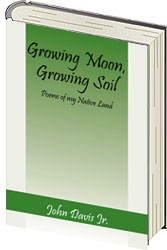
coverHello, loyal readers. This is just a quick post to let you all know that my book, Growing Moon, Growing Soil: Poems of my Native Land, is now available as a Kindle edition. The digital version is far less expensive than the original paperback, but it maintains the character and artistry of the printed page. Please see the link below, and purchase your copy today! All proceeds will go toward advancing the literary arts in central Florida. Thank you as always for your support!

My book, in Kindle edition


poetry, Uncategorized

Poets: Keeping the “human” in humanities

One thing I really like about being in the world of poetry is this: Even though a lot of poets are very well-known and have celebrity-like status in the literary realm, most of the time they remain very approachable on a personal level. Take, for instance, C.K. Williams. Now here’s a guy who has won major awards, published well-received books, seen his name in major magazines, and taught in prestigious locations all over the world. And yet, when encounters a fan of his work (like yours truly), he’s not so stuffy and pretentious that he won’t add you on Facebook. Little things like that are huge, especially to up-and-comers like me — the fact that “big name poets” (see previous entries) would associate themselves with rank newbies is a testament to their humanity and humility.

Certainly, there exist those writers who perceive themselves as so high and mighty that they would not dare set foot off of their cloud of condescencion, but from my experience, those individuals are few and far between, and most poets have a pretty fair assessment of their own status: Their limited fame that comes from the academic and erudite set is a nice commodity, but it’s not like the National Enquirer is going to send paparazzi after a poet laureate anytime soon.

I suppose the lesson in all this is one in the basic tenets of courtesy: Even when you have achieved Pulitzers and Pushcarts, even when the Atlantic Monthly and the New Yorker simultaneously publish your work, and even when your book sells its first million copies, you, poet, still have the obligation to remain personable. The example set by our predecessors is a positive one, and we have the obligation to uphold it.