 FLteacherpoet555
Subscribe to continue reading
Subscribe to get access to the rest of this post and other subscriber-only content.
Subscribe to get access to the rest of this post and other subscriber-only content.

My newest poetry collection is in the hands of many potential publishers: Small presses, contest judges, and university press editors are all considering it as we speak. I’m especially proud of this one. Its quality, organization, and message make it a strong book, and once it’s out in the world in its finished form, I feel certain that it will make a difference. One of its prevailing themes is land loss. The question many of the poems attempt to answer is this: What do we lose when native acreage in its natural state becomes housing developments, mining leases, or euphemistically named “solar farms?”
Here in Florida (and in the southeastern U.S. at large), more wild spaces are being pushed out in favor of generic, boxy homes with zero lot lines and oppressive HOAs. Subdivisions aren’t the only culprit, but they are the ugliest. And this isn’t a new occurrence, of course — Big developers and other commercial interests have been devouring woodlands for decades. But now more than ever, as country disappears, we are also losing its customs, practices, understandings, and the pioneer breed of people that once thrived amid an untainted Sunshine State. Historic greenspaces are being eradicated, and with them, the common sense one needs to live within an unbridled ecosystem, one replete with unique animals, plants, and bodies of water. In this way, Florida is a microcosm of our nation’s lower-right region, where woods are increasingly shoved aside so that more dull concrete monoliths can rise.
Readers who know me understand I do not consider myself an environmental crusader. I would call myself moderate when it comes to “green” causes. I believe in a healthy balance of business and conservation. But as my beloved state deforms into a hideous plain of beige construction and shiny black panels, I cannot stand idly by. We turn to poetry when significance demands it: funerals, weddings, commemorations, and similar occasions. Now, we need it to stand up and register an emphatic rejection of bulldozers and big money. Narrative is a powerful weapon, and the small poem-stories within my latest book comprise an arsenal. They commemorate and celebrate a place and people we are losing. They preserve the diligence and ingenuity of past generations while offering an objective look at our asphalt-smothered present. And they cherish a way of life that some may consider rustic, even quaint.
Nonetheless, these poems are needed for our times. What better way to pedestal a crisis than by expressing it in the one form closest to the sacred? Though some may say that poetry is a rarefied art enjoyed by a slim minority, it is also true that this genre is the one most sought after in our inherently human moments. As earth and knowledge perish in the name of “growth,” crafted language is one part of a much larger solution. My hope is that this book provides an emotional journey rather than a sermon. And when the reader finishes the final page, perhaps some inchoate desire for a purer land, one closer to our ancestors and our Creator, will take root.

As World Poetry Day arrives (today!), and National Poetry Month waits just around the corner (April), I thought I’d offer a brief missive on literary matters both personal and universal:
Most people are poets to one degree or another, though some don’t like to admit it. When you walk outside and feel the temperature in the morning, your response to it is the beginning of poetry. The texture of the air on your skin, the combination of sunlight, birdsong, and environmental noise, and the state of the world around you (your seasonal lawn, the road nearby, the leaves that have fallen on your driveway)…these things are the earliest signals that your mind wishes to celebrate life by composing a poem. Most people immediately shut down this impulse with negative self-talk: “I’m not a poet,” or “That’s what somebody else would do,” or “That stuff’s too deep for me.” The truth is, we all want to record and respond to the world around us in artistic words; some folks just lean into that longing more than others.
There’s also that dreaded mental reservation called imposter syndrome. “I don’t know enough/haven’t done enough/can’t compete with experts” hinders so many earnest efforts. Nobody is the greatest at something the first time they try it, and there are plenty of metaphors and parables extolling the virtue of practice and patience. Being unwilling to try something because of initial frustration is ordinarily a child’s reaction, but in the adult world, too many creators quit before they’ve properly begun. Nowhere is this fact more evident than in poetry — the persistent thrive, even if they aren’t that great.
I won’t name names here, but walk into your mainstream bookstore and you’ll find the one shelf called a “poetry section” filled with poorly designed and badly written tomes by people whose greatest claim to fame is that they’ve penned trite cliches or radical malarkey for the last 25 years or more. And those “books” are placed alongside Dickinson, Shakespeare, and Frost. This literary injustice is a turnoff to those who may be considering writing well-crafted verses of their own, and it should be. But this sad fact should also be a motivator for producing better work for our current age. Make poetry great again!
So, how do we overcome a closed mindset regarding poem writing? The first step is to get inspired. Sometimes a little help can go a long way, and toward that end, I recently began a new mini-workshop by mail called “Metacreativity: The Process Behind the Poetry.” In this monthly letter, I offer one poem of mine, the backstory behind it, and the process it went through before becoming its final version. Sometimes seeing into someone else’s creative process inspires others to use their own, and this little communication allows readers to do exactly that. I also include a more traditional poetry prompt in every letter, and sometimes I add a QR code that links to an audio recording of the monthly poem. I also include news about my upcoming appearances, book signings, and other events when appropriate.
I’d love to add more subscribers to my growing roster for Metacreativity. Now more than ever, we need fresh voices putting more relevance into our world through poetry. And as celebrations of poetry begin in this first quarter of 2025, I hope you’ll join me in spreading good words. Whether it’s buying a fresh book of poetry or trying your hand at a sonnet, spring is a perfect time to appreciate beautiful language.


Sometimes people ask me, ”Why don’t you write fiction or nonfiction?” My answer to them is, ”I do; it’s just not my first love or my calling.” I sometimes begin with prose before arriving at a poem. Today was one of those days. Sitting on my back porch with a yellow legal pad in my lap and a cup of coffee nearby, I began writing something, anything, to prime the mental pump. Gym-goers, consider this like the cardio before the weight training. As I cursived out a few initial throw-away words, the garbage truck pulled up out front, its brakes emitting that high, industrial screech that precedes a brief stop. This quick encounter prompted the following to appear on my notepad:
The sound of our neighborhood garbage truck takes me back to Fort Meade, circa 1986, when garbagemen (yes, that’s what we called them) would leap from the backs of slow-moving, dirty white trucks and, with Herculean muscle, lift and empty our large metal trash cans into the waiting, hungry mouth of the compactor in the truck’s rear. The work was filthy and stinky, and the men who did it went home every night smelling of other people’s refuse. But the men who did it grew strong and made a decent enough living to send kids off to college so they’d never have to become “sanitation workers.”
Today, the truck extends a mighty mechanical gripper. The machine lifts, empties, and returns the dumpster, which is lifeless gray plastic. There is no poetry in this process. No clang of cans, no yelling among workers. No Clyde, no Cecil [whose names we knew because they were embroidered onto gray-blue name-strips above their breast pocket, sometimes ripped]. No quick wave before the resumption of a route. Just an ugly claw taking waste, leaving vacancy.
Ironic, I suppose, that I openly stated the lack of poetry in modern rubbish collection. Had it not been for the shiny blue truck’s arrival and the sensations that went with it, my recollection would not have been triggered. I know that Cecil and Clyde (conveniently two C names) will probably make an appearance in a future poem. I know that those noises and memories will probably appear in that poem, as well. And I know that right now, I must allow those images and ideas to rest a while before they become something else. I’ll stash away this yellow piece of paper, and some morning at 4 a.m., much to my family’s chagrin, I will revisit this small vignette, and it will take on new life in my chosen genre.
This is what a life in literature sometimes looks like: not the gleam of an award or the bustle of a book-signing, but the simplicity of a legal pad, a ballpoint pen, and a cup of coffee. A view of a pond, a quick sensory stimulation, and a ready place to process all those thoughts that arrive. This is what I write when I don’t write poems.
I used to serve under a school administrator who repeatedly used the cliche, “This ain’t my first rodeo.” In fact, he kept a large wooden sign with the phrase painted on it in his office. I hate that expression now.
Tomorrow I will launch my fifth book, The Places That Hold, at the Firehouse Cultural Center in lovely small-town Ruskin, Florida, where I’ve given many poetry workshops over the years, and I find myself repeating the “first rodeo” cliche as a way to assure myself that everything will go just fine.
Book launches are always a crap shoot: You could have zero people or 100, just depending on so many other factors. This time, there’s Omicron lurking around us, a children’s parade, and a handful of competing events. Truthfully, poetry isn’t known for bringing in the masses, and I get that.
I’ve done my part — The word has been put out on social media and through other outlets, I’ve readied all the supplies, and I’ve recruited at least a few good friends to comprise an audience in case nobody else shows up. I know what I’ll be reading, wearing, and doing at the event itself. I’d like to say this is “old hat” by now, but with all transparency, putting a new book into the world with a special engagement like this always tends to be nerve-wracking until it’s done.
So yes, “This ain’t my first rodeo,” but you never know which way the bull might buck, either. Stay tuned, readers. There may be figurative face-manure or a shiny buckle ahead; only time will tell.
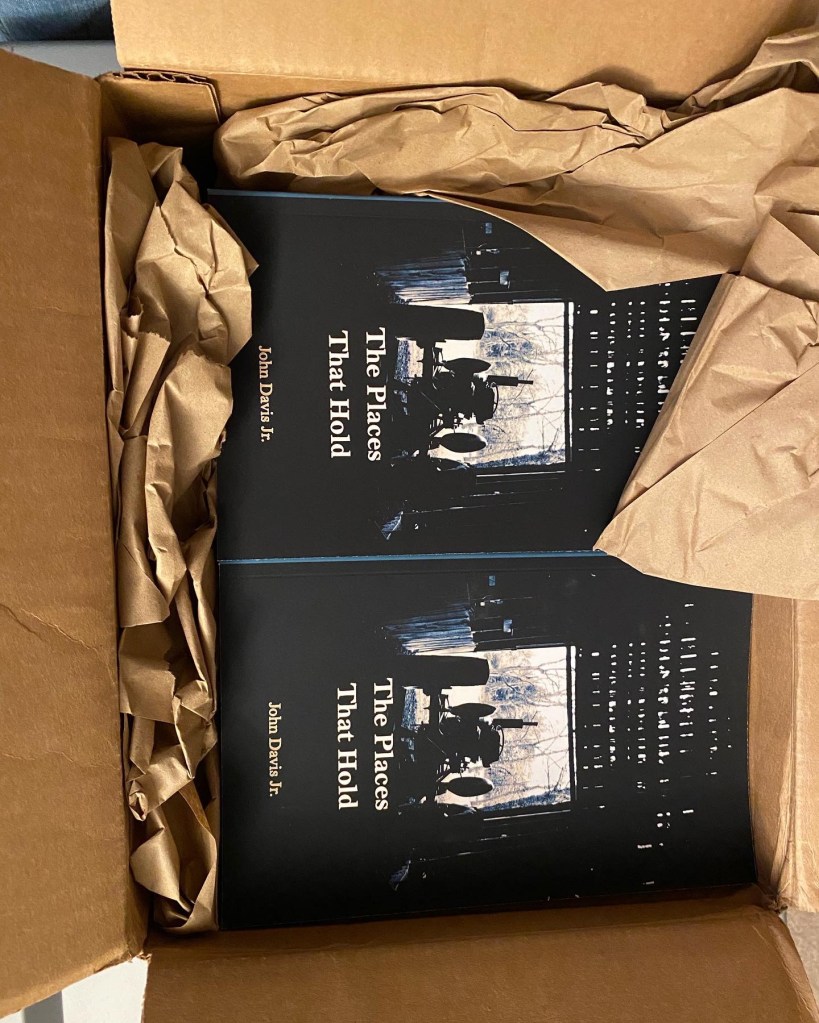
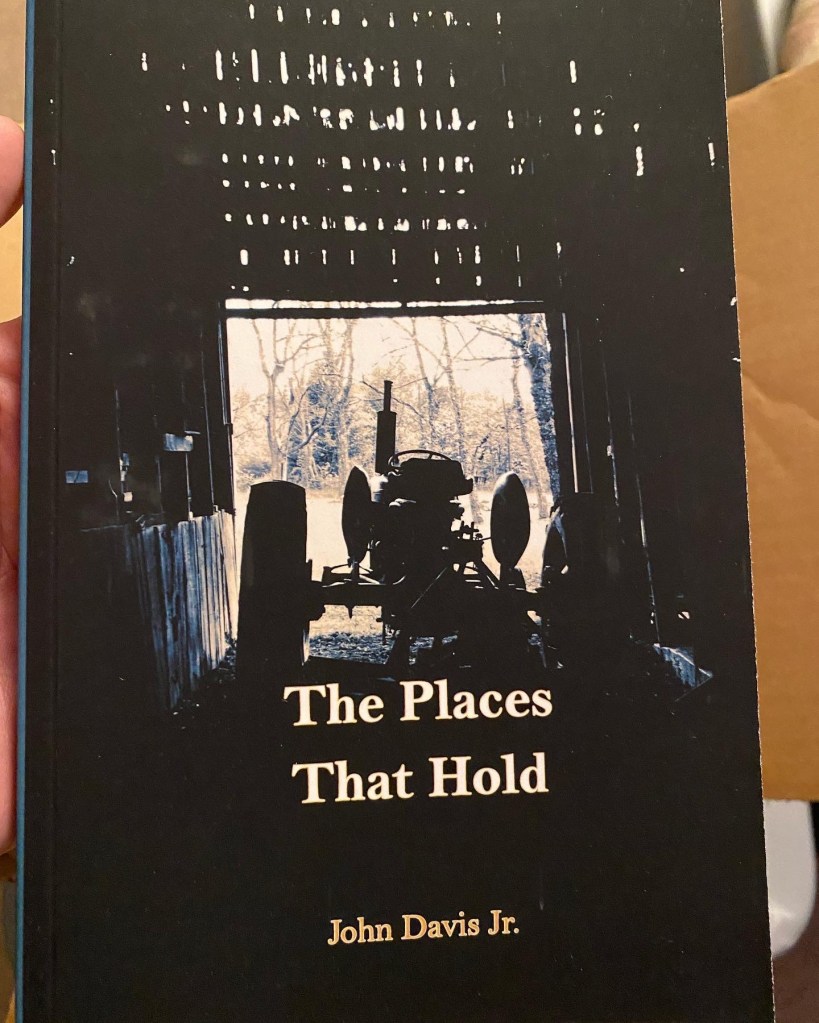

Ready to get your own copy? Visit:

With all due respect to Marie Kondo and other “organization” experts, I’m not making my space utterly devoid of stuff. Here’s why: Stuff has history. Stuff is full of inspiration, and sometimes it can make us think in ways we ordinarily wouldn’t. And finally, stuff has meaning. If a thing has beauty as well as function, then it ceases to be what some experts would call “clutter.”
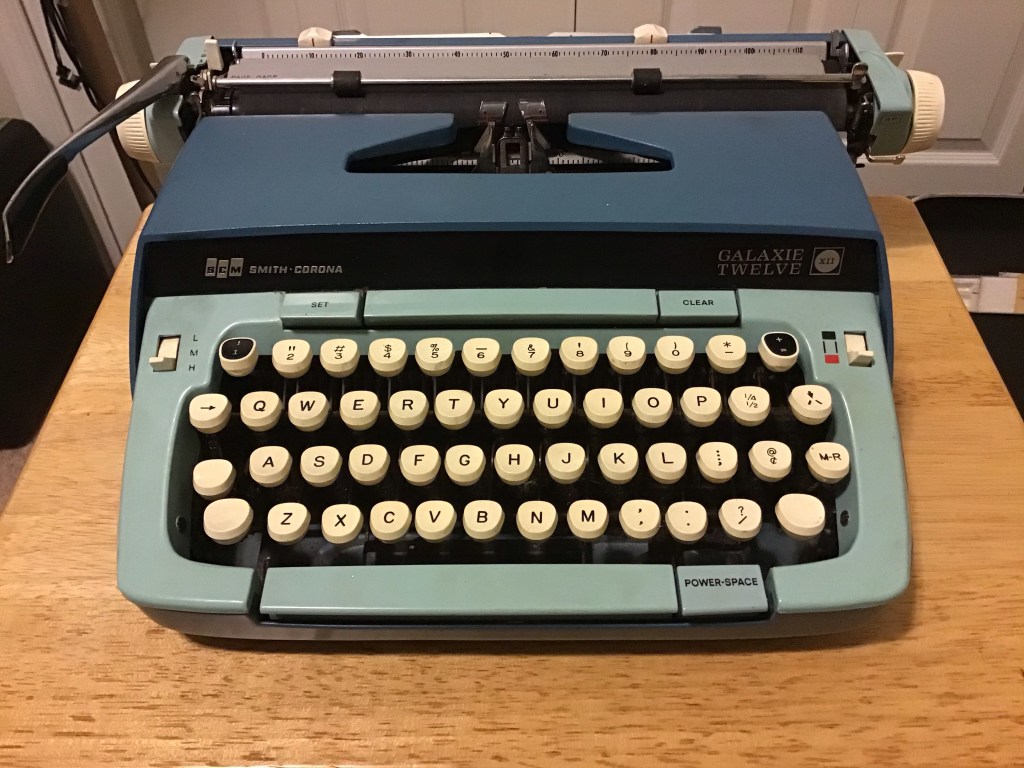
Now before you call Hoarders and report me, let me say that there’s an extent to everything. My study is not overflowing with so much junk that I can’t even move, let alone think. But I do have a number of objects that I keep because of their inherent aesthetic value. Here, I’d like to talk just a little about the items I hold dear as a writer, and how my practice might suffer without them.
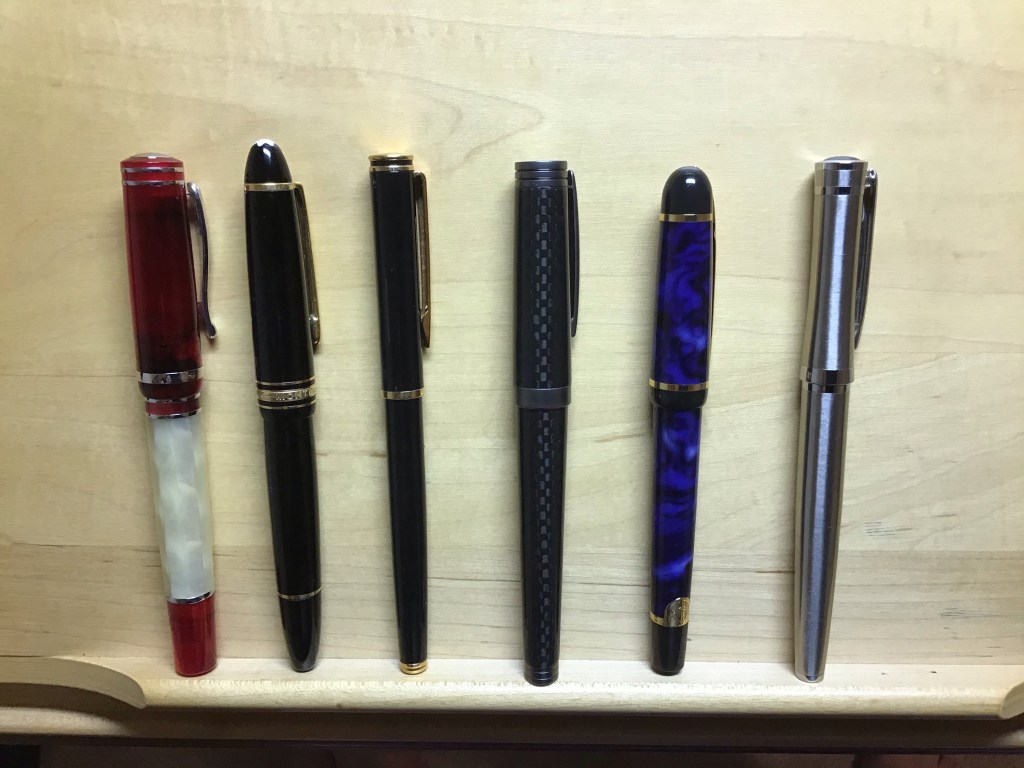
Good pens are the frontline workers of the creative life. When smooth ink is flowing freely, filling good paper with artfully rendered words, the whole experience of writing is improved. I prefer old-school fountain pens because they connect me to generations of great minds well before our all-things-temporary present. Watching a crafted nib do its work motivates a writer to do his work in an equally elegant way. On my podcast, I talk about how connecting to things by touch can result in artistic revelation, thereby generating more output (writing or otherwise). Good fountain pens are probably the prime examples of this idea in action, and they’re good for Socratic Journaling, another idea explored on my podcast.

Some of the stuff I keep has sentimental value. My Great Uncle Hy was a swell guy — he was a businessman through and through, and over his lifetime, he did well for himself. One relic of his that I’ve kept is the translucent heavy green glass ashtray he used when smoking his after-dinner pipe. While I’m not a smoker myself, I use it these days to hold the aforementioned fountain pens and other office sundries. It catches the light the same way it did when I was a boy and became fascinated by its color and brilliance. The memory of Uncle Hy and his industriousness keeps me going when I feel like slacking off.

Some things call out to you when you see them. Such was the case when I saw this little faux ivory box at The Oxford Exchange in downtown Tampa. It holds paper clips and thumbtacks mostly, but it also reminds me to stay true in my direction. Its weight is pleasantly permanent, and opening it is always an experience filled with possibility, even though I’m well aware of what’s inside. There’s a kind of Indiana Jones mystique about it, so yes, it stays.
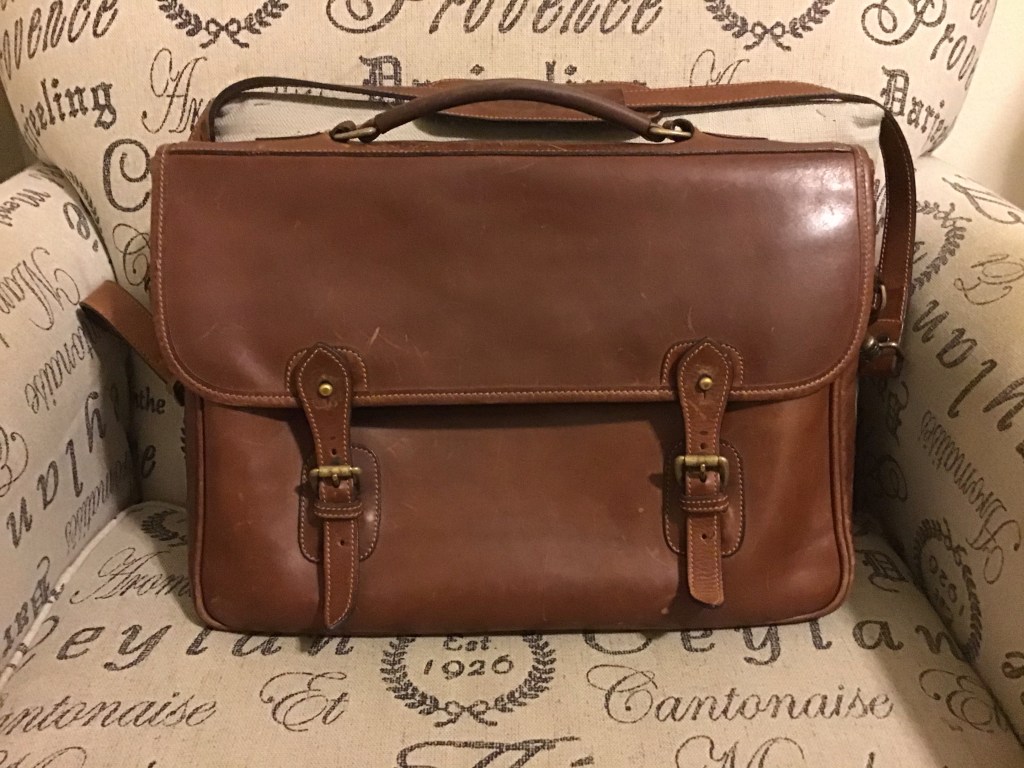
My leather briefcase was given to me by my mother after I received my first master’s degree. Over the years, it has been to Lisbon, Portugal, Santa Fe, New Mexico, and lots of other spots. It holds everything I need, and frankly, it has become an extension of me — rare is the day when I walk onto campus without it. It even smells like literature.
So there you have it — an assortment of objects and keepsakes that make my literary life a little more inspiring. Minimalists and Feng Shui practitioners take note: These items might not be totally utilitarian, but they absolutely influence my creative process. Maybe you’ll say I should be willing to part with some of what I’ve mentioned here — my reasoning is too maudlin or clingy for your taste. Therein lies the beauty of stuff: Shakespeare was right when he said, “Beauty is in the eye of the beholder.” I enjoy beholding everything you’ve seen here. End of story.
Are there things that you can’t part with? Items that you’d feel a little more empty without? Use the comments section below to tell about your most cherished or prized creative possession…
Please enjoy the video poem above as we seek serenity, equanimity, and stability in this troubled time. Faith and peace to all.
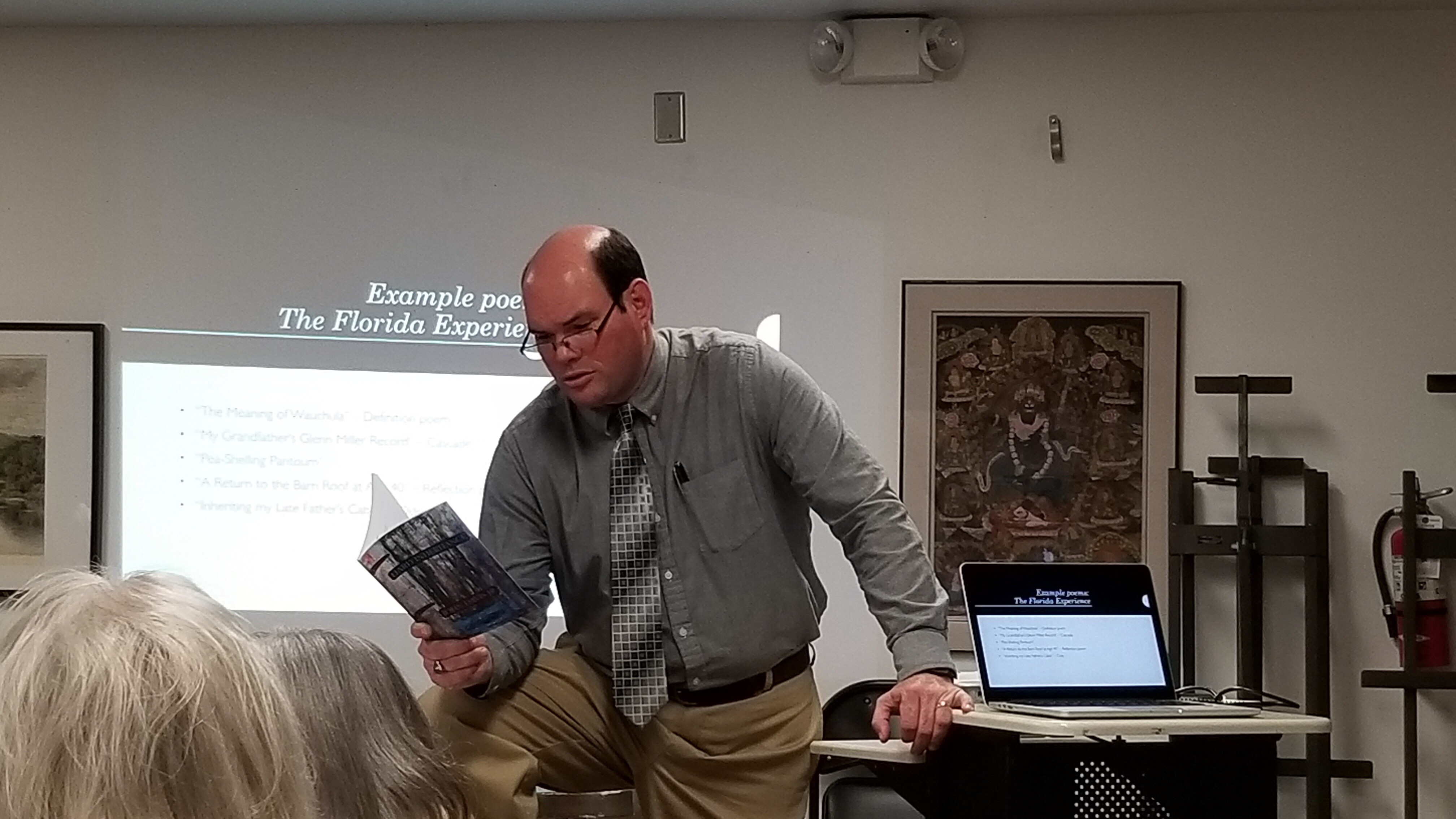 For about six months or so now, I’ve been volunteering for a local arts organization. I’ve provided workshops, seminars, and even the occasional reading. Here’s what I’ve learned: The most rewarding part of being a poet is passing on the joy of writing to others.
Sure, that sounds trite, but it’s true. And it’s not that I hadn’t grasped this notion previously. I mean, I’m a teacher after all. But here’s the thing — teaching adults who truly want to learn the craft is a world apart from teaching English courses for a paycheck.
I get to have a good time discussing poetry and how to make it, and newbies find out a few tricks and techniques that perhaps they hadn’t considered. My favorite is the generative workshop, where we use various prompts to craft the beginnings of new work. That silent hum of concentrated creativity fills the room, and you can tell that vivid things are happening in everyone’s mental theater. It’s almost (cliche warning) magical.
And while I love my day job and all it provides, for sheer joy of teaching, it’s hard to beat the volunteer space. No grades, no homework, just genuine fun with words. I’ve also noticed that giving back a little something to the craft that has meant so much to me restores my passion for the written word. Watching people grasp the potential of poems reminds me why I do this work, and believe me, it is work. But it’s a labor of love, certainly.
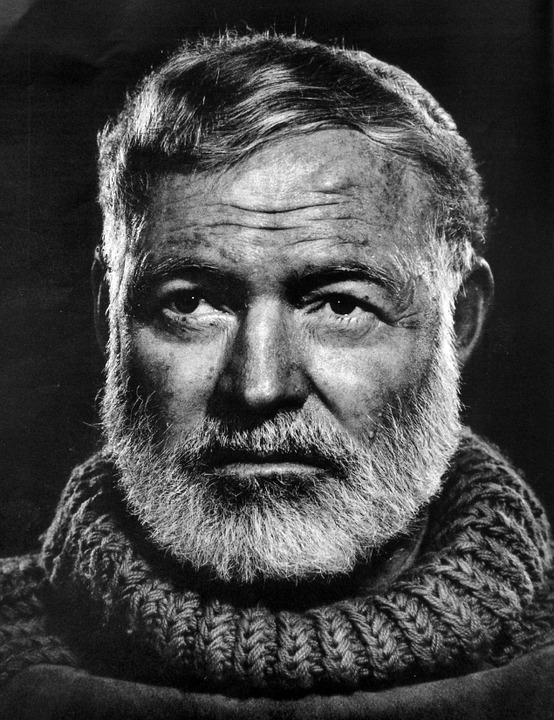 When I was a younger man, I desperately wanted to be the next Ernest Hemingway of poetry: a rugged outdoorsman and adventurer extraordinaire who happened to scribble meaningful words. I think every writer goes through that phase sooner or later. George Saunders, for example, regularly confesses to a time in his life when he was striving for his prose to mimic that of “Papa.”
I haven’t fought any bulls or driven any ambulances overseas, and surprisingly enough, even though I reside in the Sunshine State, I have never landed a giant blue marlin (or any other large saltwater fish, for that matter). However, once in a great while, I encounter an opportunity that combines Hemingway’s two great loves: travel (usually in natural settings) and writing.
Such was the case in 2016, when I spent 16 days in Lisbon, Portugal. From the food to the language to the music to the memorable landmarks, that city and its surrounding areas made me feel like the reincarnation of some Lost Generation member — enjoying the days and nights in a European setting, chatting casually about artistic concerns with like-minded others. Even now, certain Lisboan influences still enter my work from time to time.
And this summer presents a similar (though more domestic) opportunity. For one week in early summer, I will be attending a writer’s retreat in the Cumberland Gap area of Tennessee. The natural splendor of the area combined with solitude should produce some favorable results. My plan is to work on poetry for half the week and prose for the other half, but we’ll see what the muses have in mind. I have two manuscripts in the works, and there’s no telling where creative isolation may lead.
Another perhaps more Hemingway-esque event that I’ll be helping lead this summer can be found at the Marywood Writers Retreat in the Northwoods of Wisconsin. While there in July, I’ll be leading poetry workshops and also serving as an unofficial fishing guide — A “fish with the poet” event has been planned, and, having never fished in Wisconsin previously, I’m excited by the prospect. Granted, I’ve caught plenty of bass, bluegill, sunfish, catfish, and other freshwater species south of the Mason-Dixon, but that’s a whole other world, from what I’ve been told. (Note to anglers — please feel free to drop good fishing advice in the comments section below if you’ve got it. I’ll trade you my “best” poetry advice.)
But whether I’m reeling in the big one or attempting to pen a masterpiece, I am hopeful that the spirit of Hemingway — the spirit that seizes the world by its lapels — will work its magic. And I hope that you too, reader, will find joy and inspiration as warmer months finally arrive. To good times and good writing: Cheers!
 John Davis Jr. -- Author