 FLteacherpoet555
Subscribe to continue reading
Subscribe to get access to the rest of this post and other subscriber-only content.
Subscribe to get access to the rest of this post and other subscriber-only content.

Once in a while at this time of year, workshop participants and seminar attendees express a desire to integrate poetry reading into their holiday celebrations. There’s a fine tradition of reading verses at Christmas get-togethers, and it dates back centuries. As we get more high-tech and less connected to the old ways, events like reading “A Visit from St. Nicholas” can restore in our homes a generational bond, and a continuation or a renewal of tradition.
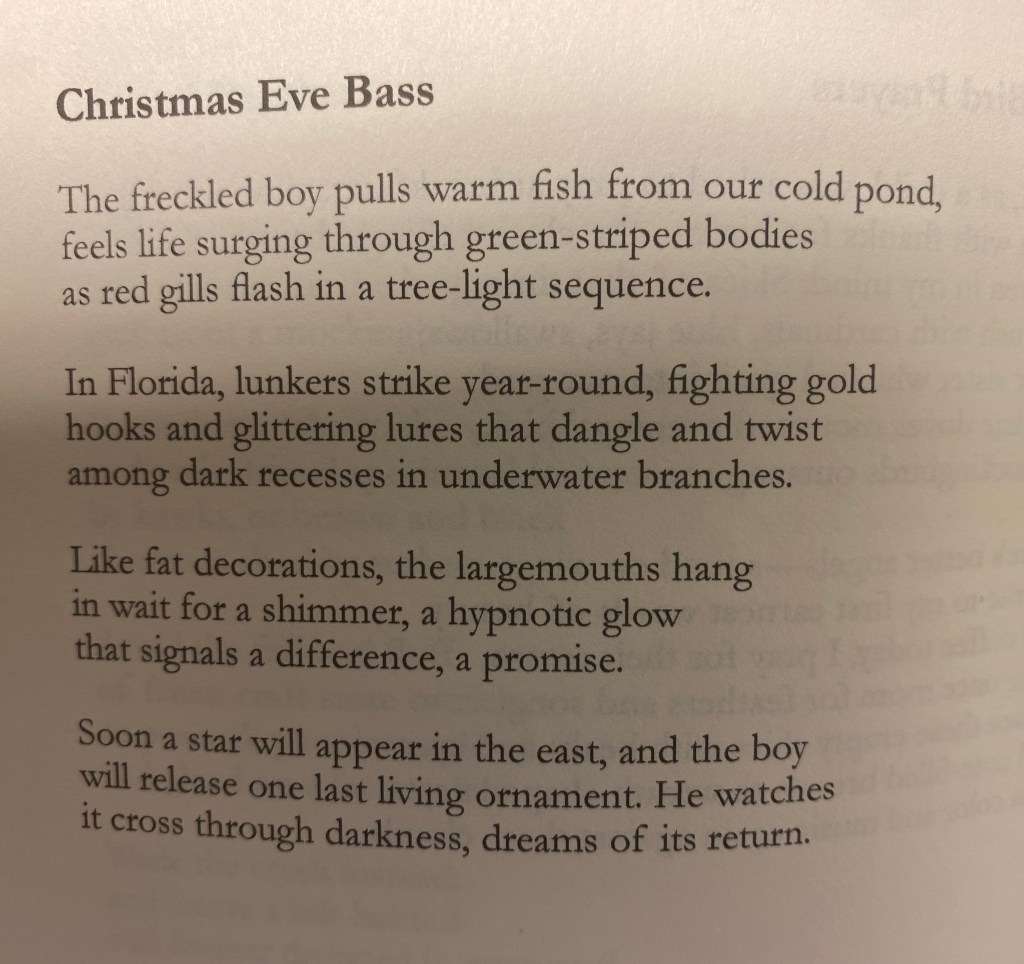
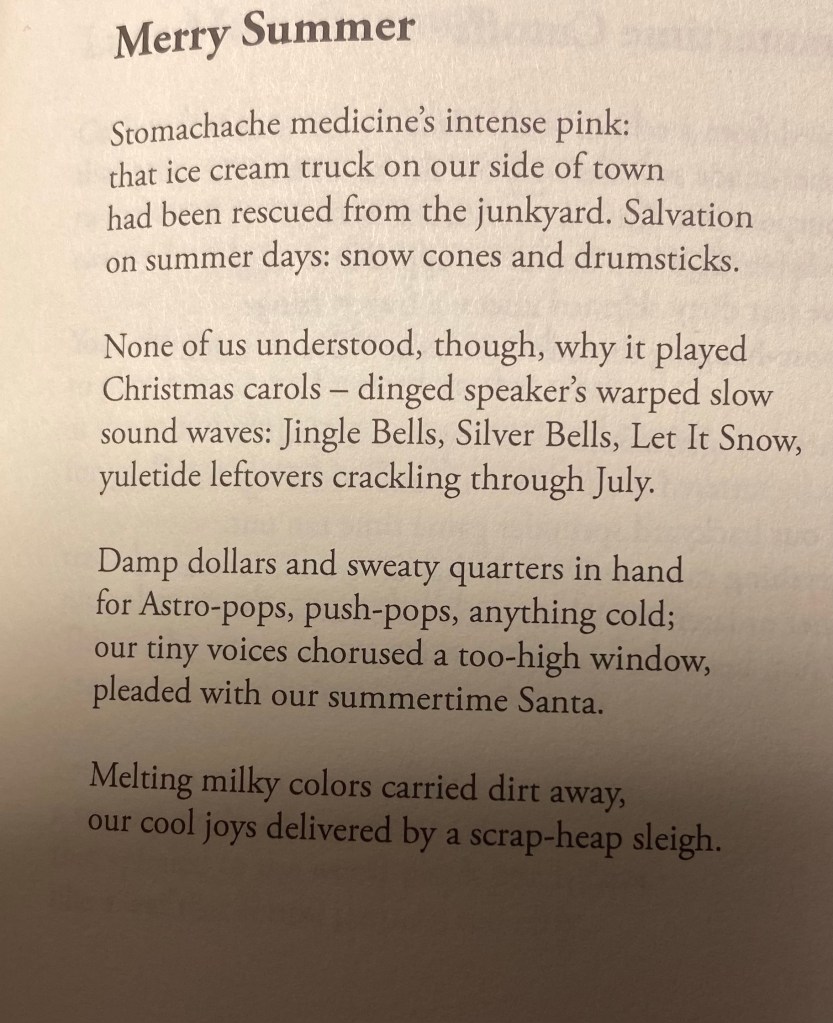
But we don’t have to limit poems to old standards; even newer poems and those with remote connections to Christmas can have value and add a fun, unconventional event to parties and family gatherings. For this post, let’s look at two poems that could give guests something meaningful and memorable:
Now is also a good time to mention that books of poetry, usually slimmer and more travel-friendly than prose books, make great stocking stuffers. There’s always someone in our circles who is resolving to read more poetry in the new year, and the books linked to above will provide hours of truly engaging reading. Help make a poet’s Christmas brighter, and purchase copies for friends and loved ones! I am grateful to all of you, readers and followers, and I hope this season treats you well.
Once in a while at this time of year, workshop participants and seminar attendees express a desire to integrate poetry reading into their holiday celebrations. There’s a fine tradition of reading verses at Christmas get-togethers, and it dates back centuries. As we get more high-tech and less connected to the old ways, events like reading “A Visit from St. Nicholas” can restore in our homes a generational bond, and a continuation or a renewal of tradition.
But we don’t have to limit poems to old standards; even newer poems and those with remote connections to Christmas can have value and add a fun, unconventional event to parties and family gatherings. For this post, let’s look at two poems that could give guests something meaningful and memorable:
Now is also a good time to mention that books of poetry, usually slimmer and more travel-friendly than prose books, make great stocking stuffers. There’s always someone in our circles who is resolving to read more poetry in the new year, and the books linked to above will provide hours of truly engaging reading. Help make a poet’s Christmas brighter, and purchase copies for friends and loved ones! I am grateful to all of you, readers and followers, and I hope this season treats you well.


Sometimes people ask me, ”Why don’t you write fiction or nonfiction?” My answer to them is, ”I do; it’s just not my first love or my calling.” I sometimes begin with prose before arriving at a poem. Today was one of those days. Sitting on my back porch with a yellow legal pad in my lap and a cup of coffee nearby, I began writing something, anything, to prime the mental pump. Gym-goers, consider this like the cardio before the weight training. As I cursived out a few initial throw-away words, the garbage truck pulled up out front, its brakes emitting that high, industrial screech that precedes a brief stop. This quick encounter prompted the following to appear on my notepad:
The sound of our neighborhood garbage truck takes me back to Fort Meade, circa 1986, when garbagemen (yes, that’s what we called them) would leap from the backs of slow-moving, dirty white trucks and, with Herculean muscle, lift and empty our large metal trash cans into the waiting, hungry mouth of the compactor in the truck’s rear. The work was filthy and stinky, and the men who did it went home every night smelling of other people’s refuse. But the men who did it grew strong and made a decent enough living to send kids off to college so they’d never have to become “sanitation workers.”
Today, the truck extends a mighty mechanical gripper. The machine lifts, empties, and returns the dumpster, which is lifeless gray plastic. There is no poetry in this process. No clang of cans, no yelling among workers. No Clyde, no Cecil [whose names we knew because they were embroidered onto gray-blue name-strips above their breast pocket, sometimes ripped]. No quick wave before the resumption of a route. Just an ugly claw taking waste, leaving vacancy.
Ironic, I suppose, that I openly stated the lack of poetry in modern rubbish collection. Had it not been for the shiny blue truck’s arrival and the sensations that went with it, my recollection would not have been triggered. I know that Cecil and Clyde (conveniently two C names) will probably make an appearance in a future poem. I know that those noises and memories will probably appear in that poem, as well. And I know that right now, I must allow those images and ideas to rest a while before they become something else. I’ll stash away this yellow piece of paper, and some morning at 4 a.m., much to my family’s chagrin, I will revisit this small vignette, and it will take on new life in my chosen genre.
This is what a life in literature sometimes looks like: not the gleam of an award or the bustle of a book-signing, but the simplicity of a legal pad, a ballpoint pen, and a cup of coffee. A view of a pond, a quick sensory stimulation, and a ready place to process all those thoughts that arrive. This is what I write when I don’t write poems.
I used to serve under a school administrator who repeatedly used the cliche, “This ain’t my first rodeo.” In fact, he kept a large wooden sign with the phrase painted on it in his office. I hate that expression now.
Tomorrow I will launch my fifth book, The Places That Hold, at the Firehouse Cultural Center in lovely small-town Ruskin, Florida, where I’ve given many poetry workshops over the years, and I find myself repeating the “first rodeo” cliche as a way to assure myself that everything will go just fine.
Book launches are always a crap shoot: You could have zero people or 100, just depending on so many other factors. This time, there’s Omicron lurking around us, a children’s parade, and a handful of competing events. Truthfully, poetry isn’t known for bringing in the masses, and I get that.
I’ve done my part — The word has been put out on social media and through other outlets, I’ve readied all the supplies, and I’ve recruited at least a few good friends to comprise an audience in case nobody else shows up. I know what I’ll be reading, wearing, and doing at the event itself. I’d like to say this is “old hat” by now, but with all transparency, putting a new book into the world with a special engagement like this always tends to be nerve-wracking until it’s done.
So yes, “This ain’t my first rodeo,” but you never know which way the bull might buck, either. Stay tuned, readers. There may be figurative face-manure or a shiny buckle ahead; only time will tell.
Hello friends, fans, and followers!
The official launch of The Places That Hold will take place Saturday, January 22 at 2 p.m. at the Firehouse Cultural Center in Ruskin, Florida. It’s a stone’s throw from Tampa and St. Petersburg, so if you’re local, come on by! For those on Facebook, see the link below:
www.facebook.com/events/595926751480194/permalink/596159064790296/
Here’s hoping you can make it to this fun event!
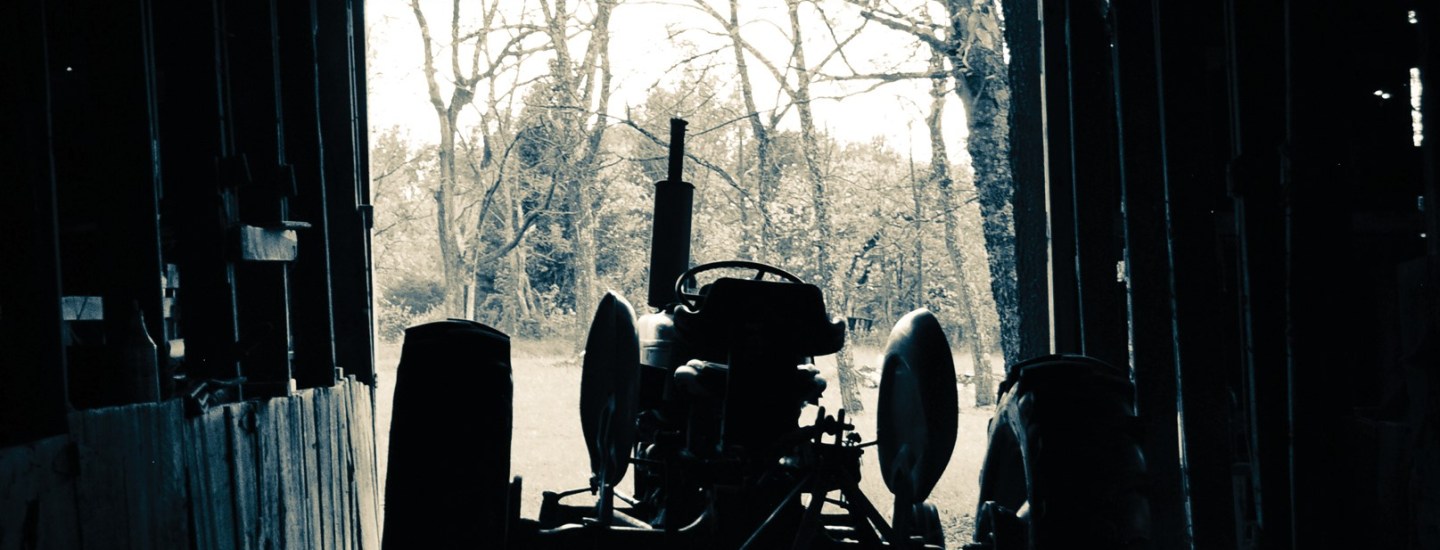

The Places That Hold
John Davis Jr.’s newest poetry collection published by Eastover Press. Small-town life, rural truths, and poems of captivity interweave themselves in this volume.
$20.00
For all those who’ve eagerly asked to be notified when the new book is available, I have special news: Tuesday is the official release day! In preparation for this major event, I’m offering my preorder folks a unique bargain — order today (before the release) and you’ll have a signed copy made out to you. I’ll ship it to you (shipping included in price above) along with a personal card of thanks as soon as I receive my author’s copies. As the holiday season arrives, please help me celebrate this new collection with your support. Just click the “Pay with PayPal” button above. Thanks in advance!

Hello, readers. I’m very excited to reveal the cover of my new forthcoming book! Hot off the designer’s PC, here’s the front of The Places That Hold, my fifth collection.
This 81-page book contains some of my finest work yet, according to my fiercest critics (see also: wife and sons). I’ve had a great experience with EastOver Press, the publisher. They’re located out of Rochester, Mass., but the editor calls Speedwell, Tennessee home. This publication marks the first time I’ve ever received an advance for a book, and while it’s crass to discuss money matters, I can honestly say that receiving that check was both gratifying and validating for a small-town scribbler like me.
Perhaps what I’m most excited by is this book’s rare chemistry: It is a unique combination of fond reflection and tragic documentary. On the one hand, there are lots of poems about the beauty and history of my home state. But on the other, there is one whole chapter devoted to pieces inspired by the horrific events that took place at Dozier Reform School in the panhandle. The book is equal parts light and darkness, with poems that examine what it means to call somewhere home alongside those about alienation and abandonment. For those seeking the rural and the natural, you’ll find plenty of both here, but you’ll also find the noise and smell of cities like Tampa, St. Petersburg, and even Lisbon, Portugal. These “Places That Hold,” alongside others, create a book that is rich in imagery. These poems provide escape via captivity.
Keep your eyes on this site for further updates; as soon as The Places That Hold becomes available for purchase, I’ll provide the links and locations here. Thanks as always for supporting my work, and may your upcoming holiday season be the happiest yet.
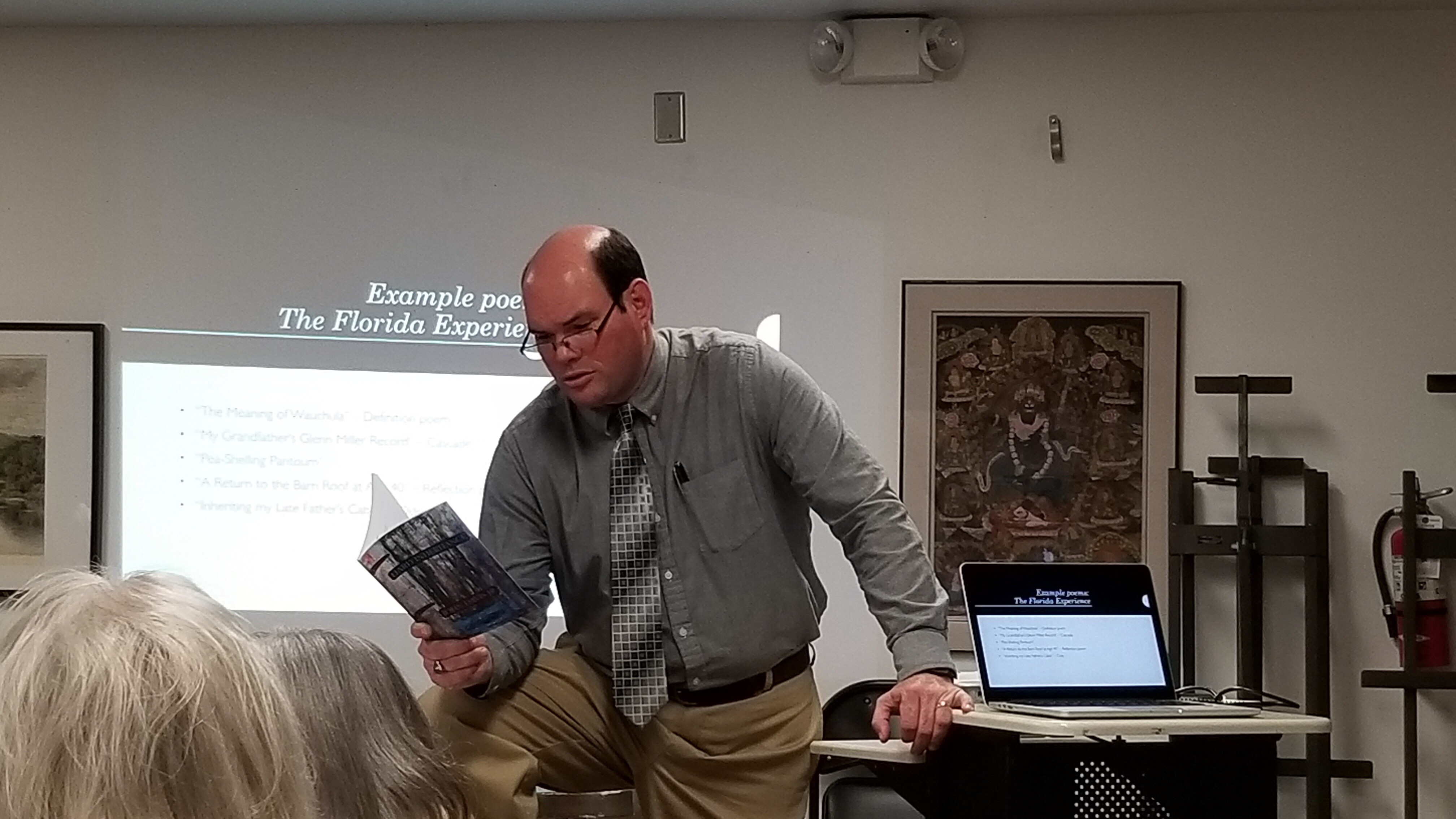 For about six months or so now, I’ve been volunteering for a local arts organization. I’ve provided workshops, seminars, and even the occasional reading. Here’s what I’ve learned: The most rewarding part of being a poet is passing on the joy of writing to others.
Sure, that sounds trite, but it’s true. And it’s not that I hadn’t grasped this notion previously. I mean, I’m a teacher after all. But here’s the thing — teaching adults who truly want to learn the craft is a world apart from teaching English courses for a paycheck.
I get to have a good time discussing poetry and how to make it, and newbies find out a few tricks and techniques that perhaps they hadn’t considered. My favorite is the generative workshop, where we use various prompts to craft the beginnings of new work. That silent hum of concentrated creativity fills the room, and you can tell that vivid things are happening in everyone’s mental theater. It’s almost (cliche warning) magical.
And while I love my day job and all it provides, for sheer joy of teaching, it’s hard to beat the volunteer space. No grades, no homework, just genuine fun with words. I’ve also noticed that giving back a little something to the craft that has meant so much to me restores my passion for the written word. Watching people grasp the potential of poems reminds me why I do this work, and believe me, it is work. But it’s a labor of love, certainly.
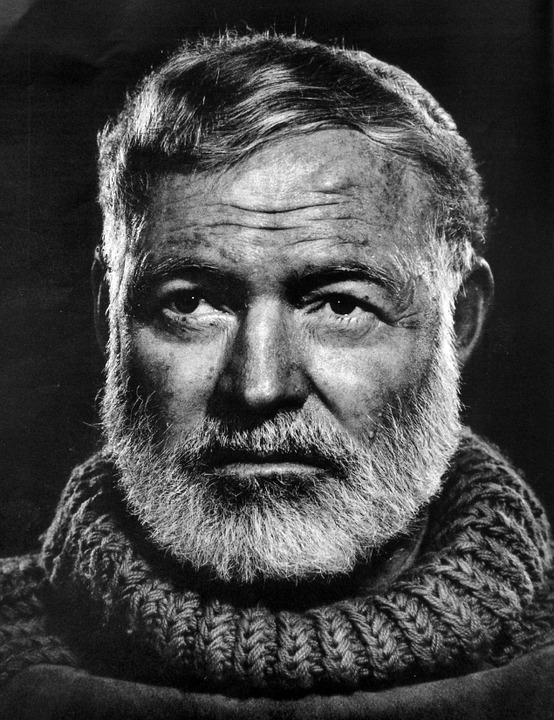 When I was a younger man, I desperately wanted to be the next Ernest Hemingway of poetry: a rugged outdoorsman and adventurer extraordinaire who happened to scribble meaningful words. I think every writer goes through that phase sooner or later. George Saunders, for example, regularly confesses to a time in his life when he was striving for his prose to mimic that of “Papa.”
I haven’t fought any bulls or driven any ambulances overseas, and surprisingly enough, even though I reside in the Sunshine State, I have never landed a giant blue marlin (or any other large saltwater fish, for that matter). However, once in a great while, I encounter an opportunity that combines Hemingway’s two great loves: travel (usually in natural settings) and writing.
Such was the case in 2016, when I spent 16 days in Lisbon, Portugal. From the food to the language to the music to the memorable landmarks, that city and its surrounding areas made me feel like the reincarnation of some Lost Generation member — enjoying the days and nights in a European setting, chatting casually about artistic concerns with like-minded others. Even now, certain Lisboan influences still enter my work from time to time.
And this summer presents a similar (though more domestic) opportunity. For one week in early summer, I will be attending a writer’s retreat in the Cumberland Gap area of Tennessee. The natural splendor of the area combined with solitude should produce some favorable results. My plan is to work on poetry for half the week and prose for the other half, but we’ll see what the muses have in mind. I have two manuscripts in the works, and there’s no telling where creative isolation may lead.
Another perhaps more Hemingway-esque event that I’ll be helping lead this summer can be found at the Marywood Writers Retreat in the Northwoods of Wisconsin. While there in July, I’ll be leading poetry workshops and also serving as an unofficial fishing guide — A “fish with the poet” event has been planned, and, having never fished in Wisconsin previously, I’m excited by the prospect. Granted, I’ve caught plenty of bass, bluegill, sunfish, catfish, and other freshwater species south of the Mason-Dixon, but that’s a whole other world, from what I’ve been told. (Note to anglers — please feel free to drop good fishing advice in the comments section below if you’ve got it. I’ll trade you my “best” poetry advice.)
But whether I’m reeling in the big one or attempting to pen a masterpiece, I am hopeful that the spirit of Hemingway — the spirit that seizes the world by its lapels — will work its magic. And I hope that you too, reader, will find joy and inspiration as warmer months finally arrive. To good times and good writing: Cheers!
 John Davis Jr. -- Author