life, poetry, publishing, Uncategorized, writers, writing

National Poetry Month Concludes


2018-npm-poster-image

View at Medium.com

View at Medium.com

April has certainly been less than “the cruelest month” this year. I’ve had some pieces published, spent some time with excellent poets, and with spring has come that sense of hope and relief. Soon, my boys will be out of school, and summer will press its Floridian heat upon us, urging us to the community pool and the beach. But for now, I’d like to spend the last little bit of a great month celebrating a victory or two:

1.) Deep South magazine, a publication that has been friendly to my work since its very beginnings, recently published “My Grandfather’s Exhibit,” a newer piece of mine that deals with a subject very dear to me:

http://deepsouthmag.com/2018/04/19/my-grandfathers-exhibit/

I’d appreciate folks visiting the link and hitting “like” or offering a comment, if you can spare the time. The editor loves for people to interact with content, and maybe this piece will inspire a few memories of your own. I’ll also share the audio version below:

2.) Alternating Current Press, who publishes a great online journal called The Coil, recently awarded an ekphrastic piece of mine in its Daguerrotyped competition. Using the photo provided from them, I put together a piece celebrating the contributions of women during the mid-20th Century:

https://medium.com/the-coil

Here again is an audio version for those who prefer to both hear and read works:

I also have some pieces forthcoming in other venues that I’ll announce as I’m able. I hope that National Poetry Month has treated you well, reader, and that as the year progresses, poetry will continue to be a valuable part of your everyday life.

View at Medium.com

View at Medium.com

View at Medium.com

View at Medium.com

poetry, publishing, Uncategorized, writing

Embracing the Idiosyncratic

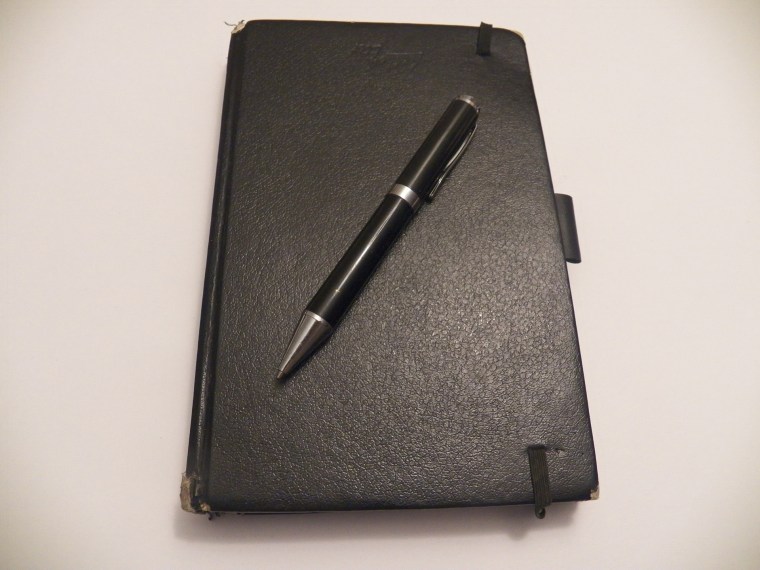
WIN_20171228_15_08_04_ProWriting is full of superstitions. There are accounts of authors who only use a certain brand of typewriter, who write only at one certain time of day, who sip only one certain brand of coffee or tea with one certain number of creams/sugars/whatevers in it.

Our rituals become nearly religious in their practice. For instance, I prefer to write the first several drafts of a poem with a fountain pen, specifically a Waterman Phileas. I like to fill its charger with ink from a bottle — the color doesn’t really matter so long as it’s not red — and then feel the flow of that ink through a golden nib onto the page of a legal pad (canary or white is of little consequence to me).

But these kinds of minute habits, while important, are more innocuous than the habits we can sometimes abuse in our actual writing. I know I have a few idiosyncrasies in my poetry, and over the years, I’ve had a love-hate relationship with each of them. The excessive alliteration, the internal rhyme for no good reason other than the enjoyment of its sound, the Dickinsonian love of dashes — all these and more have been stylistic markers of my work, for better or worse.

And while my MFA program did its best to make me aware of them to the point of eschewing them, I’ve come to another understanding: All the greats have certain idiosyncrasies that critics scolded them for, but in the long run, we find those little habits endearing. Who could  imagine the work of e.e. cummings with capital letters, for instance? Or who could recall the work of Ogden Nash without its insistent whimsy and child-like wordplay? The list goes on, and the remainder of this post could be comprised of famous poets’ strange diction-predilections, but there’s only so much space, and I value your time.

The point is just this — Maybe I’ll stop using those devices that I’ve loved so much and so long, fearing I may “wear them out.” Or maybe, like a comfortable sweatshirt or an old pair of jeans, I’ll keep using them. Maybe I will own them proudly. Being mindful of delicious syllables doesn’t necessarily mean obviating them. In the diet of language, our guilty pleasures can still be consumed (or employed) occasionally, so long as we know not to eat the whole metaphorical pizza. Like everything, diction is a balancing act. Too much or too little of anything can throw things into disorder or disarray. But sometimes, that kind of creative chaos is just what we need. Our little indulgences and idiosyncrasies can lead us to greater authenticity. And as literary history proves, the authentic writers survive long after they’ve passed. Here’s to a great 2018, complete with all the oddities our creative minds return to again and again.

life, poetry, publishing, teaching, Uncategorized, writers, writing

Calling All Writers: HELP


cover-for-ad

Buy a book, save a life: Between now and Christmas, 100 percent of every sale of each of my books will go toward getting one of my poet-students and her mother out of the homeless shelter. You get good poems, and a family that desperately deserves a Merry Christmas is given a hand up. There are no losers here — If you don’t want to buy one of the books below, you may donate directly to the Save my Student from Homelessness fund:

https://www.gofundme.com/save-my-student-from-homelessness

If you would like to go the literary route and receive some poetry in exchange for your generosity, please consider purchasing any one of the books below (click the title):

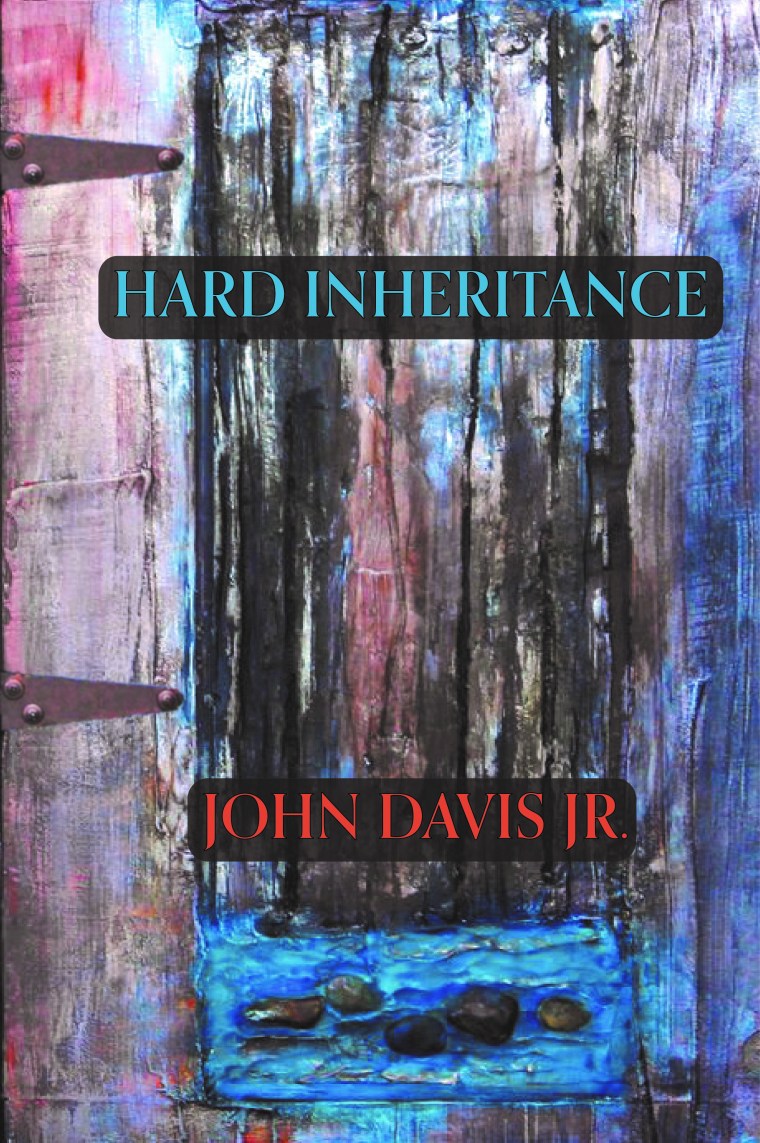
Hard Inheritance

Middle Class American Proverb

The Boys of Men

Your purchase or donation is deeply appreciated. I can’t say enough good things about this student, and she and her mother are grateful for any help you can offer. Please join this effort to save a budding writer from the horrible conditions at the homeless shelter. THANK YOU!

life, poetry, publishing, Uncategorized, writers, writing

Well, That Didn’t Take Long

journalRegular readers may recall in mid-November that I was lamenting copious recent rejections and doubting my own ability as a poet. I feared I had “lost my touch,” in essence, and I was also seeking solace in other genres, among other things. Not too long thereafter, I was contacted by a prestigious literary journal whose reading period is ongoing. I was complimented by the editor on a fine poem, and I was asked not to say anything about the acceptance until their reading period ended (which it has not). Hence, the mystery and ambiguity at this point: I’d love to tell you where and when the poem will be published, but I’ve made promises, and for now, I’m keeping them.

The lesson in all this, of course, is one I learned long ago but still occasionally forget: One’s poetic victories and losses wax and wane, and there is usually a fair balance among the wins and defeats. Inspiration doesn’t just suddenly die, and experimentation can make one’s voice more authentic, more robust. If nothing else, dabbling with other choices can help reinforce the resonance of a poet’s authentic voice — it certainly did for me.

When I stopped “messing around” with subjects, ideas, and forms that were unnatural and inorganic to my sensibilities, I was able to return to the true, the genuine, and the productive. Like Dickinson, Frost, and countless others before me, I have certain friendly forms and techniques that have served me well over the years, and while breaking from them for a time can serve as a kind of oasis, sooner or later, the trek must continue more earnestly than ever before.

My journey has been (and continues to be) one marked by the regional, the rural, and the real. These descriptors, however I may wish to alter or even abandon them, continue to define my work, as they are the sources I return to again and again, and they rarely fail me.

Place is inextricable from my diction. Every Dickinson needs her Amherst, every Frost needs his Vermont (or New Hampshire), and every Hughes, Cullen, or Toomer needs his Harlem. I need central Florida and its rhythms, its landmarks, and its people as much as I need oxygen. This land and its characteristics are infinite in their inspiration.

As the publication of this newer piece arrives, I’ll be sure to follow up here. For now, may I politely suggest a few stocking stuffers:

Hard Inheritance — My latest (2016) collection filled with the wonders and truths of agrarian life.

Middle Class American Proverb — My 2014 book that was a finalist for the Lascaux Book Prize, and which includes multiple Pushcart-nominated poems. It is also my largest collection to date, and was hailed by poets from Peter Meinke (poet laureate of Florida) to Erica Dawson (2016 Poets Prize winner, among other accolades).

The Boys of Men — A chapbook (meaning little/short collection) of poems about fatherhood, mentorship, and the bonds that link generations to one another. A good gift for the teacher, dad, or son on your list. And cheap!

Thank you, readers and lovers of poetry, for your continued support. This literary life might not be an easy road at times, but it certainly remains valuable. Onward to Christmas!

life, poetry, publishing, teaching, Uncategorized, writing

A Farewell Book Launch

cover-for-adIn one week, I will be launching my latest collection, Hard Inheritance, at one of our city’s nicest art galleries. It is bittersweet, as this will be both the first and last book launch I hold here. I’ve loved my current city for 17 years, but this summer, my family and I will be moving to the west coast of Florida. My newest university teaching gig is a 70-mile drive from my present home, and making a 140-mile round trip daily is simply infeasible. By spring break, we plan to put our house on the market, and hopefully by summer, we will be in a new house in the Tampa Bay area. Timing, the market, and other factors will determine how quickly all this occurs, of course.

In the meantime, I’m excited to offer this new book, much of which has been inspired by our city, to the people of Winter Haven. My cover artist, a Winter Haven native herself, will be on hand to sign copies of the book with me, and invitees include people who have been supportive of my craft over the years that I’ve resided here. In many ways, this book launch is a fond goodbye to a place that has been kind to me and my family. The time I’ve spent here hasn’t been perfect — the same is true anywhere called home — but it has been inspirational.

Winter Haven’s people, its lakes, its nature, and its history have all woven themselves into my poems at different points along my artistic journey. I’ll miss all that over on the west coast, but there will be fertile material for writing there, as well. I’ve enjoyed seeing the vast salt water every day as I cross the Courtney Campbell Causeway or the Howard Frankland Bridge, and I feel certain that soon enough, my writing will take on a flavor that is more beach-driven. My hope is not to become one of those poets who creates trite rhymes about the sea, but rather, one who allows the environment to speak in its own way. Certainly that has happened here among the lakes of Winter Haven.

My wife’s family lives in Winter Haven, and doubtless we will be returning to visit often, especially during the summers. And yes, it will be a while yet before we’re out of the area. But this book launch allows me to reflect upon and salute a place that has been meaningful. The future is uncertain but hopeful, and it wouldn’t be possible without history. So, Winter Haven, a place of history, beauty, and opportunity, this book launch is for you. Best wishes.

poetry, Uncategorized, writers, writing

The Beauty of Lisbon, Portugal

lisbon rooftop

The rooftops of Lisbon are a sight to behold! This shot from the top of the Hotel de Chiado, where the opening reception for the Disquiet International Literary Program is taking place, says it all.

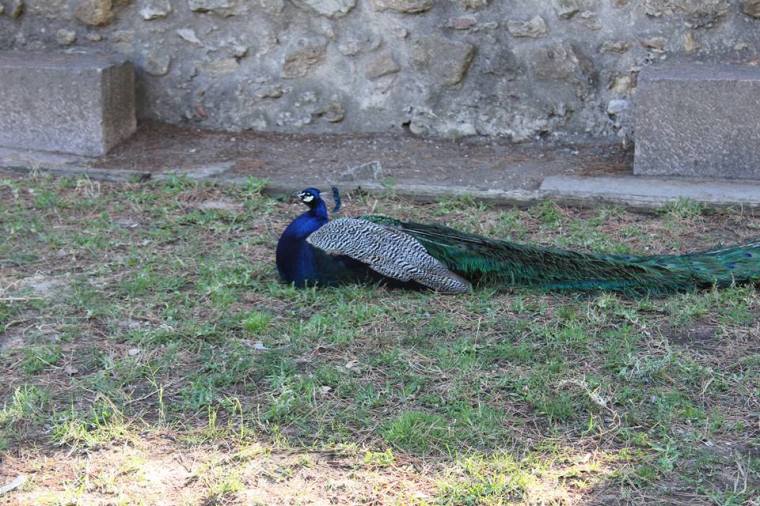
Lisbon peacock

While walking the grounds of the Castela de St. Jorge in Sintra, this peacock stole the show. The castle is huge, and there will be more photos of it in future posts. Stay tuned!

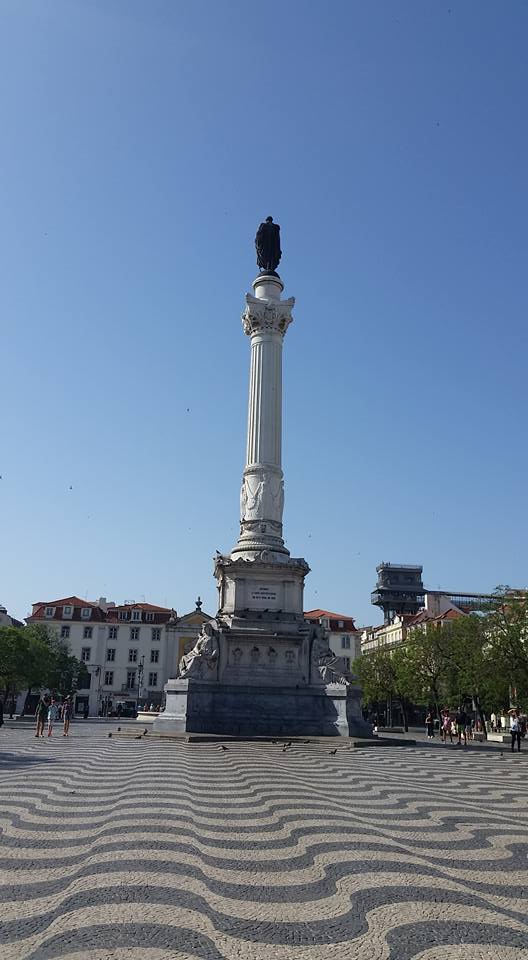
Lisbon statue 1

One of the many beautifully tiled plazas here in Lisbon. Statues of artists and writers are everywhere!

life, poetry, writers, writing

In Praise of Being “Mainstream”

The Cast of


As a kid growing up in the 80s, my television family was the Seavers, not the Cleavers. Every boy my age wanted to be Kirk Cameron (Mike Seaver of Growing Pains), or maybe Michael J. Fox, who played Alex P. Keaton in Family Ties. Shows like these made it seem cool to be like those families and their kids, for certain.

In today’s literary community, aspiring toward a more traditional type of success has been replaced by a phobia about being “too mainstream.” I was reading an article just the other day by a respected author who lamented that her life was “becoming too mainstream,” which she defined by tasks like going to the grocery store, washing dishes, and tending to the relationships beneath her roof.

Sadly, being responsible and attempting to live a reasonable, self-sufficient life are both ideas that have been denigrated by various media in recent years. The notions that we should work ethically, raise a family, seek advancement in a single field, and aspire toward something greater than self-satisfaction are frowned upon by a vocal minority. There are those, after all, who believe such ideas to be too old-fashioned, too whitebread, or too puritanical for the twenty-first century.

But this isn’t a political post. I’m here to defend the value of the mainstream in our literature, specifically. There is beauty in the common, after all, and while socio-cultural activists may be trying their hardest to redefine what constitutes “the norm,” Joe and Jane Average still know that their lives — complete with light bills, plumbing repairs, and runny noses — have wonder, merit, and poetry in their seemingly mundane routines. Eschewing the everyday limits the scope and reach of our literature.

What’s more, by omitting mainstream details, artists portray a fallacious picture of what our world is really like: Rather than giving readers honest visions of life, many are seeking shock value, or perhaps some abstract, inauthentic version of their environment. In the end, both of these motives generate lies — creative, occasionally beautiful lies, perhaps, but lies nonetheless. While I’m no Realist (artistically speaking), I also don’t believe that writers should fear the mainstream. Give us the sidewalk cracks, the wasps and overdue notices in the mailbox, the wiffle ball stuck in the backyard oak tree. There is poetry in all these things, and there is life.

Being mainstream, by the way, isn’t all that bad, you’ll find. Parenthood and the obligations of marriage, career, and family life remain sources of great inspiration, just as they did in prior generations. Maybe it’s not new, it’s not avant-garde, and it’s not the “artist thing to do.” But I’ll take it any day over the exotic or the crazy. To be clear, I’m not saying “mainstreaming” is for everyone. However, I am saying that in going about the business of writing, we as authors should not be scared of that which seems standard. For it is the run-of-the-mill that yields the exceptional, the original, and the special. And that, writers, is what we’re after — the diamond in the rough, the pearl inside the oyster, and the rainbow out of the gray. Without the ordinary, there can be no extraordinary.

poetry, publishing, writers, writing

On the Color of Names

Asian-sounding Pen Name Gets White Guy in Trouble

So, I read the story linked to above from the Washington Post. Here’s my two cents, for what it’s worth:

As a plainly named, semi-average white guy, I too have considered using a name that sounds “less Caucasian.” In today’s literary marketplace, it sometimes feels like people with humdrum, plain-Jane names get overshadowed by those without them, no matter what the ethnicity, gender, or background in question may be.

“Oh, to be a Li-Young Lee, a Marina Tsvetaeva, or a Yusef Komunyakaa!” say the Joe Smiths of the writing world. Of course, poets’ names are not their strength (although the aforementioned ones, especially, are impressive and beautiful sounding). It is the authors’ fine work that has earned them their spot in the literary marketplace. Their awards are many, and rightfully so. It is not a matter of name alliteration, length, or origin that has raised them to prominence; it is the quality of their writing, and a strong history of artistic contribution.

Statistics from a number of sources show us that writers from historically underrepresented communities still struggle to get their work in front of readers, and the good folks at Vida: Women in Literary Arts have demonstrated the imbalance between published male writers and their female counterparts. Nonetheless, when one opens a copy of Poets and Writers, AWP Chronicle, and other trade pubs that scribblers like me regularly receive, the most highly publicized writers can seem to be comprised of those with extraordinary and uniquely identifiable names, no matter what their color or creed.

Consider if you will the glossy back cover of the September 2015 issue of The Writer’s Chronicle: There, in a full-color ad for Grand Valley State University’s Poetry Night 2015, are Kwame Dawes and Aimee Nezhukumatathil. I wish I could be at the advertised event, not because I want an excuse to form such lovely names more often, but because these are exceptional writers. Inside the back cover, a full-page ad for the Sanibel Island Writers Conference (another event I wish I could attend this year) proclaims the presence of Edwidge Danticat, another brand-name poet whose work is as striking as her name, if not moreso. A quick flip through the magazine reveals Nikki Giovanni, Ravi Shankar, Minal Hajratwala, Luisa Igloria, and Natasha Trethewey, among other names like poems.

Admittedly, my name has sometimes raised an editor’s eyebrow or two because “John Davis Jr.” could belong to someone of any number of races. Sure, it’s a white guy’s name, but it could belong to someone of African-American descent, Native American descent, or any one of many other races, I’ve found. A quick run of my name through Google reveals a rainbow of people from all walks of life. Some are realtors, some are doctors, and one even ran for president in 2012. I’ve had editors presume I was African-American because my name reminded them of another famous “Davis Jr.” — Sammy Davis Jr. No joke. I didn’t mind the confusion, nor did I take offense. But then, I’m a member of this country’s majority. My people are not disenfranchised, nor have they faced excessive hurdles in society. And maybe that’s why Michael Derrick Hudson’s decision irks me.

It irks me for the same reasons that dialect-discrimination irks me, actually. I’ve had plenty of people assume over the years (based upon my size, appearance, and Floridian accent) that I am ignorant. “Dumb Southerner” is the label some have attached without knowing my full story. They hear my use of the colloquial “y’all” and jump to their conclusions, which are, ultimately, dead wrong. Yes, my family has farmed for three generations (at least). But we’ve also been educators, doctors, lawyers, professors, and Air Force pilots, just to name a few other roles. I don’t appreciate others assuming we’re hillbillies any more than writers of Asian descent appreciate “Yi-Fen Chou.”

So what’ll it be, Mr. Hudson? You think your name sounds too Anglo-Saxon? Oh, gosh. Better fix that right up. You’ll never get published now. It’s not like Billy Collins, Ted Kooser, C.K. Williams, or — let’s go back a ways — Edgar Allan Poe, Robert Frost, or W.B. Yeats have had any luck. I can see your quandary, what with all the illogical repression of white male names and voices, It’s clearly a wonder that your work has managed to see the light of day.

But I get it. I really do. All those delicious-sounding syllables from diverse cultures are out there, just waiting to be exhaled. And they’re tempting. I know they are. That, however, doesn’t make them yours to appropriate. Might I be so bold as to suggest Mr. Hudson read an excellent essay by Henry Louis Gates Jr. entitled “What’s In a Name?” I assign it to my students regularly. When you read it, consider yourself Mr. Wilson, Michael. For in essence, you have called Asian and Asian-American writers everywhere “George.” And that’s not okay.

poetry, publishing, writers, writing

When should you blacklist a publisher?

magazinesI’m not usually one to post one negative thing after another, but recently, circumstances in my literary life have been causing me to offer a few “no-nos” to the general public. In today’s edition: How to know when you should never submit to a magazine/journal/publisher again.

Without naming names, I’ll tell you that I’ve recently scrawled a list of literary venues that I will never offer my work to again, and posted them to my bulletin board as a reminder. As a younger writer, I did this after a single rejection (or even two or three), which was hot-headed and foolish on my part. However, the places that I’ve listed and “sworn off” recently have committed editorial faux pas that I consider frankly unforgivable in the 21st century. And so, without further adieu (punny, yes?), here’s why I said goodbye and good riddance to a few literary outlets lately:

1. No response unless accepted. One journal is on my list because the editors cling to a policy that states, “We will communicate with you only in case of acceptance.” Hogwash. There is absolutely no reason that a magazine of any size should refuse sending a simple “no” to a waiting and hopeful writer. Their exclusive practice is rude, and rudeness doesn’t fly, even today.

2. Hostile, condescending, or insulting rejections. Another place is on my list because the editor could have sent a simple form rejection letter or a polite “This doesn’t fit our current needs,” but decided instead to engage in blatant snobbery and offer a few ad hominem cutting remarks. Where “no thanks” will suffice, subtle or obvious condescension has no place. Farewell, editorial ugliness. You have no home here.

3. Rampant inefficiency or gross incompetence. My third blacklisted venue accepted my work more than two years ago, and published it about a week ago. No, I haven’t mentioned them by name here or on social media. I thought the place had gone belly-up, honestly, as my attempts at communication were never returned, and I had already submitted the pieces they accepted to other venues. This could have created a major legal snafu, among other issues. Also, my author’s bio was grossly outdated in this publication due to lax oversight and poor management. Never again, (name withheld) Review. Yes, I know publishing is tough and time-consuming, but not to the extent that it should cause literary malpractice.

4. Emotional/personal affairs affecting editorial discernment. The final place to which I will no longer submit is operated by a novice publisher who sees every “no thank you” as a personal attack, or as an affront to the integrity of her/his operation. This same publisher overshares his/her personal problems when deadlines are missed or when quality is questionable. When the boss has problems, everybody has problems, much like the old adage “When momma ain’t happy, ain’t nobody happy.” I’ll steer clear, thanks.

So there you have them: my reasons for “blacklisting” certain publishers. Some of these may seem hasty or even unfair, but in every case, my personal experience has been such that I felt compelled to write them off. I would be interested to know why you, the reader, have stopped submitting to various places, as well. Feel free to posit your experiences in the comments section (please keep it clean and non-libelous). We’ve all been there. Keep writing!

poetry, Uncategorized

Of Robert, Emily, and Thoughts of Legacy

Emily1
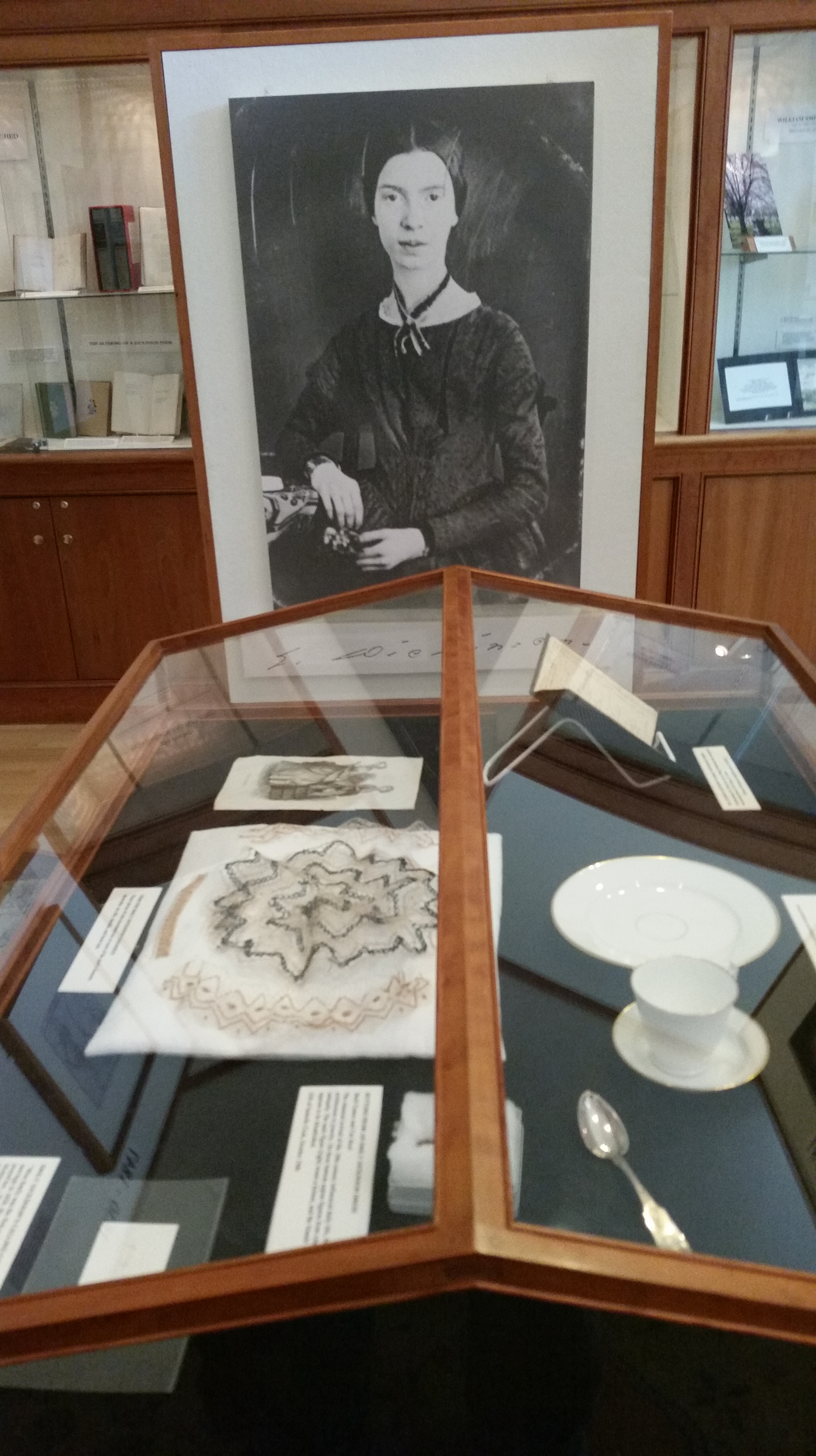
Emily Dickinson’s portrait in the Dickinson/Frost collection of Jones Library, Amherst, Mass.

Recently, I attended the Juniper Writing Institute at University of Massachusetts in Amherst. For the unaware, Amherst is the hometown of one of the canon’s most memorable and memorized poets, Emily Dickinson. Also nearby, one can find the farm of another great American poet, Robert Frost, considered by many to be the landmark poet of the 20th century. Both of these poets have meant a great deal to me as a writer throughout my career, and being in their part of the world was an unforgettable experience.

But my own independent studies of both Frost and Dickinson raised a new question for me — one that awoke me at 3:30 a.m. the first night of the conference. So distracted was I from this recurring question that I arose from my semi-peaceful travel slumber to write by hand in my journal. Here, in its unedited version, is the transcript of my late-night, early-morning writing:


6/21/15, 3:30 a.m.

I am awake because Emily Dickinson will not leave my mind. Having visited her house yesterday, I keep seeing her small corner bedroom over and over: its little sleigh bed, its dresser, its white-knobbed doors.

The Dickinson House in downtown Amherst.

Most of all, though, I think of all its windows. The tour guide kept using phrases like “extraordinary fenestration,” and she did not exaggerate. The natural light in Emily’s room was almost church-like. White and spiritual, it seemed to give life to the broad, thick beams of hardwood flooring there. As old as everything was, the light carried no dust. The air in her quarters was as pristine as the white housecoat she sewed for herself. On that air was the scent of history, a rare mixture of old wood, natural fibers, and unstirred earth.

I glimpsed the Amherst world from her window. Her tiny desk was positioned before it, and for a second, I could visualize her sitting, penning lines of legacy. Some of these lines also awoke me today, mostly her first lines:

Hope is the thing with feathers

I dwell in possibility

My teacher-mind sets to work on these, and I envision exercises for my students:

(Abstraction) is the thing with (concrete object)

What idea or notion do you “dwell in,” and why?

EmilyCollection
A collection of Emily’s things at the Jones Library in Amherst.

 The second of these questions applies to me as well, for once again I find myself too fixated on the idea of leaving my mark as an artist. I dream of a time when others tour my family’s farm or my smaller lake-view house in the city to see where and why and how I worked. Even at this mature age, my boyish whims of literary celebrity return, thanks in part to Emily Dickinson. My pragmatism intervenes, though, and tells me I need to sleep before daylight arrives. [End Journal Entry]

So, I was at my most honest in the middle of the night. But my thoughts of leaving a literary trail for others to follow would not stop with Emily. No, not when the home and writing space of one of my all-time literary heroes was nearby.

Upon my visit to the Frost Farm in Derry, New Hampshire, I was privileged to see his barn, his house (both floors!) and the land surrounding. I stood where the great man stood, walked where he walked, and even trod the staircase his wife descended, prompting the poem “Home Burial.” All these experiences once again raised the concern of posthumous impact.

Would people want to similarly experience the spaces where I have created? Will my own work ever merit that kind of attention, before or after my death? The literary marketplace is full of Frost-wannabes and Dickinson-aspirants, and who am I to even ponder such weighty matters? How does proving oneself a “fanboy” of literature make one any more likely to succeed at literary and scholarly endeavors? And thusly, I tortured myself further.

I visited the Robert Frost Library. I spent hours perusing the Frost-Dickinson collection in the Jones Library of Amherst. I allowed my imagination to run wild with scenarios concocted only from the notion of greatnesses recognized. And once again, I found myself twisting my brain into the same enigma that it has puzzled over like a Rubik’s Cube countless times before: Will I matter? Will my work matter? How do I ensure both? What steps must I next take to be certain that I’m not forgotten, like so many writers of the past?

EmilySign
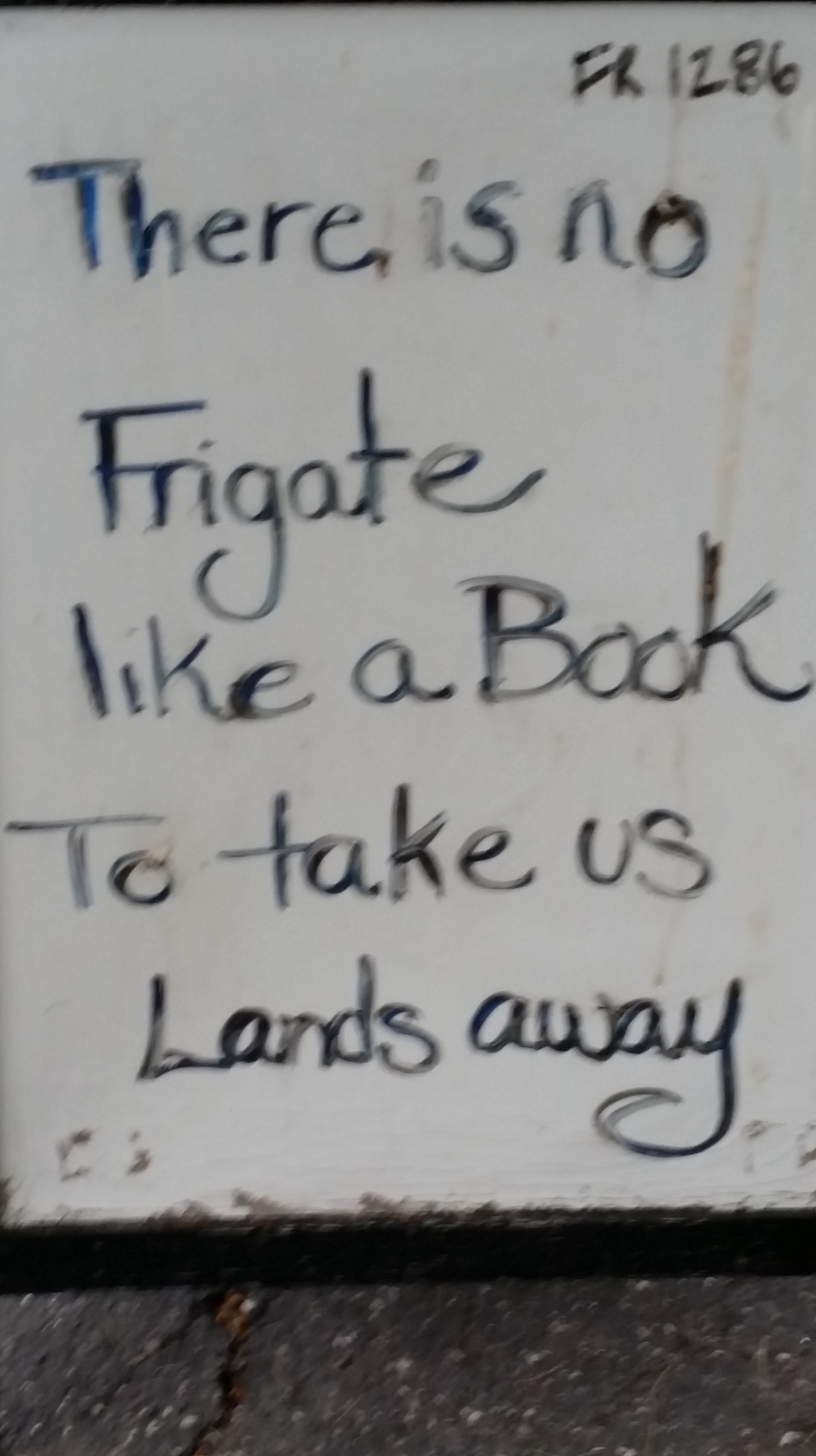
A sign on the grounds of the Dickinson House in Amherst. This passage is directly from Emily’s poetry.
FrostBust
A bust of the great man himself inside the Dickinson/Frost collection at Jones Library.

I had hoped by now, at my nearly 40 years of age, that such concerns would really be a thing of the past. After all, I continue to write, and I’m sure that one day I’ll see some wider recognition than my meager efforts have so far produced. Like all writers, I’d like a Pulitzer and maybe some other big awards (see prior posts), but honestly, at the end of the day, what I’m really aiming to do is preserve people, times, and places that have mattered to me the most. If my poetry results in just a few people gaining a broader appreciation of the heritage, values, and experiences I’ve received in this life, then I’ve won. And I don’t mean that all of my poems are totally autobiographical — certainly many are not. But all of them lend themselves toward ideas, visions, and perspectives that, however universal, have arisen somehow from the life I’ve lived.

Will people care about that life? Why should they? Will students sit through laborious documentaries about the different periods in my writing timeline? Will my work be anthologized in textbooks of the future? Such inquiries can drive one mad, if left unchecked. Spending countless hours in the homes of the greats might not make me a better writer, but it did accomplish one thing — it allowed me to see a shared humanity, a common thread of inspiration, motivation, and dedication.

Persistence, diligence, and  enormous creativity are shared traits among those we celebrate today, so long after their earthly departures. And perhaps it is these traits that we should take away from memorials and museums commemorating their contributions. More than the vanity of asking, “How can I attain their level of distinction?”, perhaps we (I) should be asking, “What can I do continuously and creatively well to positively affect my world?” Such a question surpasses the superficial desire for remembrance, and enters us into a more philosophical, even theological, realm. May our answers lead us not to fame, not to fortune, and not to solipsism. Rather, may they lead us to be better human beings, produce finer work, and seize the opportunities of the everyday.

Frost's Desk
Robert Frost’s writing space at Frost Farm in Derry, N.H.
FrostStatue
A statue of Frost just outside the Robert Frost Library at Amherst College.