life, poetry, teaching, Uncategorized, writing

What Robots and AI Can’t Replace

Everywhere we look, there are mentions of artificial intelligence (AI), robotics, and their implications for the future. News stories and social media feeds predict a heyday of ease and comfort as we assign more and more mundane tasks to technology (the art that accompanies this post was created by AI). In contrast, we’re also given the dark prophecies of Asimov and Bradbury come to life: When our computerized creations become so sentient that they can resent us, how will we control them?

More realistically, however, people are rightfully concerned about their jobs: Cashiers are already becoming obsolete, data entry by remote workers is becoming a relic, and countless other positions previously filled by people are slated to go extinct in the next few years. How, then, do we reckon with this revolution?

As the father of two older boys, one in college and one about to go there, I’m relieved that both of them have chosen irreplaceably human endeavors for their futures: One is in theatre, and the other plans to pursue architecture. These are professions that AI will never be able to fully usurp. After all, theatre is among the humanities, a select group of art forms and practices marked by their innate reliance upon authentic emotion and genuine experience. Our hamartia, the human condition, is ironically our greatest strength when it comes to livelihoods that are AI-proof. Architecture will be helped by AI, certainly, but to design and create livable spaces that consider the needs of complex people, we need human minds and hearts. Ask AI to design a mid-20th Century ranch house like the one on The Brady Bunch, and you’ll probably get a reasonable facsimile. But ask AI for a blueprint of a home that considers the individual needs of 21st Century family members, and confusion results — the blinking cursor begins to smoke.

As a teacher, I’ve already encountered the challenge of getting students to write rather than use ChatGPT or some similar product. For now, AI-generated writing is fairly easy to spot: Its reliance upon certain words and phrases, its preference for sterile-sounding language, and its occasional errors about obvious matters all make it detectable, even without running an essay or paper through an online checker or two. Combine those facts with a vast divergence from a student’s in-class writings, and AI use becomes obvious. But we know that technology consistently advances, and as time elapses, the fakes will become harder to spot, especially as classrooms become more tech-dependent. This is why some teachers and professors have gone back to old-school blue books, those lined-paper pamphlets of an earlier era, for class writing. And while I see the nostalgic appeal and hard-nosed devotion to justice driving such a practice, I also see its inherent temporary nature. Returning to number two pencils and canary yellow legal pads may get us by for a while, but students, parents, and clients of the new age won’t tolerate this Luddite approach for long. We need to find the middle ground between total AI reliance and achieved, owned learning quickly. Compromises like “You may use an AI editor for the writing you have authored independently in class” serve as a good start. This technique prepares students for the world to come without damaging their acquisition of knowledge. Further, they learn by seeing the corrections made by QuillBot, Grammarly, and other language-fixers. And if these products make a mistake as they sometimes do, so much the better. That’s where the real learning begins — technology has never been and will never be infallible, and the sooner students grasp this truth by experience, the better off they will be.

As a poet, I’m not worried about AI. I’ve seen the replica-poems it produces, and while some sound good on the surface, a closer look reveals that same artificial shimmer visible in the art that I’ve used above. Something’s missing; there’s a bad aftertaste like that of saccharine diet sodas from the seventies. An astute reader can tell that the cane sugar of the human touch is missing from this thing’s formula, whatever it may be. The “experiential resonance” — the sense that an event or product is organic — just isn’t there. Call it instinct if you will, but a reasonable human being can tell the difference between the things we do and make and the contrived, data-driven simulacra of thought-approximating algorithms. An initial, superficial “Oh, that’s lovely!” soon becomes an “Oh, this isn’t what I thought it was.” And that kind of deflating disappointment will toll the end of our infatuation with AI. Like any other once-novel discovery, this, too, will lose its luster.

So, what’s the big picture? The AI “scare” is similar to that of Y2K: Yes, we should consider it, but no, it isn’t Armageddon. As we prepare and adapt, we will add it to our toolboxes, become indifferent to it, and move on. Just as we healed the hole in the ozone layer, just as we eliminated acid rain, and just as we defeated diseases of long ago, we will coexist with this latest change until it no longer seems intriguing or threatening. We could easily theorize a future dystopia like those seen in science fiction, but it’s more likely that balance will prevail as it always has. For parents, teachers, and creators, AI is nothing to obsess over. Put simply, it’s just another thing. And if history has taught us anything, it’s that things are perishable.

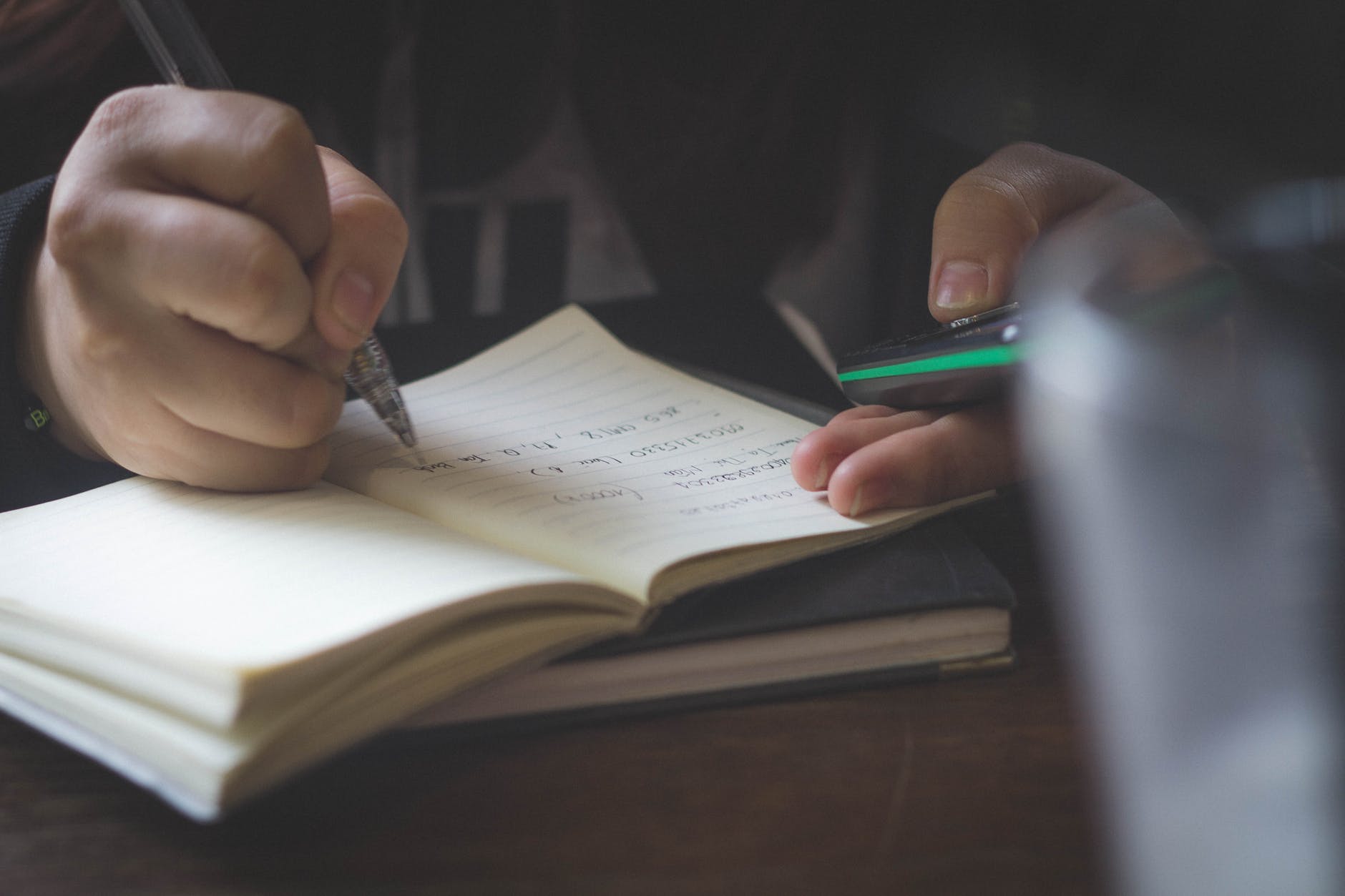
life, teaching, writing

The Literary Scoutmaster

Photo by Bryce Carithers on Pexels.com

When I was the age of my current students, I was busy finishing up the requirements for Eagle Scout. I genuinely enjoyed scouting, mostly because the things I learned there were hands-on, useful, and seemed to have real-life application. I enjoyed it so much, in fact, that one of my very first jobs was camp counselor, teaching younger boys how to safely and accurately shoot both rifles and shotguns. Scouting was good to me, and it gave me skills I use and teach even now when I take my sons camping, fishing, skeet shooting, hiking, or kayaking, among other activities.

Admittedly, the Boy Scouts of America is not what it used to be. Over the years, the organization has made a series of egregious missteps that have caused me not to place my sons in a troop, and I’ve largely cut all ties with the BSA. But this isn’t a political post, nor is it one intended to defend or prosecute “Scouting USA” as they now prefer to be called. Instead, I’d like to reflect upon how my present teaching experience embodies what was valuable within a former version of scouting: Practical guidance and retainable learning through meaningful relationships and memorable experiences.

I teach at an all-boys high school. Every day, I get to walk into my classroom and impart subject matter I love to young men who are eager to start the first chapters of their “real lives” beyond secondary education. Like tying a square knot or administering first aid, the skills I provide (reading a text more deeply, writing a clear sentence, etc.) are ones that will follow my pupils the rest of their lives if they’re wise enough to grasp this opportunity.

And I do all I can to ensure that my subject matter is imparted in a tangible, relatable way. We don’t just sit in rows and uniformly parrot back the rules of reading and writing; we investigate texts and tear sentences apart to see what makes them work (or not). I choose material that the boys will find engaging so as not to lose their focus. I show them that poetry, an oft-dreaded element of high school English, can be cool. They earn metaphorical “merit badges” in matters like fiction, nonfiction, composition, rhetoric, and critical analysis. And throughout all this, I lean into their experiences.

They write about their lives, their parents, their worries, and their friends. They give presentations about how they share traits with certain characters we’ve encountered. They read paragraphs with highlighters like navigators would read maps with compasses. And they build essays and compositions as a camper might carefully structure his log-cabin fire lay: each piece discerningly placed atop the other until the warmth and light reach optimal climax.

These boys remind me of a better chapter and give me hope for our cultural future. While all around us, young men give in to so many negative influences, I prefer to think that my small part in shaping my students will in some way brighten tomorrow through integrity and knowledge. I know that some of them will make bad choices just as certain scouts in my troop did. But if a small-town poet can reach into the minds of enough youth with lingering lessons about words and ideas, I will have succeeded. When my students enter the world beyond our campus, I know they will have heeded, even adopted, a certain old motto that remains in my heart: Be Prepared.

life, teaching, Uncategorized, writers, writing

E.B. and Me

One of the essays I most love to teach is  “Once More to the Lake” by E.B. White. In that short essay, White recounts lake trips he took with his father each summer, and he tells the reader about his own encounter with his son at the same lake. Throughout the essay, he sees his father in himself, and he sees himself in his son. The essay is full of vivid imagery (as one would expect from the author of Charlotte’s Web), and it muses fondly without straying into rank sentimentality. 

Last weekend, my wife, sons, and I went back to a lake house where I spent some summer days in my own youth. Much like White, I got to see history repeating itself. My boys discovered the joy of diving off a dock, feeling the white sand of the lake bottom against bare feet,  collapsing at night in the pleasant exertion of a day spent swimming, swinging from a rope swing, and soaking in Florida sunlight.

But there were differences, too. For one, my experiences at the lake house were usually large family affairs, surrounded by countless cousins and massive amounts of home-cooked food. People were busy skiing and knee-boarding, and it was hard to find a place that was not already occupied by beloved others. As much as I revel in the memories of those large family gatherings, this past weekend had several advantages over the bigger productions of my boyhood.

We were able to connect to one another in meaningful ways since it was only us. We played card games, watched a movie or two, and the rest of the time was spent on the lake or engaged in some form of relaxation. My sons used light-up swords to “duel” each other in the evening outside. We made memories. We conversed. We escaped.

And while part of me longs for the days of yesteryear, complete with now-departed family members and the squirt-gun spirit of boyish mischief, another part is deeply satisfied with this present — a time when I as a father can watch my sons discover the new-old joys of a near-summer day on the lake, one complete with colder morning water that warms gradually throughout the morning and into the afternoon.

I get it now, E.B. I’ve stepped into your shoes a little. I’ve felt the creep of age slowly maturing me from descendant into ancestor, and I’m okay with that. One day my boys will undoubtedly have similar feelings as generations continue to unfold. It’s the way things are meant to be.


life, poetry, Uncategorized, writing

Quarantine: The Ultimate Family Fellowship

architecture clouds daylight driveway
Not my house, but makes the point. Photo by Pixabay on Pexels.com

Earlier this year, I wrote about my “travel fast,” explaining how 2020 would be a year in which I would abstain from literary workshops, conferences, seminars, or retreats. My plan has been (and continues to be) allowing connection with my family to motivate and inspire new writing. Well, God sure has an interesting sense of humor:

“What’s that, son? You want to spend more time with your family? POOF! Here you go. I will enable you to work from home, school your sons at home, worship at home, give poetry workshops from home, exercise at home, and….let’s see…pretty much anything else you want to do — it’s going to have to happen within the four walls of your house. You’re welcome.”

Lest anyone think I’m making light of coronavirus, let me say that I’m not. I know that people are dying. I know that many are ill in ways they’ve never been before. And I know that a global pandemic is nothing to laugh about. We in the US are blessed to have largely first-world concerns that sound an awful lot like whining to those less fortunate. That being said, the situations we find ourselves in as locked-down Americans deserve a moment or two of levity.

Thus far, my boys, my wife, and I have: 1.) Put together jigsaw puzzles, 2.) Played countless rounds of Uno, Life, Monopoly, and Trivial Pursuit, 3.) Gone for hikes in the remote area near the creek, 4.) Ridden our bikes a couple of miles a day, and 5.) attended “online church,” an experience that has really expanded our definition of “sacred.”

But throughout all this, the discoveries we’ve made have been meaningful: My oldest son, a budding TikTok celebrity whose following is somewhere around 45,000, has been entertaining us with his theatrical abilities. He randomly performs stand-up routines, imitations, and monologues. My youngest son, the future architect/lawyer/billionaire, has been learning to code and has had extensive video conversations with his favorite cousin who shares much of his personality and interests. These two have their own “secret detective agency” and hatch plans via Facetime. Much of their dialogue has been inspired by the book series The Mysterious Benedict Society.

The hero during our isolation has been my wife: A healthcare worker, she goes to her clinic day after day, exposing herself to potential infection so that people can receive the care they need, now and anytime. When she returns in the evenings, she immediately showers and sanitizes to protect all of us. About a week ago, a known COVID-19 infected patient coughed near her. We’ve been watching and waiting ever since. Nothing so far, thankfully, but…the risk is always there. To exacerbate her situation, she’s also recovering from surgery that she had about three weeks ago. Without going into graphic detail, the operation was moderately invasive. Nonetheless, she presses on. She is our resident saint and our honored queen.

Our afternoons have been the most remarkable feature of this weird time: I’ve been reading Ray Bradbury’s Fahrenheit 451 with the boys. We each have a copy of the text, and via Audible, we have Tim Robbins reading the book to us. We follow along, pause to discuss and reflect, and analyze the book’s characters, plot, tone, and other details. Supplementing this study, we’ve watched old episodes of Ray Bradbury Theater, a t.v. show based upon the great author’s exhilarating short stories (see YouTube). The boys find commonalities between the novel we’ve been reading and the smaller bite-sized narratives on screen. This has given rise to discussions of our present society and culture, as one might imagine. It’s also allowed us to practice some amateur psychology on the characters Bradbury invented. My oldest son developed a five-step treatment plan for Mildred (Montag’s wife in the novel), for example.

Will this quarantine generate poems? Probably. I don’t plan to write about all the kinds of things that have occurred to so many others — how this moment demonstrates our universal humanity, how politics are utterly futile in times like these, how the family unit remains the foundation of our society. These big ideas, while true, will undoubtedly be overdone, and frankly, poems that are written with an agenda in mind rarely succeed as art.

No, my poems that will spring from this strange point in history will probably dwell upon subjects like those I mentioned before — the heroism of my wife, the creativity of my sons, the little day-to-day tasks and events that are breaks from our non-coronavirus life routines. Crisis, despite its horrors, is a rescue from the mundane. It shakes us from our civilized, programmed, humdrum existences into realization of our human fragility. For all of us, this epiphany has been, perhaps, the most monumental lesson.

I never intended for this blog entry to become a gratitude journal, and yet, as I look back over it,  it certainly has leaned in that direction. There’s much to be thankful for, and that’s undoubtedly another lesson of this period. As we inhabit the most intimate spaces of our lives with those we hold closest, we re-learn the value of connection. We are reminded that, if everything else perished, our interpersonal bonds would matter most. Hold your dear ones tight, embrace the temporary inconveniences, and soon enough, we will all look back on this historical hiccup a little wiser, a little better.

life, teaching, Uncategorized, writing

Dear Teacher: Thoughts on a New School Year

It’s that time again: Parents prepare to send their kids off to school for the next go-round, hoping that this year will be the best so far. Teachers eagerly decorate classrooms, plan vivid and engaging lessons, check class rosters, and pick apart data.

As someone who spent 15 years in the secondary classroom before moving into higher ed, I distinctly recall all the dreamy potential that this time of year can represent for parents, students, and teachers — it’s a blank slate, a fresh start, and a million other tabla-rasa cliches rolled into one. It is hope and nerves. It is the smell of paper, the satisfaction of checked-off lists, and the promise of a brightly lit, welcoming space away from home. It is its own magic.

But the real work is about to begin. The daydream of clean faces, happy chatter, and new clothes will soon be supplanted by young people facing issues from abuse to homelessness (and more). The shiny technology and glossy posters will matter less than empty stomachs and forgotten texts. Teacher, what will you do then?

I don’t mean to quell the inspiration of a new year. I really don’t. Love those new stickers for your gradebook. Enjoy the cool, smooth plastic of fresh whiteboard markers. But also understand that the highs of August wear off quickly, and if you don’t love teaching and students, endorphins and dopamine will only last so long.

Teacher, I hope you are excited by those learners seated before you. I hope you are just as passionate about your subject as you have ever been and that your passion is virally contagious. I hope you have ideas for activities, strategies, and projects that will make Disney World seem dull. And above all else, I hope that the instructional fire within you burns bright All. Year. Long.

I wish you all this not just because I’m a parent, not just because I’ve been there, but because our profession (and our youth) need you now more than ever. Amid the bickering about pay scales, the ingratitude of an uninformed public, and the ever-increasing demands of governments large and small, remember your calling. Education isn’t just grading worksheets and administering assessments. It truly, truly is touching lives, leaving a legacy, and yes, making the greatest differences.

Maybe you won’t be a movie teacher like Jaime Escalante or Erin Gruwell. Maybe you’ll just be yourself, whatever that means. But you are exactly the person that at least one student is desperately seeking. Be the calm in their storm. Be the high point of their day. Be unforgettable.

America, its children, and its future are relying on you. We know it’s hard. We know there will be days of frustration, tears, and inimitable joy, sometimes all at once. Teaching means poetry. You chose this life, and we so deeply admire you.

Greet this year with greatness, and then nurture it, sustain it. You can do it, our children can do it, and tomorrow will be better because of it. This is your time. Inspire.

poetry, teaching, Uncategorized, writers, writing

Taking Poetry Teaching Online

adult blur business close up
Photo by Nguyen Nguyen on Pexels.com

Recently I’ve been expanding my cadre of skills, and as part of that ambition, I’ve started teaching poetry courses on Skillshare, a site where people quite literally share their skills. My first session is a “Reader’s Digest” version of a larger workshop I usually do for Firehouse Cultural Center, and it features photographic poetry prompts from my good friend Jim Futrell. (It’s also free, so no risk if you hate it) 🙂

I’m providing a link to my first attempt at this in the hopes that some of you will take a look at my ekphrastic poetry guidance and try out the exercise that I’ve posted there. It should be fun! Here you go:

My Ekphrastic Poetry Workshop

Please give it a shot and enjoy yourself! I appreciate your support.

poetry, teaching, Uncategorized, writing

Writing Wisconsin

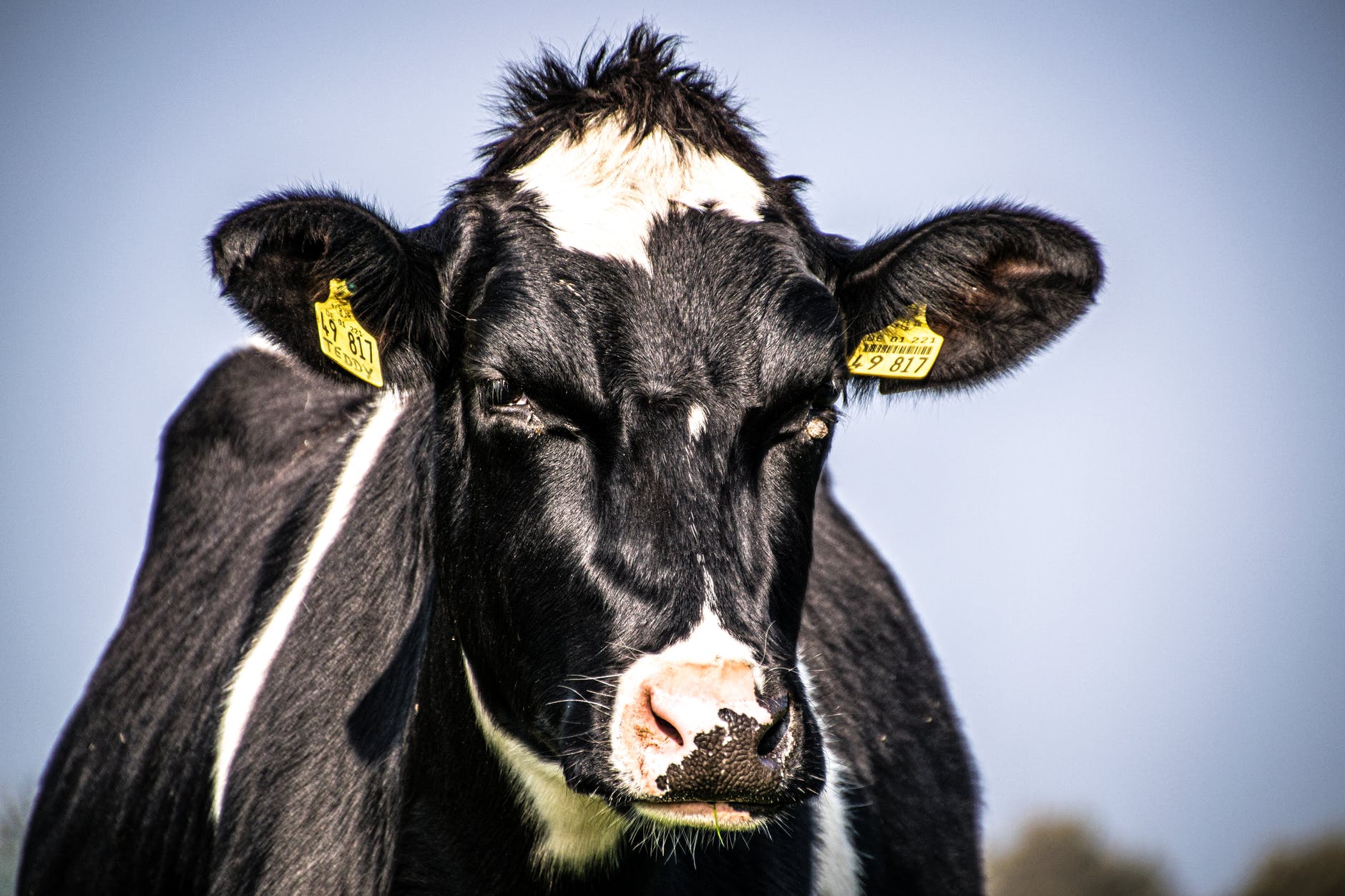
close up photo of cow
Photo by Matthis Volquardsen on Pexels.com

In a few days, I’ll be headed to the dairy state of Wisconsin. I’ve never been there before, and this time, I’m going to be leading poetry workshops, giving craft talks, and even leading a fishing expedition and playing a little guitar (see prior blog entries for details).

While my wife has family in Wisconsin, my impressions of it have been largely shaped by a public school education and media stereotypes: I expect a place where the Packers are revered, cows are in abundance, “Butter Burgers” are considered a delicacy, and the English is tinged with a certain Nordic-based dialect. It will be interesting to see how my expectations are met or disproved.

One thing that I’m most looking forward to is the change of perspective that always accompanies travel. It’s nice to enter that head-space where everything is different and new, where you feel like an observer and guest instead of a traffic-slogging native just trying to survive the daily grind. Travel always means renaissance — a new beginning for thought and creativity.

It will also be nice to go somewhere that requires a shorter flight and a shorter drive. As much as I enjoyed (and was changed by) my family’s adventure to Lisbon, Portugal in 2016, I merely tolerated the 16-hour flight it necessitated. My sons were champs about it, and my wife loves anything that means an excursion is underway. Me? Not so much. I like leg room and unlimited mobility.

And my Wisconsin experience is not slated to be “the norm:” I won’t be visiting The Dells or posing alongside statues of football greats. Instead, I will be in isolated community (a seeming oxymoron, I know, but stay with me). My fellow writers and I will be housed at the Marywood Franciscan Spirituality Center, which is a pastoral setting deep in the woods. I’ll be near Trout Lake (which I hope lives up to its name), and the feeling of the whole experience will be significantly more tranquil than touristy.

So, here’s hoping that this brief time away yields some much-needed mental clutter removal and a little broader understanding of our country, as well. Just as my earlier summer sojourn into Appalachia allowed me some solitude for literary endeavors, this adventure should reignite my teaching passion while presenting chances to reflect. I plan to keep accounts of my trip here, so stay tuned…


life, poetry, publishing, teaching, Uncategorized, writers, writing

Calling All Writers: HELP


cover-for-ad

Buy a book, save a life: Between now and Christmas, 100 percent of every sale of each of my books will go toward getting one of my poet-students and her mother out of the homeless shelter. You get good poems, and a family that desperately deserves a Merry Christmas is given a hand up. There are no losers here — If you don’t want to buy one of the books below, you may donate directly to the Save my Student from Homelessness fund:

https://www.gofundme.com/save-my-student-from-homelessness

If you would like to go the literary route and receive some poetry in exchange for your generosity, please consider purchasing any one of the books below (click the title):

Hard Inheritance

Middle Class American Proverb

The Boys of Men

Your purchase or donation is deeply appreciated. I can’t say enough good things about this student, and she and her mother are grateful for any help you can offer. Please join this effort to save a budding writer from the horrible conditions at the homeless shelter. THANK YOU!

life, teaching, Uncategorized, writers, writing

A plea for my students

If you read these posts regularly, you know I’m not in the habit of asking for things. I believe that people read what I write because they want to receive something, not necessarily give something. But today I approach all of my site followers with a simple request.

This year, my creative writing students will be writing and making (binding) their own novellas. For that to happen, we need a bunch of supplies. In fact, more supplies than my little department budget will allow me to afford. To address this issue, I’ve started a DonorsChoose page that allows my friends, family, followers, and others to donate to this cause.

I’d deeply appreciate any donations you can offer. They don’t have to be big. In fact, if each follower of this blog gave $1, I’d reach my goal by day’s end. If you are fortunate enough to be able to give more, please do so. My student writers are incredibly gifted, and they deserve this opportunity.

Summer School
A group of my students complete a literacy project connected to short stories we’d read.

To help out these budding Hemingways, Dickinsons, and Shakespeares, please follow this link:

https://www.donorschoose.org/project/novella-notebooks/2080290/?rf=link-siteshare-2016-07-teacher-teacher_3033778&challengeid=20799041

My students thank you, I thank you, and literature’s future thanks you. Let’s make something special happen for these kids!