Uncategorized

On Slow Progress

Image
photo credit: NCSU

Once when I was fifteen years old, I climbed a waterfall. To be precise, I climbed the rock facing underneath the waterfall. My family and I were in north Georgia at the time, and the trail leading to the falls had ended at a wooden deck-style overlook some distance back, but I was not to be restrained by man-made barriers. As a young man full of vigor and adventure, I knew I could get closer. I had no idea how close I would get…to dying.

At the base of the falls well off the path, I began my steep ascent. The hard rock underbelly of the falls was covered in algae and ferns, and my fingernails dug up green with each new handhold. My hiking boots were not designed for this type of climbing, but they held fast to the slick and treacherous surface. Their cleats, too, ripped into the carpet of greenery. Each move was a calculated, deliberate decision. My pulse was racing, my stomach flooded with adrenaline. Still, I was too deep into the task to go back, and had I wanted to, I probably couldn’t have. I decided to see this venture through with discernment and strength. Even with caution, though, bad things happen.

As I neared the top of the falls, the gush and roar of the waters above me became near-deafening. I knew I’d have to veer to one side of the overflow or the other. The problem I now faced was inexperience — as an untrained and unfamiliar climber, I knew how to go up, but beyond that one direction, my movement was limited. I’d have to go straight through the water to reach the top. I summoned my most courageous breath, and felt the current strike the crest of my scalp. I pushed upward, caught a face full of water, and fell backward.

It was a surprisingly short fall — unlike those dreams where one seems to descend for eternity before waking with a jolt, this fall scraped my chin and chest on the rock outcropping, and in the midst of the peril, my fingers and boot-treads made one last grasp to the surface. I had enough purchase to shove my way up the right side of the falls, and eventually, I found myself standing at their apex, looking back down the long trail of white and the brutal path beneath it. Around me, mountain laurel were in bloom, and I could see our campsite in the distance. The victory at last was mine, and a hard lesson was learned. My chin was still bleeding. I covered it with my bare hand, and walked in the direction of camp.

I thought of this experience recently as I was growing impatient with other life circumstances. As regular readers know, I have a book forthcoming this summer, and my career is in a state of flux as I attempt to transition from secondary to post-secondary teaching. The end of the school year is upon us, and I’m generally discontent with waiting. The waterfall climb of my youth was one made with persistence, care, decisiveness, and bravery. As I think back on it, I recognize traits that I now need as the next chapter of my biography is only a few pages away. And while I may experience a “slip” or two along the way, I understand that, like surmounting any great obstacle, judicious patience remains key.   

Uncategorized

Apples and Oranges: Frost’s Influence on my Early Work

Image
Photo: University of Buffalo’s Robert Frost Collection

As a middle schooler, I was fortunate to have one English teacher throughout those tumultuous years who encouraged my interest in poetry. Mr. Pace knew I was a rare breed: a perceptive and sensitive farm boy interested in writing and things literary, though not the greatest scholar. My profile, he felt, matched up with a certain northeastern poet whose canonized tomes of work combined the rhythmic labors of agriculture with the delicate intricacies of poetic diction. Hence, my introduction to the works of Robert Frost began.

I would sit atop our barn roof overlooking our orange grove, and read everything from “Out, Out –” to “Stopping by Woods on a Snowy Evening.” I’d never seen snow. This was central Florida, after all. It didn’t matter — Frost brought it to life with his vintage imagery and steady, clopping-horse meter.  And then, of course, there were the apple orchard pieces. From “After Apple-Picking” to “Mending Wall,” I knew well the lifestyle he described, even though our farm and its accompanying ladders and fences were more than a thousand miles away from New England. Like Frost, I knew the press of a rung into flesh and the whisper and sway of fruit trees. Here was a man who “got” me, I felt, even though he was long since dead.

My love for Frost’s work continued into high school and college, and I wrote bad pastiches of his work, thinking I was being totally original all the while. After all, my “citrus farm” poems were completely disparate from anything New Englandish. Yeah, right. As I look over my older pieces, I hear familiar iambs and rustic rhymes that mark a younger poet’s perception of excellent verse. How brilliant I believed my rhyme schemes and wordplay to be! If only the rest of the world could see this marvelous talent, I thought, refusing to admit that every syllable was a tribute to America’s godfather of poetry — Frost.

Even my first book, Growing Moon, Growing Soil, contains blatant influence from “Frosty Bob.” As I matured, my reading tastes expanded to include contemporary voices and a vast array of styles. But as a writer, I kept coming back to those paradoxical poems — so seemingly simple, yet profound. Frost’s work occupied a space on my mental bookshelf alongside Bible verses and the Scout Oath and Law — it was ingrained among the ridges and folds of my brain’s landscape as surely as cut weeds turned under by a grove disc.

Today, my work is influenced differently — I no longer strive to “sound like” this poet or that one, but my poetry (I like to think) has come into its own. One of the greatest compliments of my more recent work came from poet Erica Dawson: “John is accomplished. He knows his voice.  He knows his subject matter.  He knows his style.” Those words, like Mr. Pace’s initial encouragement, gave me not only assurance, but a goal. If my work is to reach the level of greats like Frost, it must be identifiable as uniquely mine. The thumbprints of many poets may be found within my writing, no doubt, but when the final draft is finished, my hope is that it surges with a different pulse; one as recognizable as Frost’s, but unique — oranges to everyone else’s apples. 

Uncategorized

Book Pregnancy

KONICA MINOLTA DIGITAL CAMERA

So it turns out that waiting really is the hardest part. For those who’ve been following my journey from MFA to book publication, you know that my 85-page collection of Florida-life poetry Middle Class American Proverb will come out later this summer. In the meantime, I’ve been setting up appearances, readings, book signings, and all the other trappings that come with good networking and positive publicity. Being one’s own agent isn’t that hard, but the gestation between book acceptance and book publication is killer.

You have this beautiful thing that you can’t wait to have released into the world, and all you want is for it to be available to your friends, family, readers, and supporters. But you must wait. And then wait some more. All the while, your creation is kicking around in its publishing-house womb, building its muscles for that incredible, inimitable cry released at first appearance (maybe I’m pushing the “birth” metaphor here).

But what’s more, the book “parent” is pretty far removed from all this development. Oh sure, there’s the occasional email about edits or cover art, but for the most part, you’ve committed your creation into the hands of total strangers who you hope will treat it right. Someone more impatient would probably have gone the self-publishing route, and I’ve been down that road before also. Yes, the book comes out quicker, but it’s all too easy to let the little flaws stay in the name of expedience. There’s also not the attention given to the finer details of publishing — does the cover art complement the text itself, or was it just thrown on assembly-line style?

Having a caring publisher who’s devoting time and real interest to my book is rewarding, and the waiting, I know, will be worth it. For now, it’s time to prepare. And there is joy in making ready.

poetry, Uncategorized

On Acceptances and Patience

OsceolaTurkeyGobblerinColorAs a much younger writer, I once composed a short story based upon one hunting trip I took with my grandfather. On that trip, I shot a young jake (turkey) with almost no beard, and moments later, a huge flock of larger turkeys came strutting by, including one with an earth-dragging beard. As hunting camp guests, we were limited to one bird, and these bigger ones had long spikes on their legs and weighed nearly double what my quarry did. The point of the story was supposed to be “good things come to those who wait,” but in retrospect, the amateur creative nonfiction probably missed its mark.

I thought back on that story today, though, as I received an acceptance for my manuscript Middle Class American Proverb. The book is an 85-page collection of poems based upon rural life in old Florida and its highs and lows, among other topics. Understand: I graduated from the MFA program at University of Tampa in January, and since that time, I’ve been waiting for a publisher to accept this hard-worked collection of poems which I produced as my creative thesis. I had widely submitted it  long before I graduated, starting last fall. It’s been entered into contests, shopped around to academic and small presses around the country, and generally plastered everywhere I could find a spot for it in the literary community.

Many of my fellow writers wait far longer than just a few months to receive those magic words, “Your manuscript has been accepted.” In today’s market especially, poetry is not a big seller, as it is purchased mostly by other poets, literary critics, and academics. To get a volume of poetry accepted by a press, even a small one, is a near-miraculous feat. Making the process worse is that seemingly interminable period between submission and the yea or nay of publishers. As the old song says, waiting is the hardest part. Indeed.

Now, as the manuscript has found a home and the edits begin, I can breathe a little easier. Colleges and universities smile more favorably on applicants with a book or two under their belt, and the old notion of “publish or perish” still thrives at serious institutions around the country. I am incredibly grateful to my publisher, Negative Capability Press of Mobile, Alabama, for their interest in and attention to what I consider my masterpiece (thus far).

It is incredibly gratifying when editors and publishers recognize the labor and serious thought that you as an artist have invested into a work. And certainly this collection, by far, has received the best parts of my work and creativity. As the edits fall into place and the book comes to life from its manuscript form, I can hardly wait to see it emerge as the book I’ve always dreamed it to be. The process, I know, will be long. It will require the patience of a seasoned turkey hunter — or maybe that of a more experienced writer. Either way, I’m ready. This time, the first offer is one worth taking. Bigger “birds” might be out there, but this one is just right.

negcappress

poetry, Uncategorized

Advancing the Literary Arts, One Step at a Time

hiker

My family and I attended the Central Avenue Arts Festival downtown today. The booths were plentiful and colorful, with media ranging from stained glass to metal, oil-on-canvas to photography. All were dazzlingly amazing. The weather was breezy, and displays included pottery making (my two sons got to make pinch pots) and an entire “kids’ corner” devoted to letting children make and do. 

Amid these other booths, there was one gentleman attempting to sell his self-published children’s books. They were on display, and people were occasionally stopping by, flipping pages and admiring them. But in comparison to the other booths, the lone book vendor lacked the sparkle and flair that other artists generated with their wares.

Certainly it wasn’t the author’s fault — his medium was simply more “subdued” than the flashier arts around him. Sometimes those of us in the literary realm find ourselves struggling with this same perception: Why should patrons trouble their minds with words when a picture will provide instant gratification? Understandably, the average consumer wants to be aesthetically pleased. Poetry appeals to all of the senses, but the reader has to work to receive its pleasure. Paintings, sculptures, or photographs, while potentially meaning-heavy, can be appreciated even by those who aren’t seeking an artist’s purpose or vision. To delve into language, however, requires cognitive investment. And so the struggle continues: How do writers (and poets especially) reach a want-it-now, get-it-now society?

One way is to increase awareness. When people know authors and poets, they are more likely to direct their attention toward the written word.  Every city, town, and county has someone pursuing the writing life, and some are better known than others. About two years ago, I posted an interview I had with Mildred Greear, a North Georgia poet whose work is known regionally, and who was a friend to Byron Herbert Reese, a well-known poet of historic import. The folks in Mildred’s part of the world love her work and support it, not because they are among the literati or the poetry elite, but because, well…it’s Mildred. And to support poetry is to support her and everything she represents: a distinct geography, history, and set of ideals rolled into one. In an age where many are crying for audiences to “separate the work from the artist” and similar notions, people near Sautee-Nacoochee, GA are doing the opposite, and it works. One great ambassador for verse can make all the difference. Some of the customers who have bought Mildred’s work might not even read poems, but they see her volumes as a near-biblical necessity. If you’re living there, you need some Greear poetry on the family bookshelf.

Mildred Greear
Mildred Greear

My hope as a younger, still-emerging poet is to serve as that same kind of ambassador. Rather than being the “quiet booth” in the arts community, I hope that my literary contributions (large and small alike) help make my community a better place in much the same way Mildred’s efforts have. The more people understand the vitality of poetry and other literary arts, the more a culture thrives. And with that thriving culture, communities build understanding and mutual respect, as well.

If you support writers and artists, especially in your community, please allow me to thank you. Likewise, if you haven’t seen what kinds of creative minds are at work in your part of the world, I encourage you to do so. Attend gallery openings, public readings, book signings, and the range of other available cultural outlets that your town or city has to offer. And if you don’t find any, make one of your own — it may feel like you’re the lone voice in the wilderness, but as any good Bible scholar can tell you, those lone voices are often the most relevant. It may sound trite, but you really can make an impact for good.

poetry, Uncategorized

More VS. Different: A human quandary

Adding isn't always the answer.
Adding isn’t always the answer.

Recently, I’ve been consumed by one mistake that I’ve made throughout my writing and teaching life. In some ways, this error is stereotypically American: When I feel the need for change, instead of choosing something different, I just pile something else on. It’s a childish mindset really — I’m unhappy with the one thing, but if I had two things, I’d be happier. Fallacy, fallacy.

When I was a young man just starting out, I didn’t make much money. Oh sure, I’d been to college and done my part to begin a journalism career, but a fresh degree and limited experience meant a meager income. My solution was always working harder, not smarter. I’d take on extra jobs until my every waking moment was consumed with responsibility of one form or another. And when you’re just setting foot into “the real world,” being industrious is admirable. But I found out pretty quickly that burnout is very real, and being obligated non-stop is a great way to compromise your health.

The lesson didn’t stick, though. When I changed careers about four years after getting my bachelor’s degree, I began to repeat the same mistakes in education: “Oh, teachers don’t make much? That’s okay. I’ll just take on more duties. I’ll tutor after school and pick up some freelance gigs on the side.” By this time I was married, and the incessant lesson planning, grading, and researching were all taking their toll on the homefront.

I added titles to my own job description, becoming a technology guru, a committee and department leader, a curriculum developer, and a professional development coordinator. My writing, of course, was taking the back burner to my overwhelming career roles, all because I assumed that if I had more to do, I’d somehow be happier. And granted, the experiences I earned while tackling these titles proved valuable. I know about a wealth of fields that make me an asset in the workplace. But meanwhile, I still wasn’t content.

The truth was, I needed something different, not something more. One more graduate degree wasn’t the answer, despite my 4.0 GPA. One more assignment wasn’t the panacea to discontent.When you’re tired of digging ditches, buying more shovels isn’t the solution.  I needed to work smarter, not harder, and I needed balance.

By shouldering more and more responsibility outside my home, I’d minimized the time I had for my family life. I had become that workaholic husband and father who can’t show up to his kids’ birthday parties, and writing? What was writing? Certainly there was no time for such frivolity. Our bank account was steadily reaping the benefits of my overexertion, but the price beneath my roof was far too great. It was time to restore some sanity and clarity to every part of my life.

I began cutting back on extra teaching opportunities, and started riding my bicycle again, for starters. I took a more active part in church life. My wife and I were dating again. I flew kites and threw Frisbees with my sons on the weekends. This was different, and it was good. Our financial situation was okay, but we still weren’t rich. And for one time in my life, I didn’t care. Money, I found, was reciprocal: we received what we gave, and often, we reaped more than we sowed, to use some biblical terminology. My new quest for balance and “smarter work” was paying off. My new and more flexible schedule now included a daily writing routine during the early morning hours, and soon, I had a thick volume of work. The MFA became not “one more degree,” but a natural outcropping from my own talents and interests, which my re-balanced life had shown me.

So now, as spring break draws nearer and the end of another school year will follow not long after, I feel another mile marker approaching. Change is coming in my professional life, and this time, my hope is that I’ll remember the lessons of my personal history. Work smarter, achieve balance, and don’t mistake more for different.


poetry, Uncategorized

Business and the Personal

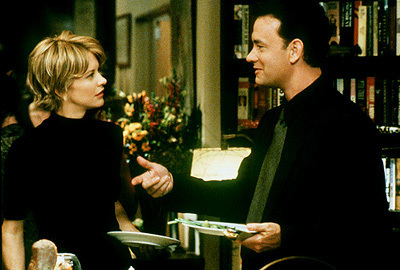
Image borrowed from terraverdeonline.com

In the movie You’ve Got Mail, Joe Fox, multi-millionaire chain bookstore owner (played by Tom Hanks), advises small bookstore owner Kathleen Kelly (Meg Ryan): “It’s just business. It’s not personal. … Recite that to yourself.” Ryan’s character responds with, “Whatever something else is, it should begin by being personal.”

I see the merit in Kathleen Kelly’s sentiment, but having been in the rough-and-tumble world of publishing recently, I think I’m inclined to lean more toward Joe Fox’s approach. Yes, poetry, writing, and book-making are all endeavors that involve a person’s heart, even the soul. However, when it comes time to negotiate about matters like royalties, author’s copies, and similar factors, it’s time to put away the purple prose and break out the spreadsheets and graphs.

Lots of writers don’t want to hear this. They’d rather live in their sheltered creative Xanadu, pondering air castles and planning their next great narrative. On the other hand, rarely does one find publishers who can’t distinguish pragmatics from the emotional. Publishers, for the most part, are able to put aside their feelings and prejudices in favor of their latest project. I recently dealt with a publisher (name omitted intentionally) whose approach to book production was seen not as a creative-commercial enterprise, but rather, as an extension of her/his inner self. The publisher in question viewed the relationship with the writer as an deep emotional bond rather than seeing it primarily as a business arrangement. This person also slammed the work of similar publishers, some of whom he/she had worked with in the past.

As things became increasingly unprofessional, I politely declined the services of this publisher. I attempted to word the rejection softly, as I too have had my fair share of let-downs. In response, I was told that seeking a traditional or academic publisher was “insulting.” There were hurt feelings, apparently, despite my best attempts to avoid such ugliness. As a recent MFA grad seeking an experienced and respected publisher for my creative thesis (a mighty fine collection, if I do say so myself), I really don’t need a business partner who is affronted by every minor exchange.  It’s great to be invested in your craft, whatever that may be. Likewise, it’s necessary to differentiate between an expression of intellect and an expression of love. A consumer decision is not a romance.

Yes, creating (be that writing or publishing) is showing the world a piece of yourself. But when that creation crosses the transom into product, it’s time to evolve into strategist. Even for those of us who’d rather “dwell in possibility,” there must come a time when strictly cognitive and logistical decisions predominate. Once the art is done, business belongs in its proper perspective. Let’s keep it professional.

poetry, Uncategorized

What If and If Only

PreacherI heard a minister deliver a sermon that cautioned believers against these two phrases. His point, for those within his congregation, bore validity: If the family members of a faith spend too much time in worry or regret, then they (we) are displaying a lack of confidence in our Higher Power.

For writers and creators, however, there are no two more powerful phrases. “What ifs” open the door to imagination, whereas “If onlys” encourage reflection. There’s a proud tradition behind both of these phrases yielding creative, dynamic works across genres. Consider Coleridge’s Kubla Khan — a “What If” poem if there ever was one. Scholars and speculators agree that much of the poem may have been induced by chemical means, but even so, without the questioning of reality, such language would not have existed.

For “if only” work, see Edgar Allan Poe. I don’t think a great deal of exposition is needed for this example. From Lenore to Annabel Lee, Poe’s work is rife with the “if onlys” of lost love and longing. This isn’t to say that all creative work must contain angst or fantasy; certainly much great poetry, art, and creation has been produced from the images and occurrences of “average” life (see Billy Collins). However, to exclude the questions mentioned above from the creative process would result in enormous detriment.

As artists, the need for us to pose and answer creative inquiries is great, and perhaps no two questions are more idea-inducing than these. Fellow writers and makers, delve into your what-if and if-only moments. Your Kubla Khan or your Raven may be waiting just around the next question.