poetry, Uncategorized

The “Cover Reveal:” Just Say No

A word of warning before I begin here: This post is probably going to upset a number of my creative and socially inclined readers. But what you see below must be said.

I will not be holding a “cover reveal” for my upcoming book. If you want to know what the cover looks like, here it is:

johndaviscover (3)

There. It’s revealed. And as happy as I am with this cover (isn’t it COOL?), I don’t feel anything further is warranted. After all, the real meat of this work lies between the covers, and that’s where I’m hoping you’ll look when this volume hits the bookstore shelves soon.

“Why the snarky attitude about cover reveals?” you might ask. Well, here’s the thing: I am a husband, a father, a teacher, and a writer. I serve as a community volunteer and as an active member of my church. My weekends are most often consumed with birthday parties for other people’s kids, lawn maintenance, and the peripheral tasks of education — grading papers, preparing lesson plans, and so forth. My time is valuable, and honestly, unnecessary and entangling social engagements are nothing more than a gigantic time-suck.

Now before my readers accuse me of being some selfish, antisocial hermit, allow me to say that I love a good get-together as much as the next person. Just recently (as you may have read here), I hosted my own chapbook launch for “The Boys of Men,” and it was thankfully well-attended. The food was delicious, the company was wonderful, and the reading was fun and interactive. I sold lots of copies, and was able to make a modest donation to one of my favorite charities who helped host the event.

Why, then, am I against the notion of a cover reveal, in particular? I oppose cover reveals for the same reason that I oppose “gender reveal” events for babies that have not yet arrived: It’s one more thing. That’s right — one more space on the calendar filled with pointless banter and oddly colored punch. We’re all very happy you’re having a boy/girl, but isn’t your fourth baby shower (also inappropriate, might I add) enough? Must you subject us to yet another inane occasion to stand about, idly discussing the weather until you drop a curtain or pop a balloon? Seriously, stop. No more, please.

Authors: Please don’t consume the valuable time of those you know with the literary equivalent of the gender reveal. We know your book has a cover. We’re ecstatic for you, and proud to call you our friend. But to hold people hostage while you unveil a placard is both ludicrous and disrespectful, even if you provide finger sandwiches and fruity beverages. By all means, launch your book. Hold readings. Give lectures and seminars. I’ll be there. It’s an opportunity to learn something, hear something new, and culturally engage. Reveal something more than a shiny piece of plastic, some crackers and a “TA-DA!” Give us your words, give us your work, give us your heart.

poetry, Uncategorized

Launching the Chapbook

davis cover 1This Tuesday, I will launch my chapbook of poems entitled “The Boys of Men.” This volume, a collection of poems dealing with the topics of fatherhood and mentorship, is near and dear to me, as it was originally developed as a gift for my two sons. As the poems developed, though, I began to understand how this little assembly of verses might be useful to others beyond my family. The messages, after all, cross the boundaries of bloodlines.

Ideals of trust, loyalty, persistence, and courage are universal, after all, and these poems speak of all those and more. As a bigger book of poems waits for its release just around the corner, I want to take the time to celebrate this smaller milestone; this little get-together of poems that future generations can look to for fond reflection, family connection, and perhaps even a moment or two of guidance. My purpose in publishing this book was never to get rich — rather, I wanted those close to me to have a keepsake, something intimate and direct. In this volume, I feel that’s accomplished.

For those wishing to buy a copy, here’s the Amazon address: http://www.amazon.com/Boys-Men-John-Davis-Jr/dp/0692276874/ref=sr_1_1?s=books&ie=UTF8&qid=1411822481&sr=1-1&keywords=The+Boys+of+Men+by+John+Davis+Jr.

I hope that you gain as much from reading this as I gained from writing it. Your purchase is appreciated, and your attention to my work is always, always valued. Thank you.


poetry, Uncategorized

The Catharsis of Found Poetry

FoundPoetry1It was the end of the first week of school. Students in my creative writing classes had been pounded all week with Strunk & White, William Zinsser, and the thousand and one unofficial “rules” of good writing. It was time for expression. It was time to put the “creative” back in creative writing.

I thumped a load of TIME magazines down on the table at the front of the classroom along with scissors, glue sticks, tape, and construction paper.  Then I began explaining found poetry: that crazy-but-sometimes-deep hodgepodge of discovered, connected everyday language. My challenge to this group: “Take seemingly disparate words and phrases from these publications and bring them together in a way that appeals to your mind.” No limitations other than that. Just cut and paste. Form something that makes a semblance of sense to you — that’s it.

Then something magical happened. Students began to string together words and phrases in unexpected ways, forming verses about topics ranging from racial prejudice to missing class because of nature’s call. Some were expectedly cliche, but others struck a nerve, both in their authors and in me as their teacher. It was splendid. It was creative. It was (pardon the triteness) inspiring.

This was not the first time I’d seen the “cut and paste” exercise used — teachers have known about newspaper poetry and similar tricks for years. And of course, I’d been fortunate enough to have a grad school professor who encouraged us to use this exercise to loosen up our own creative muscles before. But when these high schoolers were set loose on the project, there was an unusual fervor in the air — it was as though they were finding treasures that would help display their souls. After a long week of reading the advice of the old, the dead, and the mundane, found poetry was just what the doctor ordered.

For us as writers, the occasional dabble into arts and crafts can likewise be a refresher.  When faced with being stuck, the switch to tactile-kinesthetic arranging of words like refrigerator magnet poetry or word tiles can allow another part of the brain to do the work for a while. And sometimes, when monotony brings us down, colorful paper and scissors and paste can also remind us of a simpler time — one that perhaps inspired us to undertake the writer’s journey in the first place.

For more examples of my students’ awesome work: https://sites.google.com/site/harrisoncreativewriters/


poetry, Uncategorized

Of Medals, Poems, and Diplomas

DFCOne of the first poems I ever encountered was “High Flight” by Maj. John Gillespie Magee. Written in iambic pentameter (which I did not recognize as a child) and describing the sensations inherent to piloting, Magee’s piece was given to my grandfather by the US Army Air Corps during granddad’s 51-mission career during World War II. He hung the poem in his family room just above his medals, of which there were many. The Distinguished Flying Cross (pictured above) and the Air Medal (pictured below) were among them. He had been offered the Silver Star, but asked that it be awarded to his navigator instead for valor during the raid on Ploesti, Hitler’s oil fields.

 airmedal Before I could read, the medals caught my eye. As a boy with dreams of achievement and distinction, they glimmered beneath old glass with the ideals of courage, willingness to sacrifice, and loyalty to one’s country. My grandfather held God-like status to me, and the medals seemed to reinforce my notions. Here, framed in gold-painted wood and blue velvet, were the emblems of a man who put himself in harm’s way with nothing more than a bible in his pocket and the thin metal and glass of his B-24 around him. 

It wasn’t until I could read that I began to understand the significance of that other framed item — Magee’s High Flight: “Oh I have slipped the surly bonds of earth/ and danced the skies on laughter-silver’d wings…” it began. Reading it time and time again, I eventually committed it to memory. No one told me to. It just seemed that something equal to or greater than those medals must be relevant enough to memorize.

I caught my oldest son the other day in a gaze very familiar to me — that same one I wore when looking at my grandfather’s medals and Magee’s poem on the wall of that old farmhouse. The only difference was, my son wasn’t looking at medals, he was examining my three framed diplomas– a Bachelor of Arts in Mass Communications, a Master of Education degree, and the most recent addition, my Master of Fine Arts in creative writing. All three are framed in the same red-and-white display, and I’m sure that the Old English font and gold seals caught his eye in much the same way that my grandfather’s medals and accompanying poem once mesmerized me.

Seeing him in that trance — that spell of admiration and wonder — gave me pause for realization. These pieces of paper: will they be the emblems he associates with me one day when I, too, am gone? And furthermore, am I comfortable with that association as part of my legacy?

Let’s not kid ourselves — diplomas and academic laurels are no equal to military honors. The two exist in disparate circumstances and realms, for certain. My pursuit of knowledge and proficiency is in no way a parallel to my grandfather’s hard-earned Air Force record of integrity and valor.

But in the eyes of a small boy, all that glitters truly is gold. These degrees gleam with the same curious light that influenced me toward seeking personal greatness those many, many years ago. Posted above all those military medals, Magee’s words were just as instrumental in my pursuit of poetry as Robert Frost’s, William Shakespeare’s, or “The Pirate Don Durk of Dowdee.”

The battles I have fought have been bloodless and abstract. Won in the classroom and in the mind, they have come and gone without scars. But their significations are as hypnotic as glinting metallic wings. The freedom my grandfather won has allowed me to attain “ranks” that he never would have considered.

As my son matures, my hope is that he sees past or through the thin sheepskins on our wall. I hope he finds his own medals, his own diplomas, in his own way. Whether his course involves poetry, planes, or something else entirely, I hope that he reflects upon the lives offered by those before him. And when greatness finds him, I hope he displays it for his children, as well.        

Uncategorized

Fictional Fears and Fears of Fiction

notebooknpen Earlier this week, I had a first in my writing career. A piece of humorous southern fiction that I penned appeared in The Dead Mule School of Southern Literature: http://www.deadmule.com/fiction/john-davis-jr-the-legends-of-mailman-george/

For the first time in a long time, I actually felt anxious about publishing. As a younger writer, I worried whether people would think my pieces were good enough. Over the years, as I completed the MFA and had other major milestones in my poetry writing, those fears waned. I began to adopt the attitude that I knew my work had worth and quality, and if others disagreed, so be it. I found that sentiments within the literary community were so broad that my work would never be pleasing to everyone. I wrote with my particular audience in mind, and if others also happened to enjoy it, so much the better. This wasn’t to say that I disregarded workshop advice or the feedback of diverse others, but at the end of the day, my work was just that…my work. I could compose, edit and revise with the best of them, and that confidence laid my worries to rest.

Perhaps this was why I was taken aback by my own boyish hesitation and nervousness when my fiction appeared. This funny southern tall tale was unlike anything I’d ever done, and I suddenly felt the need to seek out validation like a kid in school. All those old reservations about whether my work was good enough suddenly resurfaced. After all, I’d built my reputation on a substantial foundation of poetry — branching out into another “unsafe” genre like fiction was reason for apprehension, even intimidation.

Once the piece appeared, some of the trepidation subsided, but even now, I look at my writing there and fight the propensity to hem and haw about it. Maybe my skepticism over my fiction-writing abilities will subside like my poetry worries did, but for today, I continue to walk on eggshells around this newer genre in my publication history. Like any art, with proficient practice comes greater assurance. Maybe I need to read and write more fiction; maybe I need a few more workshops. I’m not sure. But I do know that engaged time tends to cure insecurity. This summer, as I’m busy planning book events and producing more stanzas, I plan to prioritize writing beyond the purple curtain of poetry. Hopefully, as the old saying advises, practice will make perfect, however I choose to define that abstraction.


poetry, Uncategorized

An Elegy for Booktraders

photo

Recently, one of our local traditions here in town closed its doors for good. Booktraders was a staple in downtown Winter Haven for decades, and after two different owners’ attempts at reviving its business, the used bookstore was decorated with deceptively happy-looking yellow signs in its big front windows: FREE BOOKS.

I entered just like dozens of times before, this time with less enthusiasm and curious optimism. The smell of old paperbacks, wood shelving and historical bindings filled me as it had during all those other prior visits, but this time, it was the scent of defeat. People were inside filling carts and boxes with books that they probably never would have “traded” their own used books for previously. During this glut of knowledge, it seemed to matter little whether the books had any real appeal to the hoarders or not. Books were free! The scene was not confrontational like the 1980s ugliness of Cabbage Patch Kid mania, or more recent consumer battles for the hottest items or gadgets. Nonetheless, it was an unseemly display of avarice at its basest: Humans turned hyenas by someone else’s loss.

The real sadness of the situation was its broader commentary upon our current culture. Thanks to electronic everything and a constant shove toward productivity, efficiency and expedience, Booktraders met its La Brea Tar Pits-style extinction, a slow and steady groaning descent into fossilization. I remember summers when my mother, an English teacher for our local public high school, would leisurely read through paperback after paperback. She instilled this love of pleasure-reading into all of her children, myself included. Her friends, more literate members of our community, likewise would consume books by the handful, especially during the summer. That type of leisure reading, however, seems more and more to be a thing of the distant past. Certainly, there are those select bibliophiles who consciously consume traditional texts, but the larger portrait of American reading habits paints a grim picture — one comprised of people engaged in more reading-like activities (texting, Facebook-checking, etc.) than in actual comprehension.

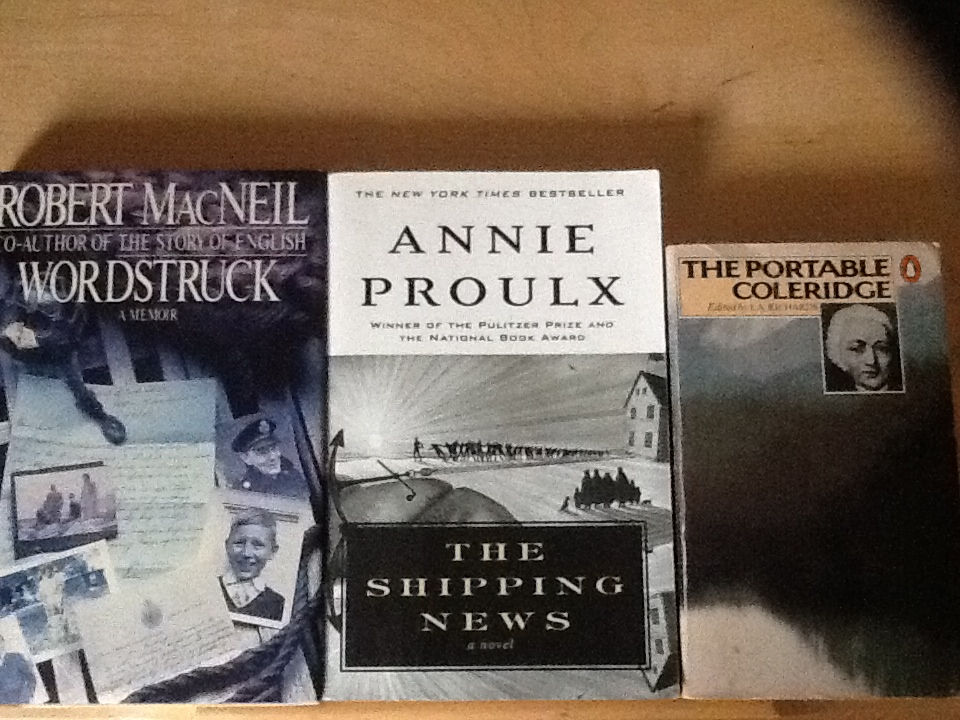
I admit it: I was not above the shuffle and scavenge of Booktraders’ end, I hate to say. I, too, walked away with three free books (pictured above) that actually piqued my interest. At least by saving these few volumes, I could promise them a good home rather than some cold resale. This act was a first for me as a lover of literature: walking away sorrowfully with books tucked beneath my arm. The creak and close of the store’s wooden doors behind me resonated like a casket’s final seal before burial.

The shuttering of Booktraders is a totem of a larger societal shift that is neither promising nor positive. When we are willing to prey on books but not give them our earnest attention and appreciation, we can no longer call ourselves a civilization. As publishing undergoes increasing transition, I suspect that real readers will become the  fulfillment of Ray Bradbury’s prophecies in the iconic novel Fahrenheit 451. We will be the outliers in a world walled in by electronic messaging and superficial relationships. Eventually, those of us who have bothered to memorize important passages will be glanced upon skeptically, even suspiciously. Perhaps this sounds extreme and even conspiracy-nuttish, but history paints a picture of prior societies who have fallen under similar strains. When we lose our love of literature, we lose our humanity.

For now, Booktraders does not rest in peace. It rests in pieces — fragments of disheveled disarray, the byproduct of mindless consumerism. It deserves better. It deserves honor. It deserves love. Farewell old friend, and thank you.


Uncategorized

On Slow Progress

Image
photo credit: NCSU

Once when I was fifteen years old, I climbed a waterfall. To be precise, I climbed the rock facing underneath the waterfall. My family and I were in north Georgia at the time, and the trail leading to the falls had ended at a wooden deck-style overlook some distance back, but I was not to be restrained by man-made barriers. As a young man full of vigor and adventure, I knew I could get closer. I had no idea how close I would get…to dying.

At the base of the falls well off the path, I began my steep ascent. The hard rock underbelly of the falls was covered in algae and ferns, and my fingernails dug up green with each new handhold. My hiking boots were not designed for this type of climbing, but they held fast to the slick and treacherous surface. Their cleats, too, ripped into the carpet of greenery. Each move was a calculated, deliberate decision. My pulse was racing, my stomach flooded with adrenaline. Still, I was too deep into the task to go back, and had I wanted to, I probably couldn’t have. I decided to see this venture through with discernment and strength. Even with caution, though, bad things happen.

As I neared the top of the falls, the gush and roar of the waters above me became near-deafening. I knew I’d have to veer to one side of the overflow or the other. The problem I now faced was inexperience — as an untrained and unfamiliar climber, I knew how to go up, but beyond that one direction, my movement was limited. I’d have to go straight through the water to reach the top. I summoned my most courageous breath, and felt the current strike the crest of my scalp. I pushed upward, caught a face full of water, and fell backward.

It was a surprisingly short fall — unlike those dreams where one seems to descend for eternity before waking with a jolt, this fall scraped my chin and chest on the rock outcropping, and in the midst of the peril, my fingers and boot-treads made one last grasp to the surface. I had enough purchase to shove my way up the right side of the falls, and eventually, I found myself standing at their apex, looking back down the long trail of white and the brutal path beneath it. Around me, mountain laurel were in bloom, and I could see our campsite in the distance. The victory at last was mine, and a hard lesson was learned. My chin was still bleeding. I covered it with my bare hand, and walked in the direction of camp.

I thought of this experience recently as I was growing impatient with other life circumstances. As regular readers know, I have a book forthcoming this summer, and my career is in a state of flux as I attempt to transition from secondary to post-secondary teaching. The end of the school year is upon us, and I’m generally discontent with waiting. The waterfall climb of my youth was one made with persistence, care, decisiveness, and bravery. As I think back on it, I recognize traits that I now need as the next chapter of my biography is only a few pages away. And while I may experience a “slip” or two along the way, I understand that, like surmounting any great obstacle, judicious patience remains key.   

Uncategorized

Apples and Oranges: Frost’s Influence on my Early Work

Image
Photo: University of Buffalo’s Robert Frost Collection

As a middle schooler, I was fortunate to have one English teacher throughout those tumultuous years who encouraged my interest in poetry. Mr. Pace knew I was a rare breed: a perceptive and sensitive farm boy interested in writing and things literary, though not the greatest scholar. My profile, he felt, matched up with a certain northeastern poet whose canonized tomes of work combined the rhythmic labors of agriculture with the delicate intricacies of poetic diction. Hence, my introduction to the works of Robert Frost began.

I would sit atop our barn roof overlooking our orange grove, and read everything from “Out, Out –” to “Stopping by Woods on a Snowy Evening.” I’d never seen snow. This was central Florida, after all. It didn’t matter — Frost brought it to life with his vintage imagery and steady, clopping-horse meter.  And then, of course, there were the apple orchard pieces. From “After Apple-Picking” to “Mending Wall,” I knew well the lifestyle he described, even though our farm and its accompanying ladders and fences were more than a thousand miles away from New England. Like Frost, I knew the press of a rung into flesh and the whisper and sway of fruit trees. Here was a man who “got” me, I felt, even though he was long since dead.

My love for Frost’s work continued into high school and college, and I wrote bad pastiches of his work, thinking I was being totally original all the while. After all, my “citrus farm” poems were completely disparate from anything New Englandish. Yeah, right. As I look over my older pieces, I hear familiar iambs and rustic rhymes that mark a younger poet’s perception of excellent verse. How brilliant I believed my rhyme schemes and wordplay to be! If only the rest of the world could see this marvelous talent, I thought, refusing to admit that every syllable was a tribute to America’s godfather of poetry — Frost.

Even my first book, Growing Moon, Growing Soil, contains blatant influence from “Frosty Bob.” As I matured, my reading tastes expanded to include contemporary voices and a vast array of styles. But as a writer, I kept coming back to those paradoxical poems — so seemingly simple, yet profound. Frost’s work occupied a space on my mental bookshelf alongside Bible verses and the Scout Oath and Law — it was ingrained among the ridges and folds of my brain’s landscape as surely as cut weeds turned under by a grove disc.

Today, my work is influenced differently — I no longer strive to “sound like” this poet or that one, but my poetry (I like to think) has come into its own. One of the greatest compliments of my more recent work came from poet Erica Dawson: “John is accomplished. He knows his voice.  He knows his subject matter.  He knows his style.” Those words, like Mr. Pace’s initial encouragement, gave me not only assurance, but a goal. If my work is to reach the level of greats like Frost, it must be identifiable as uniquely mine. The thumbprints of many poets may be found within my writing, no doubt, but when the final draft is finished, my hope is that it surges with a different pulse; one as recognizable as Frost’s, but unique — oranges to everyone else’s apples. 

Uncategorized

Book Pregnancy

KONICA MINOLTA DIGITAL CAMERA

So it turns out that waiting really is the hardest part. For those who’ve been following my journey from MFA to book publication, you know that my 85-page collection of Florida-life poetry Middle Class American Proverb will come out later this summer. In the meantime, I’ve been setting up appearances, readings, book signings, and all the other trappings that come with good networking and positive publicity. Being one’s own agent isn’t that hard, but the gestation between book acceptance and book publication is killer.

You have this beautiful thing that you can’t wait to have released into the world, and all you want is for it to be available to your friends, family, readers, and supporters. But you must wait. And then wait some more. All the while, your creation is kicking around in its publishing-house womb, building its muscles for that incredible, inimitable cry released at first appearance (maybe I’m pushing the “birth” metaphor here).

But what’s more, the book “parent” is pretty far removed from all this development. Oh sure, there’s the occasional email about edits or cover art, but for the most part, you’ve committed your creation into the hands of total strangers who you hope will treat it right. Someone more impatient would probably have gone the self-publishing route, and I’ve been down that road before also. Yes, the book comes out quicker, but it’s all too easy to let the little flaws stay in the name of expedience. There’s also not the attention given to the finer details of publishing — does the cover art complement the text itself, or was it just thrown on assembly-line style?

Having a caring publisher who’s devoting time and real interest to my book is rewarding, and the waiting, I know, will be worth it. For now, it’s time to prepare. And there is joy in making ready.