poetry, Uncategorized

Writing in “Real Life”

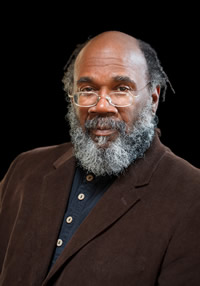
Before my cohort and my other fellow MFA candidates left from our last residency in June, we were given a final warning by the inimitable Arthur Flowers (see photo, left): “So, what are you going to do? You’re about to go back out into real life, where there’s bills to pay and mouths to feed. … People are going to tell you that you’re chasing a fantasy. People are going to say to you, ‘Just do like the rest of us.’ Don’t you do it. Follow that dream you’ve begun here. Never let anybody tell you that you’re not a writer.”

The truth is, I’ve had to replay this little lecture to myself on more than one occasion. As my teaching gigs and the mundane suburban duties of yardwork and such pile up, I sometimes tend to forget that I am also a poet. After all, the labels of father, husband, and professor seem to hold so many more responsibilities. What’s more, the immediacy of providing for my family tends to obscure the more long-term goal of poetic success.

It is indeed a dog-eat-dog world out there, and poets, like everyone else, are scrambling in a fight to the top: networking, assuming new titles, taking on the challenges of work-home balance, and ensuring that all the parts of life are functioning smoothly. In the midst of all this, it becomes pretty easy to allow writing and those related goals to take a back seat. I even found myself telling my wife recently, “Writing’s not as important as (insert bigger priority here).” And while that may be true, I must remind myself not to throw out the proverbial baby with the bathwater. Just because life demands greater attention to things of necessity doesn’t mean that I should completely cast aside any and all writing endeavors. And neither should you, reader.

“We do what we have to do so we can do what we want to do,” the old saying goes. But occasionally there’s a blurry line between those two ideas. Where the needs meet the wants, in that blurry gray space, is poetry. Yes, I could live without writing. But it would definitely be a sad and colorless existence, devoid of any creative sparks or intrinsic cognitive satisfaction. It is unimaginable and unimaginative. I have no plans to cut out my essence, just as I have no plans to desert my family or my career. Join me, readers, in this persistent striving toward the bigger, toward the better, toward tomorrow. Let us be pilgrims on this journey together. May our walk be filled with abundance, and may our pens never run dry.
poetry, Uncategorized

The Necessity of Interruption

So, this post probably won’t win me many writer friends. Be warned.

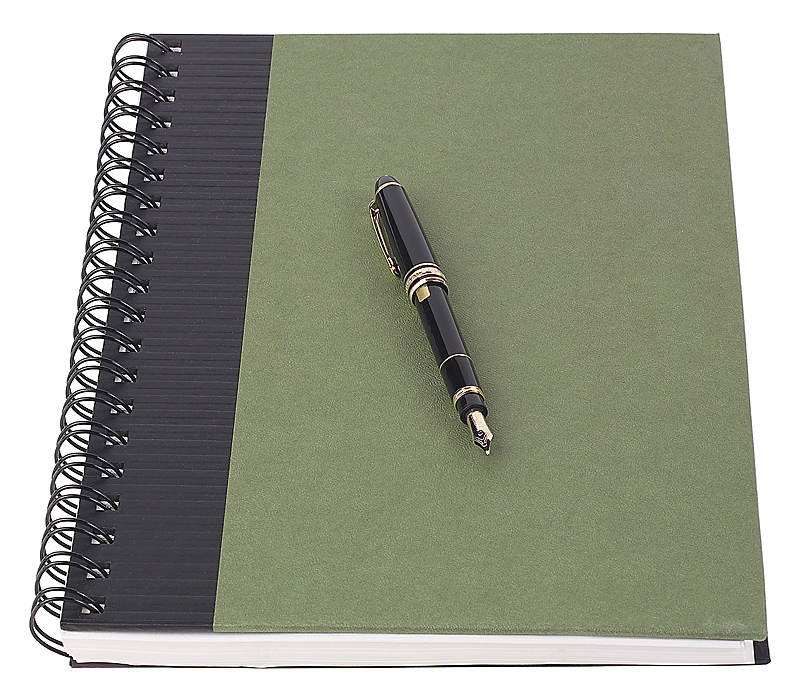
I have found over the years I have written poetry and prose that I am different from my colleagues in one regard: I actually prefer to be interrupted from writing.

Now, before all you secluded-in-solitude writers go nuts, let me clarify: My writing room has no “doors” to speak of. My children can come in at any time and speak to me, get hugs, whatever. And in retrospect, those interruptions have actually made my writing stronger.

Here’s what I mean: My brain actually has to work harder to power through the static and the outside influences, and thereby comes up with things that my brain at total ease would never think. In fact, when I’ve tried to write in areas that are too quiet (the library, my local college study room, etc.), I find myself encountering greater difficulty. There has to be some background noise, and it can’t be something like music with lyrics or that artificial white noise garbage. The sounds in the environment have to be things I know are real: the drip of the rain beyond my window (like right now), the TV in the adjoining room mumbling about…I can’t tell what, the coffeemaker gently whirring forth a stream of fuel, my boys playing pirates in their bedroom down the hall. These noises actually help me to focus better. And while many of my poet friends would cringe at the thought of such “racket,” I’ve found that writing locales without these sensations rob me of something. Maybe it’s the familiarity, maybe it’s a degree of undiagnosed OCD — I’m not sure.

Whatever the cause of this scientific fact, the thing that matters most is its effect. I know how and where I write best, and life’s little interruptions are as necessary as pen and paper. Do I still fantasize about being that “lone wolf” author who has blackout blinds and acoustic paneling just to ensure that his thoughts aren’t “tainted?” I suppose. But given my druthers, I’ll take my boys’ imagination-chatter and the soft hum of life in the suburbs over celebrity sanctuary any day.

poetry, Uncategorized

Hello, Neighbor

ImageImage

As a child, I watched Mister Rogers’ Neighborhood. It came on right after Sesame Street, which I sometimes watched, sometimes didn’t. But Mister Rogers offered children an avenue to escape — his land of make-believe, arrived at by way of the jingly-jangly trolley, may have been one of the first places that I understood the importance of using my own imagination.

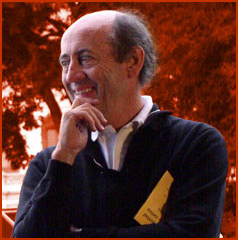
The point of this post, however, is not merely to reminisce about television programming from my primary years. Instead, it is intended to reveal an epiphany about modern-day popular poets. Specifically, Billy Collins as an example. Many critics have lauded Collins’s efforts at raising public awareness of poetry. By that same token, many have criticized him for “oversimplifying” poetry, or making it “too accessible.” No matter how you feel about his contributions, however, Collins has that same presence, that same certain at-ease mystique that Fred Rogers had those many, many years ago: When you listen to Collins read, it is as though you, the listener, are having an across-the-fence conversation with a favored neighbor. His occasional dry wit and all-American approach make him a hit with universal audiences.

Just as Mister Rogers shed his formality upon entering his time with young viewers, donning sneakers and a cardigan instead of his preaching coat and dress shoes, it feels as if Collins is shedding the academic veneer so often kept up by other contemporary poets. He is here simply to speak with you, his listener, and perhaps his reader. It is this convincing stage initmacy that makes America love Billy Collins, just as parents and children adored the beloved Mister Rogers for so many decades. That sense of “everything’s okay” that pervaded the imaginary land of make believe equally is exhibited in the voice and presence of America’s former poet laureate. And in an age so full of insecurity and ugliness, time spent in the comfort and beauty of poetry’s surety is certainly time well spent.

poetry, Uncategorized

Pen Names and Identity

A week or so ago, I began contemplating using a pen name for manuscript submission. This move, I thought, would follow in a great literary tradition of authors whose work I admire. In consulting with my mentor through UT’s MFA program, however, several points were raised that I felt bore repeating here:

1. Using a pen name could mean that people won’t identify “the real you” with your work. That is, your persona or pseudonym receives the credit. Much like the ventriloquist plagued by the reputation of his puppet, authors too sometimes become overshadowed by the power of their pen name.

2. A pen name can serve as a hiding spot or a shield. Some people may consider this a good thing, but in the end, pen names can sometimes cause writers to avoid accountability for their words by blaming this “imaginary friend” of sorts. Comfort and liberation can come from this idea, of course, but at what price?

3. When people go into the bookstore, do you want them looking for work by (your name here), or do you want them seeking words by this moniker? True, you and your pseudonym may be one and the same, but there’s always that lurking barrier that arises through the use of another identity. In this society where we value openness and sincerity, pen names impart a certain shade or veil that readers today don’t necessarily enjoy.

In the end, of course, I decided against my proposed pen name. It was, at best, a passing fancy, and one best left in the annals of my writing history. If some day I decide to change course, I’ll probably take the Nora Roberts route: Let people get to know “the real me” first, then later write under an assumed name that everyone knows is mine in the first place. For the time being, I’m just me. As common and as average as my name is, it’s still mine.

poetry, Uncategorized

Why “Florida Poetry?”

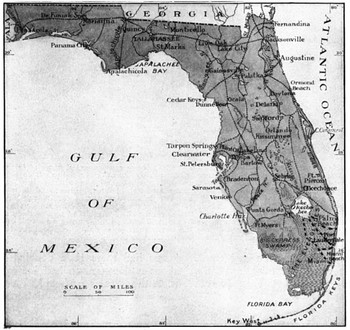
Once in a while, I have people ask about the title I have chosen to wear as a writer. “Why limit yourself to being considered a ‘Florida Poet?'” they inquire, certain that I have made a horrible marketing mistake. The simple fact is, I believe in truth in advertising. My work, while not totally Florida-driven, is largely based here in my home state. Sure, I may write once in a while about exotic, even fictional, locales, but for the most part, the nature, the people, the settings, and the themes of my work are uniquely Floridian.

I don’t write “Florida Poetry” so that I have a better shot at cornering one select niche of readers, nor do I use the term to make my work seem any more “Floridian” than that of my peers or colleagues. When I advertise myself as a “Florida Poet,” I do so because I want people to understand what they’re getting when they pick up one of my books, or when they see my pieces in journals and on websites all over. My perspective is one influenced by “Floridana,” and all that term encompasses.

So, to those of you thinking I’ve eliminated myself from “serious literary consideration” and such, my hope is that you now have a better understanding of my position — I am Florida through and through, and no state is more universal.

Uncategorized

Thoughts on “Becoming a Name”

Within literary circles, there is constant talk about authors who are “names” — that is, they’ve done so much and accomplished things so notable that their names are immediately recognizable in print or elsewhere: Billy Collins, Rita Dove, C.K. Williams, and others could be considered “names” within the field of poetry, for example.
This observation, then, drives a question: How do amateur poets become “names” also? Certainly winning prizes and earning publication credits help, but without a big-name publisher, well-attended reading events, and a certain splash of eccentric personality, young or fledgling poets can seemingly forget about the idea of “becoming a name.”
Perhaps a deeper philosophical question is this: Should fame really be the end goal of poets, novice or experienced? Certainly recognition helps when making appearance arrangements and other accommodations, but if that sort of “brand awareness” becomes all we’re shooting for as writers, something’s wrong. We write, primarily, because we love to write, and feel deprived if we don’t. When that love becomes something other, some strong impetus for our faces to grace the cover of Poets and Writers perhaps, then it’s time to step back and re-examine.

Uncategorized

Welcome and Introduction

Hello, and thank you for stopping by my site. Here, you’ll find information about me, John Davis Jr., and my poetry and writing. Primarily, I write poetry that reflects my Florida background and lifestyle. Most of my pieces deal with “The Real Florida,” not the postcard-picture stereotypes that most people conjure up mentally when they hear my home state’s name in passing. My people have been here for the last six generations. We fought in the Civil War, farmed our own land, and even today, we continue many of the proud traditions of our agrarian forebears. To learn a little more about me, please choose a link from the menu above: “About” or “Publication and Awards History” should do just fine. Occasionally, I’ll post a little something here inspired by the writing life. As my bio states, I am currently a student in the MFA program at University of Tampa. Some posts may be motivated by specific assignments, but mostly, this is a place to reflect and express my thoughts on writing and poetry in particular. Stay tuned, folks. The best is yet to come.