Uncategorized

Fictional Fears and Fears of Fiction

notebooknpen Earlier this week, I had a first in my writing career. A piece of humorous southern fiction that I penned appeared in The Dead Mule School of Southern Literature: http://www.deadmule.com/fiction/john-davis-jr-the-legends-of-mailman-george/

For the first time in a long time, I actually felt anxious about publishing. As a younger writer, I worried whether people would think my pieces were good enough. Over the years, as I completed the MFA and had other major milestones in my poetry writing, those fears waned. I began to adopt the attitude that I knew my work had worth and quality, and if others disagreed, so be it. I found that sentiments within the literary community were so broad that my work would never be pleasing to everyone. I wrote with my particular audience in mind, and if others also happened to enjoy it, so much the better. This wasn’t to say that I disregarded workshop advice or the feedback of diverse others, but at the end of the day, my work was just that…my work. I could compose, edit and revise with the best of them, and that confidence laid my worries to rest.

Perhaps this was why I was taken aback by my own boyish hesitation and nervousness when my fiction appeared. This funny southern tall tale was unlike anything I’d ever done, and I suddenly felt the need to seek out validation like a kid in school. All those old reservations about whether my work was good enough suddenly resurfaced. After all, I’d built my reputation on a substantial foundation of poetry — branching out into another “unsafe” genre like fiction was reason for apprehension, even intimidation.

Once the piece appeared, some of the trepidation subsided, but even now, I look at my writing there and fight the propensity to hem and haw about it. Maybe my skepticism over my fiction-writing abilities will subside like my poetry worries did, but for today, I continue to walk on eggshells around this newer genre in my publication history. Like any art, with proficient practice comes greater assurance. Maybe I need to read and write more fiction; maybe I need a few more workshops. I’m not sure. But I do know that engaged time tends to cure insecurity. This summer, as I’m busy planning book events and producing more stanzas, I plan to prioritize writing beyond the purple curtain of poetry. Hopefully, as the old saying advises, practice will make perfect, however I choose to define that abstraction.


Uncategorized

On Slow Progress

Image
photo credit: NCSU

Once when I was fifteen years old, I climbed a waterfall. To be precise, I climbed the rock facing underneath the waterfall. My family and I were in north Georgia at the time, and the trail leading to the falls had ended at a wooden deck-style overlook some distance back, but I was not to be restrained by man-made barriers. As a young man full of vigor and adventure, I knew I could get closer. I had no idea how close I would get…to dying.

At the base of the falls well off the path, I began my steep ascent. The hard rock underbelly of the falls was covered in algae and ferns, and my fingernails dug up green with each new handhold. My hiking boots were not designed for this type of climbing, but they held fast to the slick and treacherous surface. Their cleats, too, ripped into the carpet of greenery. Each move was a calculated, deliberate decision. My pulse was racing, my stomach flooded with adrenaline. Still, I was too deep into the task to go back, and had I wanted to, I probably couldn’t have. I decided to see this venture through with discernment and strength. Even with caution, though, bad things happen.

As I neared the top of the falls, the gush and roar of the waters above me became near-deafening. I knew I’d have to veer to one side of the overflow or the other. The problem I now faced was inexperience — as an untrained and unfamiliar climber, I knew how to go up, but beyond that one direction, my movement was limited. I’d have to go straight through the water to reach the top. I summoned my most courageous breath, and felt the current strike the crest of my scalp. I pushed upward, caught a face full of water, and fell backward.

It was a surprisingly short fall — unlike those dreams where one seems to descend for eternity before waking with a jolt, this fall scraped my chin and chest on the rock outcropping, and in the midst of the peril, my fingers and boot-treads made one last grasp to the surface. I had enough purchase to shove my way up the right side of the falls, and eventually, I found myself standing at their apex, looking back down the long trail of white and the brutal path beneath it. Around me, mountain laurel were in bloom, and I could see our campsite in the distance. The victory at last was mine, and a hard lesson was learned. My chin was still bleeding. I covered it with my bare hand, and walked in the direction of camp.

I thought of this experience recently as I was growing impatient with other life circumstances. As regular readers know, I have a book forthcoming this summer, and my career is in a state of flux as I attempt to transition from secondary to post-secondary teaching. The end of the school year is upon us, and I’m generally discontent with waiting. The waterfall climb of my youth was one made with persistence, care, decisiveness, and bravery. As I think back on it, I recognize traits that I now need as the next chapter of my biography is only a few pages away. And while I may experience a “slip” or two along the way, I understand that, like surmounting any great obstacle, judicious patience remains key.   

Uncategorized

Apples and Oranges: Frost’s Influence on my Early Work

Image
Photo: University of Buffalo’s Robert Frost Collection

As a middle schooler, I was fortunate to have one English teacher throughout those tumultuous years who encouraged my interest in poetry. Mr. Pace knew I was a rare breed: a perceptive and sensitive farm boy interested in writing and things literary, though not the greatest scholar. My profile, he felt, matched up with a certain northeastern poet whose canonized tomes of work combined the rhythmic labors of agriculture with the delicate intricacies of poetic diction. Hence, my introduction to the works of Robert Frost began.

I would sit atop our barn roof overlooking our orange grove, and read everything from “Out, Out –” to “Stopping by Woods on a Snowy Evening.” I’d never seen snow. This was central Florida, after all. It didn’t matter — Frost brought it to life with his vintage imagery and steady, clopping-horse meter.  And then, of course, there were the apple orchard pieces. From “After Apple-Picking” to “Mending Wall,” I knew well the lifestyle he described, even though our farm and its accompanying ladders and fences were more than a thousand miles away from New England. Like Frost, I knew the press of a rung into flesh and the whisper and sway of fruit trees. Here was a man who “got” me, I felt, even though he was long since dead.

My love for Frost’s work continued into high school and college, and I wrote bad pastiches of his work, thinking I was being totally original all the while. After all, my “citrus farm” poems were completely disparate from anything New Englandish. Yeah, right. As I look over my older pieces, I hear familiar iambs and rustic rhymes that mark a younger poet’s perception of excellent verse. How brilliant I believed my rhyme schemes and wordplay to be! If only the rest of the world could see this marvelous talent, I thought, refusing to admit that every syllable was a tribute to America’s godfather of poetry — Frost.

Even my first book, Growing Moon, Growing Soil, contains blatant influence from “Frosty Bob.” As I matured, my reading tastes expanded to include contemporary voices and a vast array of styles. But as a writer, I kept coming back to those paradoxical poems — so seemingly simple, yet profound. Frost’s work occupied a space on my mental bookshelf alongside Bible verses and the Scout Oath and Law — it was ingrained among the ridges and folds of my brain’s landscape as surely as cut weeds turned under by a grove disc.

Today, my work is influenced differently — I no longer strive to “sound like” this poet or that one, but my poetry (I like to think) has come into its own. One of the greatest compliments of my more recent work came from poet Erica Dawson: “John is accomplished. He knows his voice.  He knows his subject matter.  He knows his style.” Those words, like Mr. Pace’s initial encouragement, gave me not only assurance, but a goal. If my work is to reach the level of greats like Frost, it must be identifiable as uniquely mine. The thumbprints of many poets may be found within my writing, no doubt, but when the final draft is finished, my hope is that it surges with a different pulse; one as recognizable as Frost’s, but unique — oranges to everyone else’s apples. 

poetry, Uncategorized

On Acceptances and Patience

OsceolaTurkeyGobblerinColorAs a much younger writer, I once composed a short story based upon one hunting trip I took with my grandfather. On that trip, I shot a young jake (turkey) with almost no beard, and moments later, a huge flock of larger turkeys came strutting by, including one with an earth-dragging beard. As hunting camp guests, we were limited to one bird, and these bigger ones had long spikes on their legs and weighed nearly double what my quarry did. The point of the story was supposed to be “good things come to those who wait,” but in retrospect, the amateur creative nonfiction probably missed its mark.

I thought back on that story today, though, as I received an acceptance for my manuscript Middle Class American Proverb. The book is an 85-page collection of poems based upon rural life in old Florida and its highs and lows, among other topics. Understand: I graduated from the MFA program at University of Tampa in January, and since that time, I’ve been waiting for a publisher to accept this hard-worked collection of poems which I produced as my creative thesis. I had widely submitted it  long before I graduated, starting last fall. It’s been entered into contests, shopped around to academic and small presses around the country, and generally plastered everywhere I could find a spot for it in the literary community.

Many of my fellow writers wait far longer than just a few months to receive those magic words, “Your manuscript has been accepted.” In today’s market especially, poetry is not a big seller, as it is purchased mostly by other poets, literary critics, and academics. To get a volume of poetry accepted by a press, even a small one, is a near-miraculous feat. Making the process worse is that seemingly interminable period between submission and the yea or nay of publishers. As the old song says, waiting is the hardest part. Indeed.

Now, as the manuscript has found a home and the edits begin, I can breathe a little easier. Colleges and universities smile more favorably on applicants with a book or two under their belt, and the old notion of “publish or perish” still thrives at serious institutions around the country. I am incredibly grateful to my publisher, Negative Capability Press of Mobile, Alabama, for their interest in and attention to what I consider my masterpiece (thus far).

It is incredibly gratifying when editors and publishers recognize the labor and serious thought that you as an artist have invested into a work. And certainly this collection, by far, has received the best parts of my work and creativity. As the edits fall into place and the book comes to life from its manuscript form, I can hardly wait to see it emerge as the book I’ve always dreamed it to be. The process, I know, will be long. It will require the patience of a seasoned turkey hunter — or maybe that of a more experienced writer. Either way, I’m ready. This time, the first offer is one worth taking. Bigger “birds” might be out there, but this one is just right.

negcappress

Uncategorized

Christmas Epiphanies

ImageEarlier this year, I ran a series of posts regarding the subject of epiphanies and how those revelations visit upon us as writers and artists. For a complement to that series, here is my last post for 2013:

Christmas at our house is a time of family togetherness. Therefore, it is also a time of remembrance. Yes, we observe all the religious aspects of the holiday — we have our nativity scene out, we read Luke 2, and our gifts to one another are given in recognition of that Greatest Gift of All — Jesus Christ.

Aside from the religious meanings of this season for us, however, Christmas is secondarily a time when we recall family celebrations from years past. When I was very small, we spent Christmas Eve at my Aunt Doty’s house. Her “secret-recipe” chicken and dumplings were the festive highlight of the bountiful food table, and her modest living room was filled with cousins, aunts, uncles, friends, and visitors.

Today, my mother carries on that legacy of Christmas Eve at her own home. The scene is similar, and mom has even managed to figure out the hush-hush chicken and dumplings recipe. As a poet, I am grateful to have grown up in an environment where traditions, gatherings, and shared time played such a major pivotal role. Reflections on our family’s celebrations often drive my work, even if the pieces aren’t completely autobiographical.

As artists, when we think back on holidays past, be they Christmas or others, we find ourselves in the environments that have meant (and still mean) the most to us. As you go about your end-of-year errands, showing up at office parties and well-wishing others, take some time to think back on those past seasons of life. Reflection is still a prime epiphany-generator, and this time of year often provokes remembrance in the strongest ways possible. Merry Christmas, readers, and a very Happy New Year.

poetry, Uncategorized

Niche and Identity

Sometimes routine is more foe than friend
Can one’s writing niche become a rut?

Much has been written about the importance of finding one’s place, both in the universal sense and within one’s chosen profession. Modern poets strive for years to find their voice, their style, and their unique contribution to literature. In essence, they strive to find their niche.

No matter how you pronounce it (neesh for some, nitch for others), one’s niche is an important component to the writing life. Knowing it can mean the difference between publication and rejection. Our niche, to some extent, is how we brand ourselves as writers. A quick look at the title of this site will show you how I feel my work is defined — “Florida poetry.” Granted, that doesn’t mean my work is all beach sunsets and Disney characters (those aren’t the REAL Florida anyway), but enough of my work has its roots in Floridian soil to justify the label, I believe. I am indeed a Florida Poet.

But what happens when that niche becomes a rut? When the title we choose to wear is either outgrown or outmoded, it’s time to reconsider. A wise writing mentor once told me, “We are constantly redefining ourselves.” He was right then, and it still holds true. When our chosen position in life or literature no longer suits our situation, then change, in one form or another, must occur. Even now, as my travels increase and my style matures, I feel that the “Florida Poet” label is being stretched to its limits. The niche has lived its life, and perhaps I may retire that verbiage altogether. Like actors who fear typecasting, writers too can “portray themselves into a box.” If one is known by strictly one state or one style, then it’s time to diversify. Showing off the full range of “chops” that one possesses can also breathe fresh air into previously stale subject matter.

Oh sure, I’ll always be a Florida poet at heart — this land, where my family has spent seven generations, has been too good to even consider abandoning my roots, my heritage, or my Cracker drawl. But as my poems grow and as my tastes broaden, perhaps I may dig the niche a little broader. Florida for many is a destination. For me, it is the port from which to set sail — not a rut, but a route. May my work always do it justice, and may I always fit my niche, no matter its wording, to the fullest.


poetry, Uncategorized

Going Organic — A Floridian Perspective

grove0001
A view of our grove from the top of our barn, January 1996. As a younger poet, I spent a great deal of time “pondering” from the old barn roof. This vista was my first real point of inspiration.

My family runs a citrus farm in south central Florida. My grandfather, who died in late 2004, began it well before my mother was born.

It isn’t a very big grove; only about 20 acres. We grow pineapple variety oranges, which are considered by the industry a “juice orange.” You won’t find our fruit in commercials for OJ, because they aren’t “table fruit,” meaning they aren’t the kind of oranges one puts in a bowl to make a centerpiece.

Now in Florida, we have another blow dealt to our crop: Citrus Greening. This disease causes the fruit to wither into hard little knots, and it causes trees to diminish in foliage and abundance. As bad as citrus canker was in the 1980s and before, greening now threatens family farms like ours even more. This disease, caused by a foreign phyllid, has brought Florida Citrus to its knees. As legislators and agricultural experts figure out what to do next, Florida orange groves are dying away, acre by acre. Ours is no different, unfortunately. Government officials have worked hard to get funding to eradicate greening, but it may not happen fast enough. No more 100 percent Florida orange juice is a very close and real possibility. Greening could mean the end of not only a product, but also a long line of family traditions, as well. Current farmers looking to pass on the family business may soon be without a family business at all.

I explain all this to raise another point, however: In the midst of the great greening crisis our state is undergoing, many farmers, including my family, are examining organic farming practices with greater intensity. No-till farming and other ideas are being investigated for their potential benefit, and 21st Century agriculturists are learning that the chemicals we relied upon for decades are doing more harm than good, especially in dealing with greening.

Poetry, much like citrus farming, equally demands a more organic approach as we enter a new era in literature. No longer can the writer be satisfied with language that sounds self-important and inflated; the words must flow, and there must be balance among the elements, just as sustainable agriculture requires the right balance of water, sunlight, and food. Too much alliteration or metaphor, and the verses will perish. Too little editing or revising, and the end product will be as hard and withered as a greening-affected orange.

It seems a little selfish to focus on writing artfully amid such a dangerous situation for family farms. But maybe, just maybe, some of the same practices that poets and artists employ on paper can be used by our scientific community to save our citrus — sometimes, the new, radical, and unconventional solution is exactly what a piece of writing needs. And perhaps that’s what our oranges need as well.

If you’d like to get involved in the fight against greening, please write your congressional representatives, and search online for ways that you may be able to help. Keep American Agriculture strong! Thank you for listening, and thank you for reading.

poetry, Uncategorized

The little chapbook that could

combboundThe very first collection of poems I ever published were put into a plastic comb-bound chapbook entitled Satin Grit: Poetry for the Average Joe. I know, I know — a truly horrible title, and unfortunately, the poetry inside this little 25-page first effort wasn’t much better. Forced rhymes, trite metaphors, tired cliches, and “borrowed” clip art from Windows 95 made that initial attempt truly laughable in retrospect.

But that first little gathering of bad poems, which I sold for $5 apiece from a folding table at a small central Florida authors’ get-together, gave me some elementary experience in the business of publishing. I understood what it meant to assemble a collection, choosing just the right piece for just the right page. I gained some sense of the work that goes into the physical process of making a book, no matter how small.

At the end of the event, I still had a box full of my homemade chapbooks, but a few kind patrons actually ponied up their hard-earned money for inexperienced and unrefined verses of a twenty-something dabbler. I had an “author’s profile” in the local newspaper, and a few other perks came my way as a result of those terrible, dot matrix-printed chapbooks. These rewards were enough, however, to keep me going. In 2005, I would publish an entire collection of Florida poetry, and in 2012, I would enroll in the University of Tampa’s MFA in Creative Writing program to further hone my skills. That sorry, self-made chapbook served as a gateway to further pursuits, despite its questionable quality.

So today, when I received word from Kelsay Books that they’d like to publish my newest chapbook, a 30-page volume dedicated to the issues of fatherhood and mentorship, I felt a few rogue memories returning. Would these little texts be no better than Satin Grit? My poetry has come a long way since those folding-table days, but would people treat this new work seriously, or see it as simply another “ploy” by a struggling poet? A friend of mine who also published through Kelsay assured me that their products were professional and artful, and that I would be pleased with the end result, for certain. And of course, no plastic comb binding. Whew. I scribbled my signature and date onto the contract, sent it back off to the publisher, and now, the waiting game begins.

The Boys of Men will be available in September 2014, according to my publisher. It will be sold through Amazon and other venues, and I will receive five author’s copies as a starting point. And even though poetry chapbooks aren’t the hottest selling commodities, the royalties I will receive on sales aren’t bad, either. I intend to have a book launch and a few other events (more details will follow). The faith I have in my work is greater than when I began peddling my word-wares more than a decade ago. I now see the chapbook as an honorable literary endeavor rather than a cheap avenue to push my name under people’s noses. I also admire the history of the chapbook: its humble beginnings as reading material for the less-than-royal draw me to it just as much as its modern, wildly artistic iterations. My writing, many rejection letters and maturing experiences later, is finally worthy to be bound into a quality chapbook. I am honored by this new proposition, and equally honored to partner with Kelsay Books.

I’ve become many things since those Satin Grit days — a husband, a father, an educator, and yes, a REAL poet. As I finish out my final months of the MFA program and I await the publication of The Boys of Men, memories of badly bound manuscripts and the head-shaking pity of small-town strangers may continue to haunt me. But at least now I know that, when the time arrives to launch my latest work into the world, this time it will soar on its own wings.

poetry, Uncategorized

Little Rituals

20130919-224853.jpg

Admittedly, I used the title phrase recently in a poem about a couple who wanted to build a new house. This set me thinking, however, about some of those small things I do to “signal” to myself that I am officially writing. I use a hot beverage, a particular location, and a few technological idiosyncrasies to get my brain in “writing mode.” This post explains those weird little habits that tell my brain it’s time to go poet.

If I’m writing during daylight hours, I usually have a cup of coffee in the mug pictured above. It’s thick ceramic, and there’s no telling how many years I’ve had it, but it serves as one of my neurological cues for writing. If it’s night, then maybe I’ll opt for decaf or some kind of tea, but I must have access to some hot drink in the mug you see here.

Secondly, I write in my “quiet room.” I think I have enough posts on that little subject, however. I have one desk for drafts, which I write by hand, and another desk for computer writing; that is, final drafts that make their way into my little PC. My computer, though, has given me a number of quirks that I never would have considered without technology: I begin by setting my margin at the 2 inch mark, for example. If the poem later deserves different formatting, then that can happen. But for the initial go-round, 2 inches is the magic setting for effective starts. I also insist on 12 point Times New Roman font. Yes, it’s old school, but it’s also clean and widely demanded by editors at respected journals.

All these little rituals verify to my mind that my unique brand of creating is happening. I enjoy the regularity and routine of these seemingly insignificant customs; if I changed them, I’d probably miss them, honestly. We never know how much our writing depends upon a couple of inches and a warm mug. And as the old country expression goes, “If it ain’t broke, don’t fix it.”

Until next time, loyal readers, enjoy your odd and inexplicable habits. They might be more important than you know.

poetry, Uncategorized

Keeping the Writing Window Clean

Every writer needs an inspirational view.

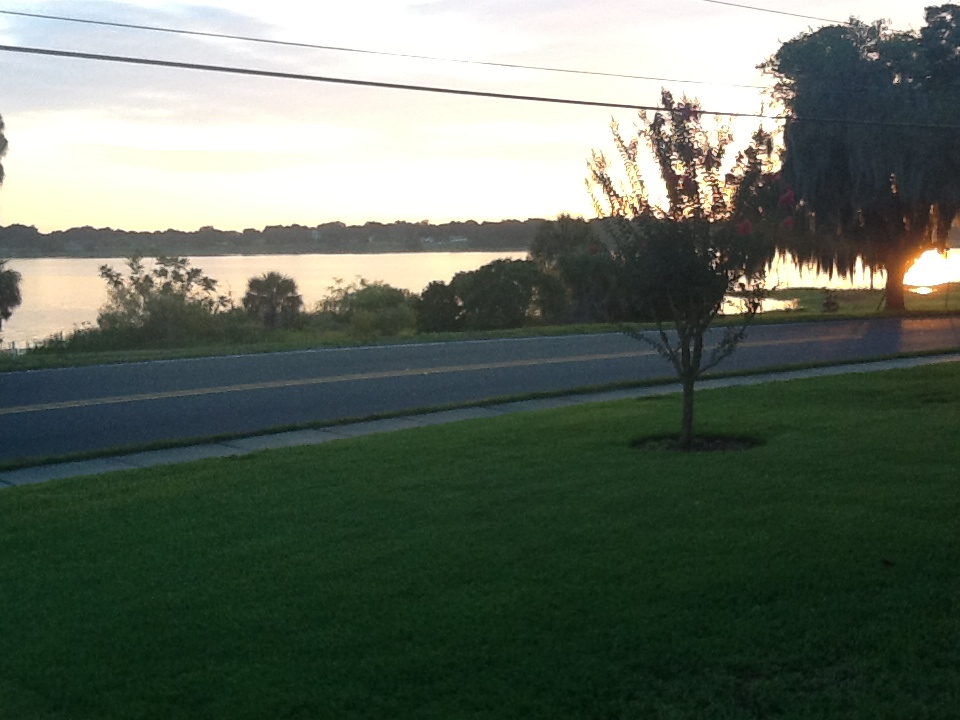
Those who’ve followed my blog for a while know that I have a “writing room.” Back in the seventies, this room was the formal living room, and after my second son was born, I transformed it into my studio (since I had willingly transformed my previous study into a nursery). In this room, we installed a large picture window that looks out across Lake Elbert. I do most of my writing in view of the lake.

But today’s post is less about the room itself and more about that window — the one that allows me to clear my head of other outside influences and reach a state of creative clarity. This morning, you see, I had to go outside to clean the window. Living on a lake means tolerating the Daddy Longlegs, dirt dobbers, and other occasional creepy crawlies that want to claim your open porch as home. But when they start to encroach on my view, then the gloves are off. As I was scrubbing, I realized, as many poets have, the metaphorical power of windows. Granted, this was not some new, earth-shaking revelation, but simply a restatement of prior knowledge: windows in literature have served as eyes, symbols of transparency or opacity, and they have taken on a wide range of other meanings, depending on the work’s needs.

For us as writers, however, our window on the world (both literally and figuratively) must always remain unclouded. If we allow streaks or stains in the form of distractions, worldly worries, or doubts about our abilities, then the inspiration stops. Just as the window works best when clean, so too, does our writerly vision work best when we free it from the dust of politics, society, career, and finances. Maybe your window is clouded with something else — grief or glee, negative or positive stress. No matter what the “smudges,” we as creatives must get out our mental Windex, and keep the view inspirational. Clean your window, reader. Your work will thank you for it.