life, poetry, publishing, teaching, Uncategorized, writing

A Farewell Book Launch

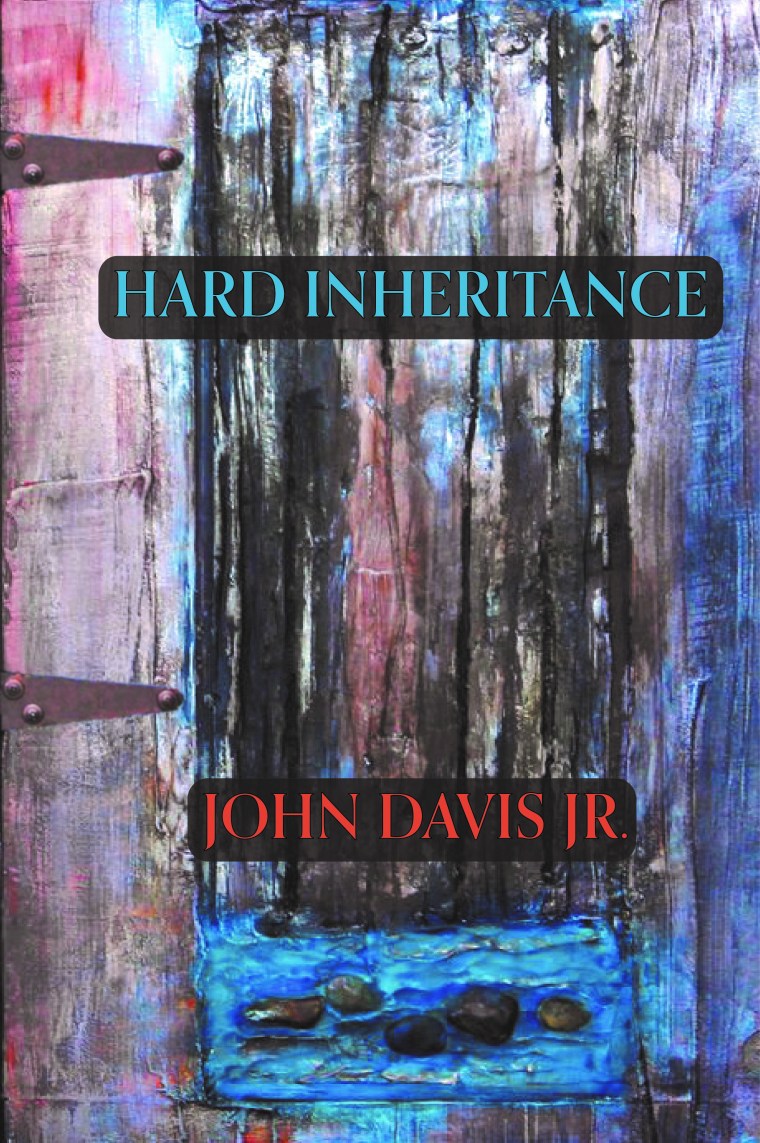
cover-for-adIn one week, I will be launching my latest collection, Hard Inheritance, at one of our city’s nicest art galleries. It is bittersweet, as this will be both the first and last book launch I hold here. I’ve loved my current city for 17 years, but this summer, my family and I will be moving to the west coast of Florida. My newest university teaching gig is a 70-mile drive from my present home, and making a 140-mile round trip daily is simply infeasible. By spring break, we plan to put our house on the market, and hopefully by summer, we will be in a new house in the Tampa Bay area. Timing, the market, and other factors will determine how quickly all this occurs, of course.

In the meantime, I’m excited to offer this new book, much of which has been inspired by our city, to the people of Winter Haven. My cover artist, a Winter Haven native herself, will be on hand to sign copies of the book with me, and invitees include people who have been supportive of my craft over the years that I’ve resided here. In many ways, this book launch is a fond goodbye to a place that has been kind to me and my family. The time I’ve spent here hasn’t been perfect — the same is true anywhere called home — but it has been inspirational.

Winter Haven’s people, its lakes, its nature, and its history have all woven themselves into my poems at different points along my artistic journey. I’ll miss all that over on the west coast, but there will be fertile material for writing there, as well. I’ve enjoyed seeing the vast salt water every day as I cross the Courtney Campbell Causeway or the Howard Frankland Bridge, and I feel certain that soon enough, my writing will take on a flavor that is more beach-driven. My hope is not to become one of those poets who creates trite rhymes about the sea, but rather, one who allows the environment to speak in its own way. Certainly that has happened here among the lakes of Winter Haven.

My wife’s family lives in Winter Haven, and doubtless we will be returning to visit often, especially during the summers. And yes, it will be a while yet before we’re out of the area. But this book launch allows me to reflect upon and salute a place that has been meaningful. The future is uncertain but hopeful, and it wouldn’t be possible without history. So, Winter Haven, a place of history, beauty, and opportunity, this book launch is for you. Best wishes.

life, poetry, publishing, teaching, writing

An Empathetic Farewell to Unpopular 2016

last-day-imageSo many of my friends have been cheering on the parting of 2016, thankful that it is about to fade into oblivion. As these last few hours tick by, I can’t believe I’m actually feeling sorry for a year in history. But 2016 has elicited that response from me, strangely enough. I feel that 2016 has been like that unpopular kid in class that everybody liked to pick on: easy prey because of difference. I, for one, kind of enjoyed 2016 — not necessarily for political or cultural reasons, but for its more personal milestones:

My fourth book (and by far my best to date), Hard Inheritance, received publication on December 5, and I have been honored by its critical reception. It was good to see a new book of poetry out there, and as 2017 waits just a few hours away, I fully anticipate that it will be a great year for my latest collection.

I received an incredible new full-time position teaching English and Literature at the university level, a long-time goal of mine. The job itself is both rewarding and intellectually stimulating, and I’m the happiest (professionally) I’ve been in a long time. My students make teaching a joy and privilege. That’s a sentiment I thought I’d lost, and now it’s back, thanks to the events of 2016.

Both of my sons have done well in different areas this year. My oldest son discovered a love for basketball, while my younger son has continued to develop himself academically and artistically in the new Montessori school both boys attend. My wife has continued to enjoy her work in the medical field, and my family life has been good, to say the least. My fortieth birthday meant a big trip to Lisbon for all of us, a time that none of us will soon forget for its meaningful experiences.

Maybe your candidate didn’t get elected. Maybe your favorite celebrity died. Maybe unnatural disasters befell your part of the world. But from my little corner of the planet, 2016 was more than okay. It was memorable, it was unique, and it was unpredictable. All three of these traits, while they can be negative, also give us things of beauty. And despite its occasional difficulty and ugliness, 2016 also had plenty of the positive. All we have to do is look for it.

life, poetry, publishing, Uncategorized, writing

How 5 became my life’s official number

handfiveAllow me to begin by saying I’m no numerologist. I do believe, however, that one day, we will all understand why the numbers in our lives intermingle and coordinate the way they do. I also believe that this overlap of figures is more than just mathematical. There is a purpose to the numbers, and it’s not just coincidental.

Here’s a good example: I was born on July 5. As a kid, I lived on Fifth Street. My stepdad was born March 5. My oldest son was born January 5. My best friend growing up had a birthday 25 days later than mine. Many of my other family members have birthdays, anniversaries, and other important dates that are influenced by the number five — maybe they’re multiples or maybe the dates add up to something five-related. Perhaps that last bit is stretching the significance a little, but you get the picture.

So I suppose it shouldn’t have surprised me when, the other day, my publisher emailed to tell me that my latest book, Hard Inheritance, had been published on the date of my grandfather’s death 12 years prior — December 5th.

To really grasp the importance of this chronological lineup, you have to know the kind of influence my grandfather had in my life. As a young child, I grew up on his citrus farm in Hardee County, a very rural community in southern central Florida. My grandfather loved me more deeply than almost any other person in my life, save my mother. He invested his time, his resources, and his wisdom in preparing me to become a hard working, honest, and thinking man.

He had flown 51 missions in World War II, and his American devotion carried well beyond his military service. He served his church as a deacon (a model I would later follow myself). He faithfully worked for the Coca-Cola Foods Division as a groves manager for decades before retiring to volunteer with my scout troop. I became an Eagle Scout because he taught me the value of persistence and perseverance; seeing a thing through to its successful end.

It only made sense to me when Hard Inheritance came out on the fifth. Of course it would, I thought, following the five-laden trail of bread crumbs throughout my life. It’s both fitting and bittersweet that this book, my best and most earnest to date, would become available to the public on a day with such meaning.

My hope now is that this volume would please him, were he still here. It celebrates the beautiful and the natural, but it also shows the events in life that leave our scars and calluses, both of which he was intensely familiar with. It celebrates Our Florida — that place that he, six generations of our ancestors, and now my children call home.

I think he’d like the history, the honesty, and the geography of this book. He’d probably laugh at the pieces he’s featured in, having forgotten an episode that seemed relatively unimportant to him, but one in which I find deeper relevance. He, too, was a “five” man, after all — born in the month of May, living to the age of 83 (subtract the two digits), and being great-grandfather to five children (3 girls by my sister, 2 boys that are mine).

Being connected to one particular number in such a vital way can sometimes be a Hard Inheritance  of its own. Rarely a day goes by when some important connection to the number 5 doesn’t crop up in my day-to-day life. Were I one to play the lottery, I sometimes think I’d buy one of those “Pick 5” tickets and just play all fives to see what happens. My statistician friends would discourage this, of course, knowing the wild improbability of winning from such a choice.

But if it’s one thing that my life has taught me, it’s that all the cold, sterile math in the world can’t explain the way that numbers work. There is no algebra, no geometry, no trigonometry or physics formula to rationalize how the figures align. And in that same logically inexplicable space, poetry lives.

Tomorrow will mark five days since my book was published. I will celebrate by watching my oldest son, number 35 on his basketball team, play his final game of the season. I will think of how proud my grandfather would be — both of my writing and my boys’ achievements. I will hope for more fives in the future. And I know that I will surely receive them.


life, poetry, Uncategorized, writers, writing

More than Organisms

vitruvian-300-333Recently, I attended a lecture by a respected writer who posited that we should write about the obscene, the vulgar, the disgusting, and the revolting. He said that his logic for this encouragement depended not upon shock value, but rather, upon the notion that all such things were true. Specifically, he called writers in the seminar to write about their bodily functions, sexual encounters, hidden diseases, and sources of physical shame. This, he said, would lead to writing that was absolute truth, and would liberate writers from their self-consciousness. Likewise, such writing would reach an audience that has apparently been searching for such literature — in his mind, there exists a group of people who want to know that others do, in fact, excrete waste, cavort recklessly, and wrestle with modern-day plagues (and desire to read about it). Perhaps so.

My response to the notion that we should write ugliness, though, is this: We are more than organisms, and because we are, we should elevate ourselves and our art above the crass. This statement is not intended as condescension or old-school literary snobbishness, but, somewhat ironically, as a statement of truth. Stay with me here:

As the leaders of all other species, and as cognitive, reflective, intellectually astute creatures, we should use our creative and mental faculties in the most supreme way possible. Keats was not wrong when he equated truth with beauty, even though his definition may have been an oversimplification. Yes, there is more to truth than just beauty, but as highly developed beings, we should seek the best and finest truths rather than those which debase or denigrate. St. Augustine, Martin Luther, and countless others (including the Romantics) have reached this conclusion well before our time.

To write about subjects primitive, desperate, and scatological can sometimes be a fun and bawdy diversion, but devoting oneself to these lesser ideas renders literature into the equivalent of monkey-flung feces, to borrow an image from the aforementioned speaker. Some will call this assertion elitism, and maybe it is. But if we are to leave a legacy of thought, shouldn’t we aspire to greatness rather than the sewer? Shouldn’t we leave behind something more than our literal behind?

All this theoretical explication probably won’t change the downward spiral of gutter-dwelling “literature” that is being written. I get that. But if one person lifts clearer eyes to consider things less coarse, less brutal, and less detestable, then this small epistle hasn’t been in vain. As writers, we don’t have to be Pollyanna, falsely portraying a world that is all sunshine and daisies; in fact, we have an obligation not to. But likewise, we don’t have to decrease our own personal and cultural worth by slinging words that glorify the gross and reprehensible. We are more than organisms.We are wonderfully made, and that wonder should shine in all we write.

poetry, Uncategorized

Things of Lasting Value

notebook2redMy grandfather’s oldest brother was quite the fastidious businessman in his day. I inherited his desk, books, and office supplies, and I’ve found there’s so much to discover about people from the objects that filled their lives.

For example, my great-uncle was a Master Mason and a Shriner, an avid hunter, gardener and golfer, and he was a careful record-keeper. He believed in refilling complimentary ballpoint pens rather than simply tossing them out, keeping matchbooks from places he visited, and holding on to extra nails, screws, hooks, and tacks “just in case.”

When he purchased something, he made sure it was going to last. This new old desk I have received is a testament to his insistence upon quality. A dark, heavy hardwood, its fixtures are real brass. Most of them are still shiny, despite decades of use. He topped the desk with a larger piece of lacquered wood, and he attached felt pads to the topper’s underside to assure that the original desk would remain unscratched.

The lamp that accompanies the desk was made sometime, I would venture to say, in the 1960s. It is a heavy brown metal drafting lamp with fluorescent bulbs, and it can be pivoted and adjusted for different perspectives on projects. Turning the lamp on is like taking a trip back in time, as the satisfying click of the red “on” button bespeaks another era — one that was marked by products made for near-permanence.

Even the electric pencil sharpener that came with these items is remarkable. I know the brand — it is one that has frequented my classroom for many years. The difference is, this one was made nearly 50 years ago, and its motor has yet to burn out. Yes, the unit is heavier and bulkier than today’s model, but the machinery that comprises it has yet to fail. I go through electric pencil sharpeners in my classroom at an alarming rate. I’m lucky if a modern sharpener made by this same company lasts a full school year. And yet, here is this dinosaur, still grinding down wood and graphite with precision and speed. Granted, this model hasn’t undergone the abuses and rigors of a secondary classroom, but nonetheless, its continued functionality is commendable.

I bring up these examples not as a maudlin longing for simpler times, but instead, to launch into another point: what we produce as writers can be quick and slick like dollar-a-pack stick pens, or we can endeavor to create something a bit more like the aforementioned desk, lamp, and pencil sharpener — something that endures. One of my goals as a poet has always been to create work that will be read in classrooms and checked out from libraries 100 years from now. Some would say that such an ambition is unrealistic and naive. I prefer to think that considering legacy when writing is much like investing in quality items of a more tangible nature. It ensures that when the people we care about look back over our lives, they can safely say we, too, insisted on quality.

Among the books I’ve received from this great uncle are several Bibles and dictionaries. All of them have been used with frequency, but also with a sort of care that shows reverence and admiration. My hope is, in using and appreciating these everyday items, I might somehow pass on that great tradition of surrounding oneself with matter that matters. May our writing be done in such a way that, when others hold it like a leather-bound inheritance, they treasure it equally every time.


poetry, Uncategorized

Gift vs. Calling: Which is it?

giftcallingAs I am completing the final semester of the Master of Fine Arts degree program and preparing for a new school year ahead, recently my thoughts have drifted toward the contrast between gifts and callings. Some people, especially in both religious and creative circles, use these words interchangeably. I see a difference, however.

Here’s my take: We are all gifted in some way. For some of us, music or art or science becomes the field where our most innate abilities shine through, and we experience an ease and flow in those fields that is nothing short of supernatural. Others are gifted with mechanical skills, and still others are gifted with people and relationships. I give these examples to clarify a bigger picture: Our gifts are those things that are naturally easy for us, and lie in those areas where we demonstrate talent. Is a gift a calling, however?

Your gift(s) can be part of a higher life calling, certainly. For instance, as a child, I quickly learned that I had an “ear” for music. I could sit down at a keyboard and peck out basic tunes, even adding left hand parts consisting of chords. That musical ability, however, was not my calling. In high school, other students rose to the top in chorus class and in other musical endeavors while my gift remained handy for family entertainment and recreation. I knew, even at that time, that music would not be the purpose or great mission of my life. I lacked persistence, devotion, and mathematical skills — all attributes that a professional musician needs. I still enjoyed playing piano and guitar, but they would be, at the most, hobbies.

As I progressed through school, though, I felt a great urge and need to express myself in writing. At first, short fiction pieces based on spy stories or detective cases were my outlet. With maturity came evolution, however, and my writing efforts turned toward poetry. There, in the writing of poems, I felt a certain inspiration that went beyond cognition, and held a deeper significance than mere proficiency. I knew that I had to be a writer. My teachers encouraged me, my family praised my humble first efforts, and I was on my way. My musical ear contributed to my poetic sensibility, tuning me into which words were “sour notes” and which ones flowed like a symphony. My earlier gift contributed to this larger calling.

Like Moses with his speech impediment, I also never thought of myself as a people leader. The front of the classroom seemed as alien to a younger me as becoming an astronaut. Strangely, my life was allowed to proceed in such a way that I was directed to teaching — I was spit up by a whale of circumstances onto the pedagogical shore that has since become my happiest home. Teaching is definitely a calling, and it is one not to be ignored or taken lightly. Many of my other gifts play into the classroom daily — whether it’s music, creativity, literature or nature, my loves and my abilities combine inside the walls of school to give students a memorable and meaningful experience. Teaching was not my initial “gift,” but as a calling, education has allowed me to use all of my talents in an exponential way: others are equipped and prepared through the use of those gifts that seemed like fun pastimes during another chapter of my life.

Teaching and writing are both gifts and callings for different people. There are phenomenal teachers who never darken the door of the schoolhouse, just as there are diligent journal-keepers who will never see their names on the NYT bestseller list. Their gift is not their calling. We are called, though, to use our gifts in the bigger picture — that profession or vocation that we are pointed toward, where our calling waits for us to answer.

poetry, Uncategorized

Experiential Education for Writers

In the middle of the twentieth century, critical theorist John Dewey put forth his then-radical idea that experiences equal education. Dewey, considered the father of the progressive movement, posited that interaction and continuity were the two key traits that made up an educational experience. Even today, while educators use different names for those same ideas (interaction=engagement, continuity=structure), Dewey’s legacy lives on. But it’s not just for those of us in the classroom. Dewey’s experiential education model is undergoing a renaissance of sorts at the post-secondary level, with more colleges and universities touting that they believe in it and use it to provide students with memorable learning.   Even for working writers and parents, the thoughts that Dewey developed have implications that can provide lasting benefits to us in our average, non-academic lives.

To begin, experiences form the foundation upon which all truly great literature is built. Even if those experiences are imagined or exaggerated, they nonetheless constitute the building blocks of fiction, poetry, and plays around the world. For those of us in the everyday world, the small experiences can generate great writing.

bikeThis summer, I’ve been riding bikes with my sons. We started small, with a few laps around our block here, and recently, we sojourned to their grandmother’s house about a mile away. The bike riding sessions have given rise to those metaphorical, time-transcending conversations that parents have always found meaningful: learning to ride a bicycle safely is a parallel to one’s larger life, after all. Lessons in persistence, balance, confidence, care, and initiative can all be heard when one is teaching others about basic cycling. Uphill grades can’t be conquered without perseverance, and the reward is always that downhill gust of face-breeze. Bicycles and their allegorical implications have been used by writers for years, and so, I haven’t bothered to write a poem about this experience yet. I feel that it’s been covered entirely too well by others before me. The poem that this experience generates will probably not be the old cliche about “letting go of the baby bird” or some similar tripe, but I sense that something from our time together will mold itself into poetry before the summer’s out. It just needs some time for creative gestation.

kayak 1Last summer, my oldest son and I spent almost every day kayaking. There are lakes all over our town, and we would set out on Lake Martha, carving a trail to the park across the lake from our launch point. The park made for some great play time, and afterward, we would paddle back. This experience also bore a number of universal lessons that later worked themselves into poetry — the landmarks around the lake were particularly symbolic of different stages in life: the park being childhood, the high weeds being adolescence, the tall offices being adulthood, and finally, the hospital just before home. As you might have guessed, the experiences of our kayaking journeys lent themselves toward poetry.

I relate these two examples to reinforce the larger point: Yes, experience equals education, but more than that, experience equals life equals literature. Only by living can we truly write in a way that will relate to others. Until next time — to write great, live great.

poetry, Uncategorized

A Writer-Teacher’s Birthday

typewriter-cakeIn looking back over my site here, I noticed that last year I also posted on my birthday. I thought that by doing so again this year, it might make a nice little tradition of sorts. I promise, however, not to wax eloquent about my resolutions or grand goals for the year ahead. That’s what New Year’s posts are for, after all.

What I do know is this: Having made it through well more than a third of a century now, I feel an increasing compulsion to strengthen my legacy. An awful lot of my writing heroes were far better known and more respected than I before they were my current age. But with that said, an equally great number of authors I look up to weren’t even map dots on the literary landscape until they were much older. I’m increasingly thankful for those men and women who “bloomed late.” Their stories are consolations and reassurances when I, like another poet, find myself “in disgrace with fortune and men’s eyes.”

In my twenties, I still didn’t possess the maturity and experience necessary to produce respectable literary work. Plenty of great writers have produced meaningful literature in their twenties, but I hadn’t even begun figuring out life. Even if I had attempted a graduate-level program or “the great American novel,” I probably would have done the bare minimum to get by, and spent most of my time dwelling in pseudo-angst that I associated with “the writer type.”

In other words, I would have adopted the persona of a writer — some weird hybrid of Edgar Allan Poe and Ernest Hemingway, no doubt — and become a self-fulfilling prophecy of bad habits and dramatic life choices. I would have been concerned with acting out a tragic and memorable biography rather than the actual writing of excellent work. In some ways, I did exactly that: During my post-college years as a journalist, I sought out dangerous assignments, got shot at, had broken bottles hurled at my head, drove through a wall of fire, and gained my fair share of other brushes with mortality. I felt like I had something to prove. My lifestyle made for great coffeehouse stories, but I wasn’t making any real difference. Police scanner on my hip, the only thing I sought was juicy headlines and personal adventure. My time in journalism was devoted almost exclusively to my own selfish desires. Employers were merely means to the end of front-page byline glory.

There is a distinct benefit in having more life behind me: Having evolved into a husband, father, educator, and community member, I’m able to see my place in the universe with a little greater clarity. Selfish concerns over identity and others’ perceptions are subordinate to the demands of family, work, school, and faith. Living through most of my thirties has allowed me to gain richer exposure to the world, and to better understand what it means to earnestly make a lasting impact. Maybe my writing won’t be the major part of my legacy; it could be that the students I’ve engaged are a bigger part of my future memoirs than my experiences in the literary realm. And I’m okay with that. In fact, more than okay. I’d like one day to say that I’ve measured my life, not in coffee spoons like Eliot, but in student successes (excuse the cliche). And if my poetry and my other words happen to find a place in the public consciousness while I’m at it, then so much the better.

Sure, I’m going to keep pushing my writing. Absolutely, I’m going to continue to submit and publish (hopefully) with regularity. Whether my printed words or my classroom creativity will become my greater contribution, I don’t know. And for right now, that’s perfectly fine. The next chapter is still waiting to be written.

poetry, Uncategorized

Lawful and Profitable?

thinkingboy_outlineRecently, my mind has been consumed by choices. As many of my readers know, I just had my paperback transformed into a Kindle edition, and I’ve also been interviewing for various higher education positions in my area. In addition, my financial situation has recently encountered some modification as well. In all of these matters, however, some words of advice from the apostle Paul keep popping to mind:

I Corinthians 10:23: “All things are lawful, but not all things are profitable.”

In other words, I can do anything, but that doesn’t mean I should do everything. With the pleasure of increased choices comes the burden of amplified responsibility. I can choose to market my Kindle edition through any number of means, but only a few of those are actually going to work. It becomes my job to decipher which methods are not only permissible, but will result in the greatest outcome. Likewise, I can pursue any number of jobs within academia, but only that job that best fits my abilities and life calling should earn the “brass ring” of my acceptance.

Now before my friends judge my limited interpretation of Paul’s words above, allow me to elaborate a bit. In my current workplace, we’ve recently been exploring the notion of “getting to yes.” In a nutshell, that idea states that businesses should inform customers that “we can do anything, but we can’t necessarily do everything.” So when I encountered Paul’s echo of this sentiment (only in a more spiritually minded fashion), the correlation between my “worldly” situation and a more supernatural piece of wisdom organically began to bridge with one another. I’m not advocating a “prosperity gospel;” instead, I’m simply tying two areas of my life together with a common thread of philosophy.

As I’ve gone along life’s path lately, this little scripture has returned again and again, rearing its head everywhere from the boardroom to the dining room table. It has influenced my decisions daily, and caused me to cast new light on old issues. Paul’s test of worthiness causes one to pause and analyze, examining each set of options with a magnifying lens of overall benefit: Which choice is not only going to be allowable, but will also provide the biggest or best return? Please don’t think I see this from a strictly monetary perspective — “returns” come in both intrinsic and extrinsic forms, and research time and again has shown us that the most intrinsic rewards are the best for us as humans.

And certainly, there are other religious tomes out there that equally advocate balanced decision-making. However, for my purposes in my daily life, Paul continues to speak truth into my everyday practices. Something as simple as flipping a light switch can become a moment for reflection, and something as complex as intelligent investing can be critically viewed equally well using this tiny phrase of ancient proverbage. Give it a try yourself — who knows what great decisions wait right around the corner?

poetry, Uncategorized

On losing role models

Jake Adam York
Jake Adam York

Yesterday, in the midst of national mourning over Newtown, CT, America quietly lost one of its brightest young poetry stars. Jake Adam York, author of A Murmuration of Starlings and other great books, passed away after a stroke. The thing that makes this so difficult for me is not that I was close to Jake as some of my friends were, but the fact that he and I share so many similar “markers” in our lives. We’re roughly the same age (he was a little older than I), we both write “Southern” literature, although in very different ways, and we have followed fairly similar professional paths within higher education. His accomplishments far surpass my few little awards and recognitions, but we both shared similar goals and ambitions, as well. His voice was unique and upbeat, and I found myself going to his work frequently as a guide, especially for my regional work.

People who knew him well described him as kind, open, warm, and fun to be around. As I was telling a friend of mine who befriended Jake early on his career, I knew his work and his voice primarily through reading his stellar poetry. But secondarily, I felt like I understood him as a person through his seminars, workshops, and videos of his readings and speaking engagements. Granted, none of these media replace truly knowing a person. However, by gaining a sense of his perspectives, his vision, and his understandings, I felt like I was participating in life alongside him as a fellow poet. Maybe that statement is a little selfish, and certainly it isn’t intended to be.

His legacy should inspire writers and poets everywhere to produce their finest work. None of us knows when our last breath will be, and we should aspire to disseminate work that reflects the very best of ourselves. Jake did. As our country and the literary community continue to heal from tragedy, we owe it to ourselves to reflect on all our gifts and blessings, especially in this season. Pondering the bittersweet combination of loss and generosity should motivate us to use our talents for the betterment of our world at large. Our role models, no matter what field they may be in, always point us toward things higher, greater, and more important than ourselves. We owe it to their memories to preserve the spirit of excellence by doing our utmost.