In a few days, I’ll be headed to the dairy state of Wisconsin. I’ve never been there before, and this time, I’m going to be leading poetry workshops, giving craft talks, and even leading a fishing expedition and playing a little guitar (see prior blog entries for details).
While my wife has family in Wisconsin, my impressions of it have been largely shaped by a public school education and media stereotypes: I expect a place where the Packers are revered, cows are in abundance, “Butter Burgers” are considered a delicacy, and the English is tinged with a certain Nordic-based dialect. It will be interesting to see how my expectations are met or disproved.
One thing that I’m most looking forward to is the change of perspective that always accompanies travel. It’s nice to enter that head-space where everything is different and new, where you feel like an observer and guest instead of a traffic-slogging native just trying to survive the daily grind. Travel always means renaissance — a new beginning for thought and creativity.
It will also be nice to go somewhere that requires a shorter flight and a shorter drive. As much as I enjoyed (and was changed by) my family’s adventure to Lisbon, Portugal in 2016, I merely tolerated the 16-hour flight it necessitated. My sons were champs about it, and my wife loves anything that means an excursion is underway. Me? Not so much. I like leg room and unlimited mobility.
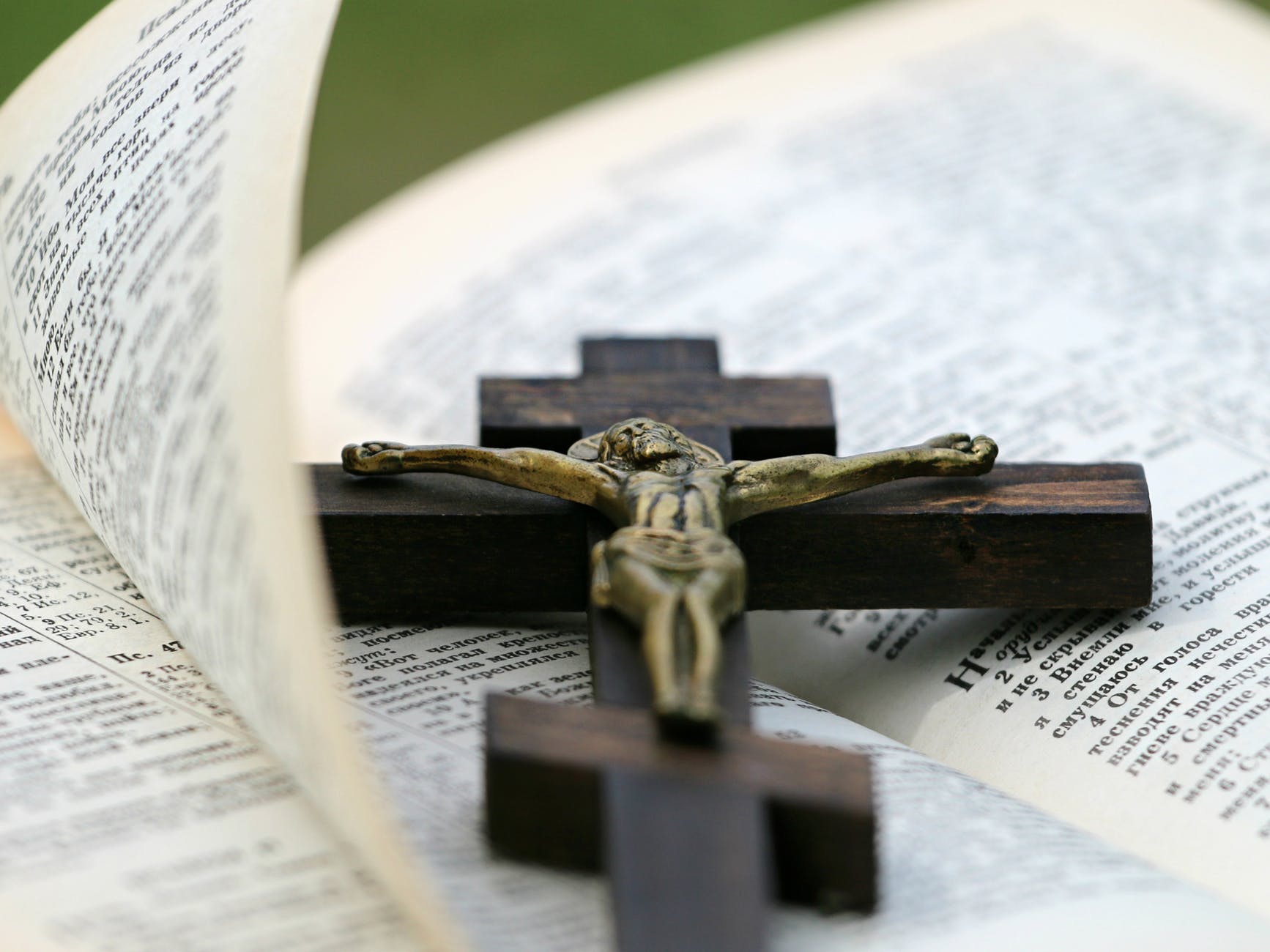
And my Wisconsin experience is not slated to be “the norm:” I won’t be visiting The Dells or posing alongside statues of football greats. Instead, I will be in isolated community (a seeming oxymoron, I know, but stay with me). My fellow writers and I will be housed at the Marywood Franciscan Spirituality Center, which is a pastoral setting deep in the woods. I’ll be near Trout Lake (which I hope lives up to its name), and the feeling of the whole experience will be significantly more tranquil than touristy.
So, here’s hoping that this brief time away yields some much-needed mental clutter removal and a little broader understanding of our country, as well. Just as my earlier summer sojourn into Appalachia allowed me some solitude for literary endeavors, this adventure should reignite my teaching passion while presenting chances to reflect. I plan to keep accounts of my trip here, so stay tuned…
There’s been a lot of bad press about Catholicism lately, but then, there’s been bad press about pretty much anything having to do with God, religion, or faith, so that stands to reason. Anytime the media get a whiff of something potentially salacious or scandalous, it becomes a headline (I should know; I started out as a newspaper reporter many years ago). And this isn’t to excuse the egregious behaviors of offenders; victims deserve to be heard and justice deserves to be rendered in cases where horrors occurred. But I’d like to take a moment to take a look at the redeeming side of a denomination not my own.
I was born in St. Vincent’s Medical Center in Jacksonville, Florida the day after America’s Bicentennial. Forty-one years and three months prior to that event, my stepdad (who recently passed away) was also born there. The lovely Catholic hospital had crucifixes in every room, and the presence of nuns was a silent reassurance to patients including my mother, who was and is a dyed-in-the-wool Southern Baptist. So, my life began as a consequence of Catholic benevolence, among other factors.
Fast-forward 10 years. I am sitting in my fifth grade class, and it is the last time school will appeal to me until I hit age 30. The reason I still semi-like school in 1986 is mostly because of my teacher, a phenomenal educator/second-mom who happened to be Catholic. Even with all my issues (and there were many), I was still treated by her as though I had rich potential for great things — musically, creatively, and academically. In her fair but compassionate eyes, she saw a student who desired attention, so she made me the “leader” of class songs. She saw a boy who was drawn to more sensitive endeavors like story writing, so she gave me time to pursue them. My school life was made more tolerable, even enjoyable, because of a Catholic educator who chose to work in a rural public school as her mission field.
Jump now to my adulthood: While attaining two graduate level degrees in subjects I actually like (education and creative writing), I attend the Glen West Workshop in Santa Fe, New Mexico — a city populated by statues of St. Francis on numerous corners and where the famed Loretto Staircase is found. The workshop is run by IMAGE Journal, whose editor at that time was (and still is?) Catholic. I am attending the workshop on a scholarship, donated generously by a local Catholic family. Without their assistance, I would have been sitting at home, twiddling a number two pencil, and wishing I could be among like-minded poets.
While I’m at The Glen, I meet a charming woman who is in the process of becoming a Franciscan Sister. We chat over matters ranging from theology to literature, and we participate in workshops that refine our writing while celebrating faith. I attend a homily given by a Benedictine monk, and it makes me think deeply, reflect upon my own beliefs, and inquire further.
Another year passes, and the woman I met at The Glen is now a full-fledged Franciscan Sister of Perpetual Adoration. She messages me online to tell me that America magazine (a Catholic publication) is holding a poetry contest. She thinks my work might be a good fit. I submit a little something. My poem “Skeletal Prayer” takes runner-up, and I’m elated. The news of the win comes at a time when I’m thinking about abandoning poetry altogether, so I keep going. What’s more, my financial adviser sees the poem and sends me hearty congratulations. Life is good and getting better.
And now, to the present: In 10 days, I will be presenting poetry workshops and craft talks at Marywood Franciscan Spirituality Retreat Center in Arbor Vitae, Wisconsin. This invitation to teach and write is the result of meeting the aforementioned Franciscan Sister some years ago. It should be an interesting time; I’m learning what a Taize service is (since I’ll be playing a little guitar for it), and again I find myself standing at the intersection of Faith, Art, and Mystery. I can hardly wait to try my hand at this new experience.
My life has been repeatedly and favorably influenced by Catholic forces well beyond my control. As I teach my college students Flannery O’Connor short stories and draw inspiration from minds like G.K. Chesterton, I’m reminded that, even though my Protestantism may be firmly intact, it is only because of Catholicism that my birth, my education, and my literary life have been what they are. And for that truth, I am continually grateful.
Not too long ago, someone told me to quit submitting my work to small journals. “I’ve never even heard of half of these,” he lamented. “Your work deserves to be in bigger places — you know, like The New Yorker or something.”
Don’t get me wrong: I’m among the great morass of writers submitting their poetry to The New Yorker every year. It’s almost like a custom of sorts. I send something, and six months later, I get their standard rejection. C’est la vie.
But to completely abandon the small, independent magazines to exclusively focus on getting published in “major” venues would be both foolhardy and counterproductive. Small journals have, for decades, provided my work with a home that has become gratifying in different ways.
One of the greatest rewards of “submitting small” occurs when that tiny publication really takes off. Take, for example, Deep South magazine. Erin Z. Bass, who has become a friend of mine, started this little venture years ago when I was still getting my feet wet in the literary realm. She published some of my fledgling work, and since that time, she’s provided a home for some of my more mature poems as well. It’s been great to see how her magazine has thrived, covering food, culture, literature, and the broad array of southern life topics. With pride, I tell people I’ve been published there. Had I kept my work for some “bigger” magazine, I never would have been part of this success story.
Smaller journals also nominate for awards. Not that big publications don’t, mind you, but more often than not, I’ve found my work gets nominated for prizes when it’s been published in little places. These journals’ editors appreciate the well-crafted line, the strong image, and the dexterity of wordplay. As a result, they will often nominate work exhibiting these qualities for the Pushcart Prize, Best of the Net, and other recognition. I’ve always enjoyed the potential of having my work nominated unexpectedly. It’s a pleasant surprise and one of the perks of doing this work.
Finally, the literary community only works when we all pull together. What if everyone strictly contributed to mega-zines? The little voices that are so necessary to a civilized and well-read society would dry up, and we would all be forced to consume the standard tastes of a select few big shots. Boring! The little journals ensure that the broadest diversity of voices is presented. Let’s face it: Not everyone is going to love poems about rural life, generational customs, and historic landmarks, and yet this is what much of my work addresses. Without the small mags, these creations would remain safely tucked away inside my laptop. But instead, there are editors out there who recognize value in a breadth of experiences: urban, suburban, and yes, rural.
I will continue submitting my work to the up-and-coming journals. They do good things. Certainly, I’ll take my shot with the “name brand” magazines as well — it’s part of being a writer. But don’t expect me to withhold good work from a place just because it’s not as lauded as the monolith publications. If we’re eager to hear from a wide variety of experiences, the small magazine must thrive. And it’s up to writers to help it do exactly that.
In the Christmases of my youth, my dear (now deceased) Aunt Martha always bought me a yearly subscription to a very popular writing magazine. Novice scribblers religiously scoured its pages for insights to getting published, receiving recognition, and of course, winning those all-important writing competitions. Article titles included such enticements as: “10 Secrets to Crafting a Contest Winner” and “Win That Award! Top Writers Tell You How.”
In the body of such articles, glittering generalities and pseudo-motivation reigned. Typical promises: If inexperienced writers simply use Times New Roman 12-point font, keep their cover letters brief, and “write with their heart,” they will magically become gold-medalist poets/short story writers/novelists/whatever. Other suggestions included such wisdom as, “Be sure to center and boldface your title” and (perhaps my favorite) “Don’t thank the contest sponsor or judge; it shows a lack of confidence.” Gee, thanks.
The unfortunate truth is, no one approach (or set of rules) will guarantee a contest win — ever. The world of publishing is incredibly subjective. What one editor or judge loves, another will hate (and vice-versa). You can “always submit your best,” as the old saw goes, and still come up empty-handed when the laurels are passed around. Such is writing life.
Just as writers learn to expect rejection, we also learn to live with losses. Defeat is especially disheartening if you paid a big submission fee. Of course, the good side of this issue contains another truth: Stick around long enough, and sooner or later you’re bound to win a few. Even little contests feel big when your work has won, and it’s gratifying to learn that someone somewhere (even at the tiniest of journals) has appreciated your work enough to award it.
I’ve been writing “real” poetry for about 20 years now, and in that time, I’ve had the joy of being nominated for the Pushcart Prize five times. My 2014 book, Middle Class American Proverb, was nominated for both the American Book Award and the Florida Book Award. Yet for all these nominations, I’ve never quite ascended to the winners’ platform. I guess I could throw myself a pity party and moan, “Always the bridesmaid, never the bride,” but truthfully, I appreciate just being nominated. In retrospect, a small-town poet like me getting Pushcart nods and similar tokens is a pretty big deal. Sure, I’d like to win one day, but poetry is a marathon, not a sprint or a dash.
And of course, this isn’t to say I haven’t won my fair share of contests. Going all the way back to 2002, I won the Wesley Ryals Writing Award for Poetry from my first alma mater, Florida Southern College. Later on, I was among the winners of the Robert Frost International Poetry and Haiku Contest put together by The Studios of Key West. My work has won me scholarships and partial scholarships to places I would never have traveled otherwise. I’ve also been a runner-up in America magazine’s Foley Poetry Contest. So, I’ve done all right. And if you stick around, you probably will, too.
Another advantage of time: I’ve served as a journal editor and a contest judge over the years, and those roles allowed me to see things from the viewpoint of a decision-maker. It’s tough to cull out writing that is “soooo close,” but inevitably it happens. Here again, what I liked wasn’t necessarily what others liked. The things I rejected would have been accepted by someone with different tastes. But in the end, someone has to be declared winner. Sometimes, just knowing you’re a finalist, a semifinalist, or an honorable mention can be motivation, and that happens quite often when your work is satisfactory.
Keep going, writer. Don’t get seduced by “secret formulas” or “sure-fire ways to success.” There’s a reason that the magazine my Aunt Martha gifted me every year recently filed for Chapter 11 Bankruptcy. The allure of pretty-sounding logical fallacies and empty promises can only be sustained so long. For the devotee of words, everything will eventually happen the way it’s supposed to. That includes winning contests, getting published, and achieving other milestones. Don’t quit. Persist. That’s how you win.
Recently I had a piece published by a journal that is edited by someone who has received, shall we say, “mixed responses” from the literary community. This editor’s political and religious views are certainly not “mainstream” in the poetry world, for certain.
That being said, I love this editor’s written work and [their] journal’s style. The fact that this person has been berated for unconventional beliefs is inconsequential to me as a writer. If anything, I admire the editor more for that willingness to stand on principles, whether I agree with them or not.
Nonetheless, I’m aware that in the future, my work being published by the editor’s journal may be a “dark mark” against my name. Guess what? I don’t care.
Too often writers inform their choices based on what is “acceptable.” I have reached a magical middle age where such considerations don’t enter my radar anymore. Good journal? Submit. Bad journal? Don’t. It’s really that simple. I don’t base my submissions on who nominates how many for which awards. I don’t look at percentages of rejections or acceptances. I don’t even give an inkling to a publication’s “prestige.” I send my work to places I respect. The end. Accepted? Hooray! Rejected? Keep going.
“But don’t you want to be on ‘the right side of history?'” my socially concerned friends may ask. My answer: Not especially. The annals of literature contain heroes and villains alike — those we’ve forgiven and those we haven’t. If I’m eventually judged by the same politically correct mob that hates the Fugitives but adores Ginsberg, so be it. Their sensitivity to prevailing mores has blinded them to a great span of sterling work, and frankly, my words aren’t for them anyway.
My poems speak of old-fashioned values, hard work, forgotten places, and flawed people. These topics exclude me from certain bookshelves, and that’s okay. Furthermore, it’s equally okay that my work is published in places that may one day “fall from grace.”
For today, my poetry is there, chosen by an editor who might or might not share my vision of the world. If that bothers you, dear reader, please heed this message: None of us is perfect. Let’s forego the hypocrisy of pretending that any man-made philosophy is fallacy-free and just enjoy the show. History will write (and right) itself.
I’ve written before about how this year will be one where I spend some time in other locales for the good of my writing (see “My Hemingway Summer” — an earlier post on this blog). When I travel even short distances for writing purposes, my brain begins making observations and connections that it typically doesn’t make during my everyday routine. For example, during residencies for University of Tampa’s MFA program, I would find deeper significance in even the tiniest of details around me. A pile of bricks I passed daily on my way to workshop became a poem. The creak in the stairs of Plant Hall wound up documented in another piece. Every minute detail seemed to come alive with literary potential.
The same thing happened when I traveled to Lisbon, Portugal in 2016 (Disquiet International Literary Program), to Amherst, Massachusetts in 2015 (Juniper Writers Institute),and to Santa Fe, New Mexico in 2013 (Glen West Writers Workshop). But all the inspiration in the world is worthless without the right tools to take advantage of it. So without further ado, here’s my list of necessities for the writer on the road:
1.) Small pocket notebook with cheap ballpoint pen: I stole this idea from one of my mentors, Peter Meinke. He has always advised poets young and old to carry something with them to record inspirations. First lines, striking images, and clever turns of phrase are just a few of the things I find myself scribbling into my small pocket notebook, and that happens more frequently when I travel.
2.) White, college-ruled legal pad and good fountain pen: When the inspiration strikes and the ideas are flowing into developed, coherent stanzas, this set of tools becomes my go-to. Whether I’m at a hotel room desk, a coffee shop, or in the middle of the woods, the old standby of writing by hand on a good, stiff pad remains an important part of my creative process. I may have mentioned it a time or two previously, but for fountain pens, I prefer Waterman Phileas models. A good ink in a unique color also helps — see Levenger.
3.) The latest copy of Poets and Writers magazine: When the muse has cooled and I’m thinking about more logistical matters (where to submit, what contests to enter, etc.), I like to peruse the pages of P&W. Their interviews are excellent, their prompts timely, and their resources consistently useful. Maybe it’s a Luddite reflex to prefer the paper copy of the magazine to the digital version, but it’s nice to be able to annotate, highlight, and even tear out pages when needed.
4.) A traveling library of a few essentials: There are some poets whose work manages to inspire me again and again: Robert Wrigley, Rodney Jones, Claudia Emerson, Maurice Manning, Kevin Young, and C.D. Wright, to name just a few. I usually pack a few volumes of poetry I admire to look over when I’m between sessions. Sometimes I read them for leisure, and other times I’m performing serious critical analysis. Either way, they work their magic.
5.) Technology? Well, maybe just a little… Before anyone gets the idea that I scribble monastically on parchment with a quill, let me say that I like my tablet-laptop combo as much as the next guy. But I try to steer clear of the screen as much as possible when traveling for writing purposes. Only when I’m truly ready to create a final draft of something or when I feel that courtesy dictates I should check email do I return to the glowing square of distraction. In the evenings when there’s time, I might post a few social media updates just to keep friends happy. But the whole notion of getting away is, well, getting away. I don’t even use the same brand of soap I do at home when I’m on the road. I want a complete contrast with my normal life. Toward this end, I also abandon unnecessary technology use. It cuts down on procrastination, and it lets me see the world around me more organically.
So, there you have it. Five things (or groups of things) I tend to carry with me on writing adventures. I’d be interested to hear in the comments what items you just can’t live without when you attend a retreat, conference, workshop, or seminar. Do you prefer a particular brand of coffee? Is there a doodad or whatnot you superstitiously pack? Whatever it is, I wish you great travels and great writing in the future. Here’s hoping for a highway full of words to fill our pages.
Rather than talking about resolutions, goals, or similar subjects, I thought I’d highlight a few things that definitely won’t make a difference to your success as a writer in the 365 days ahead. Here we go:
1.) STUFF — I love fountain pens. I am particularly fond of Waterman pens from the City of Lights, Paris. When you write with a Waterman pen, it feels like history and beauty are both surging from the nib. No, I’m not being compensated to say this. Regular followers of this blog know I’m enamored with these products. But I am not so infatuated that I cannot write with anything else.
Thinking that a certain desk accessory will make you a better writer is the beginning of counterproductive hours. Yes, it’s nice to have lovely things from Levenger or other high-end bookish vendors, but at the end of the day, tools are only as good as the person using them. Stuff, no matter how cool it seems, will not magically transform you into an author.
2.) BEVERAGES — Whether it’s coffee or alcohol, the old stereotype is that writers need their liquid fix. Stories are abundant about Hemingway and his beloved whiskey, and certainly other canonized voices are made more endearing by tales of their imbibing. “Write drunk, edit sober,” the old (alleged) quote goes, but no writer worth his or her salt follows that maxim. Writing and editing both require clear thinking, and even too much caffeine can inhibit that process.
I’ll never forget the time I was on a writing streak and consumed three huge cistern-sized mugs of coffee in the process. My heart raced, my brain surged and buzzed, and my breathing became erratically elevated. Something like a panic attack ensued, and I learned the value of moderation the hard way. Today I drink coffee with a bit more care and deliberation. Drinks don’t make you more writerly — if anything, they get in the way.
3.) WARDROBE — Along the same lines as “stuff,” certain clothing choices also don’t make one a writer. Not too many decades ago, the fashion at poetry readings consisted of a black turtleneck and accompanying black beret. This ensemble, the thought went, demonstrated one’s cognitive and emotional “depth,” whatever that meant. Today we’ve eschewed the theatrics of such a “poet’s uniform,” but even now, if one isn’t dressing in a non-conformist way, there are some who assume from such superficial measures that one isn’t a “real writer.” Forget them.
Dress how you dress. I tell my students: There is no greater conformity than non-conformity because, well, you’re different just like everybody else. Assuming that eccentric clothing is going to get you a better platform for your work or more notice from key figures in the literary community is a bit condescending, as well. The assumption made is that people are too stupid to notice your words, and therefore, there must be some kind of gimmick to draw their attention. If your words are good enough, they’ll speak for themselves. No amazing technicolor dreamcoat is necessary.
4.) TECHNOLOGY — Sure, having a social media presence and a few high-tech toys can be helpful. But please don’t assume that your new iThing is going to mystically transmogrify you into Kafka overnight. Your cute photos on Instagram, your witty observation on Facebook, your wry humor on Twitter — all these make zero impact on your actual writing. It’s fine to create a persona online, but at the end of the day, the words you write will define you, not the keyboard or device you typed them on.
One of the finest poets I know (who also serves as editor of a well-regarded literary journal) uses her Twitter account to track her success at running. She posts her times and distances, and very little else. She tweets few literary observations, even fewer politics. I respect a literary human who refrains from leveraging social media to advance her writing or publishing endeavors. It goes against the grain of common practice and demonstrates a level of confidence that exudes cool.
5.) OTHER WRITERS — At one point in my writing journey, I assumed that hanging around great minds would result in some kind of artistic osmosis. And while it’s fun and engaging to be around people with similar likes, I learned not to expect “networking” to be my golden ticket. So much time is spent at events like AWP pressing the flesh and engaging in awkward literary politics; that time would be better spent pressing ink into a legal pad or notebook. Not to minimize the importance of sharpening the saw (Stephen Covey’s term), but breathing the somewhat rarefied air of writing workshops, seminars, groups, and conferences does no good unless motivation and productivity result. The rest is just so much window-dressing.
Don’t expect mentors or friends with lit-cred to pave your way to success (however you may define that term). One’s own writing must do the heavy lifting. In business, friends in high places are essential, and to a certain extent, writing is business. But the thought that name-dropping will somehow result in acclaim or acceptance is fallacy at its finest. Aside from patting oneself on the back, mentioning famous friends or prestigious places serves little purpose. Classy writers just don’t do it unless they’re specifically asked.
I’m sure I could come up with other matters that won’t make one a writer, but these five points are a pretty good start. As we unwrap a new year like a gift, let us put words on the page and clarity in our minds. My mantra will be a quote from the great William Faulkner: “Don’t be a writer; be writing.” Happy 2019!
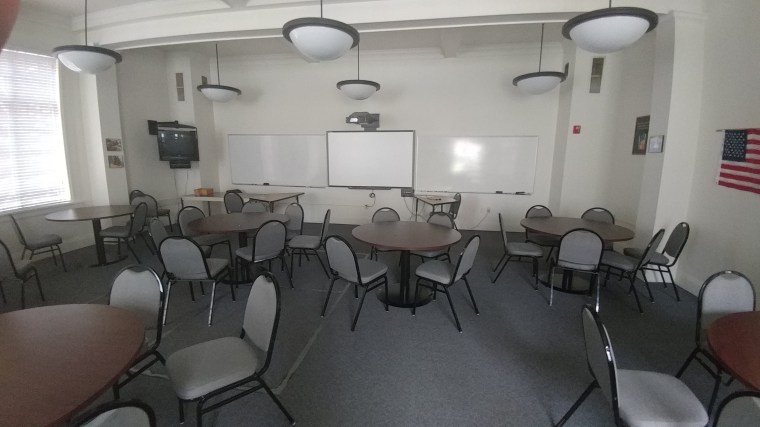
A classroom inside Edge Hall, where I earned my first Master’s degree.
As a creative writer, I’ve done some pretty weird things to try to force epiphanies upon myself. Consider my sophomore year at the Frank Lloyd Wright campus of Florida Southern College, 1995-1996. Around this time, I took an American Literature class under Prof. Wesley Ryals. His course was challenging; he expected you to read copious amounts of writing outside of class, and when you arrived, he would hold deep discussions of the work, leaving those who hadn’t read (yours truly included) in the proverbial dark.
So I began reluctantly reading. “Young Goodman Brown” by Nathaniel Hawthorne was on the syllabus, and I began to understand symbolism. Suddenly everything around me came to life with underlying potential — trees meant life and growth and progress, the sky above me foreshadowed the day ahead, and a million other everyday images I’d previously ignored glowed with further implications. We read other canonized authors like Poe, Whitman, Dickinson, and Frost, and my “literary x-ray vision” for the world around me strengthened.
Right about this same time, I started seeking out spots on campus from which to write. I’d always dabbled in poetry and prose, but now, with this new heightened awareness, I felt especially motivated. I chose a bench somewhere near the freshman girls’ dorms and wrote about a dead white-barked tree covered in brown-black birds. The piece was awful, consisting of faulty formalism with heavy-handed rhyme and meter, but it was editable anyway.
I visited the balcony of the Student Life Center. It was supposed to be closed for repairs, but what are “keep out” signs to young men but invitations? From there, I looked out over Lake Hollingsworth at night, and took particular interest in the radio towers blinking their “dim, consistent red” while cars “looped a pool of silent black.” Egad. I think on these excerpts now and shudder, but they were a starting point. I began to conclude that, so long as I could get elevated enough or secluded enough, artistic revelation would follow.
And so I began frequenting the outdoor stairwells of Edge Hall, where education and religion classes were held (still are). In the evenings, the hustling spirits of the day were left there, but no one visited. Notepad in lap, I wrote about the rain and the wind, the hollow echoes of hard, narrow places. Sometimes the experience was good, but most of the time, I was trying too hard to squeeze the blood of inspiration from my turnip-brain. I’d leave with a legal pad full of sophomoric observations, and occasionally I’d return to them later and pick out some small detail that generated poetry. A few years after I graduated with my B.A., two FSC-inspired pieces would be included in Cantilevers, the school’s literary magazine, and one of them would win — get this — the Wesley Ryals Creative Writing Award.
What I learned from all this nomadic writing, though, was that a writer cannot prescribe himself a place for creativity. As my mentor Erica Dawson once said (and I’m paraphrasing here), you don’t just sit down somewhere and think Today I will write a poem about X. Epiphanies are elusive things, and placing yourself in solitude may help foster them, but there’s no assurance.
As a 19-year-old questing after sagacity, I never would have guessed that I would return to FSC years later to attain my first master’s degree in education, let alone that I would do so inside the very building where I’d written those stairwell stanzas. If someone had told me I’d complete that graduate program with a 4.0 GPA, I would have scoffed, considering my undergrad grades. Likewise, if some guru had said I’d have an MFA and eventually teach the very works that inspired me, I probably would have laughed.
But if some soothsayer had said, “Years from now, you will look out from the third floor of the Roux Library and still be inspired to write poetry,” I would have believed. Florida Southern continues to be a place of inspiration for me. I’ve been honored to adjunct-teach there a few times, but mostly, I like to return to the campus to see with older eyes that which I could not have seen earlier — genius under its eaves, history written into every column, and beauty in the youthful interactions of those with a whole future ahead of them. Such a place embodies potential, and potential is where revelation thrives.
While reading Cornelius Eady’s newest chapbook, The War Against the Obvious (Jacar Press, 2018), the audience must ask: “Is it jazz? Is it blues? Is it poetry?” The answer to all three is a resounding yes.
Using the artful anaphora and rhythmic refrains common to musical innovators like John Coltrane and Miles Davis, Eady weaves words into meter reminiscent of Langston Hughes. In other places, he allows his diction to parallel the beats and melodic play of jazz master Thelonious Monk, with scats of phrases punctuated by drum-beat white space. Line and stanza breaks equally reinforce sometimes-staccato prosody. The overall effect is at once enlivening and enlightening.
Eady has previously professed a love for 45 rpm records, and while reading this chapbook, one can detect a distinct connection between the small vinyls of yesteryear and the lyric professions of certain poems in the 34-page collection. Single-page pieces like “I’m a Fool to Love You” (a title borrowed from Billie Holiday) resonate with the static and scratch of bygone, glorious audio:
“Some folks will tell you the blues is a woman,
Some type of supernatural creature.
My mother would tell you, if she could,
About her life with my father,
A strange and sometimes cruel gentleman.
She would tell you about the choices
A young black woman faces.”
And so begins an adventure into a bittersweet past, one akin to those heard in the brass lamentations of saxophones. The volume of poems is both light and dark, still and moving. With serious, dire poems like “Emmett Till’s Glass-Top Casket” eventually giving way to happy pieces like “White Socks” (a rollicking commentary on fashion) and “The White Couch,” a narrative poem displaying a vignette of humorous everyday life and concluding the book with a smile.
The collection is also home to one of the most powerful closing lines I’ve ever read (no hyperbole here):
“Like cellophane beneath a match.” This concluding simile comes from the poem “Aerial Ballet,” and to truly understand its impact, one must have context (buy the chapbook). But please believe me when I say that, as far as endings go, this one is perfect. It’s worth picking up a copy of the book if only to fall under the spell of this single piece.
In addition, Eady pays homage to the influence of AM radio in his past through the universality of his words. In another era, AM radio stations played a little bit of everything. A rock song may be followed by something classical or country, and in the same way, The War Against the Obvious combines influences to produce a collection that is relatable to a broad demographic. Just as music reaches into a primal, limbic space within us, so too do Eady’s poems. Like the watermarked music notes behind them, these lines and stanzas rise and fall with intentional spontaneity.
After reading The War Against the Obvious, one would assume that a musical album download included with it would continue its sonorous tradition of jazz or blues, or maybe a combination of both. But true to its title, the chapbook is supplemented by the unexpected (spoilers ahead): The audio collection, accessed by using a link on an included bookmark, whisks the listener into the world of Irish ballad, bluegrass, and folk-rock. Hanging Out with Ms. Sparkle features words and music by Eady, but it is made complete by vocals from the poet and Concetta Abbate, percussion from Sebastian Sanchez, and accompaniment including acoustic and electric guitars and the unmistakable sound of mountain dulcimer, all played by Eady himself. Charlie Rauh lends his electric guitar skills to track 6, and Paulo Fazio assisted with arrangements. Sanchez also served as mix engineer for the collection, which includes a tribute to Zora Neale Hurston entitled “Ward of the State” — a worthwhile listen. The lyrics of the songs are poetry themselves, and although there are places where one can tell that this project was done by individual artists with ordinary technology, the mixture of strings, voices, and drums creates an ear-pleasing experience. It is a surprising and eclectic blend that makes for a good morning coffee-drinking soundtrack.
The War Against the Obvious and its supplemental album would make a fine addition to anyone’s library, but it will especially speak to fans of history, diverse music, and strong imagery. For these reasons, it is my pleasure to recommend both this reading and this listening. You will not be disappointed.
You may view a full description and order this volume from the publisher here.
Poets tend to view age a little differently from most people: We measure our years in publications, gatherings (literary and not), and in Eliot’s case, even coffee spoons. I had some real reservations about being 41 over the past year. After all, could there be a less consequential age? Friends and family make such a big deal out of 40 that its successor seems like an anticlimax.
For me, 41 was fairly quiet, but I did get to inch a little closer to bigger goals and dreams. I wrote a creative writing course for my college which was adopted institution-wide (even in China and Latin America), I wrote some pretty decent poetry that got published in places I liked, and I moved to a new home in a friendly neighborhood just miles away from scenic woods with a creek.
Maybe the creek has been the most monumental of all “41” discoveries. It has given me the chance to spend time with my boys making memories that are genuine. There are vines hanging over the creek that are strong enough for both sons to swing on, a tree bridge, and of course, all the other nature-based sights and sounds that go with a small flowing body of water: fish, snakes, raccoons, and even an occasional bobcat. It’s a place that is magical for many reasons.
I suppose, however, that what I appreciate most about the creek is its authenticity. Unlike theme parks, movie theaters, or tourist traps, the creek is a place where my boys can allow their imaginations to determine their adventures. There are no lines, no prescribed rides or experiences, no Hollywood artifice. At the creek, we are kept company by red-tailed hawks rather than costumed characters, and we are guided not by slick brochures or fake technology, but by the soft currents that flow through Florida forests and boyish ambitions.
At different times, I’ve watched my sons become pirates, jungle explorers, and even characters from various novels. Recently, I helped both boys create flutter-mills like the one mentioned in Marjorie Kinnan Rawlings’ The Yearling. Rawlings used the flutter-mill as a symbol of passing time and a foreshadowing of coming maturity, and never have those ideas held such weight in my own mind. Middle age reminds one that things are halfway over, and you better get busy making your difference.
Maybe my difference won’t be measured in ink. Maybe it will be measured in creek water and sons’ laughter. Either way, I’m satisfied. If 42 is anything like 41, I’m looking forward to it. There are still plenty of things I’d like to accomplish both professionally and personally, but the 40s are also much like a hammock stretched in the middle of one’s chronology — yes, there are visible fixed points at both ends, but as long as I’m here in the middle of leaving a legacy, I might as well enjoy the sway of the breeze, the sky above, and the soft rhythms that make life enjoyable. Happy birthday to me.
 FLteacherpoet555



 John Davis Jr. -- Author