poetry, Uncategorized

The Obligatory “Writing Resolutions” Blog Post

notebooknpenIt’s a bit of cliche to write a post entirely about “what I resolve to do in 2013.” However, that’s not stopping me from doing it. Disappointing, I know. But all the cool kids are doing it. So, here you have it: John Davis Jr.’s list of writing resolutions for the new year:

1. I have a book manuscript that has been sitting on my hard drive now for the better part of a year. I’ve submitted it around to various publishers and contests, revised it and polished it countless times, but still haven’t landed any “bites” yet. I resolve to get this book published in 2013.

2. In connection with resolution #1, I resolve NOT to self-publish said manuscript. Been there, done that, friends. It wasn’t a positive experience the first time around, so why would I intentionally subject myself to that negative encounter a second time?

3. One magazine publication per month, or at least 12 publication credits total in (fairly) reputable outlets. Sure, some months are more publication-heavy than others, and expecting to publish in at least one journal like clockwork every month would be unrealistic. However, seeking to publish at least 12 times over the course of an entire year is doable. Last year, I garnered about 10 publication credits total in magazines and online zines that are pretty good, so this year, I plan to up the ante a bit. If I fall short of the goal, it won’t be for lack of trying.

4. Enter at least six writing contests. My general rule is this: for every five magazine submissions I send out, I try to enter one contest. Some of these are respected and renowned competitions, others are fledgling. But no matter the prestige or the status, entering contests yields its own rewards: subscriptions to magazines, feedback from judges, and name placement are just a few of the perks that come with contest participation.

5. Build the network. By being in the MFA program, I have a number of great associates who provide candid, well-thought-out responses to my work. With that being said, I like hearing from people from all walks of life within the literary field. Editors, publishers, and professors are just a few of the folks whose opinions and thoughts I would like to encounter more. So, with that in mind, I plan to build out my writing network to include more people whose critical eyes are sharpest.

I think five resolutions should about do it — some believe in more, others believe in fewer. For my purposes at this juncture, however, these five goals should give me plenty of work for 2013. Here’s hoping that all my readers have a wonderful new year, as well. May it be filled with the pleasures and wonders that our world has to offer: Faith, Family, Friends, and incredible experiences. Happy New Year!

poetry, Uncategorized

The “Not Knowing” and its Value

Sometimes, the question IS the answer.

After the recent success of my post about Arthur Flowers’s advice to writers, I felt obliged to write another quicker but equally applicable piece about something else that emerged during my last MFA residency: “The Not Knowing.”

It seemed this phrase was everywhere over the 10 June days I spent at University of Tampa. Fiction writers, especially, swore by it. They recounted tales of how their stories simply “took on lives of their own” after a truly boffo first line or a vague inkling concept drove pen to page. As a poet, I failed to see the relevance. After all, poets like me are in the business of crafting lines one by one, giving explicit attention to the sound, the sense, the structure, and even the symbolism of each individual word. “The Not Knowing” seemed to be something that prose writers did, and even then, with sketchy success at best.

Usually, I have a pretty good idea about where a piece is headed when I sit down to REALLY begin writing. My brainstorming methods are sort of standard: If there’s a central metaphor at work (as there usually is), I start with a two-column note chart. This is a T chart, for those in business. Using this visual organizer, I’m able to see similarities, differences, and relationships between two things, be they objects, ideas, or something else entirely. Then, as the prewriting begins to hum, I usually have a few real zinging lines come into my mind. I write these down. I’ll use them later. Once I have  a pretty good collection of these musical lines, then I’m ready to begin really putting pen to paper in the poetic endeavor. So, as you can see, I’m fairly methodical.

There are always a few surprises that creep into poems: pleasant wordplay or unforeseen ironies. But usually, the act of creating poetry goes pretty much according to plan. I know that sounds terribly boring, but it’s true. I have an idea, I explore the idea, I create a product from the idea. Then there’s the refining and the rewriting. I go through A LOT of drafts on legal pads, and usually 4 or 5 on the computer screen. In all this process, there isn’t much room for “not knowing,” as my prose-writing friends described it.

So when the great “not knowing” happened to me, I was pleasantly surprised, both with its advent and its outcome. I had a pretty decent first line written down on an index card: It was comprised of a single striking image that had a few different elements working within it. This line had occurred to me during one of those between-class lapses when the tardy bell has not yet rung, and students are idling about, yakking and poking at one another.

When I pulled the index card from my pocket later at home, I just started freewriting (something I virtually NEVER do) based solely upon that single first line that really sang to me. I’d like to tell you the piece that came from this inspiration won me a Pushcart and a Pulitzer simultaneously, and that Natasha Trethewey has written me envious hate-mail because of it. That didn’t happen. However, what did happen was this: I was now able to look at a “spontaneous” piece, one that was driven completely by the great “not knowing” I’d heard about, and I could relate. All I had to begin with was one line — one line that had beauty, had potential, and had heart. And that was enough.

I know, I know. You probably want to see the poem now, right? Here’s the letdown, reader: I’ve sent that poem out to several potential publishers with packets of other works I’ve generated, so, sorry about that. It’s going to have to remain “in the dark” for now. However, when it does find a home, please rest assured that you’ll see it here first. And in the meantime, please feel free to explore your own “not knowing”-driven work. I’d love to hear how that works out for people outside the literary realm. Who knows where the uncertain might lead us?

poetry, Uncategorized

Old-style submissions: A lost art

Not so terribly many years ago, magazines received writer’s work using that method that we today refer to as “snail mail.”

In the first writer’s guide I ever bought (I think I might have been 17 at the time), every market entry included the following instructions: “Please include a SASE with adequate postage for reply, and a cover letter that includes a brief writer’s bio.” The words sometimes included other instructions for submitting by mail, some including “reading fees” and the like, but for the most part, the standard editor expected you to include A.) a well-written and properly formatted cover letter, B.) your submission of 3-5 poems (some more, some less), and C.) the all-important self-addressed stamped envelope.

Today, the process has become much more mainstreamed and fast-tracked, with online submission sites like Submittable making life easier on the industrious writer. There is a space for a cover letter through such services, though editors today seldom expect it to be the eloquent and elegant communication that it was once supposed to be. Moreover, the modern submissions process takes perhaps a few seconds as opposed to the elaborate endeavor that it once was. Some would call this progress, including me. By the same token, however, there are some points about this slicker model that make me somewhat nostalgic for the “good old days.”

First, the tree-free model lacks the air of refinement that stationery and bone-colored, fibrous papers promised. Yes, I am aware that all this shipping and mailing taxed our environment to a degree, but by that same token, it carried with it a certain degree of class and culture that we have lost today in the effluence of digital missives. No more can people be identified by their cursive, and no more do wax seals bear the impressive monogram of a sender. Instead, we have yet another heading in yet another database.

When historians want to trace the personal writings of famous authors of our era, will they be limited to the “comments” section of some submission site? Where will the personality of the writers shine through, other than their “professional” writings? No more will there be pointed handwritten notes to indicate the passion or the passivity of the correspondent. No more envelopes sealed by a variety of methods. No more yellowed, saved and folded notes. We are slowly but surely losing a vital piece of our humanity to the name of efficiency.

It was my pleasure recently to send off an old-school submission to a chapbook contest. Yes, I had to use my own printer ink. Yes, I had to include that SASE. And yes, I even had to write a check and a writer’s bio. Plus, I had to buy postage. But all that, I felt, was worth it. At least when that editor receives my submission, he or she will be grasping some small piece of my personality beyond my poetry. Win or lose, a piece of myself has reached another fellow human being, and the intrinsic value to that small act is beyond the price of any printer cartridge.

poetry, Uncategorized

Literary Wingmen

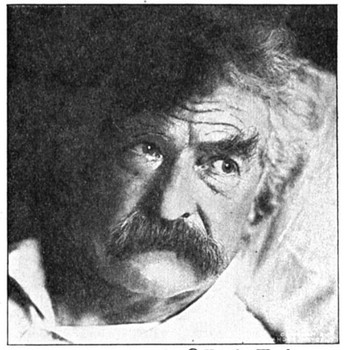
ImageT.E. Hulme wrote six poems in his life, with the best known piece being a short little near-pastoral titled “Autumn.” But this Englishman, who fought in World War I, is known better for his attachment to other greats. The company he kept included big names in the world of poetry, including Eliot, H.D., and a number of well-known imagists. He joined poetry clubs and took part in literary events where better-known authors read and were celebrated, and in 1917, he was shot and killed in wartime. He was only 34. His legacy today is largely attached to the reputation of better-known names from literature like those mentioned above. Scholars today refer to him more as a “critic” than a poet.

The lesson of Hulme’s life is one all writers, and especially poets, should take to heart: While being around “names” might be exhilirating, and doing so may have its own benefits, it is imperative that we not forget who we’re really in this business for — ourselves. Oh sure, I could go on some great philanthropic rant about how writing is “all for the readers,” or “to make society and culture better,” but at the end of the day, let’s get real: The reason writers write is to be read and recognized by others. No matter how charitable or noble our other motives may be, the one driving force behind writing is the thought that someone else will take in and appreciate our words.

So, if one is constantly “hanging around” others who are already established, that might be fun and even rewarding, but honestly, when the fat lady sings, who wants to be remembered as “that guy who hung around (famous name here)?” Making a literary contribution demands more than being the bookish equivalent of a Kardashian. Staking out one’s own path and territory is as necessary in the writing world as it is in business. Warren Buffett didn’t get where he is by riding the coattails of Rockefellers, and today’s writer can’t expect to be remembered by sitting on Grisham’s front porch, either.

Certainly this isn’t to say that receiving mentorship from “names” isn’t helpful; it definitely is. But at some point, it’s time to leave the nest and spread one’s own wings. My aspiration is that, when my time comes, I’m not put into the history books like Hulme; by then, I will hopefully have made a significant impact that is beyond “knowing and imitating good poets.” No doubt my writer friends desire something similar. Let’s begin forging that path today. Our literary legacies depend upon it.

poetry, Uncategorized

Treading the Mason-Dixon Line softly

Image

Here’s the thing about writing regional poems: you have to be careful.

As a native of Florida (and of the South, no matter what some folks may say), I find that an awful lot of my work takes on the dialect, the idioms, and the culture of our southeastern United States. However, that gift of geographic identity is a double-edged sword.

It becomes very easy to cross over from the easy grace and subtle lilt of Southern verse to something that is pure cornpone. When I find my work sounding like bad country music, I know it’s time to drop back and rethink. I’ve always been a firm believer in central metaphors — those comparisons that build poems from the outset. However, when those metaphors are already overdone (sunsets=symphonies, etc.), then it’s time to step away from the work for a while and allow the creative juices to do their job.

The South has a far too dynamic history to be denegrated by bad poetry. There are already enough cheesy lines about Mama’s Cookin’ and Daddy’s Workin’ without more people contributing to the drivel. Certainly, food and labor are staples of life here in the American South, but expressing those same sad sentiments in echoed cliches does nothing for literature or culture.

To my fellow Southern Writers, I urge you (as I urge myself) to examine and edit closely. Much like hard-core evangelicals’ “WWJD” bracelets, I would ask a similar and perhaps slightly blasphemous question of our work: What would Robert Penn Warren think? You could replace the name here with the exemplary Southern poet of your choice: Natasha Trethewey, Kevin Young, Rodney Jones, whomever. But in the end, if our work doesn’t measure up to the high standard set before us, we’re just wasting our ink.

poetry, Uncategorized

A New Meaning for “Writing Rut”

Fall in Florida is difficult for visitors to detect. We don’t have glorious leaf color changes, the temperature doesn’t dip drastically, and more often than not, our autumn feels like extended summer to those from beyond the state line. But natives and those who have lived here for decades can feel the subtle changes: Lower humidity makes the air a bit less sticky. Breezes begin to border on full-blown wind. And then there’s the change in sounds — the trees themselves, as the weather grows drier and slightly cooler, take on a different pitch as their boughs are swayed by a new incoming season. Birds’ songs grow a bit more excited and resonant as they prepare for a colder period yet to come. No, Florida’s version of fall might not be as visually grand as the displays in other parts of the country, but it’s a poet’s best friend. It requires heightened sensitivity, and is perfect outdoor weather for time in nature’s splendor.

All this reflection takes me back to my boyhood and adolescence, when fall also meant deer hunting season. This post is no rant for or against the act of hunting, but is instead intended to give a new definition for a very old term: For hunters, the word “rut” means that animals are seeking mates and are active in the woods. They forage, they frolic, they are generally more lively during mating season or “rut” than they are during more docile times of the year. Much like some big game animal, I’ve noticed that I also am enlivened by this time of year. Its different sensations and its invigorating climate make my “poetic brain” shift into overdrive. My wife has noticed this over our 10 years together; fall means that my writing takes a front seat.

So, rather than being a victim to a “writing rut” under its old definition — a time of hindered or stilted writing production due to “writer’s block” or other problems — perhaps we as poets and writers need to reclassify this term. Take a lesson from the hunters: Rut is a time for greatest activity, and so, let’s proceed into this autumn’s mating season of ideas with utmost optimism and highest ambitions for our work. Good luck, and here’s hoping you “bag” a few “trophies” along the way.

poetry, Uncategorized

Hello, Neighbor

ImageImage

As a child, I watched Mister Rogers’ Neighborhood. It came on right after Sesame Street, which I sometimes watched, sometimes didn’t. But Mister Rogers offered children an avenue to escape — his land of make-believe, arrived at by way of the jingly-jangly trolley, may have been one of the first places that I understood the importance of using my own imagination.

The point of this post, however, is not merely to reminisce about television programming from my primary years. Instead, it is intended to reveal an epiphany about modern-day popular poets. Specifically, Billy Collins as an example. Many critics have lauded Collins’s efforts at raising public awareness of poetry. By that same token, many have criticized him for “oversimplifying” poetry, or making it “too accessible.” No matter how you feel about his contributions, however, Collins has that same presence, that same certain at-ease mystique that Fred Rogers had those many, many years ago: When you listen to Collins read, it is as though you, the listener, are having an across-the-fence conversation with a favored neighbor. His occasional dry wit and all-American approach make him a hit with universal audiences.

Just as Mister Rogers shed his formality upon entering his time with young viewers, donning sneakers and a cardigan instead of his preaching coat and dress shoes, it feels as if Collins is shedding the academic veneer so often kept up by other contemporary poets. He is here simply to speak with you, his listener, and perhaps his reader. It is this convincing stage initmacy that makes America love Billy Collins, just as parents and children adored the beloved Mister Rogers for so many decades. That sense of “everything’s okay” that pervaded the imaginary land of make believe equally is exhibited in the voice and presence of America’s former poet laureate. And in an age so full of insecurity and ugliness, time spent in the comfort and beauty of poetry’s surety is certainly time well spent.

poetry, Uncategorized

Pen Names and Identity

A week or so ago, I began contemplating using a pen name for manuscript submission. This move, I thought, would follow in a great literary tradition of authors whose work I admire. In consulting with my mentor through UT’s MFA program, however, several points were raised that I felt bore repeating here:

1. Using a pen name could mean that people won’t identify “the real you” with your work. That is, your persona or pseudonym receives the credit. Much like the ventriloquist plagued by the reputation of his puppet, authors too sometimes become overshadowed by the power of their pen name.

2. A pen name can serve as a hiding spot or a shield. Some people may consider this a good thing, but in the end, pen names can sometimes cause writers to avoid accountability for their words by blaming this “imaginary friend” of sorts. Comfort and liberation can come from this idea, of course, but at what price?

3. When people go into the bookstore, do you want them looking for work by (your name here), or do you want them seeking words by this moniker? True, you and your pseudonym may be one and the same, but there’s always that lurking barrier that arises through the use of another identity. In this society where we value openness and sincerity, pen names impart a certain shade or veil that readers today don’t necessarily enjoy.

In the end, of course, I decided against my proposed pen name. It was, at best, a passing fancy, and one best left in the annals of my writing history. If some day I decide to change course, I’ll probably take the Nora Roberts route: Let people get to know “the real me” first, then later write under an assumed name that everyone knows is mine in the first place. For the time being, I’m just me. As common and as average as my name is, it’s still mine.