poetry, Uncategorized

Lawful and Profitable?

thinkingboy_outlineRecently, my mind has been consumed by choices. As many of my readers know, I just had my paperback transformed into a Kindle edition, and I’ve also been interviewing for various higher education positions in my area. In addition, my financial situation has recently encountered some modification as well. In all of these matters, however, some words of advice from the apostle Paul keep popping to mind:

I Corinthians 10:23: “All things are lawful, but not all things are profitable.”

In other words, I can do anything, but that doesn’t mean I should do everything. With the pleasure of increased choices comes the burden of amplified responsibility. I can choose to market my Kindle edition through any number of means, but only a few of those are actually going to work. It becomes my job to decipher which methods are not only permissible, but will result in the greatest outcome. Likewise, I can pursue any number of jobs within academia, but only that job that best fits my abilities and life calling should earn the “brass ring” of my acceptance.

Now before my friends judge my limited interpretation of Paul’s words above, allow me to elaborate a bit. In my current workplace, we’ve recently been exploring the notion of “getting to yes.” In a nutshell, that idea states that businesses should inform customers that “we can do anything, but we can’t necessarily do everything.” So when I encountered Paul’s echo of this sentiment (only in a more spiritually minded fashion), the correlation between my “worldly” situation and a more supernatural piece of wisdom organically began to bridge with one another. I’m not advocating a “prosperity gospel;” instead, I’m simply tying two areas of my life together with a common thread of philosophy.

As I’ve gone along life’s path lately, this little scripture has returned again and again, rearing its head everywhere from the boardroom to the dining room table. It has influenced my decisions daily, and caused me to cast new light on old issues. Paul’s test of worthiness causes one to pause and analyze, examining each set of options with a magnifying lens of overall benefit: Which choice is not only going to be allowable, but will also provide the biggest or best return? Please don’t think I see this from a strictly monetary perspective — “returns” come in both intrinsic and extrinsic forms, and research time and again has shown us that the most intrinsic rewards are the best for us as humans.

And certainly, there are other religious tomes out there that equally advocate balanced decision-making. However, for my purposes in my daily life, Paul continues to speak truth into my everyday practices. Something as simple as flipping a light switch can become a moment for reflection, and something as complex as intelligent investing can be critically viewed equally well using this tiny phrase of ancient proverbage. Give it a try yourself — who knows what great decisions wait right around the corner?
poetry, Uncategorized

Gone Digital

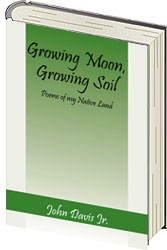
coverHello, loyal readers. This is just a quick post to let you all know that my book, Growing Moon, Growing Soil: Poems of my Native Land, is now available as a Kindle edition. The digital version is far less expensive than the original paperback, but it maintains the character and artistry of the printed page. Please see the link below, and purchase your copy today! All proceeds will go toward advancing the literary arts in central Florida. Thank you as always for your support!

My book, in Kindle edition


poetry, Uncategorized

Insomnia: The writer’s best frenemy

Plenty has been written about writers and their lack of sleep. But since I’m awake anyway, I thought I might as well tackle the issue also.

Yes, being awake at 3 a.m. has its advantages — the house is quiet, and if I really need to get some writing or editing done, there is no quieter time. Everyone else is “a-snooze in their beds,” as Dr. Seuss would say, and meanwhile, my grey matter is churning and firing more thoughts than its daytime counterpart could ever conceive.

However, the price will come in the sunlit hours — my teaching will be less enthusiastic, or too much coffee will make me jittery/cranky/irascible/jumpy. I’ve heard all the remedies, from herbal supplements (melatonin once broke me out in a rash more severe than chicken pox) to yoga relaxation techniques. And there’s nothing more irritating than a hangover induced by over-the-counter sleep aids, by the way. The plain truth is, my mind wants to be up, and so my body follows.

Insomnia is a bit of a blessing curse — some of my best stuff gets written in the wee hours, and I guess there is an established literary tradition to be followed here. Poets across centuries have endured the same nightly conflict: get up and scrawl out what could be great revelation, or stay in bed, tossing and turning in the torture of some undocumented epiphany. Truthfully, it isn’t always some kind of great inspiration that rouses me. Some nights, it’s just “awakeness.” No pressing thoughts about pieces, deadlines or work-related matters; just the old thinker cycling thousands of disconnected, unrelated images through my mental cinema.

If I were to be perfectly forthright with myself, I suppose I allow insomnia to recur because it has its creative payoff. While other writers are snugly tucked in dreamland, here I am, cranking out poetry and prose. Sure, there are studies and advisory epistles that show how lack of sleep affects performance, thought clarity, and other aspects of life, but in the end, when I have a newly completed piece or an expertly edited work of my craft, I’m willing to endure a few yawns throughout the day. Time to go brew up a pot of the good stuff — have a good morning, friends.

poetry, Uncategorized

The Blessing and Curse of Subjectivity

Again I find myself apologizing for a rather extended absence from the blogosphere; I just completed another intense 10-day residency in University of Tampa’s Master of Fine Arts in Creative Writing program. During those days, I was privileged to sit in workshops with fellow writers and hear their opinions and suggestions regarding my work. Some, as you might imagine, were quite good. They made my work more concise, clearer, and cleaner. Other suggestions were less fruitful, demonstrating only that the reader was unfamiliar with certain literary tools/devices, or that they simply had divergent poetic sensibilities from my own.

For poets, both the pleasure and the problem come from the realm of subjectivity. Over the last three semesters for instance, I’ve had three different writing mentors. All three are well-known and celebrated contemporary poets with extensive publication histories, award-winning books, and other laurels. Each one has brought a new and valuable gift to the table, and each one has had his or her own personal preferences about what poetry should look like, sound like, feel like, and be. Mentor One had different “rules” than Mentor Two, and Mentor Three has already discarded some of Mentor Two’s hard-and-fast standards. Some like language poetry, others despise it, favoring neo-modernism instead. The list goes on and on.

These vast variations among “experts” have led me to one solid conclusion: Poetry is entirely subjective. This is not a new truth. In fact, it’s one that we were advised about from the very get-go of this MFA program. But the reality of subjectivity is just now beginning to truly evidence itself for me personally. What one editor loves, another hates, and what one professor praises, another scorns. The same could be said of my fellow students in the program — because poetry doesn’t really play by any concrete rules, one workshop participant can be just as right as another in saying yea or nay to different constructions, images, parallels, or rhymes. Some reasons for critiques have a stronger tradition than others, but nobody gets excluded from having his or her say-so.

As a right-brained creative, I like the abstract notion that poetry can be perceived and valued in so many different ways. However, as a rule-follower and a structure-lover, I find myself desiring certain definitive, concrete absolutes within poetry simultaneously. It’s a perilous and paradoxical predicament, and not unlike those faced by certain other professions — what one doctor sees as incredible treatment, another calls quack medicine. What one lawyer claims is an excellent defense, another decries as logical fallacy. Those of us in the arts, however, are especially prone to the whims of individuals’ opinions: People at the top of the literary food chain have absolute mindsets about what makes great work, and woe to the poor soul whose words fail to comply with those perceptions.

The happier side of this question coin, though, is certainly worth examination: If a reader LOVES your writing, he or she will tend to LOVE it completely. Fan followings are created upon this same psychology. There exists very little grey area between the emotional responses caused by a poem. Either the reader identifies with it and embraces it after a couple of read-throughs, or he or she casts it aside as unworthy. Sure, some folks will say, “Well, I like this piece, but it’s not the poet’s strongest,” but at the end of the day, they still follow your progress and like your Facebook page. One less-liked piece won’t totally alter overall perception (unless you really step in some deep kimchi).

The question poets are tasked with asking ourselves is this: Is subjectivity our friend or foe? The answer, I believe, is “Yes.” The artistic tastes, whims and preferences of other individuals result in publication, awards, fellowships, and the other markers of a writing life. Equally, those same sentiments result in harsh critical reviews, rejection letters, and workshop ugliness. Working in the humanities demands understanding and contending with humanity — its flaws, its beauty, and yes, its unpredictable subjectivity.

poetry, Uncategorized

Laura’s line breaks: A guide to the writing life

ridingl

As both a connoisseur and writer of poems, I spend some of each day reading work by poets both canonized and contemporary. Recently, my daily reading included the works of Laura Riding (Jackson). Riding’s poem, “The Troubles of a Book” seems on its surface to be a meditative piece. It examines the life of one book, its pros and cons, and the psychology and humanity that effects texts’ perception by readers.

A more analytical look at this piece, however, yields some interesting messages. Particularly, the line breaks of the poem give some sage advice, no matter how unintentional this effect may have been. From the outset of the poem, the reader is greeted with “be nobody unwritten unread” as the final words of the first four lines. This little full-word acrostic makes a fine admonition to anyone pursuing a literary life. Certainly, authors of any genre should aspire to be both well-read and well-written. Did Riding mean for us to use these “power position words” in such a way? Maybe not, but you can bet that she recognized them as meaningful terms, and knew they fit well where they were when she wrote them.

Moving forward in the piece, the reader will notice the last three lines ending with “liveliness with bookishness,” yet another good maxim for those in the literary realm. History is full of examples of authors whose work flourished, not because they sat brooding behind a desk somewhere, but because they took Carpe Diem to heart. Hemingway ran with bulls in Spain, London froze in the Yukon, Frost absorbed culture in England, Dickinson…. oh, wait. Never mind about that last one. Maybe not every author has to mix their bookishness with liveliness, but it’s still a good idea.

One other example of Riding’s line breaks and their instructional insinuations can be found in her piece, “The World and I.” About halfway through the poem, Riding ends three lines with “sense! meaning knowing,” a statement that can be interpreted infinitely if given enough cognition. Authors of every genre should aspire for their writing to make sense, of course, and their work should provide both meaning and knowing, but beyond that checklist, this line-break message could also be seen as something of an instruction to writers: For our work to truly shine, we have to be sensitive to meanings and knowledge that others take for granted. A crooked exit sign, for example, is something more to the poet than to the electrician. Whereas Joe Average sees a problem to be fixed, the poet sees symbolic potential and possible warning.

Admittedly, I may be “stretching” the capacity of Riding’s diction here, but if we as writers can gain guidance, even if it’s unscrambled from the letters on a bubble gum wrapper, then we are better for it. Maybe Laura didn’t mean for us to read her poems like a map, but sometimes the best directions are ones that we decipher all by ourselves.

poetry, Uncategorized

Christmas Remembrances — Friend or Foe?

Pull-up-Christmas-Tree-with-LightsOne of the best things about being a poet around the holidays is the reflection that generates so many great memories. Ideas spurred on by recollections of past Christmases or realizations that take place here in the present are equally powerful motivations to write.

The one cautionary admonition I would issue to my fellow writers, however, falls into that dreadful category of avoiding bathos — that ripe sentimentality (see prior posts) which lessens the power of our words. Holidays become great cliche fodder; all the old pieces of language from carols and cards come flooding back to our brains, and if we aren’t careful, they’ll seep their way into our writing and stink it up like expired egg nog.   

With that word of sufficient warning, allow me to make one slight allowance — writing work that alludes to Christmas carols or other seasonal cultural icons is entirely different. Starting a poem with “Silent Night, Holy Night” and then altering it to convey a completely different message than the old hymn is  okay. Moreover, it’s a world apart from describing one’s past family celebrations as “holly jolly” or simply “merry.” Yuck!

The challenge for writers of all genres is finding new ways to express the oldest of great notions. When Dickens penned A Christmas Carol so long ago, you can bet that he knew his message was not novel — “greed bad, generosity good” had been a maxim for generations before Ebenezer Scrooge existed. But through memorable characterization, engaging dialogue (who doesn’t know “Bah! Humbug!”) and other tools of the trade, Dickens was able to render a masterpiece that has been adapted and enjoyed for more than a century.

As writers, the greatest gift we can give ourselves this season is new perspective. Let’s leave the old wrapping paper of holiday hackney in the dark recesses of our mental attics, and erect the fresh green boughs of our modern perceptions and expressions. As our memories and our current situations blend warmly in the glow of the holidays, let us task ourselves with the duty of renewal and re-purpose. The ghost of Christmas yet to come will thank us for it.

poetry, Uncategorized

On losing role models

Jake Adam York
Jake Adam York

Yesterday, in the midst of national mourning over Newtown, CT, America quietly lost one of its brightest young poetry stars. Jake Adam York, author of A Murmuration of Starlings and other great books, passed away after a stroke. The thing that makes this so difficult for me is not that I was close to Jake as some of my friends were, but the fact that he and I share so many similar “markers” in our lives. We’re roughly the same age (he was a little older than I), we both write “Southern” literature, although in very different ways, and we have followed fairly similar professional paths within higher education. His accomplishments far surpass my few little awards and recognitions, but we both shared similar goals and ambitions, as well. His voice was unique and upbeat, and I found myself going to his work frequently as a guide, especially for my regional work.

People who knew him well described him as kind, open, warm, and fun to be around. As I was telling a friend of mine who befriended Jake early on his career, I knew his work and his voice primarily through reading his stellar poetry. But secondarily, I felt like I understood him as a person through his seminars, workshops, and videos of his readings and speaking engagements. Granted, none of these media replace truly knowing a person. However, by gaining a sense of his perspectives, his vision, and his understandings, I felt like I was participating in life alongside him as a fellow poet. Maybe that statement is a little selfish, and certainly it isn’t intended to be.

His legacy should inspire writers and poets everywhere to produce their finest work. None of us knows when our last breath will be, and we should aspire to disseminate work that reflects the very best of ourselves. Jake did. As our country and the literary community continue to heal from tragedy, we owe it to ourselves to reflect on all our gifts and blessings, especially in this season. Pondering the bittersweet combination of loss and generosity should motivate us to use our talents for the betterment of our world at large. Our role models, no matter what field they may be in, always point us toward things higher, greater, and more important than ourselves. We owe it to their memories to preserve the spirit of excellence by doing our utmost.

poetry, Uncategorized

“Risking” sentimentality

sentimental As the next residency period for the Master of Fine Arts in Creative Writing program draws nearer, I’ve been reading the required materials like a good student. In my packet of readables this time, there are an awful lot of opinions regarding the idea of “sentimentality” in writing, especially poetry.

I’ve grown up as a writer around mentors who use the word “maudlin” disparagingly, and who utter “saccharine” for truly reprehensible sweetness violations in literature. These authors that I am reading, however, issue a valid and worth-repeating maxim to poets and writers alike who fear being too emotional or too feeling-oriented in their writing.

Essentially, all their opinions boil down to this: Use sentimental discernment. That is, if you know that the writing is corny, hokey, cliche, or sugary to the point of nausea, it needs to be edited or omitted totally. However, fearing openness and exposure through one’s literature is equally a handicap to be overcome. Some of these authors state blatantly that modern writers have become so emotionally distant from their work, that it lacks the “heart” that made literature great in the first place. Instead, witty wordplay and smart-aleck irony have become the standard. Poets are deemed cool if they seem to be the writing equivalent of Dirty Harry Callahan.

It’s time to put our emotions back into our work, but it’s time we did so without resorting to the hackneyed devices of yesteryear. Risking sentimentality increases the humanity of our writing, and allows us to reach those who have had similar experiences as well as those who haven’t. Poets don’t need to shoot for greeting card verse, but we also don’t need to shield ourselves by writing solely disinterested observations on life. There’s enough pseudo-philosophy out there right now through memes, tropes, and bumper stickers. Let’s put the heart back into our writing, and history will remember us fondly for doing so.

poetry, Uncategorized

The Expected Rejection

I’ve written before about my “rejection practices,” but this little tidbit deals more with a specific type of rejection: the expected one from the MAJOR magazine.

Today in the mail, I got a rejection slip from a powerhouse national magazine whose literary prominence is known far and wide. No personalized notations were on this slip, and of course, I hadn’t really anticipated any. My main motives for annual submissions to huge magazines with slush piles the size of Everest are twofold, really: 1. Doing so keeps me humble, and 2. It gives me some sense that my work has been in front of influential editors, even if they did reject it.

This next statement sounds terribly snobbish, but honestly, the proficient poet becomes accustomed to better-than-average acceptance rates from smaller literary magazines. When one sends work predominantly to fledgling journals and up-and-comer markets, acceptance and kind words become a fairly regular occurrence, with a few apologetic rejections along the way. Editors, for the most part, are appreciative to receive your work, and you as the writer are pleased to be published. It’s a great relationship, and one I never take for granted.

On the flipside of this publishing coin, however, is the danger of egotism. After so many acceptances, the writer’s head can grow quite large if not checked. Something has to level out the mountaintop experiences of mutliple publications in smaller journals to maintain balance. Rejection from The New Yorker, The Atlantic, or other major publications helps to keep the poet realistic and attached to modest roots. Granted, any rejection helps to accomplish this, but the coldly impersonal rejection slip from enormous national publications is the best of all ego-crushers. No explanation, no “we really liked this, but…” statements, just a flat-out “NO,” worded as generically and insensitively as possible. Tough luck, Mr. Wordsmith…no dice. (EDITORS: Please don’t interpret this graf as a request for more rejections; I have enough for a while, thanks.)

Certain writer friends of mine have this conspiracy theory that  big-time mags rotate off the poems of about 12 different renowned writers each year, and that any submission from someone without name recognition is immediately dismissed without a second thought. For now, I remain optimistic that editors and publishers are serious when they state in their guidelines that they are “devoted to discovering new voices.” Truthfully, if I were in their positions and I had to choose between rockstar fellowship winners or Joe Blow the small-town unknown, I’d probably make the same decisions they did: Publish the identifiable, decline the struggling. Empathy doesn’t make the rejection sting less, but at least it allows some justification.

My hope, of course, is that one day the tide of rejection from the “big boys” will stop, and I will finally be among the elite who manage to have their work carried in the prestigious pages of historic, culture-defining publications. For now, my small-time successes (see prior posts) sustain me and encourage me to keep going. Equally appreciated are the small magazine editors who reject work with thoughtful feedback, as well as the ones who accept my work with gratitude. Some of the best critiques I have ever received have been from the desks of truly devoted editors at college or “little” magazines. Their input has been invaluable, and hopefully, their refining suggestions will lead to bigger and better things as time progresses. For now, I have work to improve and send out, and for tonight, that’s enough.

poetry, Uncategorized

The MFA — “Legitimizing” writers

I’ve always been a writer. Even when I was very young, I would write fantastic stories about spies and detectives, and as I matured, so did my writing tastes and styles.

At this point, I proudly call myself a poet. I’ve had work published pretty regularly, I have a book of my own out there, and while poetry doesn’t keep the lights on and the kids fed, it does contribute something to my existence (see prior posts). With that being said, I always felt that it was pretty important to have something that proved my “writerness” more than just bylines and a strong publication history. Hence, my enrollment in the University of Tampa’s Master of Fine Arts in Creative Writing program.

Yes, I know many of my writer friends out there will quickly jump to the assertion that you don’t “need” a piece of paper proclaiming that you are indeed a writer. With that said, however, the benefits of the MFA program have so far been many and great: I’ve been able to meet and speak with renowned writers, I’ve gotten an inside view of the publishing industry, and my own abilities have become refined as a result of my enrollment.

For some writers, the MFA works. Others believe that a good writing critique group can yield the same outcomes. I disagree. Your writers’ group probably will not  get you introduced to the likes of Philip Levine or Lucille Clifton. If it does, I’d love to know what group you’re attending.

Likewise, it seems that an awful lot of very well-intended people who have been told they have “talent” wind up in writing clubs or groups that are community-based. They bring in their latest piece about granny’s quilt or pappy’s old dawg and expect it to be given the same level of thought as work by Chaucer, all because their ailing mother gave them high praise for rhyming the words “bone” and “home.” Perhaps I’m being a bit snarky here, but I’ve seen this happen.

You get what you pay for, folks. The MFA is an investment in a writing career. If you desire for your writing to be a serious part of your life and not just a hobby, then a degree is the path to that reality. If you’re satisfied being a local celebrity and the “big fish in the small pond,” then maybe a writers’ group is best. As for me, I plan to keep plugging away at the ole sheepskin. One year down, one to go!