poetry, Uncategorized

The Poet as Peddler

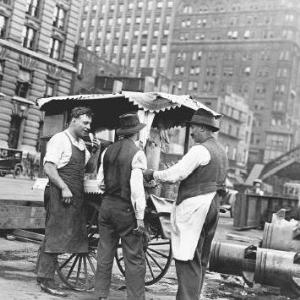
I’ve never considered myself much of a salesman. As a kid, I sold a few candy bars and other fundraisers for school, but other than that, I’ve never had much of a knack for getting people to part with their money. Truthfully, it feels kind of dirty. Even when I’m selling a product that I firmly believe in (like my own writing), I find it difficult to persuade others to buy.

This past weekend, I had the benefit of participating in the Polk Authors and Illustrators Festival, a downtown marketplace-style gathering of writers and artists in Lakeland. There I was, hawking my wares to Joe Public, having the grandest of conversations about poetry, Florida, and a thousand other topics. I fell into sort of a groove at one point where people were buying books left and right, not because I was pushing my product on them, but because I engaged their natural desire to talk about themselves.

As they spilled their guts about their childhood or their daughter-in-law, I found some kind of remotely related tie-in to my work. I opened the book up, showed them a verse or two that had to do with our conversation, and by George, they bought the book. I’m sure that those of you in sales have a name for this kind of approach, but far be it from me to know such things — I remain a poet and schoolteacher at heart.

The lesson, I guess, was just this: If you show up to a place all worried about how many books you’re going to sell (or not), then you reap the results of your anxiety. If you just take it easy, talk to the people like a normal human being, and do your best to be a good listener, the sales take care of themselves. Events like the Authors and Illustrators Festival help me to remember my place in this world; I’m not a pitch-man or a carpetbagger, thank goodness. I do, however, know good-sounding words when I come across them, and I’m a pretty fair peddler of free knowledge. I might do the festival again next year, but for tonight, there’s writing to be done. Time to close up shop.
poetry, Uncategorized

Writing in “Real Life”

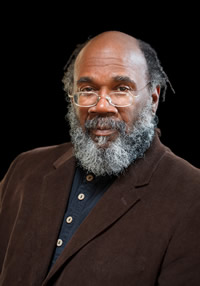
Before my cohort and my other fellow MFA candidates left from our last residency in June, we were given a final warning by the inimitable Arthur Flowers (see photo, left): “So, what are you going to do? You’re about to go back out into real life, where there’s bills to pay and mouths to feed. … People are going to tell you that you’re chasing a fantasy. People are going to say to you, ‘Just do like the rest of us.’ Don’t you do it. Follow that dream you’ve begun here. Never let anybody tell you that you’re not a writer.”

The truth is, I’ve had to replay this little lecture to myself on more than one occasion. As my teaching gigs and the mundane suburban duties of yardwork and such pile up, I sometimes tend to forget that I am also a poet. After all, the labels of father, husband, and professor seem to hold so many more responsibilities. What’s more, the immediacy of providing for my family tends to obscure the more long-term goal of poetic success.

It is indeed a dog-eat-dog world out there, and poets, like everyone else, are scrambling in a fight to the top: networking, assuming new titles, taking on the challenges of work-home balance, and ensuring that all the parts of life are functioning smoothly. In the midst of all this, it becomes pretty easy to allow writing and those related goals to take a back seat. I even found myself telling my wife recently, “Writing’s not as important as (insert bigger priority here).” And while that may be true, I must remind myself not to throw out the proverbial baby with the bathwater. Just because life demands greater attention to things of necessity doesn’t mean that I should completely cast aside any and all writing endeavors. And neither should you, reader.

“We do what we have to do so we can do what we want to do,” the old saying goes. But occasionally there’s a blurry line between those two ideas. Where the needs meet the wants, in that blurry gray space, is poetry. Yes, I could live without writing. But it would definitely be a sad and colorless existence, devoid of any creative sparks or intrinsic cognitive satisfaction. It is unimaginable and unimaginative. I have no plans to cut out my essence, just as I have no plans to desert my family or my career. Join me, readers, in this persistent striving toward the bigger, toward the better, toward tomorrow. Let us be pilgrims on this journey together. May our walk be filled with abundance, and may our pens never run dry.

poetry, Uncategorized

Literary Wingmen

ImageT.E. Hulme wrote six poems in his life, with the best known piece being a short little near-pastoral titled “Autumn.” But this Englishman, who fought in World War I, is known better for his attachment to other greats. The company he kept included big names in the world of poetry, including Eliot, H.D., and a number of well-known imagists. He joined poetry clubs and took part in literary events where better-known authors read and were celebrated, and in 1917, he was shot and killed in wartime. He was only 34. His legacy today is largely attached to the reputation of better-known names from literature like those mentioned above. Scholars today refer to him more as a “critic” than a poet.

The lesson of Hulme’s life is one all writers, and especially poets, should take to heart: While being around “names” might be exhilirating, and doing so may have its own benefits, it is imperative that we not forget who we’re really in this business for — ourselves. Oh sure, I could go on some great philanthropic rant about how writing is “all for the readers,” or “to make society and culture better,” but at the end of the day, let’s get real: The reason writers write is to be read and recognized by others. No matter how charitable or noble our other motives may be, the one driving force behind writing is the thought that someone else will take in and appreciate our words.

So, if one is constantly “hanging around” others who are already established, that might be fun and even rewarding, but honestly, when the fat lady sings, who wants to be remembered as “that guy who hung around (famous name here)?” Making a literary contribution demands more than being the bookish equivalent of a Kardashian. Staking out one’s own path and territory is as necessary in the writing world as it is in business. Warren Buffett didn’t get where he is by riding the coattails of Rockefellers, and today’s writer can’t expect to be remembered by sitting on Grisham’s front porch, either.

Certainly this isn’t to say that receiving mentorship from “names” isn’t helpful; it definitely is. But at some point, it’s time to leave the nest and spread one’s own wings. My aspiration is that, when my time comes, I’m not put into the history books like Hulme; by then, I will hopefully have made a significant impact that is beyond “knowing and imitating good poets.” No doubt my writer friends desire something similar. Let’s begin forging that path today. Our literary legacies depend upon it.

poetry, Uncategorized

Treading the Mason-Dixon Line softly

Image

Here’s the thing about writing regional poems: you have to be careful.

As a native of Florida (and of the South, no matter what some folks may say), I find that an awful lot of my work takes on the dialect, the idioms, and the culture of our southeastern United States. However, that gift of geographic identity is a double-edged sword.

It becomes very easy to cross over from the easy grace and subtle lilt of Southern verse to something that is pure cornpone. When I find my work sounding like bad country music, I know it’s time to drop back and rethink. I’ve always been a firm believer in central metaphors — those comparisons that build poems from the outset. However, when those metaphors are already overdone (sunsets=symphonies, etc.), then it’s time to step away from the work for a while and allow the creative juices to do their job.

The South has a far too dynamic history to be denegrated by bad poetry. There are already enough cheesy lines about Mama’s Cookin’ and Daddy’s Workin’ without more people contributing to the drivel. Certainly, food and labor are staples of life here in the American South, but expressing those same sad sentiments in echoed cliches does nothing for literature or culture.

To my fellow Southern Writers, I urge you (as I urge myself) to examine and edit closely. Much like hard-core evangelicals’ “WWJD” bracelets, I would ask a similar and perhaps slightly blasphemous question of our work: What would Robert Penn Warren think? You could replace the name here with the exemplary Southern poet of your choice: Natasha Trethewey, Kevin Young, Rodney Jones, whomever. But in the end, if our work doesn’t measure up to the high standard set before us, we’re just wasting our ink.

poetry, Uncategorized

Hello, Neighbor

ImageImage

As a child, I watched Mister Rogers’ Neighborhood. It came on right after Sesame Street, which I sometimes watched, sometimes didn’t. But Mister Rogers offered children an avenue to escape — his land of make-believe, arrived at by way of the jingly-jangly trolley, may have been one of the first places that I understood the importance of using my own imagination.

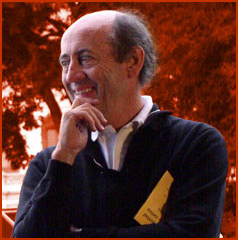
The point of this post, however, is not merely to reminisce about television programming from my primary years. Instead, it is intended to reveal an epiphany about modern-day popular poets. Specifically, Billy Collins as an example. Many critics have lauded Collins’s efforts at raising public awareness of poetry. By that same token, many have criticized him for “oversimplifying” poetry, or making it “too accessible.” No matter how you feel about his contributions, however, Collins has that same presence, that same certain at-ease mystique that Fred Rogers had those many, many years ago: When you listen to Collins read, it is as though you, the listener, are having an across-the-fence conversation with a favored neighbor. His occasional dry wit and all-American approach make him a hit with universal audiences.

Just as Mister Rogers shed his formality upon entering his time with young viewers, donning sneakers and a cardigan instead of his preaching coat and dress shoes, it feels as if Collins is shedding the academic veneer so often kept up by other contemporary poets. He is here simply to speak with you, his listener, and perhaps his reader. It is this convincing stage initmacy that makes America love Billy Collins, just as parents and children adored the beloved Mister Rogers for so many decades. That sense of “everything’s okay” that pervaded the imaginary land of make believe equally is exhibited in the voice and presence of America’s former poet laureate. And in an age so full of insecurity and ugliness, time spent in the comfort and beauty of poetry’s surety is certainly time well spent.

poetry, Uncategorized

Pen Names and Identity

A week or so ago, I began contemplating using a pen name for manuscript submission. This move, I thought, would follow in a great literary tradition of authors whose work I admire. In consulting with my mentor through UT’s MFA program, however, several points were raised that I felt bore repeating here:

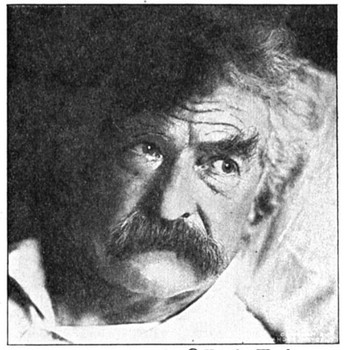
1. Using a pen name could mean that people won’t identify “the real you” with your work. That is, your persona or pseudonym receives the credit. Much like the ventriloquist plagued by the reputation of his puppet, authors too sometimes become overshadowed by the power of their pen name.

2. A pen name can serve as a hiding spot or a shield. Some people may consider this a good thing, but in the end, pen names can sometimes cause writers to avoid accountability for their words by blaming this “imaginary friend” of sorts. Comfort and liberation can come from this idea, of course, but at what price?

3. When people go into the bookstore, do you want them looking for work by (your name here), or do you want them seeking words by this moniker? True, you and your pseudonym may be one and the same, but there’s always that lurking barrier that arises through the use of another identity. In this society where we value openness and sincerity, pen names impart a certain shade or veil that readers today don’t necessarily enjoy.

In the end, of course, I decided against my proposed pen name. It was, at best, a passing fancy, and one best left in the annals of my writing history. If some day I decide to change course, I’ll probably take the Nora Roberts route: Let people get to know “the real me” first, then later write under an assumed name that everyone knows is mine in the first place. For the time being, I’m just me. As common and as average as my name is, it’s still mine.