poetry, Uncategorized

More VS. Different: A human quandary

Adding isn't always the answer.
Adding isn’t always the answer.

Recently, I’ve been consumed by one mistake that I’ve made throughout my writing and teaching life. In some ways, this error is stereotypically American: When I feel the need for change, instead of choosing something different, I just pile something else on. It’s a childish mindset really — I’m unhappy with the one thing, but if I had two things, I’d be happier. Fallacy, fallacy.

When I was a young man just starting out, I didn’t make much money. Oh sure, I’d been to college and done my part to begin a journalism career, but a fresh degree and limited experience meant a meager income. My solution was always working harder, not smarter. I’d take on extra jobs until my every waking moment was consumed with responsibility of one form or another. And when you’re just setting foot into “the real world,” being industrious is admirable. But I found out pretty quickly that burnout is very real, and being obligated non-stop is a great way to compromise your health.

The lesson didn’t stick, though. When I changed careers about four years after getting my bachelor’s degree, I began to repeat the same mistakes in education: “Oh, teachers don’t make much? That’s okay. I’ll just take on more duties. I’ll tutor after school and pick up some freelance gigs on the side.” By this time I was married, and the incessant lesson planning, grading, and researching were all taking their toll on the homefront.

I added titles to my own job description, becoming a technology guru, a committee and department leader, a curriculum developer, and a professional development coordinator. My writing, of course, was taking the back burner to my overwhelming career roles, all because I assumed that if I had more to do, I’d somehow be happier. And granted, the experiences I earned while tackling these titles proved valuable. I know about a wealth of fields that make me an asset in the workplace. But meanwhile, I still wasn’t content.

The truth was, I needed something different, not something more. One more graduate degree wasn’t the answer, despite my 4.0 GPA. One more assignment wasn’t the panacea to discontent.When you’re tired of digging ditches, buying more shovels isn’t the solution.  I needed to work smarter, not harder, and I needed balance.

By shouldering more and more responsibility outside my home, I’d minimized the time I had for my family life. I had become that workaholic husband and father who can’t show up to his kids’ birthday parties, and writing? What was writing? Certainly there was no time for such frivolity. Our bank account was steadily reaping the benefits of my overexertion, but the price beneath my roof was far too great. It was time to restore some sanity and clarity to every part of my life.

I began cutting back on extra teaching opportunities, and started riding my bicycle again, for starters. I took a more active part in church life. My wife and I were dating again. I flew kites and threw Frisbees with my sons on the weekends. This was different, and it was good. Our financial situation was okay, but we still weren’t rich. And for one time in my life, I didn’t care. Money, I found, was reciprocal: we received what we gave, and often, we reaped more than we sowed, to use some biblical terminology. My new quest for balance and “smarter work” was paying off. My new and more flexible schedule now included a daily writing routine during the early morning hours, and soon, I had a thick volume of work. The MFA became not “one more degree,” but a natural outcropping from my own talents and interests, which my re-balanced life had shown me.

So now, as spring break draws nearer and the end of another school year will follow not long after, I feel another mile marker approaching. Change is coming in my professional life, and this time, my hope is that I’ll remember the lessons of my personal history. Work smarter, achieve balance, and don’t mistake more for different.
 

poetry, Uncategorized

Business and the Personal

Image borrowed from terraverdeonline.com

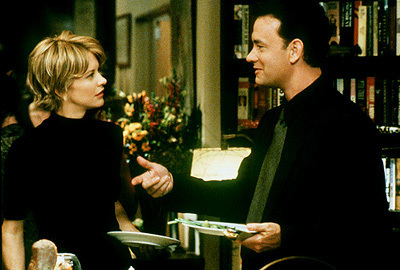
In the movie You’ve Got Mail, Joe Fox, multi-millionaire chain bookstore owner (played by Tom Hanks), advises small bookstore owner Kathleen Kelly (Meg Ryan): “It’s just business. It’s not personal. … Recite that to yourself.” Ryan’s character responds with, “Whatever something else is, it should begin by being personal.”

I see the merit in Kathleen Kelly’s sentiment, but having been in the rough-and-tumble world of publishing recently, I think I’m inclined to lean more toward Joe Fox’s approach. Yes, poetry, writing, and book-making are all endeavors that involve a person’s heart, even the soul. However, when it comes time to negotiate about matters like royalties, author’s copies, and similar factors, it’s time to put away the purple prose and break out the spreadsheets and graphs.

Lots of writers don’t want to hear this. They’d rather live in their sheltered creative Xanadu, pondering air castles and planning their next great narrative. On the other hand, rarely does one find publishers who can’t distinguish pragmatics from the emotional. Publishers, for the most part, are able to put aside their feelings and prejudices in favor of their latest project. I recently dealt with a publisher (name omitted intentionally) whose approach to book production was seen not as a creative-commercial enterprise, but rather, as an extension of her/his inner self. The publisher in question viewed the relationship with the writer as an deep emotional bond rather than seeing it primarily as a business arrangement. This person also slammed the work of similar publishers, some of whom he/she had worked with in the past.

As things became increasingly unprofessional, I politely declined the services of this publisher. I attempted to word the rejection softly, as I too have had my fair share of let-downs. In response, I was told that seeking a traditional or academic publisher was “insulting.” There were hurt feelings, apparently, despite my best attempts to avoid such ugliness. As a recent MFA grad seeking an experienced and respected publisher for my creative thesis (a mighty fine collection, if I do say so myself), I really don’t need a business partner who is affronted by every minor exchange.  It’s great to be invested in your craft, whatever that may be. Likewise, it’s necessary to differentiate between an expression of intellect and an expression of love. A consumer decision is not a romance.

Yes, creating (be that writing or publishing) is showing the world a piece of yourself. But when that creation crosses the transom into product, it’s time to evolve into strategist. Even for those of us who’d rather “dwell in possibility,” there must come a time when strictly cognitive and logistical decisions predominate. Once the art is done, business belongs in its proper perspective. Let’s keep it professional.

poetry, Uncategorized

What If and If Only

PreacherI heard a minister deliver a sermon that cautioned believers against these two phrases. His point, for those within his congregation, bore validity: If the family members of a faith spend too much time in worry or regret, then they (we) are displaying a lack of confidence in our Higher Power.

For writers and creators, however, there are no two more powerful phrases. “What ifs” open the door to imagination, whereas “If onlys” encourage reflection. There’s a proud tradition behind both of these phrases yielding creative, dynamic works across genres. Consider Coleridge’s Kubla Khan — a “What If” poem if there ever was one. Scholars and speculators agree that much of the poem may have been induced by chemical means, but even so, without the questioning of reality, such language would not have existed.

For “if only” work, see Edgar Allan Poe. I don’t think a great deal of exposition is needed for this example. From Lenore to Annabel Lee, Poe’s work is rife with the “if onlys” of lost love and longing. This isn’t to say that all creative work must contain angst or fantasy; certainly much great poetry, art, and creation has been produced from the images and occurrences of “average” life (see Billy Collins). However, to exclude the questions mentioned above from the creative process would result in enormous detriment.

As artists, the need for us to pose and answer creative inquiries is great, and perhaps no two questions are more idea-inducing than these. Fellow writers and makers, delve into your what-if and if-only moments. Your Kubla Khan or your Raven may be waiting just around the next question.

poetry, Uncategorized

After the MFA

hooding Last night, I graduated from University of Tampa’s Master of Fine Arts in creative writing program. The picture you see here is the hooding ceremony. The gentlemen behind me (center) are preparing to place my MFA graduate hood upon me. I said farewells to many friends who have traveled alongside me over these last two years, and I received the hearty congratulations of family, friends, and fellow writers alike. One of my old frat brothers even showed up for the ceremony. It was bittersweet, as graduations always are: shuffling off one set of experiences to fully engage in another, saying goodbyes to greet new challenges, and reflecting on the positive memories and lessons of a long-term academic endeavor.

The question that arises after any graduation, of course, is now what? I must have been asked a dozen times yesterday about my plans for the future with this degree. My hopes are rather standard, really: I would like a full-time college teaching position, and I’d like to continue pursuing the literary life and all it has to offer. I have my name in the hat for various awards, fellowships, and publication opportunities, and I plan to continue applying for as many possibilities as I can.

Mostly, though, I plan to write. Not to oversimplify, but really, the MFA for me is a license to practice my craft in greater credibility. Now it would be questionable NOT to arise at 5 every morning and sit down to pen things out. Now it would be foolish to waste creative time and space, squandering a significant investment. More than anything, though, now is the time that I am compelled to prove the worth, the validity, and the relevance of my degree. Failing to write regularly would equal surrender, and those that know me will attest that giving up is not in my nature.

The MFA means excelsior — onward, upward, higher. May today begin that climb to a yet-unmarked summit.

poetry, Uncategorized

Against Resolutions

pencil_redDon’t get me wrong: Anyone who has read this blog for a while knows that in years past, I’ve posted the “obligatory” writing resolutions post. This year, however, I have a new perspective. Not only are resolutions cliche, they are made to be broken. “I’m going to ________ this year” ensures that most likely, the sayer of the statement will not, in fact, do whatever filled in the blank. Resolutions, because they seem forced and common, fail for the very reasons people make them in the first place. Every January 1, people around the world become motivational lemmings, jumping over the same cliff as their fellow resolutioneers. Research proves that, for the most part, people fail at keeping these well-intended goals. “Everybody’s doing it” doesn’t stop at high school, and the broken resolutions of the majority prove that the artificiality of popular sentiment will not sustain us individually as we seek after objectives in our personal and professional lives.

So as a writer, to say, “I resolve to (get my new manuscript published by Knopf, get work into The New Yorker, win the Pulitzer, etc.)” is a silly endeavor at best. One, because many of the victories of the writing life depend upon a healthy dose of reputation, timing and luck; and two, because we as authors and creators should be constantly resolving to put forth our best, not just at one time of the year. If we desire to really resolve something (in every sense of that word), it should be a daily effort rather than an annual one.

Do I have goals for 2014? Sure. Am I going to increase my likelihood of failure by framing those goals in the dime-store filigree of a resolution? Definitely not. Fellow reader, if you’ve made your resolutions for 2014, good for you. I wish you the richest of success in the year ahead. May you shed those pounds, quit smoking, write the next Dover Beach, or do whatever it is that this day inspires you toward. Best Wishes, Happy New Year, and Cheers. I’ll be at my desk.

Uncategorized

Christmas Epiphanies

ImageEarlier this year, I ran a series of posts regarding the subject of epiphanies and how those revelations visit upon us as writers and artists. For a complement to that series, here is my last post for 2013:

Christmas at our house is a time of family togetherness. Therefore, it is also a time of remembrance. Yes, we observe all the religious aspects of the holiday — we have our nativity scene out, we read Luke 2, and our gifts to one another are given in recognition of that Greatest Gift of All — Jesus Christ.

Aside from the religious meanings of this season for us, however, Christmas is secondarily a time when we recall family celebrations from years past. When I was very small, we spent Christmas Eve at my Aunt Doty’s house. Her “secret-recipe” chicken and dumplings were the festive highlight of the bountiful food table, and her modest living room was filled with cousins, aunts, uncles, friends, and visitors.

Today, my mother carries on that legacy of Christmas Eve at her own home. The scene is similar, and mom has even managed to figure out the hush-hush chicken and dumplings recipe. As a poet, I am grateful to have grown up in an environment where traditions, gatherings, and shared time played such a major pivotal role. Reflections on our family’s celebrations often drive my work, even if the pieces aren’t completely autobiographical.

As artists, when we think back on holidays past, be they Christmas or others, we find ourselves in the environments that have meant (and still mean) the most to us. As you go about your end-of-year errands, showing up at office parties and well-wishing others, take some time to think back on those past seasons of life. Reflection is still a prime epiphany-generator, and this time of year often provokes remembrance in the strongest ways possible. Merry Christmas, readers, and a very Happy New Year.

poetry, Uncategorized

Niche and Identity

Sometimes routine is more foe than friend
Can one’s writing niche become a rut?

Much has been written about the importance of finding one’s place, both in the universal sense and within one’s chosen profession. Modern poets strive for years to find their voice, their style, and their unique contribution to literature. In essence, they strive to find their niche.

No matter how you pronounce it (neesh for some, nitch for others), one’s niche is an important component to the writing life. Knowing it can mean the difference between publication and rejection. Our niche, to some extent, is how we brand ourselves as writers. A quick look at the title of this site will show you how I feel my work is defined — “Florida poetry.” Granted, that doesn’t mean my work is all beach sunsets and Disney characters (those aren’t the REAL Florida anyway), but enough of my work has its roots in Floridian soil to justify the label, I believe. I am indeed a Florida Poet.

But what happens when that niche becomes a rut? When the title we choose to wear is either outgrown or outmoded, it’s time to reconsider. A wise writing mentor once told me, “We are constantly redefining ourselves.” He was right then, and it still holds true. When our chosen position in life or literature no longer suits our situation, then change, in one form or another, must occur. Even now, as my travels increase and my style matures, I feel that the “Florida Poet” label is being stretched to its limits. The niche has lived its life, and perhaps I may retire that verbiage altogether. Like actors who fear typecasting, writers too can “portray themselves into a box.” If one is known by strictly one state or one style, then it’s time to diversify. Showing off the full range of “chops” that one possesses can also breathe fresh air into previously stale subject matter.

Oh sure, I’ll always be a Florida poet at heart — this land, where my family has spent seven generations, has been too good to even consider abandoning my roots, my heritage, or my Cracker drawl. But as my poems grow and as my tastes broaden, perhaps I may dig the niche a little broader. Florida for many is a destination. For me, it is the port from which to set sail — not a rut, but a route. May my work always do it justice, and may I always fit my niche, no matter its wording, to the fullest.


poetry, Uncategorized

Going Organic — A Floridian Perspective

grove0001
A view of our grove from the top of our barn, January 1996. As a younger poet, I spent a great deal of time “pondering” from the old barn roof. This vista was my first real point of inspiration.

My family runs a citrus farm in south central Florida. My grandfather, who died in late 2004, began it well before my mother was born.

It isn’t a very big grove; only about 20 acres. We grow pineapple variety oranges, which are considered by the industry a “juice orange.” You won’t find our fruit in commercials for OJ, because they aren’t “table fruit,” meaning they aren’t the kind of oranges one puts in a bowl to make a centerpiece.

Now in Florida, we have another blow dealt to our crop: Citrus Greening. This disease causes the fruit to wither into hard little knots, and it causes trees to diminish in foliage and abundance. As bad as citrus canker was in the 1980s and before, greening now threatens family farms like ours even more. This disease, caused by a foreign phyllid, has brought Florida Citrus to its knees. As legislators and agricultural experts figure out what to do next, Florida orange groves are dying away, acre by acre. Ours is no different, unfortunately. Government officials have worked hard to get funding to eradicate greening, but it may not happen fast enough. No more 100 percent Florida orange juice is a very close and real possibility. Greening could mean the end of not only a product, but also a long line of family traditions, as well. Current farmers looking to pass on the family business may soon be without a family business at all.

I explain all this to raise another point, however: In the midst of the great greening crisis our state is undergoing, many farmers, including my family, are examining organic farming practices with greater intensity. No-till farming and other ideas are being investigated for their potential benefit, and 21st Century agriculturists are learning that the chemicals we relied upon for decades are doing more harm than good, especially in dealing with greening.

Poetry, much like citrus farming, equally demands a more organic approach as we enter a new era in literature. No longer can the writer be satisfied with language that sounds self-important and inflated; the words must flow, and there must be balance among the elements, just as sustainable agriculture requires the right balance of water, sunlight, and food. Too much alliteration or metaphor, and the verses will perish. Too little editing or revising, and the end product will be as hard and withered as a greening-affected orange.

It seems a little selfish to focus on writing artfully amid such a dangerous situation for family farms. But maybe, just maybe, some of the same practices that poets and artists employ on paper can be used by our scientific community to save our citrus — sometimes, the new, radical, and unconventional solution is exactly what a piece of writing needs. And perhaps that’s what our oranges need as well.

If you’d like to get involved in the fight against greening, please write your congressional representatives, and search online for ways that you may be able to help. Keep American Agriculture strong! Thank you for listening, and thank you for reading.

poetry, Uncategorized

Trash those dreadful drafts?

trashdraftsRecently I tweeted about throwing away my rough drafts, and how posterity might frown on such a practice. The more thought I gave the subject, the more I concluded that tossing those old scribbled up legal pad pages isn’t such a bad idea.

However, I have writer friends who save every scrap that they’ve ever scrawled upon. “You never know when you might need to look back at your prior thought processes,” they defend, and while I see the point, I can’t help favoring efficiency and space over reflection. I wasn’t always this way. There was a time when I believed that everything had to be preserved “just in case.” I was well on my way to being the subject of a “Hoarders” episode.

These days, I’m a bit more pragmatic in my approach. Everything will eventually be dust anyway, so why not give myself some mental room and clarity? I’m not a fully devoted practitioner of feng shui, but I do see the merit in having “flow” in my surroundings. A bunch of old chicken-scratched drafts won’t help my process anymore than having a mulch pile in the middle of my writing room. Both are about equal in function.

Lest the reader think I’m a minimalist, allow me to clarify: If something adds beauty or merit, then it should stay. This is true in poetry as in life — lots of professors believe that adjectives and adverbs are tools of Satan, and in some cases, they are. They add fluff and window-dressing, often where none is needed. However, just as the writing room demands certain little accoutrements to make it home, so too does the poem. An occasional descriptive won’t kill the bigger message or theme, no matter what Dr. Killdarlings says.

The issue of tossing out drafts and prewriting is personal to every writer. Those of us with visions of Ken Burns documentaries based on our lives may hold on to those ugly reminders in the hopes that our penmanship, like that of Sandburg or Frost, will be looked upon as history. But for this writer, I’d rather people remember the final version. Time to go take out the trash.

poetry, Uncategorized

The little chapbook that could

combboundThe very first collection of poems I ever published were put into a plastic comb-bound chapbook entitled Satin Grit: Poetry for the Average Joe. I know, I know — a truly horrible title, and unfortunately, the poetry inside this little 25-page first effort wasn’t much better. Forced rhymes, trite metaphors, tired cliches, and “borrowed” clip art from Windows 95 made that initial attempt truly laughable in retrospect.

But that first little gathering of bad poems, which I sold for $5 apiece from a folding table at a small central Florida authors’ get-together, gave me some elementary experience in the business of publishing. I understood what it meant to assemble a collection, choosing just the right piece for just the right page. I gained some sense of the work that goes into the physical process of making a book, no matter how small.

At the end of the event, I still had a box full of my homemade chapbooks, but a few kind patrons actually ponied up their hard-earned money for inexperienced and unrefined verses of a twenty-something dabbler. I had an “author’s profile” in the local newspaper, and a few other perks came my way as a result of those terrible, dot matrix-printed chapbooks. These rewards were enough, however, to keep me going. In 2005, I would publish an entire collection of Florida poetry, and in 2012, I would enroll in the University of Tampa’s MFA in Creative Writing program to further hone my skills. That sorry, self-made chapbook served as a gateway to further pursuits, despite its questionable quality.

So today, when I received word from Kelsay Books that they’d like to publish my newest chapbook, a 30-page volume dedicated to the issues of fatherhood and mentorship, I felt a few rogue memories returning. Would these little texts be no better than Satin Grit? My poetry has come a long way since those folding-table days, but would people treat this new work seriously, or see it as simply another “ploy” by a struggling poet? A friend of mine who also published through Kelsay assured me that their products were professional and artful, and that I would be pleased with the end result, for certain. And of course, no plastic comb binding. Whew. I scribbled my signature and date onto the contract, sent it back off to the publisher, and now, the waiting game begins.

The Boys of Men will be available in September 2014, according to my publisher. It will be sold through Amazon and other venues, and I will receive five author’s copies as a starting point. And even though poetry chapbooks aren’t the hottest selling commodities, the royalties I will receive on sales aren’t bad, either. I intend to have a book launch and a few other events (more details will follow). The faith I have in my work is greater than when I began peddling my word-wares more than a decade ago. I now see the chapbook as an honorable literary endeavor rather than a cheap avenue to push my name under people’s noses. I also admire the history of the chapbook: its humble beginnings as reading material for the less-than-royal draw me to it just as much as its modern, wildly artistic iterations. My writing, many rejection letters and maturing experiences later, is finally worthy to be bound into a quality chapbook. I am honored by this new proposition, and equally honored to partner with Kelsay Books.

I’ve become many things since those Satin Grit days — a husband, a father, an educator, and yes, a REAL poet. As I finish out my final months of the MFA program and I await the publication of The Boys of Men, memories of badly bound manuscripts and the head-shaking pity of small-town strangers may continue to haunt me. But at least now I know that, when the time arrives to launch my latest work into the world, this time it will soar on its own wings.