poetry, Uncategorized

The Obligatory “Writing Resolutions” Blog Post

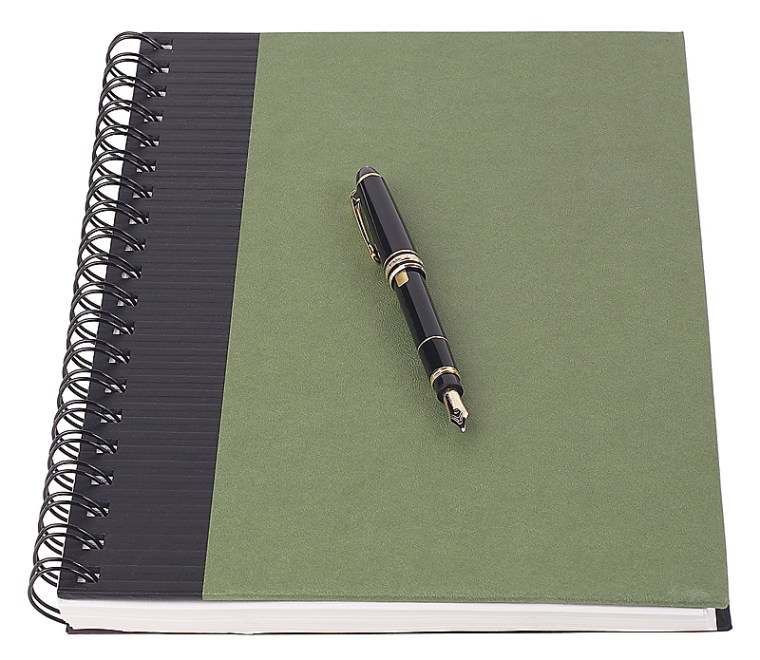
notebooknpenIt’s a bit of cliche to write a post entirely about “what I resolve to do in 2013.” However, that’s not stopping me from doing it. Disappointing, I know. But all the cool kids are doing it. So, here you have it: John Davis Jr.’s list of writing resolutions for the new year:

1. I have a book manuscript that has been sitting on my hard drive now for the better part of a year. I’ve submitted it around to various publishers and contests, revised it and polished it countless times, but still haven’t landed any “bites” yet. I resolve to get this book published in 2013.

2. In connection with resolution #1, I resolve NOT to self-publish said manuscript. Been there, done that, friends. It wasn’t a positive experience the first time around, so why would I intentionally subject myself to that negative encounter a second time?

3. One magazine publication per month, or at least 12 publication credits total in (fairly) reputable outlets. Sure, some months are more publication-heavy than others, and expecting to publish in at least one journal like clockwork every month would be unrealistic. However, seeking to publish at least 12 times over the course of an entire year is doable. Last year, I garnered about 10 publication credits total in magazines and online zines that are pretty good, so this year, I plan to up the ante a bit. If I fall short of the goal, it won’t be for lack of trying.

4. Enter at least six writing contests. My general rule is this: for every five magazine submissions I send out, I try to enter one contest. Some of these are respected and renowned competitions, others are fledgling. But no matter the prestige or the status, entering contests yields its own rewards: subscriptions to magazines, feedback from judges, and name placement are just a few of the perks that come with contest participation.

5. Build the network. By being in the MFA program, I have a number of great associates who provide candid, well-thought-out responses to my work. With that being said, I like hearing from people from all walks of life within the literary field. Editors, publishers, and professors are just a few of the folks whose opinions and thoughts I would like to encounter more. So, with that in mind, I plan to build out my writing network to include more people whose critical eyes are sharpest.

I think five resolutions should about do it — some believe in more, others believe in fewer. For my purposes at this juncture, however, these five goals should give me plenty of work for 2013. Here’s hoping that all my readers have a wonderful new year, as well. May it be filled with the pleasures and wonders that our world has to offer: Faith, Family, Friends, and incredible experiences. Happy New Year!

poetry, Uncategorized

Christmas Remembrances — Friend or Foe?

Pull-up-Christmas-Tree-with-LightsOne of the best things about being a poet around the holidays is the reflection that generates so many great memories. Ideas spurred on by recollections of past Christmases or realizations that take place here in the present are equally powerful motivations to write.

The one cautionary admonition I would issue to my fellow writers, however, falls into that dreadful category of avoiding bathos — that ripe sentimentality (see prior posts) which lessens the power of our words. Holidays become great cliche fodder; all the old pieces of language from carols and cards come flooding back to our brains, and if we aren’t careful, they’ll seep their way into our writing and stink it up like expired egg nog.   

With that word of sufficient warning, allow me to make one slight allowance — writing work that alludes to Christmas carols or other seasonal cultural icons is entirely different. Starting a poem with “Silent Night, Holy Night” and then altering it to convey a completely different message than the old hymn is  okay. Moreover, it’s a world apart from describing one’s past family celebrations as “holly jolly” or simply “merry.” Yuck!

The challenge for writers of all genres is finding new ways to express the oldest of great notions. When Dickens penned A Christmas Carol so long ago, you can bet that he knew his message was not novel — “greed bad, generosity good” had been a maxim for generations before Ebenezer Scrooge existed. But through memorable characterization, engaging dialogue (who doesn’t know “Bah! Humbug!”) and other tools of the trade, Dickens was able to render a masterpiece that has been adapted and enjoyed for more than a century.

As writers, the greatest gift we can give ourselves this season is new perspective. Let’s leave the old wrapping paper of holiday hackney in the dark recesses of our mental attics, and erect the fresh green boughs of our modern perceptions and expressions. As our memories and our current situations blend warmly in the glow of the holidays, let us task ourselves with the duty of renewal and re-purpose. The ghost of Christmas yet to come will thank us for it.

poetry, Uncategorized

On losing role models

Jake Adam York
Jake Adam York

Yesterday, in the midst of national mourning over Newtown, CT, America quietly lost one of its brightest young poetry stars. Jake Adam York, author of A Murmuration of Starlings and other great books, passed away after a stroke. The thing that makes this so difficult for me is not that I was close to Jake as some of my friends were, but the fact that he and I share so many similar “markers” in our lives. We’re roughly the same age (he was a little older than I), we both write “Southern” literature, although in very different ways, and we have followed fairly similar professional paths within higher education. His accomplishments far surpass my few little awards and recognitions, but we both shared similar goals and ambitions, as well. His voice was unique and upbeat, and I found myself going to his work frequently as a guide, especially for my regional work.

People who knew him well described him as kind, open, warm, and fun to be around. As I was telling a friend of mine who befriended Jake early on his career, I knew his work and his voice primarily through reading his stellar poetry. But secondarily, I felt like I understood him as a person through his seminars, workshops, and videos of his readings and speaking engagements. Granted, none of these media replace truly knowing a person. However, by gaining a sense of his perspectives, his vision, and his understandings, I felt like I was participating in life alongside him as a fellow poet. Maybe that statement is a little selfish, and certainly it isn’t intended to be.

His legacy should inspire writers and poets everywhere to produce their finest work. None of us knows when our last breath will be, and we should aspire to disseminate work that reflects the very best of ourselves. Jake did. As our country and the literary community continue to heal from tragedy, we owe it to ourselves to reflect on all our gifts and blessings, especially in this season. Pondering the bittersweet combination of loss and generosity should motivate us to use our talents for the betterment of our world at large. Our role models, no matter what field they may be in, always point us toward things higher, greater, and more important than ourselves. We owe it to their memories to preserve the spirit of excellence by doing our utmost.

poetry, Uncategorized

“Risking” sentimentality

sentimental As the next residency period for the Master of Fine Arts in Creative Writing program draws nearer, I’ve been reading the required materials like a good student. In my packet of readables this time, there are an awful lot of opinions regarding the idea of “sentimentality” in writing, especially poetry.

I’ve grown up as a writer around mentors who use the word “maudlin” disparagingly, and who utter “saccharine” for truly reprehensible sweetness violations in literature. These authors that I am reading, however, issue a valid and worth-repeating maxim to poets and writers alike who fear being too emotional or too feeling-oriented in their writing.

Essentially, all their opinions boil down to this: Use sentimental discernment. That is, if you know that the writing is corny, hokey, cliche, or sugary to the point of nausea, it needs to be edited or omitted totally. However, fearing openness and exposure through one’s literature is equally a handicap to be overcome. Some of these authors state blatantly that modern writers have become so emotionally distant from their work, that it lacks the “heart” that made literature great in the first place. Instead, witty wordplay and smart-aleck irony have become the standard. Poets are deemed cool if they seem to be the writing equivalent of Dirty Harry Callahan.

It’s time to put our emotions back into our work, but it’s time we did so without resorting to the hackneyed devices of yesteryear. Risking sentimentality increases the humanity of our writing, and allows us to reach those who have had similar experiences as well as those who haven’t. Poets don’t need to shoot for greeting card verse, but we also don’t need to shield ourselves by writing solely disinterested observations on life. There’s enough pseudo-philosophy out there right now through memes, tropes, and bumper stickers. Let’s put the heart back into our writing, and history will remember us fondly for doing so.

poetry, Uncategorized

A great big THANK YOU

thanks-keyboard To all those who voted for the Pushcart Prize nomination of my poem “Lovebug Seasons”   through Deep South magazine, I extend my humblest gratitude. Every vote mattered in the end, and when the numbers were tallied, your support helped pull me through. I am honored by your faith in and appreciation of my work. At the end of the day, awards are nice, but knowing that your community and your audience value your voice is even nicer. Again, THANK YOU.

poetry, Uncategorized

Readers: I need your vote!

 http://deepsouthmag.com/2012/11/vote-on-pushcart-prize-nominations/

It is my great honor to announce that I am being considered for Pushcart Prize nomination. Loyal blog followers, readers, and lovers of the written word, I humbly ask for your vote. Please visit the link above and cast your vote for Lovebug Seasons, my poem that is being considered for Pushcart nomination.

Thank you to all my supporters — your backing and your kindness mean so much to me. While writing can sometimes be a lonely endeavor, knowing that you are out there, reading my words and appreciating them, makes a great difference. You are valued more than you’ll ever know.

poetry, Uncategorized

The Poet’s Black Friday Wish List

 Poets have slightly different holiday tastes than do Average Joe and Plain Jane. On my list this year, I have all sorts of things that the “normal” folks probably would not think to ask for, but then, eccentricity becomes an expectation once you’ve told people that you’re a writer. For better or worse, here’s a list of a few things I’d like to get, and probably, some of your writer friends would like also:

1. The Best American Poetry 2012: This year’s collection, compiled and edited with the help of Mark Doty, has quite a few poets I admire personally, including my own writing mentor, Erica Dawson. Reading good work often leads to writing good work.

2. The 6.5 Habits of Moderately Successful Poets. This is another book in the category of “things I’ve been meaning to read, but haven’t.”  After reading the reviews, I’m pretty convinced I should at least familiarize myself with it.

3. Cool new bookends. I have this affinity for bookends — there’s a certain stability and finality that they convey, I suppose. Antique stores and online vendors alike offer great opportunities to pick up a piece of history while keeping one’s texts ship-shape. There’s also this air of refinement that bookends offer, and I suppose that’s another draw for me. I like classy touches, and bookends fall into that category often.

4. Fine writing instruments. My all-time favorite vendor for Waterman pens has to be Levenger. I don’t usually plug businesses here, but over the years, Levenger has provided me with reliable, aesthetically pleasing fountain pens and a plethora of cool “writer toys” that remain meaningful even today. The pen I typically use to start drafts (a Waterman Phileas) came from there probably about ten years ago, and the briefcase I use for all things writing-related is also a Levenger product. If you haven’t paid them a visit yet, I highly recommend it. The writer in your life will thank you.

5. Gift card #1: Staples. If you’ve been a regular reader of mine, you probably know by now about my unhealthy obsession with office supplies. My favorite store is definitely our local Staples. From paper clips to printer cartidges, Staples allows me to feed my fetish for writerly goods.

6. Gift card #2: B&N. Sorry, other booksellers. I’m a fan of Barnes and Noble’s brick-and-mortar establishments. Somehow, they’ve managed to preserve that certain air of old-school bookstores while staying current with technology and trends. And before my writer friends get upset with me for not patronizing my local small, independent bookstore, allow me to say that here in my location, we unfortunately don’t have such an animal. To use an old football idiom, here in my town you have to “go big or go home.” It’s BAMM or B&N, and the people under the green awning have better customer service skills and actual knowledge of their wares.

7. Gift card #3:   Apple. I love my iPad. I like my apps, my games, my music, and my movies. I try not to write using my iPad, simply because it’s so recreational — there are too many distractions there. But for everything else in my life, the iPad is a wonderful tool. I use it in the classroom, at home, on vacations, and in workshops, seminars, and classes. For everything that’s NOT writing-related in my life, my iPad is the perfect companion. (No, I was not compensated for saying this — it’s just true).

8. Vinyl records: I love the sound of music on vinyl. There’s such a history and an art that goes with listening to an honest-to-goodness record. Mostly, I use my record player for classical music. I have all my other media players for more contemporary stuff — PC, iPad, etc. do a perfectly good job with modern music, but for Handel’s Messiah and Arthur Fiedler’s Boston Pops, I gotta have my vinyls. Call me antiquated if you will.

9. Coffee. Not the stuff in a blue can from the grocery store, the good stuff. Yes, I grind my own beans. And yes, I do have three separate coffeemakers in my house: French press, percolater (percolator?), and finally, Keurig single-serve. I typically use the big French press for company, the percolator for Sunday mornings when everyone is having coffee, and the Keurig for everyday, nothing-special single cups. That hackneyed expression about “a little blood in my caffeine stream” holds true here. Coffee is my gasoline.

10. Gift subscriptions to my favorite magazines. By keeping in touch with what’s happening on the literary front, I’m better equipped when sending out submissions and manuscripts. The great thing about getting subscriptions for Christmas is that the gift is enduring — every time a new issue arrives, I’m reminded of the person who kindly thought of me and my ambitions.

So, there you have it — one Florida poet’s guide to giving for the coming holiday season. If you’re out fighting the insane crowds today, good luck. And here’s hoping that you get everything on your wish list, as well.

poetry, Uncategorized

A Southern Thanksgiving Poem

“Thanksgiving in the woods” has been a family tradition of ours for generations.

In just two more days, one of my family’s favorite holidays will finally be here. Thanksgiving is probably the second-most American holiday right after the Fourth of July. Recently, a couple of journals have published my piece “Family Gathering”: The Marjorie Kinnan Rawlings Journal of Florida Literature ran it first, with Deep South Magazine following suit just the other day. For my readers’ enjoyment, I am posting a copy of the piece here, since it has found a home twice now. Happy Thanksgiving everyone, and God bless you and yours on this fabulous, historic holiday! 


Family Gathering

Dedicated to all my country cousins


In those Thanksgiving woods we were grateful
by nature, we were farm kids – mud-made
battle plans detailed our attack:

Mounting our gallant oak-limb steed,
we hurled barrages of pine-cone grenades
followed by Sabal Palm frond spears,
then went hand-to-hand with sword sticks
in the friendly fire of safe conflict.

Wounded, the unnamed invisible invaders
cowardly crossed the creek, high-tailed
into town, where all of our dangers went
to regroup and plot their revenge against
us, the adults of tomorrow.

poetry, Uncategorized

Hemingway’s Distance

 When the great author of The Old Man and the Sea was in Michigan, he wrote about Paris. Likewise, when he was in Paris, he wrote of Michigan. In speaking with other poets and writers, I have found there to be a common link among creative types: The farther (in every sense of that word) we are from our dearest subjects, the stronger our writing about it becomes.

For instance, when I return to my family homestead many miles south of here, I am not automatically inspired to compose lines about it. The spirit of the place is too strong, too close. Also, the peace I experience there is too great for the fevered activity of poetry composition. The old place’s effect is soporific on my muse, but once I’ve left and I’m on the road or even back at my current suburban home, then the poetic flood begins to rise. Images, sensations, memories, and the whole of the family farm experience (past or present) sets itself heavily on my writing mind.

Time also serves as a literary “distance” filter: Consider Wordsworth’s famous lines above Tintern Abbey, written five years after the visit took place. By having hindsight, the truest and most poem-worthy elements of an experience can rise like sweet cream to the surface of our consciousness. The traumas and impressions of the present are intensified by having some chronological separation. Only the strongest details remain after delay. Sometimes this separation can be mere hours, other ideas may require years for processing. It all depends upon the severity and sincerity of the inspiration in question.

I am not advocating the idea that writers shouldn’t “strike while the iron is hot,” however. If one is overcome by the NEED to write at a moment, then by all means, don’t let that desire cool in apathy. The Beats would tell us that our first thoughts are our best thoughts, but the discerning voices before and after that generation would advise us to refine those first thoughts into something far more elegant.

The big picture is just this: If you want to create truly reflective writing, then some form of distance is necessary. It doesn’t always have to be as radical as Michigan to Paris, but stepping back from the subject is advisable for any creative endeavor. If you don’t believe me, just ask “Papa.”

poetry, Uncategorized

The Expected Rejection

I’ve written before about my “rejection practices,” but this little tidbit deals more with a specific type of rejection: the expected one from the MAJOR magazine.

Today in the mail, I got a rejection slip from a powerhouse national magazine whose literary prominence is known far and wide. No personalized notations were on this slip, and of course, I hadn’t really anticipated any. My main motives for annual submissions to huge magazines with slush piles the size of Everest are twofold, really: 1. Doing so keeps me humble, and 2. It gives me some sense that my work has been in front of influential editors, even if they did reject it.

This next statement sounds terribly snobbish, but honestly, the proficient poet becomes accustomed to better-than-average acceptance rates from smaller literary magazines. When one sends work predominantly to fledgling journals and up-and-comer markets, acceptance and kind words become a fairly regular occurrence, with a few apologetic rejections along the way. Editors, for the most part, are appreciative to receive your work, and you as the writer are pleased to be published. It’s a great relationship, and one I never take for granted.

On the flipside of this publishing coin, however, is the danger of egotism. After so many acceptances, the writer’s head can grow quite large if not checked. Something has to level out the mountaintop experiences of mutliple publications in smaller journals to maintain balance. Rejection from The New Yorker, The Atlantic, or other major publications helps to keep the poet realistic and attached to modest roots. Granted, any rejection helps to accomplish this, but the coldly impersonal rejection slip from enormous national publications is the best of all ego-crushers. No explanation, no “we really liked this, but…” statements, just a flat-out “NO,” worded as generically and insensitively as possible. Tough luck, Mr. Wordsmith…no dice. (EDITORS: Please don’t interpret this graf as a request for more rejections; I have enough for a while, thanks.)

Certain writer friends of mine have this conspiracy theory that  big-time mags rotate off the poems of about 12 different renowned writers each year, and that any submission from someone without name recognition is immediately dismissed without a second thought. For now, I remain optimistic that editors and publishers are serious when they state in their guidelines that they are “devoted to discovering new voices.” Truthfully, if I were in their positions and I had to choose between rockstar fellowship winners or Joe Blow the small-town unknown, I’d probably make the same decisions they did: Publish the identifiable, decline the struggling. Empathy doesn’t make the rejection sting less, but at least it allows some justification.

My hope, of course, is that one day the tide of rejection from the “big boys” will stop, and I will finally be among the elite who manage to have their work carried in the prestigious pages of historic, culture-defining publications. For now, my small-time successes (see prior posts) sustain me and encourage me to keep going. Equally appreciated are the small magazine editors who reject work with thoughtful feedback, as well as the ones who accept my work with gratitude. Some of the best critiques I have ever received have been from the desks of truly devoted editors at college or “little” magazines. Their input has been invaluable, and hopefully, their refining suggestions will lead to bigger and better things as time progresses. For now, I have work to improve and send out, and for tonight, that’s enough.