poetry, Uncategorized

Old-style submissions: A lost art

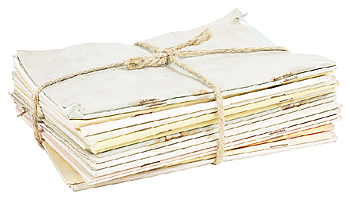
Not so terribly many years ago, magazines received writer’s work using that method that we today refer to as “snail mail.”

In the first writer’s guide I ever bought (I think I might have been 17 at the time), every market entry included the following instructions: “Please include a SASE with adequate postage for reply, and a cover letter that includes a brief writer’s bio.” The words sometimes included other instructions for submitting by mail, some including “reading fees” and the like, but for the most part, the standard editor expected you to include A.) a well-written and properly formatted cover letter, B.) your submission of 3-5 poems (some more, some less), and C.) the all-important self-addressed stamped envelope.

Today, the process has become much more mainstreamed and fast-tracked, with online submission sites like Submittable making life easier on the industrious writer. There is a space for a cover letter through such services, though editors today seldom expect it to be the eloquent and elegant communication that it was once supposed to be. Moreover, the modern submissions process takes perhaps a few seconds as opposed to the elaborate endeavor that it once was. Some would call this progress, including me. By the same token, however, there are some points about this slicker model that make me somewhat nostalgic for the “good old days.”

First, the tree-free model lacks the air of refinement that stationery and bone-colored, fibrous papers promised. Yes, I am aware that all this shipping and mailing taxed our environment to a degree, but by that same token, it carried with it a certain degree of class and culture that we have lost today in the effluence of digital missives. No more can people be identified by their cursive, and no more do wax seals bear the impressive monogram of a sender. Instead, we have yet another heading in yet another database.

When historians want to trace the personal writings of famous authors of our era, will they be limited to the “comments” section of some submission site? Where will the personality of the writers shine through, other than their “professional” writings? No more will there be pointed handwritten notes to indicate the passion or the passivity of the correspondent. No more envelopes sealed by a variety of methods. No more yellowed, saved and folded notes. We are slowly but surely losing a vital piece of our humanity to the name of efficiency.

It was my pleasure recently to send off an old-school submission to a chapbook contest. Yes, I had to use my own printer ink. Yes, I had to include that SASE. And yes, I even had to write a check and a writer’s bio. Plus, I had to buy postage. But all that, I felt, was worth it. At least when that editor receives my submission, he or she will be grasping some small piece of my personality beyond my poetry. Win or lose, a piece of myself has reached another fellow human being, and the intrinsic value to that small act is beyond the price of any printer cartridge.

poetry, Uncategorized

Literary Wingmen

ImageT.E. Hulme wrote six poems in his life, with the best known piece being a short little near-pastoral titled “Autumn.” But this Englishman, who fought in World War I, is known better for his attachment to other greats. The company he kept included big names in the world of poetry, including Eliot, H.D., and a number of well-known imagists. He joined poetry clubs and took part in literary events where better-known authors read and were celebrated, and in 1917, he was shot and killed in wartime. He was only 34. His legacy today is largely attached to the reputation of better-known names from literature like those mentioned above. Scholars today refer to him more as a “critic” than a poet.

The lesson of Hulme’s life is one all writers, and especially poets, should take to heart: While being around “names” might be exhilirating, and doing so may have its own benefits, it is imperative that we not forget who we’re really in this business for — ourselves. Oh sure, I could go on some great philanthropic rant about how writing is “all for the readers,” or “to make society and culture better,” but at the end of the day, let’s get real: The reason writers write is to be read and recognized by others. No matter how charitable or noble our other motives may be, the one driving force behind writing is the thought that someone else will take in and appreciate our words.

So, if one is constantly “hanging around” others who are already established, that might be fun and even rewarding, but honestly, when the fat lady sings, who wants to be remembered as “that guy who hung around (famous name here)?” Making a literary contribution demands more than being the bookish equivalent of a Kardashian. Staking out one’s own path and territory is as necessary in the writing world as it is in business. Warren Buffett didn’t get where he is by riding the coattails of Rockefellers, and today’s writer can’t expect to be remembered by sitting on Grisham’s front porch, either.

Certainly this isn’t to say that receiving mentorship from “names” isn’t helpful; it definitely is. But at some point, it’s time to leave the nest and spread one’s own wings. My aspiration is that, when my time comes, I’m not put into the history books like Hulme; by then, I will hopefully have made a significant impact that is beyond “knowing and imitating good poets.” No doubt my writer friends desire something similar. Let’s begin forging that path today. Our literary legacies depend upon it.

poetry, Uncategorized

Treading the Mason-Dixon Line softly

Image

Here’s the thing about writing regional poems: you have to be careful.

As a native of Florida (and of the South, no matter what some folks may say), I find that an awful lot of my work takes on the dialect, the idioms, and the culture of our southeastern United States. However, that gift of geographic identity is a double-edged sword.

It becomes very easy to cross over from the easy grace and subtle lilt of Southern verse to something that is pure cornpone. When I find my work sounding like bad country music, I know it’s time to drop back and rethink. I’ve always been a firm believer in central metaphors — those comparisons that build poems from the outset. However, when those metaphors are already overdone (sunsets=symphonies, etc.), then it’s time to step away from the work for a while and allow the creative juices to do their job.

The South has a far too dynamic history to be denegrated by bad poetry. There are already enough cheesy lines about Mama’s Cookin’ and Daddy’s Workin’ without more people contributing to the drivel. Certainly, food and labor are staples of life here in the American South, but expressing those same sad sentiments in echoed cliches does nothing for literature or culture.

To my fellow Southern Writers, I urge you (as I urge myself) to examine and edit closely. Much like hard-core evangelicals’ “WWJD” bracelets, I would ask a similar and perhaps slightly blasphemous question of our work: What would Robert Penn Warren think? You could replace the name here with the exemplary Southern poet of your choice: Natasha Trethewey, Kevin Young, Rodney Jones, whomever. But in the end, if our work doesn’t measure up to the high standard set before us, we’re just wasting our ink.

poetry, Uncategorized

The Necessity of Interruption

So, this post probably won’t win me many writer friends. Be warned.

I have found over the years I have written poetry and prose that I am different from my colleagues in one regard: I actually prefer to be interrupted from writing.

Now, before all you secluded-in-solitude writers go nuts, let me clarify: My writing room has no “doors” to speak of. My children can come in at any time and speak to me, get hugs, whatever. And in retrospect, those interruptions have actually made my writing stronger.

Here’s what I mean: My brain actually has to work harder to power through the static and the outside influences, and thereby comes up with things that my brain at total ease would never think. In fact, when I’ve tried to write in areas that are too quiet (the library, my local college study room, etc.), I find myself encountering greater difficulty. There has to be some background noise, and it can’t be something like music with lyrics or that artificial white noise garbage. The sounds in the environment have to be things I know are real: the drip of the rain beyond my window (like right now), the TV in the adjoining room mumbling about…I can’t tell what, the coffeemaker gently whirring forth a stream of fuel, my boys playing pirates in their bedroom down the hall. These noises actually help me to focus better. And while many of my poet friends would cringe at the thought of such “racket,” I’ve found that writing locales without these sensations rob me of something. Maybe it’s the familiarity, maybe it’s a degree of undiagnosed OCD — I’m not sure.

Whatever the cause of this scientific fact, the thing that matters most is its effect. I know how and where I write best, and life’s little interruptions are as necessary as pen and paper. Do I still fantasize about being that “lone wolf” author who has blackout blinds and acoustic paneling just to ensure that his thoughts aren’t “tainted?” I suppose. But given my druthers, I’ll take my boys’ imagination-chatter and the soft hum of life in the suburbs over celebrity sanctuary any day.

poetry, Uncategorized

A New Meaning for “Writing Rut”

Fall in Florida is difficult for visitors to detect. We don’t have glorious leaf color changes, the temperature doesn’t dip drastically, and more often than not, our autumn feels like extended summer to those from beyond the state line. But natives and those who have lived here for decades can feel the subtle changes: Lower humidity makes the air a bit less sticky. Breezes begin to border on full-blown wind. And then there’s the change in sounds — the trees themselves, as the weather grows drier and slightly cooler, take on a different pitch as their boughs are swayed by a new incoming season. Birds’ songs grow a bit more excited and resonant as they prepare for a colder period yet to come. No, Florida’s version of fall might not be as visually grand as the displays in other parts of the country, but it’s a poet’s best friend. It requires heightened sensitivity, and is perfect outdoor weather for time in nature’s splendor.

All this reflection takes me back to my boyhood and adolescence, when fall also meant deer hunting season. This post is no rant for or against the act of hunting, but is instead intended to give a new definition for a very old term: For hunters, the word “rut” means that animals are seeking mates and are active in the woods. They forage, they frolic, they are generally more lively during mating season or “rut” than they are during more docile times of the year. Much like some big game animal, I’ve noticed that I also am enlivened by this time of year. Its different sensations and its invigorating climate make my “poetic brain” shift into overdrive. My wife has noticed this over our 10 years together; fall means that my writing takes a front seat.

So, rather than being a victim to a “writing rut” under its old definition — a time of hindered or stilted writing production due to “writer’s block” or other problems — perhaps we as poets and writers need to reclassify this term. Take a lesson from the hunters: Rut is a time for greatest activity, and so, let’s proceed into this autumn’s mating season of ideas with utmost optimism and highest ambitions for our work. Good luck, and here’s hoping you “bag” a few “trophies” along the way.

poetry, Uncategorized

Hello, Neighbor

ImageImage

As a child, I watched Mister Rogers’ Neighborhood. It came on right after Sesame Street, which I sometimes watched, sometimes didn’t. But Mister Rogers offered children an avenue to escape — his land of make-believe, arrived at by way of the jingly-jangly trolley, may have been one of the first places that I understood the importance of using my own imagination.

The point of this post, however, is not merely to reminisce about television programming from my primary years. Instead, it is intended to reveal an epiphany about modern-day popular poets. Specifically, Billy Collins as an example. Many critics have lauded Collins’s efforts at raising public awareness of poetry. By that same token, many have criticized him for “oversimplifying” poetry, or making it “too accessible.” No matter how you feel about his contributions, however, Collins has that same presence, that same certain at-ease mystique that Fred Rogers had those many, many years ago: When you listen to Collins read, it is as though you, the listener, are having an across-the-fence conversation with a favored neighbor. His occasional dry wit and all-American approach make him a hit with universal audiences.

Just as Mister Rogers shed his formality upon entering his time with young viewers, donning sneakers and a cardigan instead of his preaching coat and dress shoes, it feels as if Collins is shedding the academic veneer so often kept up by other contemporary poets. He is here simply to speak with you, his listener, and perhaps his reader. It is this convincing stage initmacy that makes America love Billy Collins, just as parents and children adored the beloved Mister Rogers for so many decades. That sense of “everything’s okay” that pervaded the imaginary land of make believe equally is exhibited in the voice and presence of America’s former poet laureate. And in an age so full of insecurity and ugliness, time spent in the comfort and beauty of poetry’s surety is certainly time well spent.

poetry, Uncategorized

Simultaneous Submissions and Such

Flooding the market has its ups and downs

As an active working writer, I confess: I simultaneously submit work all over the place. A lot of journals these days have woken up to the fact that authors are going to be sending their work to multiple places at various times, and therefore, editors have broadened their horizons about simultaneous submissions — manuscripts sent to more than one venue at a time.There are a few journals’ bosses that still frown on this practice however; they assume that you must value their opinion so much that you would NEVER send your work to someone else at the same time. This elitist and frankly inefficient mentality is a holdover from a more Guttenbergian time, when “gentlemen” were expected to give their exclusive attention to one press at a time. Rarely do things operate in such a way today, though. Journaleers who expect writers to give them some kind of preferential treatment are as obsolete as tophats and typewriters.Recently, I submitted some pieces to a publication that included among its guidelines the statement, “We prefer no simultaneous submissions.” In my cover letter, I told the editors forthrightly that the pieces were being “shopped around” to other publications — if they want my work, they’ll have to come to grips with the fact that I have bills to pay and I operate largely on a “first-acceptance, first-dibs” basis. This isn’t some kind of snobbishness on my part; it’s just sound business practice. I want my work out there efficiently and presented well. Whoever does that the fastest and the best is the proverbial “winner.” If writers have to grapple with competition from others, why shouldn’t editors and publishers as well?Granted, the aforementioned publication might frown upon someone so recklessly disregarding their preferences, but at the end of the day, I know I have to face myself as a professional poet, and sometimes that means going against the grain. Here’s hoping I haven’t burned a vital bridge in the process…

poetry, Uncategorized

Pen Names and Identity

A week or so ago, I began contemplating using a pen name for manuscript submission. This move, I thought, would follow in a great literary tradition of authors whose work I admire. In consulting with my mentor through UT’s MFA program, however, several points were raised that I felt bore repeating here:

1. Using a pen name could mean that people won’t identify “the real you” with your work. That is, your persona or pseudonym receives the credit. Much like the ventriloquist plagued by the reputation of his puppet, authors too sometimes become overshadowed by the power of their pen name.

2. A pen name can serve as a hiding spot or a shield. Some people may consider this a good thing, but in the end, pen names can sometimes cause writers to avoid accountability for their words by blaming this “imaginary friend” of sorts. Comfort and liberation can come from this idea, of course, but at what price?

3. When people go into the bookstore, do you want them looking for work by (your name here), or do you want them seeking words by this moniker? True, you and your pseudonym may be one and the same, but there’s always that lurking barrier that arises through the use of another identity. In this society where we value openness and sincerity, pen names impart a certain shade or veil that readers today don’t necessarily enjoy.

In the end, of course, I decided against my proposed pen name. It was, at best, a passing fancy, and one best left in the annals of my writing history. If some day I decide to change course, I’ll probably take the Nora Roberts route: Let people get to know “the real me” first, then later write under an assumed name that everyone knows is mine in the first place. For the time being, I’m just me. As common and as average as my name is, it’s still mine.