9/11/01 gave Americans pause. We paused to mourn, we paused to reflect, and we paused to resolve. Along with that pause, though, came poetry. People needed catharsis amid crisis, and poems, no matter how good or bad, helped us. Some of the stanzas written were angry, some were sad, and others were just reaching and exploring to make sense of immense tragedy.
Americans wrote poems of every conceivable stripe. Now, as the vivid images of 9/11 turn “adult” by reaching an 18th anniversary, poetry writing has waxed and waned. There have been national events that have spurred on the creation of more poems, certainly, but the problem is one of motivation: Once the flames of inspiration have cooled, so do passions for writing.
As people accept whatever happened, be that a terrorist attack or a personal milestone, their desire to produce poems is seen as a mere whim — something brought on by extraordinary circumstances, and definitely not something to continue in “normal” times. But this line of thinking is flawed; after all, poetry has historically served as the documentation of our everyday lives in the present. Why should today be any different?
Billy Collins writes about Cheerios and the forgetfulness of old age. Tracy K. Smith writes of museums and cathedrals. Aimee Nezhukumatathil pens pieces about baked goods and auctions. Everything (literally everything) is the stuff of poetry — why should we reserve a whole genre for some special occasion, treating it like the good silver or the fine china? Life is too short to keep our words safely untarnished in credenzas of the mind; break out the good stuff and use it now! Not just for the funeral, the wedding, or the remembrance.
Eighteen years ago, more than three thousand people breathed their last. What poems passed with them? We who remain are charged with an obligation — to communicate our selves so that others may learn, recall, and understand their own humanity. The absolute best way to accomplish this task is through poetry. Don’t wait for another tragedy, another landmark in personal history, or another ceremony to strike your creative fancy. There are poems within you right now. Write about the unconsidered objects in your office, that funny thing a child does, the weather wherever you aren’t. Write about a long-forgotten item buried in a drawer. Write the smells on your daily commute. Write poems. America needs them.
As I begin to conclude my time as faculty at Word and Community: A Writers Retreat, I feel it would be appropriate to reflect on what I’ve learned and gained here. The following are a few lessons I’ve taken from a week in the Wisconsin Northwoods with other writers:
1.) One’s creative impulse and personal faith are two halves of a larger whole. They work integrally with one another and often simultaneously.
2.) Solitude is great, but like everything else, it demands balance. Being by oneself for reflection and contemplation must be counter-weighted by relationship and interaction with others. Too much time in either community or isolation can be detrimental to creativity.
3.) Being on a body of water opens the mind’s gateway to metaphor, analogy, and critical perspective. The physical supplements the metaphysical when paddling a craft.
4.) Nature is necessary to allow the processing of events, truths, and ideas from our lives. Clarity is fostered by trees, trails, and the wild.
5.) We must go in order to return. Away is anywhere not home. Seeking simplicity through complexity leads one back to the familiar and the cherished. And these ideas are also interrelated.
In retrospect, I probably would not have had the time to better understand my craft and my self without this week in the woods. It has allowed me to write, edit, revise, teach, and most of all, relax. I’ve met others I won’t soon forget, eaten differently (and more nutritiously) than I usually would, and cleared away a number of mental cobwebs.
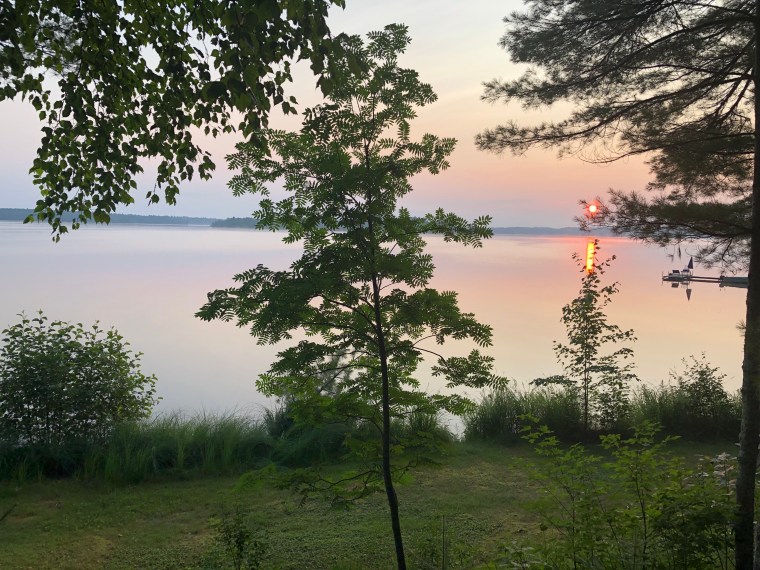
Tomorrow, I will return my rental car, board an airplane, and resume life as husband, dad, educator, and leader. But for these final hours, it’s nice to hear the wind through the pines, watch the ripples on Trout Lake, and hear the bird songs of a place unlike my native Florida. But it will also be good to get back there. Farewell, Wisconsin.
William Faulkner once famously said, “Don’t be a writer; be writing.” As I enter my third day of the Word and Community Writers Retreat at Marywood Franciscan Spirituality Center in Arbor Vitae, Wisconsin, I find myself having to recall those words regularly.
How easy it is to be overwhelmed by nature’s splendor and by the fact that one has been selected to impart poetic knowledge (even wisdom?) to aspiring writers of all ages. As I breathe in the clean air of the Northwoods, I recall that I have come here, yes, to teach and to help, but also to write.
On this Wednesday devoted to silence and solitude, my aspiration is to complete several poems that are presently in draft form. The bones are there, but they need muscle and life. I resolve to put more than this promising prose on the page — let there be poetry.
Recently I’ve been expanding my cadre of skills, and as part of that ambition, I’ve started teaching poetry courses on Skillshare, a site where people quite literally share their skills. My first session is a “Reader’s Digest” version of a larger workshop I usually do for Firehouse Cultural Center, and it features photographic poetry prompts from my good friend Jim Futrell. (It’s also free, so no risk if you hate it) 🙂
I’m providing a link to my first attempt at this in the hopes that some of you will take a look at my ekphrastic poetry guidance and try out the exercise that I’ve posted there. It should be fun! Here you go:
In a few days, I’ll be headed to the dairy state of Wisconsin. I’ve never been there before, and this time, I’m going to be leading poetry workshops, giving craft talks, and even leading a fishing expedition and playing a little guitar (see prior blog entries for details).
While my wife has family in Wisconsin, my impressions of it have been largely shaped by a public school education and media stereotypes: I expect a place where the Packers are revered, cows are in abundance, “Butter Burgers” are considered a delicacy, and the English is tinged with a certain Nordic-based dialect. It will be interesting to see how my expectations are met or disproved.
One thing that I’m most looking forward to is the change of perspective that always accompanies travel. It’s nice to enter that head-space where everything is different and new, where you feel like an observer and guest instead of a traffic-slogging native just trying to survive the daily grind. Travel always means renaissance — a new beginning for thought and creativity.
It will also be nice to go somewhere that requires a shorter flight and a shorter drive. As much as I enjoyed (and was changed by) my family’s adventure to Lisbon, Portugal in 2016, I merely tolerated the 16-hour flight it necessitated. My sons were champs about it, and my wife loves anything that means an excursion is underway. Me? Not so much. I like leg room and unlimited mobility.
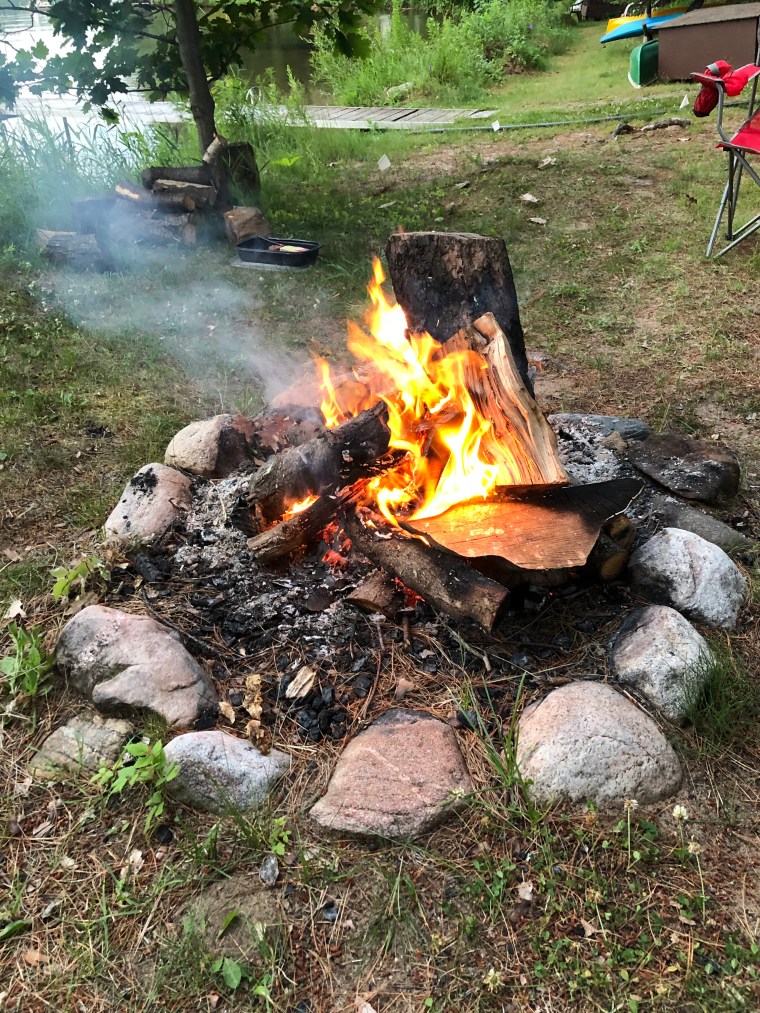
And my Wisconsin experience is not slated to be “the norm:” I won’t be visiting The Dells or posing alongside statues of football greats. Instead, I will be in isolated community (a seeming oxymoron, I know, but stay with me). My fellow writers and I will be housed at the Marywood Franciscan Spirituality Center, which is a pastoral setting deep in the woods. I’ll be near Trout Lake (which I hope lives up to its name), and the feeling of the whole experience will be significantly more tranquil than touristy.
So, here’s hoping that this brief time away yields some much-needed mental clutter removal and a little broader understanding of our country, as well. Just as my earlier summer sojourn into Appalachia allowed me some solitude for literary endeavors, this adventure should reignite my teaching passion while presenting chances to reflect. I plan to keep accounts of my trip here, so stay tuned…
A statue of Robert Frost, one poet whose legacy I admire.
I am mentoring a young writer, and I am grateful for her willingness to accept critiques and guidance. This woman is truly interested in making her unique work the best it can be while exploring the masterpieces of prior poets. Her outlook and attitude are precisely what they should be to achieve learning. She is well on her way to the next step in her maturity as a poet.
Too often, writing mentorships can evolve into counterproductivity for a number of reasons, beginning with a mentee’s desire to precisely emulate a mentor’s path. The truth is, no matter how badly we may wish to trace the steps of others, our journeys, literary or otherwise, will forever be our own.
Over the last twenty years or so, I’ve admired a number of poets whose trails have been admirable: They’ve won awards, published in esteemed venues, taught in prestigious institutions, and achieved many of the milestones that poets (rightly or wrongly) value. As a much younger man, I wanted to try to walk in the footsteps of those who had done the things I wanted to do and had been to the places I wanted to go, even going so far as to seek their same publishers or apply to their same fellowship opportunities.
I found, however, that those things weren’t right for me. Just as my mentors had experiences and encounters that were suitable to them as individuals, I likewise needed to forge my own path. Some authors are meant for the lights of New York City; I am not. Some authors revel in writing the grotesque and the disturbing; I do not. And still some authors hide from their readers and the public in general; I will not. I believe in celebrating the simple, recording the beautiful, and engaging earnestly with others. Some of my mentors have shared these traits, and some have not.
And while I’m grateful to have learned from a variety of literary personalities, I would be foolish to think that my road will look exactly like theirs. To extend the metaphor, my two-lane country gravel path is a far cry from their eight-lane high-speed interstates, and that’s really okay. This loud, bumpy ride I’m on has its own charms.
I hope that my current mentee finds her own way. If some of my voyage becomes hers, that’s fine. But each of us must blaze our own course. The fellow wayfarers who go before us, join us, or follow us just make the trip more interesting. Fare thee well, readers — enjoy the journey.
Once upon a time, there was a poet. He was ambitious, as poets happen to be, and he was terribly concerned with making a name for himself. All day every day, he sat around thinking about what his literary legacy would be, and how future generations would look back upon his work.
This was pretty funny, considering his work had only been carried in a dozen or so literary journals of modest reputation, and his first book had been bought by only a handful of family and friends. Nonetheless, Poet was quite certain that one day, his rhymes and stanzas would wind up in the hands of adoring students who would romanticize his life, documentary-style, and he would receive the reverential treatment of other great canonized writers.
Driven by his lust for immortality and renown, Poet began assembling his most recently published works into a collection. He’d already self-published one book (see “bought only by family and friends” above), and he’d even gone to a terribly expensive liberal arts college to earn the coveted MFA — which he reminded people regularly was a “terminal degree.” So he knew how to put a poetry collection together and how to find a publisher.
When the day came to submit his manuscript, Poet was shaking with excitement. He sent the book to publishers great and small, hoping oh so adamantly that one would see the merit and value in his clever diction and intense imagery. As luck would have it, one did!
This publisher was a very good publisher, too. The press had a 40-year history of getting poets’ work in front of readers and libraries alike, and much of the poetry it published was like that of our hero. Joy and elation filled Poet’s mind! How great! How rewarding! He could hardly wait to hold this new book in his hands. The manager of the press was very kind, and the cover art for his book was beautiful. Likewise, the pagination, the formatting, and the production quality of the book were all incredible. Before the book hit the presses, the kindly publisher had advertised its arrival through major outlets, and critics were eager to read it. Poet was as happy as he had ever been. The book sold several hundred copies, a very positive return for a new book of poems from a virtually unknown author.
As months passed, however, Poet began to think too highly of himself. After all, his work had now been published in “better” venues with bigger names, and established writers had been singing Poet’s praises. Surely he deserved to have his work seen and appreciated by people beyond his geographic region.
“London!” Poet exclaimed. “I must have my work published in London!”
The warm light of Big Ben flashed in his mind along with scenes of major publishing houses he had seen in magazines and in movies. If only he could find his own! London became an obsession — even England would do, if not the capital city. After all, the home of Byron, Shakespeare, Chaucer, and Donne would certainly benefit from his writing as well. He was just as deserving as they, he told himself.
More of his poetry was picked up by magazines, contests, and anthologies (thanks somewhat to the book that had been put out by his good former publisher), and soon, Poet had a whole new manuscript ready to go. Rather than sending the book to his highly proficient previous publisher, though, Poet decided to go a different route (aside: consider this part “going off the path in the woods”, a la Goldilocks).
An English publisher had recently set up shop, and the manager of that press approached Poet. “What a nice manuscript you have there,” said the British publisher in exquisite queen’s English. “Wouldn’t it be delightful to have it turned into a book? I’m very qualified.” Publisher licked his lips and his eye gleamed.
“Yes! Yes!” Poet shouted without a moment’s hesitation. “My book will be published in [gasp] Europe!”
And so, Poet handed over his work, a collection of award-winning poems previously published in reputable magazines. New Publisher extended his claws, clasped the manuscript greedily, and slithered back to the deep, dark woods of unknown England.
Some months later, a book from Hickshire, UK arrived. Its interior was on cheap, plain white pages, many of the poems had been incorrectly printed, and the back-cover blurbs from prestigious members of the literary community were barely visible due to New Publisher’s poor design sense. Poet’s dream of overseas publication was becoming a nightmare. He could hardly believe his eyes! Moreover, New Publisher had not done anything for publicity or marketing of Poet’s newest manuscript, and so no one knew about it, aside from people who knew Poet already. It sold maybe 100 copies, and many of those purchases were “pity sales,” people who felt so badly for Poet that they bought copies just to ease his suffering.
If only he could undo this decision; if only he could go back in time and send this precious manuscript to a publisher that he knew would treat it professionally and artistically. But alas, it was too late. Poet’s bad decision would now haunt him forever, even when, in a few short months, New Publisher closed its doors leaving all its writers in the lurch, including Poet. What was he to do now?
With a humbled spirit and a wiser perspective, Poet began working on fresh poems. He sent them out to magazines, contests, and other venues, and soon, many of them found loving homes. In a few years, Poet had regained the ground he’d lost due to his own hubris. Editors recognized his name, contest judges identified his work by its unique style, and fellow writers appreciated his judicious perspectives. However, this time, Poet kept his ego in check. As the acceptances poured in and the award nominations mounted, Poet began assembling another collection. And this time, he swore he would not be lured off course by the promise of exotic publication.
Upon finishing the last pages of the book, he humbly submitted it exclusively to the publisher he’d known before — the one who had so richly contributed to his prior successes and victories. There, his newest book received a warm reception and all the editorial attention it deserved. The kind publisher was elated to see Poet return! The book went on to become a New York Times bestseller in the poetry category, it received multiple accolades and awards, and everyone lived happily ever after. THE END.
The moral of this story, boys and girls, is not to let your pride go before a fall. Beware the wolves and snakes of the publishing industry who capitalize on self-important people. Avoid falling prey to the traps and snares that Poet encountered, and you too will be wiser and happier all your livelong days.
Not too long ago, someone told me to quit submitting my work to small journals. “I’ve never even heard of half of these,” he lamented. “Your work deserves to be in bigger places — you know, like The New Yorker or something.”
Don’t get me wrong: I’m among the great morass of writers submitting their poetry to The New Yorker every year. It’s almost like a custom of sorts. I send something, and six months later, I get their standard rejection. C’est la vie.
But to completely abandon the small, independent magazines to exclusively focus on getting published in “major” venues would be both foolhardy and counterproductive. Small journals have, for decades, provided my work with a home that has become gratifying in different ways.
One of the greatest rewards of “submitting small” occurs when that tiny publication really takes off. Take, for example, Deep South magazine. Erin Z. Bass, who has become a friend of mine, started this little venture years ago when I was still getting my feet wet in the literary realm. She published some of my fledgling work, and since that time, she’s provided a home for some of my more mature poems as well. It’s been great to see how her magazine has thrived, covering food, culture, literature, and the broad array of southern life topics. With pride, I tell people I’ve been published there. Had I kept my work for some “bigger” magazine, I never would have been part of this success story.
Smaller journals also nominate for awards. Not that big publications don’t, mind you, but more often than not, I’ve found my work gets nominated for prizes when it’s been published in little places. These journals’ editors appreciate the well-crafted line, the strong image, and the dexterity of wordplay. As a result, they will often nominate work exhibiting these qualities for the Pushcart Prize, Best of the Net, and other recognition. I’ve always enjoyed the potential of having my work nominated unexpectedly. It’s a pleasant surprise and one of the perks of doing this work.
Finally, the literary community only works when we all pull together. What if everyone strictly contributed to mega-zines? The little voices that are so necessary to a civilized and well-read society would dry up, and we would all be forced to consume the standard tastes of a select few big shots. Boring! The little journals ensure that the broadest diversity of voices is presented. Let’s face it: Not everyone is going to love poems about rural life, generational customs, and historic landmarks, and yet this is what much of my work addresses. Without the small mags, these creations would remain safely tucked away inside my laptop. But instead, there are editors out there who recognize value in a breadth of experiences: urban, suburban, and yes, rural.
I will continue submitting my work to the up-and-coming journals. They do good things. Certainly, I’ll take my shot with the “name brand” magazines as well — it’s part of being a writer. But don’t expect me to withhold good work from a place just because it’s not as lauded as the monolith publications. If we’re eager to hear from a wide variety of experiences, the small magazine must thrive. And it’s up to writers to help it do exactly that.
In the Christmases of my youth, my dear (now deceased) Aunt Martha always bought me a yearly subscription to a very popular writing magazine. Novice scribblers religiously scoured its pages for insights to getting published, receiving recognition, and of course, winning those all-important writing competitions. Article titles included such enticements as: “10 Secrets to Crafting a Contest Winner” and “Win That Award! Top Writers Tell You How.”
In the body of such articles, glittering generalities and pseudo-motivation reigned. Typical promises: If inexperienced writers simply use Times New Roman 12-point font, keep their cover letters brief, and “write with their heart,” they will magically become gold-medalist poets/short story writers/novelists/whatever. Other suggestions included such wisdom as, “Be sure to center and boldface your title” and (perhaps my favorite) “Don’t thank the contest sponsor or judge; it shows a lack of confidence.” Gee, thanks.
The unfortunate truth is, no one approach (or set of rules) will guarantee a contest win — ever. The world of publishing is incredibly subjective. What one editor or judge loves, another will hate (and vice-versa). You can “always submit your best,” as the old saw goes, and still come up empty-handed when the laurels are passed around. Such is writing life.
Just as writers learn to expect rejection, we also learn to live with losses. Defeat is especially disheartening if you paid a big submission fee. Of course, the good side of this issue contains another truth: Stick around long enough, and sooner or later you’re bound to win a few. Even little contests feel big when your work has won, and it’s gratifying to learn that someone somewhere (even at the tiniest of journals) has appreciated your work enough to award it.
I’ve been writing “real” poetry for about 20 years now, and in that time, I’ve had the joy of being nominated for the Pushcart Prize five times. My 2014 book, Middle Class American Proverb, was nominated for both the American Book Award and the Florida Book Award. Yet for all these nominations, I’ve never quite ascended to the winners’ platform. I guess I could throw myself a pity party and moan, “Always the bridesmaid, never the bride,” but truthfully, I appreciate just being nominated. In retrospect, a small-town poet like me getting Pushcart nods and similar tokens is a pretty big deal. Sure, I’d like to win one day, but poetry is a marathon, not a sprint or a dash.
And of course, this isn’t to say I haven’t won my fair share of contests. Going all the way back to 2002, I won the Wesley Ryals Writing Award for Poetry from my first alma mater, Florida Southern College. Later on, I was among the winners of the Robert Frost International Poetry and Haiku Contest put together by The Studios of Key West. My work has won me scholarships and partial scholarships to places I would never have traveled otherwise. I’ve also been a runner-up in America magazine’s Foley Poetry Contest. So, I’ve done all right. And if you stick around, you probably will, too.
Another advantage of time: I’ve served as a journal editor and a contest judge over the years, and those roles allowed me to see things from the viewpoint of a decision-maker. It’s tough to cull out writing that is “soooo close,” but inevitably it happens. Here again, what I liked wasn’t necessarily what others liked. The things I rejected would have been accepted by someone with different tastes. But in the end, someone has to be declared winner. Sometimes, just knowing you’re a finalist, a semifinalist, or an honorable mention can be motivation, and that happens quite often when your work is satisfactory.
Keep going, writer. Don’t get seduced by “secret formulas” or “sure-fire ways to success.” There’s a reason that the magazine my Aunt Martha gifted me every year recently filed for Chapter 11 Bankruptcy. The allure of pretty-sounding logical fallacies and empty promises can only be sustained so long. For the devotee of words, everything will eventually happen the way it’s supposed to. That includes winning contests, getting published, and achieving other milestones. Don’t quit. Persist. That’s how you win.
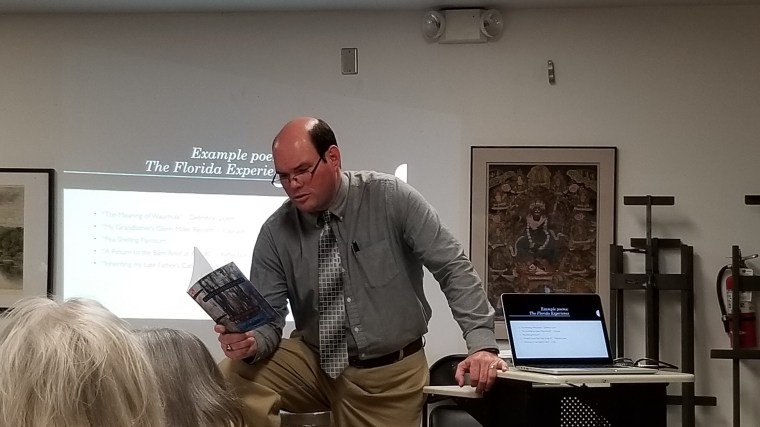
For about six months or so now, I’ve been volunteering for a local arts organization. I’ve provided workshops, seminars, and even the occasional reading. Here’s what I’ve learned: The most rewarding part of being a poet is passing on the joy of writing to others.
Sure, that sounds trite, but it’s true. And it’s not that I hadn’t grasped this notion previously. I mean, I’m a teacher after all. But here’s the thing — teaching adults who truly want to learn the craft is a world apart from teaching English courses for a paycheck.
I get to have a good time discussing poetry and how to make it, and newbies find out a few tricks and techniques that perhaps they hadn’t considered. My favorite is the generative workshop, where we use various prompts to craft the beginnings of new work. That silent hum of concentrated creativity fills the room, and you can tell that vivid things are happening in everyone’s mental theater. It’s almost (cliche warning) magical.
And while I love my day job and all it provides, for sheer joy of teaching, it’s hard to beat the volunteer space. No grades, no homework, just genuine fun with words. I’ve also noticed that giving back a little something to the craft that has meant so much to me restores my passion for the written word. Watching people grasp the potential of poems reminds me why I do this work, and believe me, it is work. But it’s a labor of love, certainly.
 FLteacherpoet555





 A statue of Robert Frost, one poet whose legacy I admire.


 For about six months or so now, I’ve been volunteering for a local arts organization. I’ve provided workshops, seminars, and even the occasional reading. Here’s what I’ve learned: The most rewarding part of being a poet is passing on the joy of writing to others.
 John Davis Jr. -- Author