life, poetry, publishing, teaching, writing

An Empathetic Farewell to Unpopular 2016

last-day-imageSo many of my friends have been cheering on the parting of 2016, thankful that it is about to fade into oblivion. As these last few hours tick by, I can’t believe I’m actually feeling sorry for a year in history. But 2016 has elicited that response from me, strangely enough. I feel that 2016 has been like that unpopular kid in class that everybody liked to pick on: easy prey because of difference. I, for one, kind of enjoyed 2016 — not necessarily for political or cultural reasons, but for its more personal milestones:

My fourth book (and by far my best to date), Hard Inheritance, received publication on December 5, and I have been honored by its critical reception. It was good to see a new book of poetry out there, and as 2017 waits just a few hours away, I fully anticipate that it will be a great year for my latest collection.

I received an incredible new full-time position teaching English and Literature at the university level, a long-time goal of mine. The job itself is both rewarding and intellectually stimulating, and I’m the happiest (professionally) I’ve been in a long time. My students make teaching a joy and privilege. That’s a sentiment I thought I’d lost, and now it’s back, thanks to the events of 2016.

Both of my sons have done well in different areas this year. My oldest son discovered a love for basketball, while my younger son has continued to develop himself academically and artistically in the new Montessori school both boys attend. My wife has continued to enjoy her work in the medical field, and my family life has been good, to say the least. My fortieth birthday meant a big trip to Lisbon for all of us, a time that none of us will soon forget for its meaningful experiences.

Maybe your candidate didn’t get elected. Maybe your favorite celebrity died. Maybe unnatural disasters befell your part of the world. But from my little corner of the planet, 2016 was more than okay. It was memorable, it was unique, and it was unpredictable. All three of these traits, while they can be negative, also give us things of beauty. And despite its occasional difficulty and ugliness, 2016 also had plenty of the positive. All we have to do is look for it.

life, poetry, publishing, Uncategorized, writing

How 5 became my life’s official number

handfiveAllow me to begin by saying I’m no numerologist. I do believe, however, that one day, we will all understand why the numbers in our lives intermingle and coordinate the way they do. I also believe that this overlap of figures is more than just mathematical. There is a purpose to the numbers, and it’s not just coincidental.
Here’s a good example: I was born on July 5. As a kid, I lived on Fifth Street. My stepdad was born March 5. My oldest son was born January 5. My best friend growing up had a birthday 25 days later than mine. Many of my other family members have birthdays, anniversaries, and other important dates that are influenced by the number five — maybe they’re multiples or maybe the dates add up to something five-related. Perhaps that last bit is stretching the significance a little, but you get the picture.

So I suppose it shouldn’t have surprised me when, the other day, my publisher emailed to tell me that my latest book, Hard Inheritance, had been published on the date of my grandfather’s death 12 years prior — December 5th.

To really grasp the importance of this chronological lineup, you have to know the kind of influence my grandfather had in my life. As a young child, I grew up on his citrus farm in Hardee County, a very rural community in southern central Florida. My grandfather loved me more deeply than almost any other person in my life, save my mother. He invested his time, his resources, and his wisdom in preparing me to become a hard working, honest, and thinking man.

He had flown 51 missions in World War II, and his American devotion carried well beyond his military service. He served his church as a deacon (a model I would later follow myself). He faithfully worked for the Coca-Cola Foods Division as a groves manager for decades before retiring to volunteer with my scout troop. I became an Eagle Scout because he taught me the value of persistence and perseverance; seeing a thing through to its successful end.

It only made sense to me when Hard Inheritance came out on the fifth. Of course it would, I thought, following the five-laden trail of bread crumbs throughout my life. It’s both fitting and bittersweet that this book, my best and most earnest to date, would become available to the public on a day with such meaning.

My hope now is that this volume would please him, were he still here. It celebrates the beautiful and the natural, but it also shows the events in life that leave our scars and calluses, both of which he was intensely familiar with. It celebrates Our Florida — that place that he, six generations of our ancestors, and now my children call home.

I think he’d like the history, the honesty, and the geography of this book. He’d probably laugh at the pieces he’s featured in, having forgotten an episode that seemed relatively unimportant to him, but one in which I find deeper relevance. He, too, was a “five” man, after all — born in the month of May, living to the age of 83 (subtract the two digits), and being great-grandfather to five children (3 girls by my sister, 2 boys that are mine).

Being connected to one particular number in such a vital way can sometimes be a Hard Inheritance  of its own. Rarely a day goes by when some important connection to the number 5 doesn’t crop up in my day-to-day life. Were I one to play the lottery, I sometimes think I’d buy one of those “Pick 5” tickets and just play all fives to see what happens. My statistician friends would discourage this, of course, knowing the wild improbability of winning from such a choice.

But if it’s one thing that my life has taught me, it’s that all the cold, sterile math in the world can’t explain the way that numbers work. There is no algebra, no geometry, no trigonometry or physics formula to rationalize how the figures align. And in that same logically inexplicable space, poetry lives.

Tomorrow will mark five days since my book was published. I will celebrate by watching my oldest son, number 35 on his basketball team, play his final game of the season. I will think of how proud my grandfather would be — both of my writing and my boys’ achievements. I will hope for more fives in the future. And I know that I will surely receive them.


life, poetry, publishing, Uncategorized, writers, writing

The Big Announcement

After years of writing and months of preparation, Hard Inheritance is now available! Just in time for the holiday season, this new volume contains works first published by such literary powerhouses as Nashville Review and similar respected journals.

Perhaps more importantly, though, it is a testament to life lived in rural Florida. Following in the footsteps of its older brother, Middle Class American Proverb, Hard Inheritance offers readers a glimpse into the trials, joys, and landmark events of time spent in places that barely get their own map-dot. Moreover, it presents a portrait of such places’ people — the hard, the charitable, the native.

Notable southern poet Andrew Hudgins says this about Hard Inheritance:

“The poems in Hard Inheritance are set firmly in the poet’s ‘ancestral terrain’ of small-town Florida. The landscape is lovingly but unsentimentally brought to the page, and it is peopled by the poet’s family, friends, and fellow parishioners. … These truly are ‘songs sculpted by home’s hard structures.'”

And award-winning poet Sandra Beasley adds:

“What is architecture, without its inhabitants? ‘In our heart pine handmade farm house, / my grandparents were window weights: // cast iron bars tethered in country wood, / plumb and place-holding pendulums.’ What is a field, without the hands that tend it? In HARD INHERITANCE, John Davis, Jr. recognizes the potent ecosystems of everyday life, as in “What the Grove Knows”: “Stirred soil lifts its secrets to the sky. / Revealed and overturned crickets / invite snowy egrets who eat them.” Readers will enjoy taking a joy ride on an untethered dock, hunting down poisonous white frogs, harvesting worms before a father and son’s angling expedition, and hand-nestling one newspaper section into another before the morning’s delivery. Yet these poems resist mere nostalgia; the author’s voice is attentive, conversational, and wise to how class shapes the landscape at hand. Given graceful and balanced stanzas, consonance of word choice, and the unexpected glimmer of a pantoum, I admire both Davis’s rigors of craft and vitality of spirit.”

I’m incredibly excited by this new release, and I hope you’ll pick up a copy to fill a stocking or to surprise that word-lover on your list. Get one for yourself, while you’re at it. Here’s wishing everyone the warmest of holiday seasons! Happy Reading!

BUY HARD INHERITANCE HERE: Link to purchase the book


poetry, publishing, Uncategorized, writing

Cover Revealed!

hardinheritance

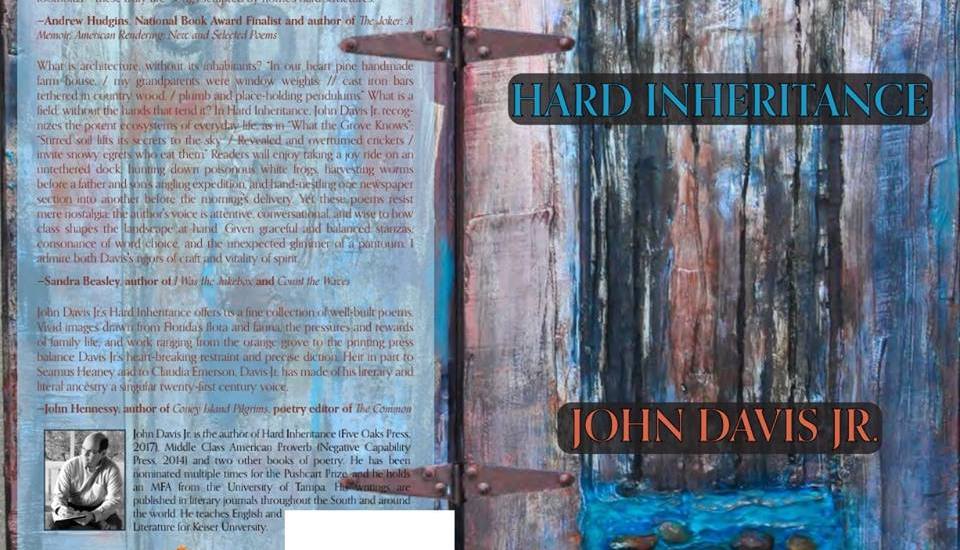
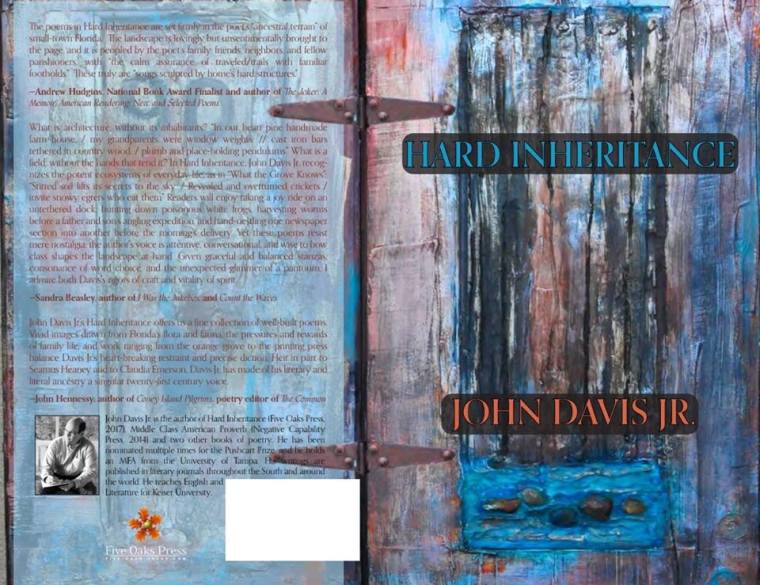
Thanksgiving is always a great time for my family, but today was made even greater by some unexpected news: The cover for my latest collection is now completed! The wonderful people at Five Oaks Press emailed me to let me know that the cover, complete with art from the inimitable Tinia Polk Clark, was ready. So here it is for your enjoyment. If you think this cover is great, however, just wait until you read the book!

My greatest pleasure is that my book was honored by blurbs from the likes of Andrew Hudgins, Sandra Beasley, and John Hennessy — all highly esteemed voices in the literary community. Their vote of confidence means a great deal to me, and I’m hopeful that their words, seen here on the back (left) cover, might give you, reader, some idea about the book itself.

Soon it will be time for book launch arrangements, readings, signings, and the like. Stay tuned here for all the details. In the meantime, Happy Thanksgiving, and thanks for following!

poetry, publishing, Uncategorized, writing

Big News for Followers!

My new book, Hard Inheritance, was just submitted to the publisher! I’m pleased to announce that this latest collection, 60 poems strong, will be available in 2017. Launches are being scheduled, and news of times and places will come soon. Also, I’ll be posting sales links and sites in the future for those who like to patronize both electronic and brick-and-mortar vendors.

For now, please take a look at my publisher’s other wares to get an idea the company my book will be among: http://www.five-oaks-press.com/our-titles/

I’m especially pleased to share Five Oaks Press publication with the likes of Julie Hensley (another Disquiet International Literary Program alum), and the inimitable Peter Murphy. I am also pleased to announce that this latest collection has blurbs from some of the best-known and most respected voices in poetry today. See below for a free preview:

The poems in Hard Inheritance are set firmly in the poet’s “ancestral terrain” of small-town Florida.  The landscape is lovingly but unsentimentally brought to the page, and it is peopled by the poet’s family, friends, neighbors, and fellow parishioners, with “the calm assurance of traveled/trails with familiar footholds.”  These truly are “songs sculpted by home’s hard structures.” 

~Andrew Hudgins, National Book Award Finalist and author of The Joker: A Memoir, American Rendering: New and Selected Poems and other critically acclaimed works


What is architecture, without its inhabitants? “In our heart pine handmade farm house, / my grandparents were window weights: // cast iron bars tethered in country wood, / plumb and place-holding pendulums.” What is a field, without the hands that tend it? In Hard Inheritance, John Davis Jr. recognizes the potent ecosystems of everyday life, as in “What the Grove Knows”: “Stirred soil lifts its secrets to the sky. / Revealed and overturned crickets / invite snowy egrets who eat them.” Readers will enjoy taking a joy ride on an untethered dock, hunting down poisonous white frogs, harvesting worms before a father and son’s angling expedition, and hand-nestling one newspaper section into another before the morning’s delivery. Yet these poems resist mere nostalgia; the author’s voice is attentive, conversational, and wise to how class shapes the landscape at hand. Given graceful and balanced stanzas, consonance of word choice, and the unexpected glimmer of a pantoum, I admire both Davis’s rigors of craft and vitality of spirit. 

~Sandra Beasley, author of I Was the Jukebox and Count the Waves


John Davis Jr.’s Hard Inheritance offers us a fine collection of well-built poems. Vivid images drawn from Florida’s flora and fauna, the pressures and rewards of family life, and work ranging from the orange grove to the printing press balance Davis Jr.’s heart-breaking restraint and precise diction. Heir in part to Seamus Heaney and to Claudia Emerson, Davis Jr. has made of his literary and literal ancestry a singular twenty-first century voice.

~John Hennessy, author of Coney Island Pilgrims, poetry editor of The Common

I’m eager to post a cover image here, so keep your eye peeled! Thank you all for your support of my continued work. Your readership makes it all possible!


life, teaching, Uncategorized, writers, writing

A plea for my students

If you read these posts regularly, you know I’m not in the habit of asking for things. I believe that people read what I write because they want to receive something, not necessarily give something. But today I approach all of my site followers with a simple request.

This year, my creative writing students will be writing and making (binding) their own novellas. For that to happen, we need a bunch of supplies. In fact, more supplies than my little department budget will allow me to afford. To address this issue, I’ve started a DonorsChoose page that allows my friends, family, followers, and others to donate to this cause.

I’d deeply appreciate any donations you can offer. They don’t have to be big. In fact, if each follower of this blog gave $1, I’d reach my goal by day’s end. If you are fortunate enough to be able to give more, please do so. My student writers are incredibly gifted, and they deserve this opportunity.

Summer School
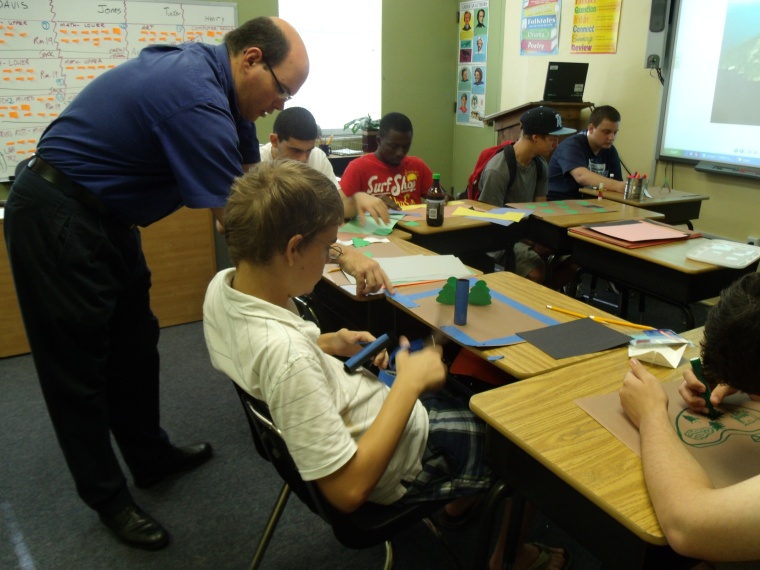
A group of my students complete a literacy project connected to short stories we’d read.

To help out these budding Hemingways, Dickinsons, and Shakespeares, please follow this link:

https://www.donorschoose.org/project/novella-notebooks/2080290/?rf=link-siteshare-2016-07-teacher-teacher_3033778&challengeid=20799041

My students thank you, I thank you, and literature’s future thanks you. Let’s make something special happen for these kids!

life, poetry, publishing, Uncategorized, writing

Coming Soon: Lisbon!

Flag_of_Lisbon Stay tuned here, readers. Beginning July 1, I’ll be attending the Disquiet International Literary Program in Lisbon, Portugal. I will be in workshops with Poets Prize winner Erica Dawson, and learning in seminars led by none other than Denis Johnson (author of Jesus’ Son) and Terri Witek, among others. Updates will follow. In the meantime, Bom viagem!

life, poetry, Uncategorized, writers, writing

More than Organisms

vitruvian-300-333Recently, I attended a lecture by a respected writer who posited that we should write about the obscene, the vulgar, the disgusting, and the revolting. He said that his logic for this encouragement depended not upon shock value, but rather, upon the notion that all such things were true. Specifically, he called writers in the seminar to write about their bodily functions, sexual encounters, hidden diseases, and sources of physical shame. This, he said, would lead to writing that was absolute truth, and would liberate writers from their self-consciousness. Likewise, such writing would reach an audience that has apparently been searching for such literature — in his mind, there exists a group of people who want to know that others do, in fact, excrete waste, cavort recklessly, and wrestle with modern-day plagues (and desire to read about it). Perhaps so.
My response to the notion that we should write ugliness, though, is this: We are more than organisms, and because we are, we should elevate ourselves and our art above the crass. This statement is not intended as condescension or old-school literary snobbishness, but, somewhat ironically, as a statement of truth. Stay with me here:

As the leaders of all other species, and as cognitive, reflective, intellectually astute creatures, we should use our creative and mental faculties in the most supreme way possible. Keats was not wrong when he equated truth with beauty, even though his definition may have been an oversimplification. Yes, there is more to truth than just beauty, but as highly developed beings, we should seek the best and finest truths rather than those which debase or denigrate. St. Augustine, Martin Luther, and countless others (including the Romantics) have reached this conclusion well before our time.

To write about subjects primitive, desperate, and scatological can sometimes be a fun and bawdy diversion, but devoting oneself to these lesser ideas renders literature into the equivalent of monkey-flung feces, to borrow an image from the aforementioned speaker. Some will call this assertion elitism, and maybe it is. But if we are to leave a legacy of thought, shouldn’t we aspire to greatness rather than the sewer? Shouldn’t we leave behind something more than our literal behind?

All this theoretical explication probably won’t change the downward spiral of gutter-dwelling “literature” that is being written. I get that. But if one person lifts clearer eyes to consider things less coarse, less brutal, and less detestable, then this small epistle hasn’t been in vain. As writers, we don’t have to be Pollyanna, falsely portraying a world that is all sunshine and daisies; in fact, we have an obligation not to. But likewise, we don’t have to decrease our own personal and cultural worth by slinging words that glorify the gross and reprehensible. We are more than organisms.We are wonderfully made, and that wonder should shine in all we write.

life, poetry, Uncategorized, writers, writing

Seeking the China Tree

cypress

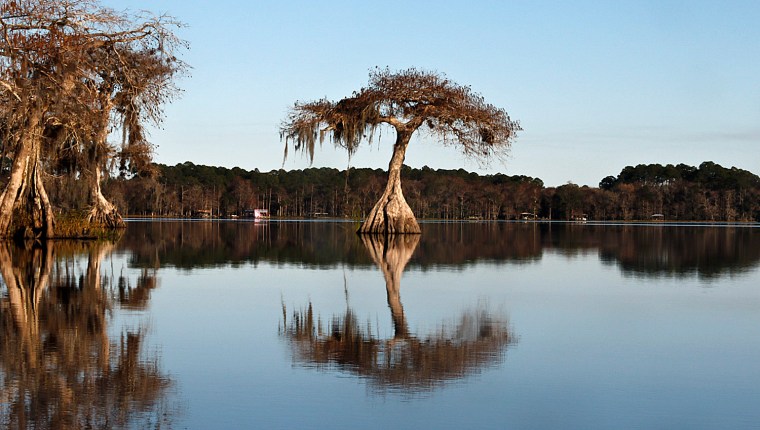
Only by climbing to the top of my grandparents’ magnolia could I see it: Far off in the west, craning above a humdrum horizon of pines and oaks, there was what I called “The China Tree.” In retrospect, it was probably just an oddly-shaped cypress, but its shadow pressed against sunsets made me think of Oriental landscapes and scenes from books and paintings I’d encountered as a boy.

While still a child, I vowed to seek the tree one day — I’d strike out on a hike to find its magnificent shape beyond the neighbors’ fields, and rest only once I’d stood at its proud, ancient trunk. The tree was a conquest-in-waiting, a thing of distinct beauty and history beckoning above and well beyond all that was common. And I told myself I would be its discoverer.

From my favorite thinking spot, the barn roof, I couldn’t see the tree’s paisley canopy; there were too many power lines and old chimneys blocking the view. But from the barn’s apex, I could ask myself: How will you know when you’ve found it? My answer as an adolescent was full of hubris — I’ll just know. Something that big, something that rare can’t be easily mistaken.

When I last returned to my grandparents’ farm, my boys and I climbed the old magnolia again, and I noticed that the China Tree was gone. Taken by hurricanes or hungry chainsaws sometime during my adult absence, its silhouette no longer marked the horizon. It saddened me, as I never pursued that quest I’d promised myself, and moreover, my sons would never know that landmark.

Maybe, though, in a more figurative way, I’ve been on the China Tree journey my whole life: I wanted to seek it for its beauty, its history, and its difference from everything around it. Is that not what the life of a poet is?

As one who has chosen the unconventional path toward a goal that many don’t understand, I believe that even today, I am seeking the China Tree. Yes, now it is more symbolic than literal, and maybe it’s a little harder to see — after all, the pines and oaks of grown-up obligations tower thick and high, and some days, it’s tough to discern my target.

Yet the ultimate objective remains the same: Find beauty, find history, find originality. With these missions in mind, I renew myself to the path ahead of me. The China Tree has not yet been fully discovered, and I will stop only once I can rest at its majestic foot. Time to press onward.

life, poetry, publishing, teaching, Uncategorized

On starting small

Earlier this year, brilliant mathematician and Nobel Prize winner John Nash and his wife Alicia were killed in a car wreck. Nash’s work and life were the subject of the film A Beautiful Mind, directed by Ron Howard in the early 2000s. Like many moviegoers, I too was touched and inspired by Nash’s biography (even if it was “adapted” for film). His humble West Virginia origins, his battle with personal demons, and his eventual rise to academic and economic prominence spoke to audiences everywhere.

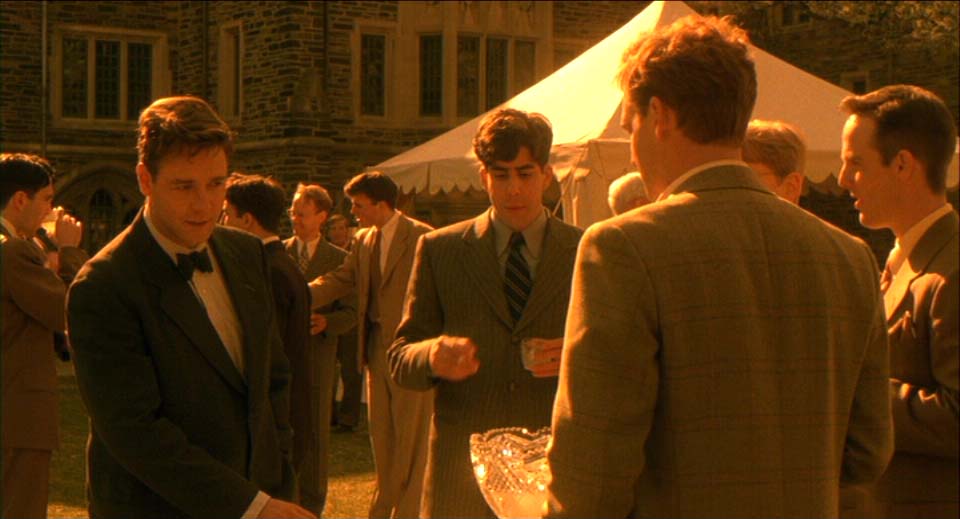
A Beautiful Mind scene, courtesy of Universal Pictures
Martin Hansen, played by Josh Lucas in the foreground, engages in some party snobbery toward John Nash (Russell Crowe), at left.

Recently, one scene from Howard’s movie replayed in my head as I encountered a situation similar to one faced by Nash early on in the film: Upon his arrival at Princeton after receiving a substantial scholarship, Nash is confronted by Martin Hansen during a reception. Hansen indicates that he “simply assumed [Nash was] the waiter,” due to his appearance. This barbed condescension is a hallmark of the early Nash-Hansen competitive relationship as portrayed in the film.

People from small towns or rural upbringings often face this kind of slight, even today. I grew up in a town of 3,500 people. Everyone knew everyone else, and the main vocation was agriculture. So, when I eventually moved to a city of 35,000 people (and growing), I felt as though I’d made my home in a more metropolitan area. Even though the culture here is still one of welcoming and warmth (see prior posts), my city has many markers of being a larger, slightly more urban place than many of Florida’s smaller map dots.

While I was serving as a guest lecturer at an area university some months ago, a student I met had the audacity to insinuate that small to mid-sized cities are undeserving of artists in residence or poets laureate. His contention was that only large cities and crowded urban areas should pay attention to literary and arts-related matters, because, after all, creative gifts can only thrive in such a vast and populous setting. There was more “talent” to choose from, he indicated, and more educated people inhabiting the big cities.

So, let me set the record straight, if only to repudiate this student’s erroneous assumptions. Many highly educated and erudite individuals choose to be country-dwellers, suburbanites, and big city expatriates (I’d supply a list, but it would be far too long). Their decision is made not because they desire to be “bigger fish in smaller ponds,” but because they desire a truer sense of community, a safe and clean place to raise a family, or maybe because they hold dear the virtues that modestly populated areas often embrace. In the end, there are several reasons to eschew the hustle and bustle of the sky-scraped city, especially if one is an artist. Certainly, there are benefits to larger metropolises, just as there are drawbacks. And yes, arts and culture do thrive there in most cases.

However, assuming ignorance or lack of refinement exists solely in smaller towns or mid-sized cities is the height of arrogant urban imperialism. I believe that Annie Dillard, Mark Twain, and John Nash would agree, for starters. And for me, smaller places yield bigger ideas. It is not by accident that Richard Hugo encouraged poets to seek out “triggering towns” that seemed to be more tight-knit communities.

I’m not attempting to prescribe small-town living to those accustomed to bigger cities, nor am I advocating one particular mode of residency. But I do know that, for my creative purposes, small and medium places work. Those who denigrate them, somewhat ironically, need only a broader mind.