Uncategorized

Christmas Epiphanies

ImageEarlier this year, I ran a series of posts regarding the subject of epiphanies and how those revelations visit upon us as writers and artists. For a complement to that series, here is my last post for 2013:

Christmas at our house is a time of family togetherness. Therefore, it is also a time of remembrance. Yes, we observe all the religious aspects of the holiday — we have our nativity scene out, we read Luke 2, and our gifts to one another are given in recognition of that Greatest Gift of All — Jesus Christ.

Aside from the religious meanings of this season for us, however, Christmas is secondarily a time when we recall family celebrations from years past. When I was very small, we spent Christmas Eve at my Aunt Doty’s house. Her “secret-recipe” chicken and dumplings were the festive highlight of the bountiful food table, and her modest living room was filled with cousins, aunts, uncles, friends, and visitors.

Today, my mother carries on that legacy of Christmas Eve at her own home. The scene is similar, and mom has even managed to figure out the hush-hush chicken and dumplings recipe. As a poet, I am grateful to have grown up in an environment where traditions, gatherings, and shared time played such a major pivotal role. Reflections on our family’s celebrations often drive my work, even if the pieces aren’t completely autobiographical.

As artists, when we think back on holidays past, be they Christmas or others, we find ourselves in the environments that have meant (and still mean) the most to us. As you go about your end-of-year errands, showing up at office parties and well-wishing others, take some time to think back on those past seasons of life. Reflection is still a prime epiphany-generator, and this time of year often provokes remembrance in the strongest ways possible. Merry Christmas, readers, and a very Happy New Year.

poetry, Uncategorized

Niche and Identity

Sometimes routine is more foe than friend
Can one’s writing niche become a rut?

Much has been written about the importance of finding one’s place, both in the universal sense and within one’s chosen profession. Modern poets strive for years to find their voice, their style, and their unique contribution to literature. In essence, they strive to find their niche.

No matter how you pronounce it (neesh for some, nitch for others), one’s niche is an important component to the writing life. Knowing it can mean the difference between publication and rejection. Our niche, to some extent, is how we brand ourselves as writers. A quick look at the title of this site will show you how I feel my work is defined — “Florida poetry.” Granted, that doesn’t mean my work is all beach sunsets and Disney characters (those aren’t the REAL Florida anyway), but enough of my work has its roots in Floridian soil to justify the label, I believe. I am indeed a Florida Poet.

But what happens when that niche becomes a rut? When the title we choose to wear is either outgrown or outmoded, it’s time to reconsider. A wise writing mentor once told me, “We are constantly redefining ourselves.” He was right then, and it still holds true. When our chosen position in life or literature no longer suits our situation, then change, in one form or another, must occur. Even now, as my travels increase and my style matures, I feel that the “Florida Poet” label is being stretched to its limits. The niche has lived its life, and perhaps I may retire that verbiage altogether. Like actors who fear typecasting, writers too can “portray themselves into a box.” If one is known by strictly one state or one style, then it’s time to diversify. Showing off the full range of “chops” that one possesses can also breathe fresh air into previously stale subject matter.

Oh sure, I’ll always be a Florida poet at heart — this land, where my family has spent seven generations, has been too good to even consider abandoning my roots, my heritage, or my Cracker drawl. But as my poems grow and as my tastes broaden, perhaps I may dig the niche a little broader. Florida for many is a destination. For me, it is the port from which to set sail — not a rut, but a route. May my work always do it justice, and may I always fit my niche, no matter its wording, to the fullest.


poetry, Uncategorized

Going Organic — A Floridian Perspective

grove0001
A view of our grove from the top of our barn, January 1996. As a younger poet, I spent a great deal of time “pondering” from the old barn roof. This vista was my first real point of inspiration.

My family runs a citrus farm in south central Florida. My grandfather, who died in late 2004, began it well before my mother was born.

It isn’t a very big grove; only about 20 acres. We grow pineapple variety oranges, which are considered by the industry a “juice orange.” You won’t find our fruit in commercials for OJ, because they aren’t “table fruit,” meaning they aren’t the kind of oranges one puts in a bowl to make a centerpiece.

Now in Florida, we have another blow dealt to our crop: Citrus Greening. This disease causes the fruit to wither into hard little knots, and it causes trees to diminish in foliage and abundance. As bad as citrus canker was in the 1980s and before, greening now threatens family farms like ours even more. This disease, caused by a foreign phyllid, has brought Florida Citrus to its knees. As legislators and agricultural experts figure out what to do next, Florida orange groves are dying away, acre by acre. Ours is no different, unfortunately. Government officials have worked hard to get funding to eradicate greening, but it may not happen fast enough. No more 100 percent Florida orange juice is a very close and real possibility. Greening could mean the end of not only a product, but also a long line of family traditions, as well. Current farmers looking to pass on the family business may soon be without a family business at all.

I explain all this to raise another point, however: In the midst of the great greening crisis our state is undergoing, many farmers, including my family, are examining organic farming practices with greater intensity. No-till farming and other ideas are being investigated for their potential benefit, and 21st Century agriculturists are learning that the chemicals we relied upon for decades are doing more harm than good, especially in dealing with greening.

Poetry, much like citrus farming, equally demands a more organic approach as we enter a new era in literature. No longer can the writer be satisfied with language that sounds self-important and inflated; the words must flow, and there must be balance among the elements, just as sustainable agriculture requires the right balance of water, sunlight, and food. Too much alliteration or metaphor, and the verses will perish. Too little editing or revising, and the end product will be as hard and withered as a greening-affected orange.

It seems a little selfish to focus on writing artfully amid such a dangerous situation for family farms. But maybe, just maybe, some of the same practices that poets and artists employ on paper can be used by our scientific community to save our citrus — sometimes, the new, radical, and unconventional solution is exactly what a piece of writing needs. And perhaps that’s what our oranges need as well.

If you’d like to get involved in the fight against greening, please write your congressional representatives, and search online for ways that you may be able to help. Keep American Agriculture strong! Thank you for listening, and thank you for reading.

poetry, Uncategorized

Trash those dreadful drafts?

trashdraftsRecently I tweeted about throwing away my rough drafts, and how posterity might frown on such a practice. The more thought I gave the subject, the more I concluded that tossing those old scribbled up legal pad pages isn’t such a bad idea.

However, I have writer friends who save every scrap that they’ve ever scrawled upon. “You never know when you might need to look back at your prior thought processes,” they defend, and while I see the point, I can’t help favoring efficiency and space over reflection. I wasn’t always this way. There was a time when I believed that everything had to be preserved “just in case.” I was well on my way to being the subject of a “Hoarders” episode.

These days, I’m a bit more pragmatic in my approach. Everything will eventually be dust anyway, so why not give myself some mental room and clarity? I’m not a fully devoted practitioner of feng shui, but I do see the merit in having “flow” in my surroundings. A bunch of old chicken-scratched drafts won’t help my process anymore than having a mulch pile in the middle of my writing room. Both are about equal in function.

Lest the reader think I’m a minimalist, allow me to clarify: If something adds beauty or merit, then it should stay. This is true in poetry as in life — lots of professors believe that adjectives and adverbs are tools of Satan, and in some cases, they are. They add fluff and window-dressing, often where none is needed. However, just as the writing room demands certain little accoutrements to make it home, so too does the poem. An occasional descriptive won’t kill the bigger message or theme, no matter what Dr. Killdarlings says.

The issue of tossing out drafts and prewriting is personal to every writer. Those of us with visions of Ken Burns documentaries based on our lives may hold on to those ugly reminders in the hopes that our penmanship, like that of Sandburg or Frost, will be looked upon as history. But for this writer, I’d rather people remember the final version. Time to go take out the trash.

poetry, Uncategorized

The little chapbook that could

combboundThe very first collection of poems I ever published were put into a plastic comb-bound chapbook entitled Satin Grit: Poetry for the Average Joe. I know, I know — a truly horrible title, and unfortunately, the poetry inside this little 25-page first effort wasn’t much better. Forced rhymes, trite metaphors, tired cliches, and “borrowed” clip art from Windows 95 made that initial attempt truly laughable in retrospect.

But that first little gathering of bad poems, which I sold for $5 apiece from a folding table at a small central Florida authors’ get-together, gave me some elementary experience in the business of publishing. I understood what it meant to assemble a collection, choosing just the right piece for just the right page. I gained some sense of the work that goes into the physical process of making a book, no matter how small.

At the end of the event, I still had a box full of my homemade chapbooks, but a few kind patrons actually ponied up their hard-earned money for inexperienced and unrefined verses of a twenty-something dabbler. I had an “author’s profile” in the local newspaper, and a few other perks came my way as a result of those terrible, dot matrix-printed chapbooks. These rewards were enough, however, to keep me going. In 2005, I would publish an entire collection of Florida poetry, and in 2012, I would enroll in the University of Tampa’s MFA in Creative Writing program to further hone my skills. That sorry, self-made chapbook served as a gateway to further pursuits, despite its questionable quality.

So today, when I received word from Kelsay Books that they’d like to publish my newest chapbook, a 30-page volume dedicated to the issues of fatherhood and mentorship, I felt a few rogue memories returning. Would these little texts be no better than Satin Grit? My poetry has come a long way since those folding-table days, but would people treat this new work seriously, or see it as simply another “ploy” by a struggling poet? A friend of mine who also published through Kelsay assured me that their products were professional and artful, and that I would be pleased with the end result, for certain. And of course, no plastic comb binding. Whew. I scribbled my signature and date onto the contract, sent it back off to the publisher, and now, the waiting game begins.

The Boys of Men will be available in September 2014, according to my publisher. It will be sold through Amazon and other venues, and I will receive five author’s copies as a starting point. And even though poetry chapbooks aren’t the hottest selling commodities, the royalties I will receive on sales aren’t bad, either. I intend to have a book launch and a few other events (more details will follow). The faith I have in my work is greater than when I began peddling my word-wares more than a decade ago. I now see the chapbook as an honorable literary endeavor rather than a cheap avenue to push my name under people’s noses. I also admire the history of the chapbook: its humble beginnings as reading material for the less-than-royal draw me to it just as much as its modern, wildly artistic iterations. My writing, many rejection letters and maturing experiences later, is finally worthy to be bound into a quality chapbook. I am honored by this new proposition, and equally honored to partner with Kelsay Books.

I’ve become many things since those Satin Grit days — a husband, a father, an educator, and yes, a REAL poet. As I finish out my final months of the MFA program and I await the publication of The Boys of Men, memories of badly bound manuscripts and the head-shaking pity of small-town strangers may continue to haunt me. But at least now I know that, when the time arrives to launch my latest work into the world, this time it will soar on its own wings.

poetry, Uncategorized

Hold the Malaise, Please

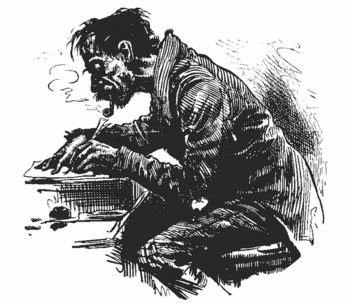
writer-smoking-pipeLots of writers I know thrive on sadness, depression, and lesser forms of melancholy like ennui. General unhappiness allows their writing to thrive, as they delve into the depths of their perceived misfortune to generate poems and stories dripping with tragedy and loss. For them, writing is catharsis, and by inking out their woe, they regulate their emotions. Some even manage to publish their diatribes of disaster, and this recognition provides them with enough dopamine to jump successfully to the next pseudo-crisis.

I’ve never been one of those people, and frankly, I can’t imagine living that way. Sure, I’ve had some down times here and there, but writing about them only seems to provide a “mood puddle” in which to wallow. I feel much better when I devote myself instead to writing on subjects unrelated to personal tribulation. Rather than catharsis, writing is occasionally my escape. More often, it is the purposeful pursuit of inspiration. Occasionally, those inspirations are sad, but I’m no Edgar Allan Poe.

Also, I’ve found that if I’m feeling blue, it’s probably a symptom of some illness beginning. Malaise, that low emotional wave preceding a sick spell, has never been my friend, and it certainly doesn’t generate good writing. I need a relaxed-yet-lively mind and a keen awareness to produce my best work, and being down inhibits both of those.

Maybe you, reader, take to the page to overcome spells of sadness. If so, may that form of therapy be your balm. I, for one, intend to remain a writer of clear-headedness and contentment. While my work may occasionally fall into the wells of woe, my hope is that those spells are mere diversions rather than the usual route. Write on!

poetry, Uncategorized

Things of Lasting Value

notebook2redMy grandfather’s oldest brother was quite the fastidious businessman in his day. I inherited his desk, books, and office supplies, and I’ve found there’s so much to discover about people from the objects that filled their lives.

For example, my great-uncle was a Master Mason and a Shriner, an avid hunter, gardener and golfer, and he was a careful record-keeper. He believed in refilling complimentary ballpoint pens rather than simply tossing them out, keeping matchbooks from places he visited, and holding on to extra nails, screws, hooks, and tacks “just in case.”

When he purchased something, he made sure it was going to last. This new old desk I have received is a testament to his insistence upon quality. A dark, heavy hardwood, its fixtures are real brass. Most of them are still shiny, despite decades of use. He topped the desk with a larger piece of lacquered wood, and he attached felt pads to the topper’s underside to assure that the original desk would remain unscratched.

The lamp that accompanies the desk was made sometime, I would venture to say, in the 1960s. It is a heavy brown metal drafting lamp with fluorescent bulbs, and it can be pivoted and adjusted for different perspectives on projects. Turning the lamp on is like taking a trip back in time, as the satisfying click of the red “on” button bespeaks another era — one that was marked by products made for near-permanence.

Even the electric pencil sharpener that came with these items is remarkable. I know the brand — it is one that has frequented my classroom for many years. The difference is, this one was made nearly 50 years ago, and its motor has yet to burn out. Yes, the unit is heavier and bulkier than today’s model, but the machinery that comprises it has yet to fail. I go through electric pencil sharpeners in my classroom at an alarming rate. I’m lucky if a modern sharpener made by this same company lasts a full school year. And yet, here is this dinosaur, still grinding down wood and graphite with precision and speed. Granted, this model hasn’t undergone the abuses and rigors of a secondary classroom, but nonetheless, its continued functionality is commendable.

I bring up these examples not as a maudlin longing for simpler times, but instead, to launch into another point: what we produce as writers can be quick and slick like dollar-a-pack stick pens, or we can endeavor to create something a bit more like the aforementioned desk, lamp, and pencil sharpener — something that endures. One of my goals as a poet has always been to create work that will be read in classrooms and checked out from libraries 100 years from now. Some would say that such an ambition is unrealistic and naive. I prefer to think that considering legacy when writing is much like investing in quality items of a more tangible nature. It ensures that when the people we care about look back over our lives, they can safely say we, too, insisted on quality.

Among the books I’ve received from this great uncle are several Bibles and dictionaries. All of them have been used with frequency, but also with a sort of care that shows reverence and admiration. My hope is, in using and appreciating these everyday items, I might somehow pass on that great tradition of surrounding oneself with matter that matters. May our writing be done in such a way that, when others hold it like a leather-bound inheritance, they treasure it equally every time.


poetry, Uncategorized

Little Rituals

20130919-224853.jpg

Admittedly, I used the title phrase recently in a poem about a couple who wanted to build a new house. This set me thinking, however, about some of those small things I do to “signal” to myself that I am officially writing. I use a hot beverage, a particular location, and a few technological idiosyncrasies to get my brain in “writing mode.” This post explains those weird little habits that tell my brain it’s time to go poet.

If I’m writing during daylight hours, I usually have a cup of coffee in the mug pictured above. It’s thick ceramic, and there’s no telling how many years I’ve had it, but it serves as one of my neurological cues for writing. If it’s night, then maybe I’ll opt for decaf or some kind of tea, but I must have access to some hot drink in the mug you see here.

Secondly, I write in my “quiet room.” I think I have enough posts on that little subject, however. I have one desk for drafts, which I write by hand, and another desk for computer writing; that is, final drafts that make their way into my little PC. My computer, though, has given me a number of quirks that I never would have considered without technology: I begin by setting my margin at the 2 inch mark, for example. If the poem later deserves different formatting, then that can happen. But for the initial go-round, 2 inches is the magic setting for effective starts. I also insist on 12 point Times New Roman font. Yes, it’s old school, but it’s also clean and widely demanded by editors at respected journals.

All these little rituals verify to my mind that my unique brand of creating is happening. I enjoy the regularity and routine of these seemingly insignificant customs; if I changed them, I’d probably miss them, honestly. We never know how much our writing depends upon a couple of inches and a warm mug. And as the old country expression goes, “If it ain’t broke, don’t fix it.”

Until next time, loyal readers, enjoy your odd and inexplicable habits. They might be more important than you know.

poetry, Uncategorized

Keeping the Writing Window Clean

Every writer needs an inspirational view.

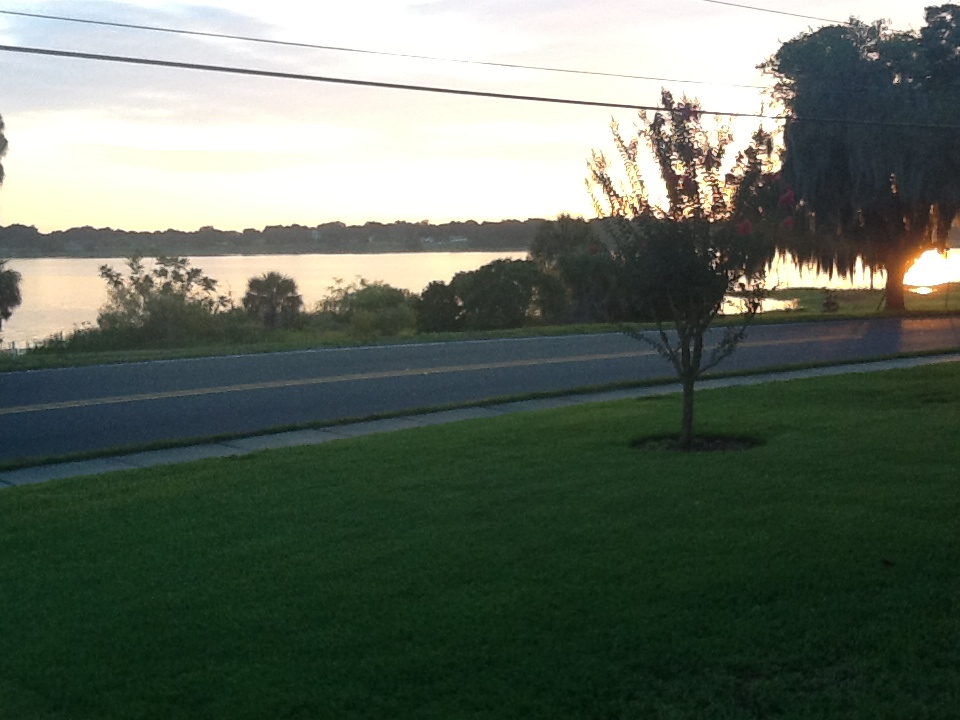
Those who’ve followed my blog for a while know that I have a “writing room.” Back in the seventies, this room was the formal living room, and after my second son was born, I transformed it into my studio (since I had willingly transformed my previous study into a nursery). In this room, we installed a large picture window that looks out across Lake Elbert. I do most of my writing in view of the lake.

But today’s post is less about the room itself and more about that window — the one that allows me to clear my head of other outside influences and reach a state of creative clarity. This morning, you see, I had to go outside to clean the window. Living on a lake means tolerating the Daddy Longlegs, dirt dobbers, and other occasional creepy crawlies that want to claim your open porch as home. But when they start to encroach on my view, then the gloves are off. As I was scrubbing, I realized, as many poets have, the metaphorical power of windows. Granted, this was not some new, earth-shaking revelation, but simply a restatement of prior knowledge: windows in literature have served as eyes, symbols of transparency or opacity, and they have taken on a wide range of other meanings, depending on the work’s needs.

For us as writers, however, our window on the world (both literally and figuratively) must always remain unclouded. If we allow streaks or stains in the form of distractions, worldly worries, or doubts about our abilities, then the inspiration stops. Just as the window works best when clean, so too, does our writerly vision work best when we free it from the dust of politics, society, career, and finances. Maybe your window is clouded with something else — grief or glee, negative or positive stress. No matter what the “smudges,” we as creatives must get out our mental Windex, and keep the view inspirational. Clean your window, reader. Your work will thank you for it.

poetry, Uncategorized

Putting the work in workshop

20130729-131949.jpg

The great thing about writing workshops is hearing other people’s responses to your written work. For instance, during today’s workshop with Amy Newman at Glen West (see photo of workshop locale– GORGEOUS), our group responded to one of my pieces that I had begun to feel wasn’t very good. I had submitted this piece to five or six journals over the last few months, only to receive rejections every time. I knew something had to be glaringly wrong with it, but my editing and revising sensors were just not catching it.

Instead of hearing how terrible this piece was, I was greeted instead with adulations accompanied by helpful word-by-word analyses. The one problem found in the piece was a single weak verb that I had somehow overlooked. That one word aside, my workshop peers pointed out a variety of strengths and merits of the piece that I had never even considered. I left feeling not only relieved, but strengthened.

In a truly supportive and functional workshop, the members build one another up like this one did. Yes, weaknesses and flaws are addressed, but likewise, poems’ assets also get a fair shake. I feel privileged to have received a scholarship to attend this week-long engagement, and hope that the positivity and encouragement continue all seven days. What an incredible opportunity!