Lots of writers I know thrive on sadness, depression, and lesser forms of melancholy like ennui. General unhappiness allows their writing to thrive, as they delve into the depths of their perceived misfortune to generate poems and stories dripping with tragedy and loss. For them, writing is catharsis, and by inking out their woe, they regulate their emotions. Some even manage to publish their diatribes of disaster, and this recognition provides them with enough dopamine to jump successfully to the next pseudo-crisis.
I’ve never been one of those people, and frankly, I can’t imagine living that way. Sure, I’ve had some down times here and there, but writing about them only seems to provide a “mood puddle” in which to wallow. I feel much better when I devote myself instead to writing on subjects unrelated to personal tribulation. Rather than catharsis, writing is occasionally my escape. More often, it is the purposeful pursuit of inspiration. Occasionally, those inspirations are sad, but I’m no Edgar Allan Poe.
Also, I’ve found that if I’m feeling blue, it’s probably a symptom of some illness beginning. Malaise, that low emotional wave preceding a sick spell, has never been my friend, and it certainly doesn’t generate good writing. I need a relaxed-yet-lively mind and a keen awareness to produce my best work, and being down inhibits both of those.
Maybe you, reader, take to the page to overcome spells of sadness. If so, may that form of therapy be your balm. I, for one, intend to remain a writer of clear-headedness and contentment. While my work may occasionally fall into the wells of woe, my hope is that those spells are mere diversions rather than the usual route. Write on!
My grandfather’s oldest brother was quite the fastidious businessman in his day. I inherited his desk, books, and office supplies, and I’ve found there’s so much to discover about people from the objects that filled their lives.
For example, my great-uncle was a Master Mason and a Shriner, an avid hunter, gardener and golfer, and he was a careful record-keeper. He believed in refilling complimentary ballpoint pens rather than simply tossing them out, keeping matchbooks from places he visited, and holding on to extra nails, screws, hooks, and tacks “just in case.”
When he purchased something, he made sure it was going to last. This new old desk I have received is a testament to his insistence upon quality. A dark, heavy hardwood, its fixtures are real brass. Most of them are still shiny, despite decades of use. He topped the desk with a larger piece of lacquered wood, and he attached felt pads to the topper’s underside to assure that the original desk would remain unscratched.
The lamp that accompanies the desk was made sometime, I would venture to say, in the 1960s. It is a heavy brown metal drafting lamp with fluorescent bulbs, and it can be pivoted and adjusted for different perspectives on projects. Turning the lamp on is like taking a trip back in time, as the satisfying click of the red “on” button bespeaks another era — one that was marked by products made for near-permanence.
Even the electric pencil sharpener that came with these items is remarkable. I know the brand — it is one that has frequented my classroom for many years. The difference is, this one was made nearly 50 years ago, and its motor has yet to burn out. Yes, the unit is heavier and bulkier than today’s model, but the machinery that comprises it has yet to fail. I go through electric pencil sharpeners in my classroom at an alarming rate. I’m lucky if a modern sharpener made by this same company lasts a full school year. And yet, here is this dinosaur, still grinding down wood and graphite with precision and speed. Granted, this model hasn’t undergone the abuses and rigors of a secondary classroom, but nonetheless, its continued functionality is commendable.
I bring up these examples not as a maudlin longing for simpler times, but instead, to launch into another point: what we produce as writers can be quick and slick like dollar-a-pack stick pens, or we can endeavor to create something a bit more like the aforementioned desk, lamp, and pencil sharpener — something that endures. One of my goals as a poet has always been to create work that will be read in classrooms and checked out from libraries 100 years from now. Some would say that such an ambition is unrealistic and naive. I prefer to think that considering legacy when writing is much like investing in quality items of a more tangible nature. It ensures that when the people we care about look back over our lives, they can safely say we, too, insisted on quality.
Among the books I’ve received from this great uncle are several Bibles and dictionaries. All of them have been used with frequency, but also with a sort of care that shows reverence and admiration. My hope is, in using and appreciating these everyday items, I might somehow pass on that great tradition of surrounding oneself with matter that matters. May our writing be done in such a way that, when others hold it like a leather-bound inheritance, they treasure it equally every time.
Admittedly, I used the title phrase recently in a poem about a couple who wanted to build a new house. This set me thinking, however, about some of those small things I do to “signal” to myself that I am officially writing. I use a hot beverage, a particular location, and a few technological idiosyncrasies to get my brain in “writing mode.” This post explains those weird little habits that tell my brain it’s time to go poet.
If I’m writing during daylight hours, I usually have a cup of coffee in the mug pictured above. It’s thick ceramic, and there’s no telling how many years I’ve had it, but it serves as one of my neurological cues for writing. If it’s night, then maybe I’ll opt for decaf or some kind of tea, but I must have access to some hot drink in the mug you see here.
Secondly, I write in my “quiet room.” I think I have enough posts on that little subject, however. I have one desk for drafts, which I write by hand, and another desk for computer writing; that is, final drafts that make their way into my little PC. My computer, though, has given me a number of quirks that I never would have considered without technology: I begin by setting my margin at the 2 inch mark, for example. If the poem later deserves different formatting, then that can happen. But for the initial go-round, 2 inches is the magic setting for effective starts. I also insist on 12 point Times New Roman font. Yes, it’s old school, but it’s also clean and widely demanded by editors at respected journals.
All these little rituals verify to my mind that my unique brand of creating is happening. I enjoy the regularity and routine of these seemingly insignificant customs; if I changed them, I’d probably miss them, honestly. We never know how much our writing depends upon a couple of inches and a warm mug. And as the old country expression goes, “If it ain’t broke, don’t fix it.”
Until next time, loyal readers, enjoy your odd and inexplicable habits. They might be more important than you know.
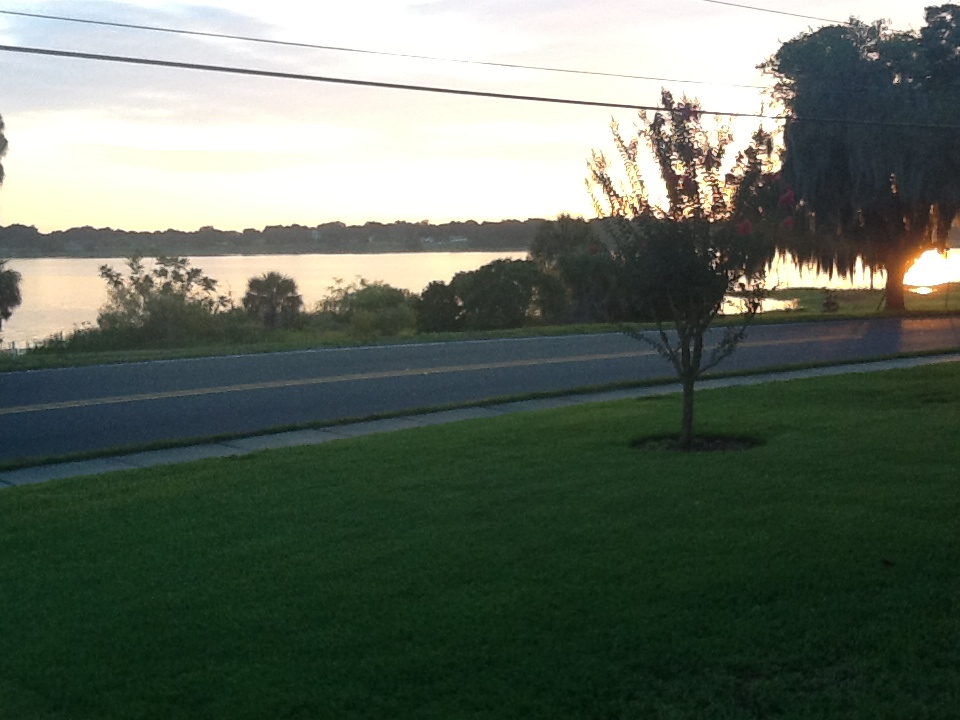
Those who’ve followed my blog for a while know that I have a “writing room.” Back in the seventies, this room was the formal living room, and after my second son was born, I transformed it into my studio (since I had willingly transformed my previous study into a nursery). In this room, we installed a large picture window that looks out across Lake Elbert. I do most of my writing in view of the lake.
But today’s post is less about the room itself and more about that window — the one that allows me to clear my head of other outside influences and reach a state of creative clarity. This morning, you see, I had to go outside to clean the window. Living on a lake means tolerating the Daddy Longlegs, dirt dobbers, and other occasional creepy crawlies that want to claim your open porch as home. But when they start to encroach on my view, then the gloves are off. As I was scrubbing, I realized, as many poets have, the metaphorical power of windows. Granted, this was not some new, earth-shaking revelation, but simply a restatement of prior knowledge: windows in literature have served as eyes, symbols of transparency or opacity, and they have taken on a wide range of other meanings, depending on the work’s needs.
For us as writers, however, our window on the world (both literally and figuratively) must always remain unclouded. If we allow streaks or stains in the form of distractions, worldly worries, or doubts about our abilities, then the inspiration stops. Just as the window works best when clean, so too, does our writerly vision work best when we free it from the dust of politics, society, career, and finances. Maybe your window is clouded with something else — grief or glee, negative or positive stress. No matter what the “smudges,” we as creatives must get out our mental Windex, and keep the view inspirational. Clean your window, reader. Your work will thank you for it.
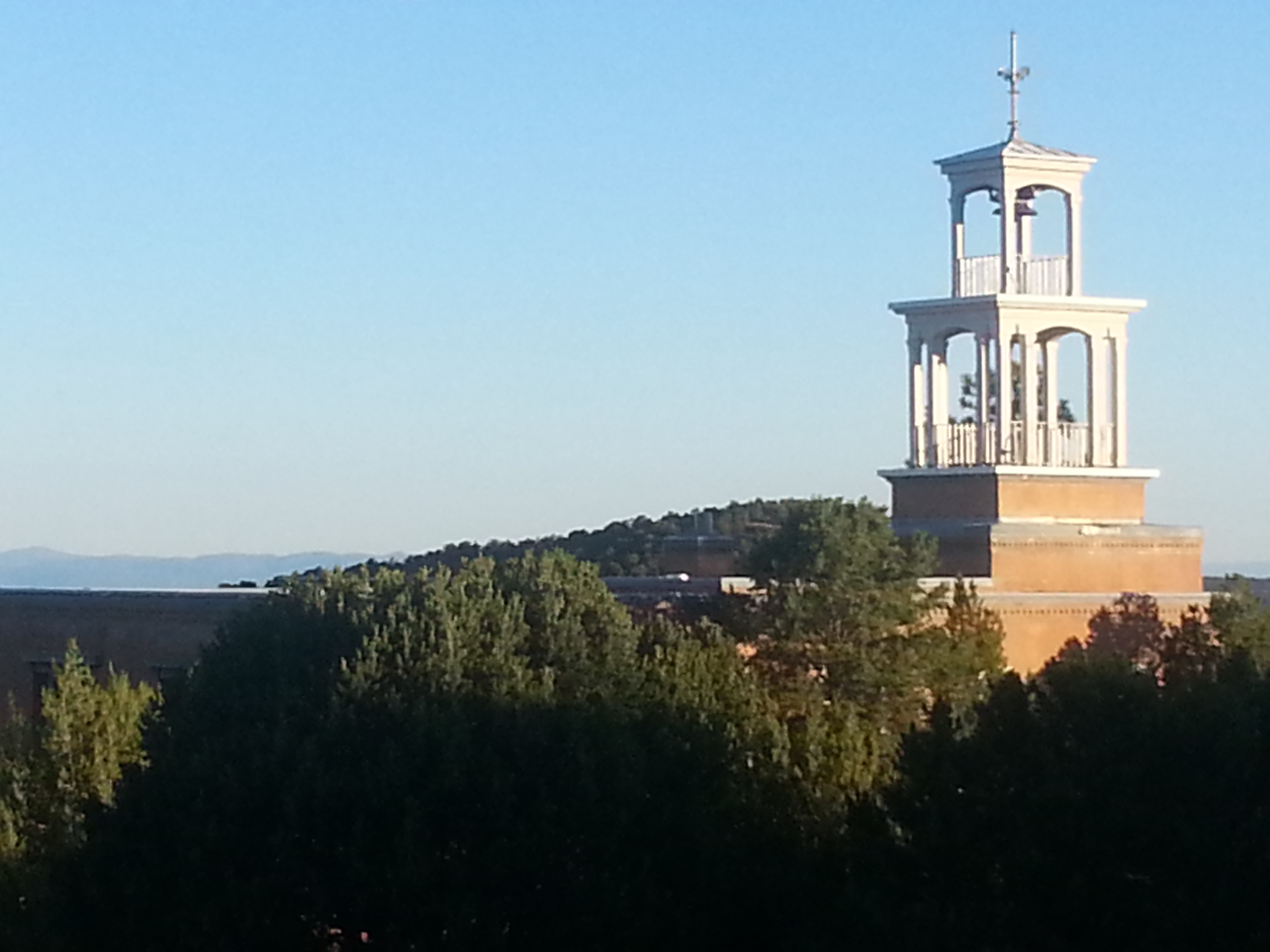
Now that some time has passed since my scholarship-funded trip to the Glen West Workshop, I feel that I can reflect on the experience with greater objectivity, and extract some of the bigger ideas from it. Held on the campus of St. John’s College in Santa Fe, New Mexico, the workshop included writers and artists from all walks of life, and from all over the world.
A shot from one of the sloping hills of St. John’s College in Santa Fe.
The scenery was beautiful, the discussions and seminars were engaging, and the faith-based component made me take a much harder look at my own personal theology. Almost nightly, I found myself returning to scripture to examine my own beliefs in response to the claims of others beyond my denomination. What I found was this: The pastors and leaders I have known allow God’s Word to speak to them to inform their perspectives. Their hermeneutics and apologetics are without error when scrutinized from a logical, etymological, and spiritual standpoint. I became grateful for my solid foundation in the greatest of all literature.
Aside from the religious component of the workshop, however, the time spent working out my own poetry was invaluable. Critiques during workshop allowed me to hear from a community that represented a broad cross-section of society, from amateur dabblers, avid readers, and experts who are highly respected in their field. In addition, the artful environment of Santa Fe provided a much-needed break from the summertime doldrums I was previously facing. The art galleries, public displays of sculpture, and a fantastic rendering of C.S. Lewis’s The Screwtape Letters on stage at the Lensic Theatre allowed me the cognitive space I needed to regenerate creativity.
While the accommodations were sparse, the company, the climate, and the conversation made up for any lacking luxuries. I made a few new good friends who are very different from me, and by so doing, received bigger understandings and broader interpretations of life itself. I would recommend The Glen West Workshop to those seeking something different than the typical writing conference. Its effect on your mind and your soul will be worth it.
A group of summer school students working on their 3D maps of Ship-Trap Island, our project from the short story The Most Dangerous Game.
If my loyal readers will allow me, I would like today to take off my “poet’s cap” and put on my teacher’s mortarboard instead for just one post.
As summer draws to its end and a new school year eagerly waits right around the corner of the calendar, I feel the need to post something here for all you newly hired teachers and professors. I, too, was once that first-year teacher. Now I serve as a mentor to up-and-coming educators. In that capacity, I have composed a brief address to teachers new to my school. I feel that this address would benefit teachers in any school, but especially independent schools like my own. Here, for your encouragement, is that short speech:
ADDRESS TO NEW VANGUARD TEACHERS By John Davis Jr., educator and poet
Before you lies an incredible journey. You have the chance to truly and positively change lives if you take advantage of this moment in your career. At Vanguard, you can teach as you have always wanted to teach, and you can become the servant leader that American education so sorely needs today.
Here is the place where your grandest experiments and classroom daydreams can come to life, if you let them. Now is the time that all your compassion, all your patience, and all your skills will be needed daily. You will have to hug children that others have found unlovable, and you will have to give structure to students that have never known boundaries. You will need to prepare your best advice for broken hearts, best-friend betrayals, and even divorces and deaths. These students need your voice, and they need your shoulders.
They will seek you out to tell you of all their firsts. When they pass their driving exam, compliment their shiny new permit photo. When they lose a beloved family pet, put your arm around them and console them. When they fail at anything, encourage them. When they ask you the hard questions, be honest with them.They’ll respect you more for the truth than for some typical grown-up cliché. And at the end of the day, real life is really what they need to hear about the most.
They will bring you food they have cooked in culinary arts. Eat it enthusiastically, even if it’s horrible. They will show you pictures of what they plan to wear to prom. Tell them that it’s incredible, even if it’s hideous. They will proudly exhibit their latest woodworking project for you. Tell them how artistic it is, no matter how loose-jointed and awkward it may look.
Dress like you’re the boss, but be prepared to get sweaty, dirty, and even occasionally bruised. But know above all that the labor, the grit, and the pain are all worth it. You will become to these students a parent, an older sibling, and eventually, a fond remembrance. Even when they go off to college, they’ll spend part of their break coming to see you again if you’ve done the job right.
And when they have long since graduated, found their way, and started adult lives of their own, rest assured that you will be a main character in the stories they tell their children. Your advice, your lessons, and your every idiosyncrasy will be recounted for another generation, not because you are a sage or a superhero, but because at one time in one child’s life, you cared.
Give them your 100 percent every day, even when you feel like you only have 10 percent left. Laugh with them, share with them; invent new games with them. The greatest stories of your teaching life are ahead of you, educator. Be prepared.
The great thing about writing workshops is hearing other people’s responses to your written work. For instance, during today’s workshop with Amy Newman at Glen West (see photo of workshop locale– GORGEOUS), our group responded to one of my pieces that I had begun to feel wasn’t very good. I had submitted this piece to five or six journals over the last few months, only to receive rejections every time. I knew something had to be glaringly wrong with it, but my editing and revising sensors were just not catching it.
Instead of hearing how terrible this piece was, I was greeted instead with adulations accompanied by helpful word-by-word analyses. The one problem found in the piece was a single weak verb that I had somehow overlooked. That one word aside, my workshop peers pointed out a variety of strengths and merits of the piece that I had never even considered. I left feeling not only relieved, but strengthened.
In a truly supportive and functional workshop, the members build one another up like this one did. Yes, weaknesses and flaws are addressed, but likewise, poems’ assets also get a fair shake. I feel privileged to have received a scholarship to attend this week-long engagement, and hope that the positivity and encouragement continue all seven days. What an incredible opportunity!
In the middle of the twentieth century, critical theorist John Dewey put forth his then-radical idea that experiences equal education. Dewey, considered the father of the progressive movement, posited that interaction and continuity were the two key traits that made up an educational experience. Even today, while educators use different names for those same ideas (interaction=engagement, continuity=structure), Dewey’s legacy lives on. But it’s not just for those of us in the classroom. Dewey’s experiential education model is undergoing a renaissance of sorts at the post-secondary level, with more colleges and universities touting that they believe in it and use it to provide students with memorable learning. Even for working writers and parents, the thoughts that Dewey developed have implications that can provide lasting benefits to us in our average, non-academic lives.
To begin, experiences form the foundation upon which all truly great literature is built. Even if those experiences are imagined or exaggerated, they nonetheless constitute the building blocks of fiction, poetry, and plays around the world. For those of us in the everyday world, the small experiences can generate great writing.
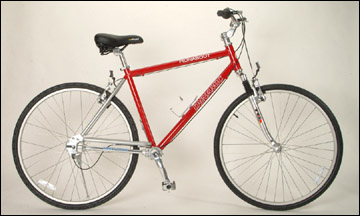
This summer, I’ve been riding bikes with my sons. We started small, with a few laps around our block here, and recently, we sojourned to their grandmother’s house about a mile away. The bike riding sessions have given rise to those metaphorical, time-transcending conversations that parents have always found meaningful: learning to ride a bicycle safely is a parallel to one’s larger life, after all. Lessons in persistence, balance, confidence, care, and initiative can all be heard when one is teaching others about basic cycling. Uphill grades can’t be conquered without perseverance, and the reward is always that downhill gust of face-breeze. Bicycles and their allegorical implications have been used by writers for years, and so, I haven’t bothered to write a poem about this experience yet. I feel that it’s been covered entirely too well by others before me. The poem that this experience generates will probably not be the old cliche about “letting go of the baby bird” or some similar tripe, but I sense that something from our time together will mold itself into poetry before the summer’s out. It just needs some time for creative gestation.
Last summer, my oldest son and I spent almost every day kayaking. There are lakes all over our town, and we would set out on Lake Martha, carving a trail to the park across the lake from our launch point. The park made for some great play time, and afterward, we would paddle back. This experience also bore a number of universal lessons that later worked themselves into poetry — the landmarks around the lake were particularly symbolic of different stages in life: the park being childhood, the high weeds being adolescence, the tall offices being adulthood, and finally, the hospital just before home. As you might have guessed, the experiences of our kayaking journeys lent themselves toward poetry.
I relate these two examples to reinforce the larger point: Yes, experience equals education, but more than that, experience equals life equals literature. Only by living can we truly write in a way that will relate to others. Until next time — to write great, live great.
As a child, my mother and grandparents read a good mixture of genres to me. About once a week, usually on Fridays, my mom made a special effort to expose me to poetry. Sometimes it came from the Childcraft series, a collection of gilt-spined hardcover books that were like thin encyclopedias of primary knowledge. Sometimes, it was the inimitable Dr. Seuss, with his nonsensical rhymes and his worlds of whimsy and fantasy. And then, there were the nights before bed that I was privileged enough to be exposed to the great Shel Silverstein, an author whose work had been slammed by public school districts throughout the south because of Shel’s past career choices (artist for Playboy, among them) and his shocking use of words like “butt” and “pee.”
The thing I really liked about Shel’s work is that, often, it would start with a simple premise (having to do the dishes, preparing to clean one’s room, etc.) and by the end, the poem had morphed into something totally unusual and unexpected. I find my own poetry doing this more and more these days. A poem will start with something pretty standard, but by the end, an entire other world or scenario will have emerged on the page.
At first, I was troubled by this occurrence, thinking that structure and form demanded I stick to the original idea and pursue it to its most logical and rational conclusion. I should persist, in other words, to do justice to my work’s inspirations. After letting the “distracted” works rest, though, I came back to them with fresh perspective. It was then I recognized that, even though the poem had taken the road less traveled somewhere along the way, it still held merit. Revision would still be necessary, but the original form — weirdness and all — warranted its own continued existence. Not unlike Shel’s digressions into crazy landscapes, my own poetry is sometimes fueled by what my fiction friends would call “the not-knowing.”
No doubt the Beats would approve of this editorial decision, reiterating their “first thought, best thought” mantra. Not every poem has to show up for work in a starched oxford shirt and presidential-looking tie. Still, I can’t help feeling that words without boundaries are somehow lost. Frost’s misgivings about free verse resonate even today in the minds of poets everywhere, mine included. I feel that certain limits and strictures make poetry stronger, and poems without rules, even self-imposed ones, often fail the test of relevance. Call me a “new formalist” if you will. Many of my peers disagree, asserting the wildness of words renders a poetic experience that is exclusive and unique. Too often such justifications provide fodder for “artists” who want to assign depth to drivel, however. “It’s not that I can’t write; it’s that I find meaning in error and ugliness,” they’ll say, as if ignorance plus garishness equals enlightenment. Rubbish.
Giving in to occasional rabbit-trails along a poem’s path may be acceptable, even artful. But when diversion turns to disruption, it’s time to get out the old poets’ toolbox and get to work. Accepting moments of Seussian whimsy and Silversteinish play can make work more human, and add an element of fun to otherwise serious poetry. It remains up to the poet, however, to know when and where those moments are beneficial. For today, I think I’ll do a few re-writes and see what happens. Wish me luck, respected reader.
In looking back over my site here, I noticed that last year I also posted on my birthday. I thought that by doing so again this year, it might make a nice little tradition of sorts. I promise, however, not to wax eloquent about my resolutions or grand goals for the year ahead. That’s what New Year’s posts are for, after all.
What I do know is this: Having made it through well more than a third of a century now, I feel an increasing compulsion to strengthen my legacy. An awful lot of my writing heroes were far better known and more respected than I before they were my current age. But with that said, an equally great number of authors I look up to weren’t even map dots on the literary landscape until they were much older. I’m increasingly thankful for those men and women who “bloomed late.” Their stories are consolations and reassurances when I, like another poet, find myself “in disgrace with fortune and men’s eyes.”
In my twenties, I still didn’t possess the maturity and experience necessary to produce respectable literary work. Plenty of great writers have produced meaningful literature in their twenties, but I hadn’t even begun figuring out life. Even if I had attempted a graduate-level program or “the great American novel,” I probably would have done the bare minimum to get by, and spent most of my time dwelling in pseudo-angst that I associated with “the writer type.”
In other words, I would have adopted the persona of a writer — some weird hybrid of Edgar Allan Poe and Ernest Hemingway, no doubt — and become a self-fulfilling prophecy of bad habits and dramatic life choices. I would have been concerned with acting out a tragic and memorable biography rather than the actual writing of excellent work. In some ways, I did exactly that: During my post-college years as a journalist, I sought out dangerous assignments, got shot at, had broken bottles hurled at my head, drove through a wall of fire, and gained my fair share of other brushes with mortality. I felt like I had something to prove. My lifestyle made for great coffeehouse stories, but I wasn’t making any real difference. Police scanner on my hip, the only thing I sought was juicy headlines and personal adventure. My time in journalism was devoted almost exclusively to my own selfish desires. Employers were merely means to the end of front-page byline glory.
There is a distinct benefit in having more life behind me: Having evolved into a husband, father, educator, and community member, I’m able to see my place in the universe with a little greater clarity. Selfish concerns over identity and others’ perceptions are subordinate to the demands of family, work, school, and faith. Living through most of my thirties has allowed me to gain richer exposure to the world, and to better understand what it means to earnestly make a lasting impact. Maybe my writing won’t be the major part of my legacy; it could be that the students I’ve engaged are a bigger part of my future memoirs than my experiences in the literary realm. And I’m okay with that. In fact, more than okay. I’d like one day to say that I’ve measured my life, not in coffee spoons like Eliot, but in student successes (excuse the cliche). And if my poetry and my other words happen to find a place in the public consciousness while I’m at it, then so much the better.
Sure, I’m going to keep pushing my writing. Absolutely, I’m going to continue to submit and publish (hopefully) with regularity. Whether my printed words or my classroom creativity will become my greater contribution, I don’t know. And for right now, that’s perfectly fine. The next chapter is still waiting to be written.
 FLteacherpoet555
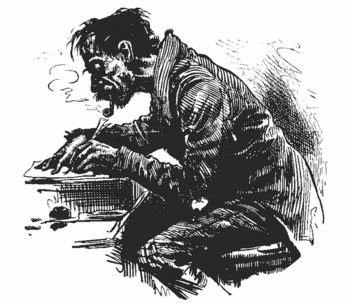 Lots of writers I know thrive on sadness, depression, and lesser forms of melancholy like ennui. General unhappiness allows their writing to thrive, as they delve into the depths of their perceived misfortune to generate poems and stories dripping with tragedy and loss. For them, writing is catharsis, and by inking out their woe, they regulate their emotions. Some even manage to publish their diatribes of disaster, and this recognition provides them with enough dopamine to jump successfully to the next pseudo-crisis.





 John Davis Jr. -- Author