poetry, Uncategorized

The Awards Game

Award_imageIt’s that time of year again: Editors and publishers are nominating works from their magazines and bookshelves for a broad range of laurels. Most notably at this time of year, writers receive word of Pushcart Prize nominations. As a younger writer, I used to get all tingly when those nominations arrived by email — kindly journal editors who liked my work sent it on to that mystical committee that views thousands of submissions every year from literary journals all over. I am still honored to have my work nominated for the Pushcart (as it was again this year), but in speaking with mentors and writer-friends of mine, I’ve come to understand something: Poets “worth their salt” are nominated for the Pushcart almost annually. Venerated veterans of poetry take such nominations for granted, apparently, even though those of us who are still “emerging” think them a big deal. So, I’ve learned to cool my jets a little. Once my work is actually included in the honorable Pushcart anthology, I’ll certainly add that detail to my author’s bio. But for now, I suppose I should join the ranks of my fellow authors who see nominations as a nice thought, a kind gesture, but ultimately, little more than a tip of the hat toward one’s work.

I’ve learned also that the awards one reads about in other writers’ portfolios aren’t always as glamorous as they seem (take note, young writers). Certain awards may open some doors, they may add something to one’s CV, but outside the literary community, they don’t amount to a hill of beans. Robert Frost was a fan of the old saw “Fine words butter no parsnips,” and I suppose in the world of literary awards, a similar thought exists — shiny trophies, parchment certificates, and faux-wood plaques don’t make you a writer any more than a fancy hat does.

Recently a publisher friend of mine let me know that my book has been nominated for a couple of other awards, as well. If I win, it will be a wonderful experience, and I’m trying hard not to get my hopes up too much prior to the announcements. These awards are entered by many of my most respected fellow writers and their publishers, as well. To even enter the field is an honor unto itself. The danger, of course, in winning awards is the temptation toward stasis — many a great writer, after earning the Pulitzer or the National Book Award, has lain down his pen. The award was an end rather than a milepost on the journey. Writers, as awards season enters full swing, the temptation is great to see pinnacles where only plateaus exist. Gilded honors are stations on the path, not summits to be conquered. Let us be grateful and humbled, but let’s not be complacent. There’s writing yet to do. Stick that award on the shelf or on your book cover, and let’s keep going.
 

poetry, Uncategorized

When did you become a “real” writer?

220px-Stipula_fountain_pen The question above isn’t new. Literary magazines and writing guides have been debating it forever, it seems, and the general consensus among writers groups, workshop participants, and seminar-givers is this: people gets to call themselves writers when each individual decides it’s time. What a horribly unspecific and wishy-washy answer. That being said, all I can provide is my own experience in an attempt to help elucidate some sort of solution to this continuing conundrum.

For some people, becoming a full-time writer gives them the license to wear the title. For others, attaining a degree in writing allows them to introduce themselves with the phrase “I’m a writer.” Many novices don’t consider bringing up their writing unless they’ve published extensively. So, let’s be clear — going full-time, earning educational laurels and publishing are all nice components to a writer’s personal history. Yet none of those (by itself or in concert with the other factors) will magically bestow the name of “writer” upon anyone. What, then, does it?

An oversimplified answer would be to say, “Well, writers write.” That unfortunate phrase has become a cliche (if not a trope) that writing magazines and workshop providers have been uttering like a forged instrument for too many years. We know writers write; hence the name. But if writing is our only criteria for calling someone a “writer,” we’re losing something along the way.

Allow me to provide an example: Last night, my six-year-old son received a new art table from the store. He drew pictures of rockets and dragons and all sorts of things, and then put some words under them. Some of the words were correctly spelled, others were more phonetic. Does he then qualify for what we would call a “writer?” I’d like to say yes, but by societal and cultural standards, I’m afraid that the answer is a resounding negative.

Stephen King is a writer. Billy Collins is a writer. Even Danielle Steele (yeesh) is a writer. Why? Because they have been advertised, marketed, promoted and published as writers, and therefore the public has dubbed them “authors.” Does that mean that our names must be up in lights or on the front of Barnes and Noble before we can lay claim to such a noteworthy nomination? Not exactly.

Here’s what did it for me: Yes, I earned an MFA. Yes, I’ve published three books now. And yes, I’ve seen my name in a pretty good number of literary magazines over the years (gratefully). But honestly, it wasn’t until I finished this most recent book that other people began calling me a writer, and I suppose the reality sank in at last. You see, my first book was self-published (fodder for another post entirely), and my second was a shorter volume (chapbook). This third book was published by a respected and professional publisher, and it has been better received than either of my previous two. It has been advertised in newspapers, online, and in magazines, and friends of mine from various lit journals have promoted it fiercely. I have not one but two different launch events planned. Many of these efforts were self-initiated, and mostly because I have greater respect for this book than I’ve had for my others. That’s not to say the others were bad; it’s just that this volume kicks their cumulative butts.

So I suppose you could say that this most recent book, Middle Class American Proverb, was the magic ingredient that finally allowed me to admit to myself that I’m more than a schoolteacher. Because I’ve given it the respect, the time, and the investment that it truly deserves, it has allowed me to finally say to others, “Yes, I’m a writer.”

The lesson here: When we give our endeavors serious treatment, we will then be treated seriously by others, and more importantly, by our selves.

poetry, Uncategorized

Shhh….Don’t tell anyone

Loyal blog subscribers, I have a secret for you: Today you can order your pre-release copy of my newest book, Middle Class American Proverb. Here’s the link:

This is the definitive Florida poetry collection I’ve been writing about. Get your copy today!

johndaviscover (3)

poetry, Uncategorized

The Book Trailer: Just Say Yes

In contrast to my recent post about the triviality of “cover reveals,” this post deals with a technique that I and other authors find effective: The Book Trailer. Simple to produce, short enough to keep interest, and crazy affordable (you can’t beat FREE), the book trailer has a vast reach. Within the first hour of uploading the book trailer below, I had more than 100 views. I haven’t checked the stats today, but the trailer is probably one of the more popular marketing steps I’ve taken in preparing for the release of Middle Class American Proverb. The book has its own website, http://www.middleclassamericanproverb.com/, and its own Facebook page: https://www.facebook.com/middleclassamericanproverb?ref=bookmarks.

But none of these has received the attention that the book trailer did in such a short period. Maybe that’s my own fault — I could have pushed the website and the Facebook page harder, but at some point, marketing becomes annoyance. Anyway, without further ado, here’s the book trailer for my loyal blog followers:

poetry, Uncategorized

The “Cover Reveal:” Just Say No

A word of warning before I begin here: This post is probably going to upset a number of my creative and socially inclined readers. But what you see below must be said.

I will not be holding a “cover reveal” for my upcoming book. If you want to know what the cover looks like, here it is:

johndaviscover (3)

There. It’s revealed. And as happy as I am with this cover (isn’t it COOL?), I don’t feel anything further is warranted. After all, the real meat of this work lies between the covers, and that’s where I’m hoping you’ll look when this volume hits the bookstore shelves soon.

“Why the snarky attitude about cover reveals?” you might ask. Well, here’s the thing: I am a husband, a father, a teacher, and a writer. I serve as a community volunteer and as an active member of my church. My weekends are most often consumed with birthday parties for other people’s kids, lawn maintenance, and the peripheral tasks of education — grading papers, preparing lesson plans, and so forth. My time is valuable, and honestly, unnecessary and entangling social engagements are nothing more than a gigantic time-suck.

Now before my readers accuse me of being some selfish, antisocial hermit, allow me to say that I love a good get-together as much as the next person. Just recently (as you may have read here), I hosted my own chapbook launch for “The Boys of Men,” and it was thankfully well-attended. The food was delicious, the company was wonderful, and the reading was fun and interactive. I sold lots of copies, and was able to make a modest donation to one of my favorite charities who helped host the event.

Why, then, am I against the notion of a cover reveal, in particular? I oppose cover reveals for the same reason that I oppose “gender reveal” events for babies that have not yet arrived: It’s one more thing. That’s right — one more space on the calendar filled with pointless banter and oddly colored punch. We’re all very happy you’re having a boy/girl, but isn’t your fourth baby shower (also inappropriate, might I add) enough? Must you subject us to yet another inane occasion to stand about, idly discussing the weather until you drop a curtain or pop a balloon? Seriously, stop. No more, please.

Authors: Please don’t consume the valuable time of those you know with the literary equivalent of the gender reveal. We know your book has a cover. We’re ecstatic for you, and proud to call you our friend. But to hold people hostage while you unveil a placard is both ludicrous and disrespectful, even if you provide finger sandwiches and fruity beverages. By all means, launch your book. Hold readings. Give lectures and seminars. I’ll be there. It’s an opportunity to learn something, hear something new, and culturally engage. Reveal something more than a shiny piece of plastic, some crackers and a “TA-DA!” Give us your words, give us your work, give us your heart.

poetry, Uncategorized

Launching the Chapbook

davis cover 1This Tuesday, I will launch my chapbook of poems entitled “The Boys of Men.” This volume, a collection of poems dealing with the topics of fatherhood and mentorship, is near and dear to me, as it was originally developed as a gift for my two sons. As the poems developed, though, I began to understand how this little assembly of verses might be useful to others beyond my family. The messages, after all, cross the boundaries of bloodlines.

Ideals of trust, loyalty, persistence, and courage are universal, after all, and these poems speak of all those and more. As a bigger book of poems waits for its release just around the corner, I want to take the time to celebrate this smaller milestone; this little get-together of poems that future generations can look to for fond reflection, family connection, and perhaps even a moment or two of guidance. My purpose in publishing this book was never to get rich — rather, I wanted those close to me to have a keepsake, something intimate and direct. In this volume, I feel that’s accomplished.

For those wishing to buy a copy, here’s the Amazon address: http://www.amazon.com/Boys-Men-John-Davis-Jr/dp/0692276874/ref=sr_1_1?s=books&ie=UTF8&qid=1411822481&sr=1-1&keywords=The+Boys+of+Men+by+John+Davis+Jr.

I hope that you gain as much from reading this as I gained from writing it. Your purchase is appreciated, and your attention to my work is always, always valued. Thank you.


poetry, Uncategorized

The Catharsis of Found Poetry

FoundPoetry1It was the end of the first week of school. Students in my creative writing classes had been pounded all week with Strunk & White, William Zinsser, and the thousand and one unofficial “rules” of good writing. It was time for expression. It was time to put the “creative” back in creative writing.

I thumped a load of TIME magazines down on the table at the front of the classroom along with scissors, glue sticks, tape, and construction paper.  Then I began explaining found poetry: that crazy-but-sometimes-deep hodgepodge of discovered, connected everyday language. My challenge to this group: “Take seemingly disparate words and phrases from these publications and bring them together in a way that appeals to your mind.” No limitations other than that. Just cut and paste. Form something that makes a semblance of sense to you — that’s it.

Then something magical happened. Students began to string together words and phrases in unexpected ways, forming verses about topics ranging from racial prejudice to missing class because of nature’s call. Some were expectedly cliche, but others struck a nerve, both in their authors and in me as their teacher. It was splendid. It was creative. It was (pardon the triteness) inspiring.

This was not the first time I’d seen the “cut and paste” exercise used — teachers have known about newspaper poetry and similar tricks for years. And of course, I’d been fortunate enough to have a grad school professor who encouraged us to use this exercise to loosen up our own creative muscles before. But when these high schoolers were set loose on the project, there was an unusual fervor in the air — it was as though they were finding treasures that would help display their souls. After a long week of reading the advice of the old, the dead, and the mundane, found poetry was just what the doctor ordered.

For us as writers, the occasional dabble into arts and crafts can likewise be a refresher.  When faced with being stuck, the switch to tactile-kinesthetic arranging of words like refrigerator magnet poetry or word tiles can allow another part of the brain to do the work for a while. And sometimes, when monotony brings us down, colorful paper and scissors and paste can also remind us of a simpler time — one that perhaps inspired us to undertake the writer’s journey in the first place.

For more examples of my students’ awesome work: https://sites.google.com/site/harrisoncreativewriters/


poetry, Uncategorized

Of Medals, Poems, and Diplomas

DFCOne of the first poems I ever encountered was “High Flight” by Maj. John Gillespie Magee. Written in iambic pentameter (which I did not recognize as a child) and describing the sensations inherent to piloting, Magee’s piece was given to my grandfather by the US Army Air Corps during granddad’s 51-mission career during World War II. He hung the poem in his family room just above his medals, of which there were many. The Distinguished Flying Cross (pictured above) and the Air Medal (pictured below) were among them. He had been offered the Silver Star, but asked that it be awarded to his navigator instead for valor during the raid on Ploesti, Hitler’s oil fields.

 airmedal Before I could read, the medals caught my eye. As a boy with dreams of achievement and distinction, they glimmered beneath old glass with the ideals of courage, willingness to sacrifice, and loyalty to one’s country. My grandfather held God-like status to me, and the medals seemed to reinforce my notions. Here, framed in gold-painted wood and blue velvet, were the emblems of a man who put himself in harm’s way with nothing more than a bible in his pocket and the thin metal and glass of his B-24 around him. 

It wasn’t until I could read that I began to understand the significance of that other framed item — Magee’s High Flight: “Oh I have slipped the surly bonds of earth/ and danced the skies on laughter-silver’d wings…” it began. Reading it time and time again, I eventually committed it to memory. No one told me to. It just seemed that something equal to or greater than those medals must be relevant enough to memorize.

I caught my oldest son the other day in a gaze very familiar to me — that same one I wore when looking at my grandfather’s medals and Magee’s poem on the wall of that old farmhouse. The only difference was, my son wasn’t looking at medals, he was examining my three framed diplomas– a Bachelor of Arts in Mass Communications, a Master of Education degree, and the most recent addition, my Master of Fine Arts in creative writing. All three are framed in the same red-and-white display, and I’m sure that the Old English font and gold seals caught his eye in much the same way that my grandfather’s medals and accompanying poem once mesmerized me.

Seeing him in that trance — that spell of admiration and wonder — gave me pause for realization. These pieces of paper: will they be the emblems he associates with me one day when I, too, am gone? And furthermore, am I comfortable with that association as part of my legacy?

Let’s not kid ourselves — diplomas and academic laurels are no equal to military honors. The two exist in disparate circumstances and realms, for certain. My pursuit of knowledge and proficiency is in no way a parallel to my grandfather’s hard-earned Air Force record of integrity and valor.

But in the eyes of a small boy, all that glitters truly is gold. These degrees gleam with the same curious light that influenced me toward seeking personal greatness those many, many years ago. Posted above all those military medals, Magee’s words were just as instrumental in my pursuit of poetry as Robert Frost’s, William Shakespeare’s, or “The Pirate Don Durk of Dowdee.”

The battles I have fought have been bloodless and abstract. Won in the classroom and in the mind, they have come and gone without scars. But their significations are as hypnotic as glinting metallic wings. The freedom my grandfather won has allowed me to attain “ranks” that he never would have considered.

As my son matures, my hope is that he sees past or through the thin sheepskins on our wall. I hope he finds his own medals, his own diplomas, in his own way. Whether his course involves poetry, planes, or something else entirely, I hope that he reflects upon the lives offered by those before him. And when greatness finds him, I hope he displays it for his children, as well.        

Uncategorized

Fictional Fears and Fears of Fiction

notebooknpen Earlier this week, I had a first in my writing career. A piece of humorous southern fiction that I penned appeared in The Dead Mule School of Southern Literature: http://www.deadmule.com/fiction/john-davis-jr-the-legends-of-mailman-george/

For the first time in a long time, I actually felt anxious about publishing. As a younger writer, I worried whether people would think my pieces were good enough. Over the years, as I completed the MFA and had other major milestones in my poetry writing, those fears waned. I began to adopt the attitude that I knew my work had worth and quality, and if others disagreed, so be it. I found that sentiments within the literary community were so broad that my work would never be pleasing to everyone. I wrote with my particular audience in mind, and if others also happened to enjoy it, so much the better. This wasn’t to say that I disregarded workshop advice or the feedback of diverse others, but at the end of the day, my work was just that…my work. I could compose, edit and revise with the best of them, and that confidence laid my worries to rest.

Perhaps this was why I was taken aback by my own boyish hesitation and nervousness when my fiction appeared. This funny southern tall tale was unlike anything I’d ever done, and I suddenly felt the need to seek out validation like a kid in school. All those old reservations about whether my work was good enough suddenly resurfaced. After all, I’d built my reputation on a substantial foundation of poetry — branching out into another “unsafe” genre like fiction was reason for apprehension, even intimidation.

Once the piece appeared, some of the trepidation subsided, but even now, I look at my writing there and fight the propensity to hem and haw about it. Maybe my skepticism over my fiction-writing abilities will subside like my poetry worries did, but for today, I continue to walk on eggshells around this newer genre in my publication history. Like any art, with proficient practice comes greater assurance. Maybe I need to read and write more fiction; maybe I need a few more workshops. I’m not sure. But I do know that engaged time tends to cure insecurity. This summer, as I’m busy planning book events and producing more stanzas, I plan to prioritize writing beyond the purple curtain of poetry. Hopefully, as the old saying advises, practice will make perfect, however I choose to define that abstraction.


poetry, Uncategorized

An Elegy for Booktraders

photo

Recently, one of our local traditions here in town closed its doors for good. Booktraders was a staple in downtown Winter Haven for decades, and after two different owners’ attempts at reviving its business, the used bookstore was decorated with deceptively happy-looking yellow signs in its big front windows: FREE BOOKS.

I entered just like dozens of times before, this time with less enthusiasm and curious optimism. The smell of old paperbacks, wood shelving and historical bindings filled me as it had during all those other prior visits, but this time, it was the scent of defeat. People were inside filling carts and boxes with books that they probably never would have “traded” their own used books for previously. During this glut of knowledge, it seemed to matter little whether the books had any real appeal to the hoarders or not. Books were free! The scene was not confrontational like the 1980s ugliness of Cabbage Patch Kid mania, or more recent consumer battles for the hottest items or gadgets. Nonetheless, it was an unseemly display of avarice at its basest: Humans turned hyenas by someone else’s loss.

The real sadness of the situation was its broader commentary upon our current culture. Thanks to electronic everything and a constant shove toward productivity, efficiency and expedience, Booktraders met its La Brea Tar Pits-style extinction, a slow and steady groaning descent into fossilization. I remember summers when my mother, an English teacher for our local public high school, would leisurely read through paperback after paperback. She instilled this love of pleasure-reading into all of her children, myself included. Her friends, more literate members of our community, likewise would consume books by the handful, especially during the summer. That type of leisure reading, however, seems more and more to be a thing of the distant past. Certainly, there are those select bibliophiles who consciously consume traditional texts, but the larger portrait of American reading habits paints a grim picture — one comprised of people engaged in more reading-like activities (texting, Facebook-checking, etc.) than in actual comprehension.

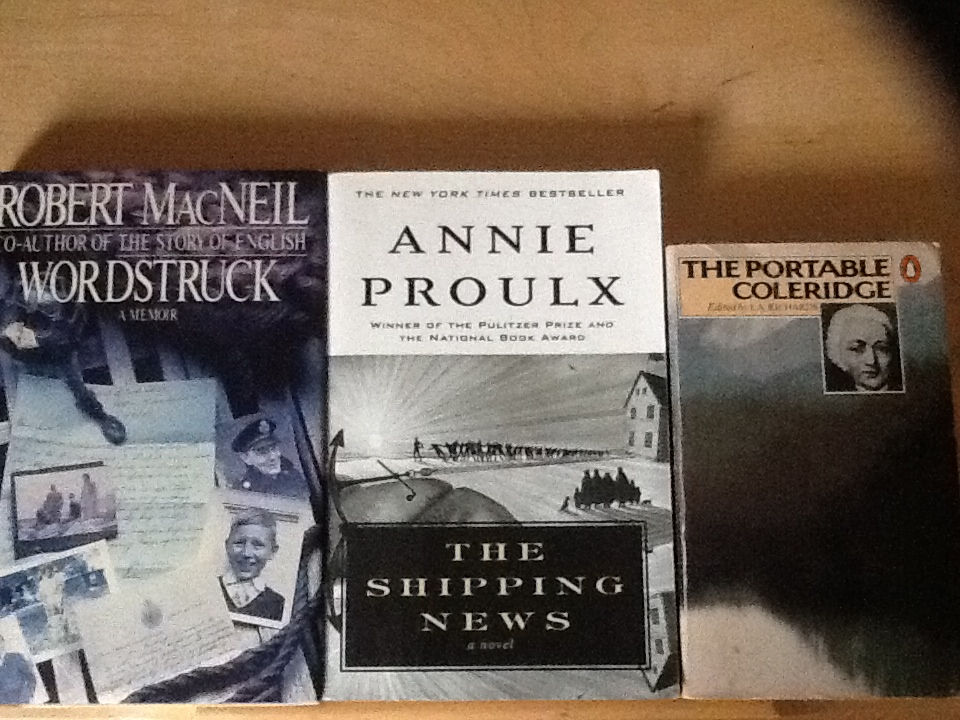
I admit it: I was not above the shuffle and scavenge of Booktraders’ end, I hate to say. I, too, walked away with three free books (pictured above) that actually piqued my interest. At least by saving these few volumes, I could promise them a good home rather than some cold resale. This act was a first for me as a lover of literature: walking away sorrowfully with books tucked beneath my arm. The creak and close of the store’s wooden doors behind me resonated like a casket’s final seal before burial.

The shuttering of Booktraders is a totem of a larger societal shift that is neither promising nor positive. When we are willing to prey on books but not give them our earnest attention and appreciation, we can no longer call ourselves a civilization. As publishing undergoes increasing transition, I suspect that real readers will become the  fulfillment of Ray Bradbury’s prophecies in the iconic novel Fahrenheit 451. We will be the outliers in a world walled in by electronic messaging and superficial relationships. Eventually, those of us who have bothered to memorize important passages will be glanced upon skeptically, even suspiciously. Perhaps this sounds extreme and even conspiracy-nuttish, but history paints a picture of prior societies who have fallen under similar strains. When we lose our love of literature, we lose our humanity.

For now, Booktraders does not rest in peace. It rests in pieces — fragments of disheveled disarray, the byproduct of mindless consumerism. It deserves better. It deserves honor. It deserves love. Farewell old friend, and thank you.