poetry, Uncategorized

Simultaneous Submissions and Such

Flooding the market has its ups and downs

As an active working writer, I confess: I simultaneously submit work all over the place. A lot of journals these days have woken up to the fact that authors are going to be sending their work to multiple places at various times, and therefore, editors have broadened their horizons about simultaneous submissions — manuscripts sent to more than one venue at a time.There are a few journals’ bosses that still frown on this practice however; they assume that you must value their opinion so much that you would NEVER send your work to someone else at the same time. This elitist and frankly inefficient mentality is a holdover from a more Guttenbergian time, when “gentlemen” were expected to give their exclusive attention to one press at a time. Rarely do things operate in such a way today, though. Journaleers who expect writers to give them some kind of preferential treatment are as obsolete as tophats and typewriters.Recently, I submitted some pieces to a publication that included among its guidelines the statement, “We prefer no simultaneous submissions.” In my cover letter, I told the editors forthrightly that the pieces were being “shopped around” to other publications — if they want my work, they’ll have to come to grips with the fact that I have bills to pay and I operate largely on a “first-acceptance, first-dibs” basis. This isn’t some kind of snobbishness on my part; it’s just sound business practice. I want my work out there efficiently and presented well. Whoever does that the fastest and the best is the proverbial “winner.” If writers have to grapple with competition from others, why shouldn’t editors and publishers as well?Granted, the aforementioned publication might frown upon someone so recklessly disregarding their preferences, but at the end of the day, I know I have to face myself as a professional poet, and sometimes that means going against the grain. Here’s hoping I haven’t burned a vital bridge in the process…

Uncategorized

Rejections and Acceptances

As a young poet, I remember “swearing off” journals that didn’t accept my work. Some, I was gracious enough to grant a “three strike” rule: If they rejected me three times, then I was done with them. But the big picture was just this: I held grudges and gave the mental ax to any publication that didn’t think my work suited their editorial needs.

Today I’ve risen above that kind of pettiness, but I still harbor a few of my old prejudices about journals that don’t greet me with an eloquent acceptance letter. After all, rejection is hard to take — veteran or novice makes no difference. It just so happens that I have developed a system for dealing with rejections these days:

1. When a rejection arrives, and I know the submitted work has true literary merit, I will immediately submit somewhere else.

2. If the rejection is worded in an ugly, condescending, or rude manner, then yes, I “swear off” that journal. I don’t want to be published by people who are high-minded or rude to others. Obviously, I suspend this rule for longstanding, proven journals of cultural worth. Abrupt rejections are expected from places that have made themselves landmarks in the literary landscape. They’ve earned the right to a degree of snobbishness through their history and contribution.

3. If the rejection is well thought-out and the editor has encouraged me to submit again earnestly, then I will wait for a while and try them again, if it’s a journal that I admire or one for which I feel my work is well-suited. These places are few and far between, however.

In the same vein as these rules, I also have a rule about re-submitting to journals that have published me previously: I believe in waiting at least one year before submitting to places that have published me previously. It gives the editor a breather from my work, and it also allows me to seek out other venues for my work besides those that I know are “poet-friendly.”

I believe that every writer should have some set rules about dealing with rejections, whether they mimic those above, or whether they are completely opposite of the opinions asserted here. Only through persistence and critical analysis can writers reap rewards from even the sting of rejection. It’s part of the life, and the sooner one knows how to process it, the better things become.

Uncategorized

Honesty and Poetry

ImageAt what point is poetry TOO honest? Here’s a question I’ve been struggling with lately. There are some things that people just don’t want to know, and yet, poets have always had the propensity to “overshare” every tiny scrap of minutiae that inhabits their lives. In a sense, it’s what we do.

Recently I wrote a poem that I know would be horribly unpopular with the modern literati because of its right-centric viewpoint and brazen language. What’s more, I’ve considered deleting the poem altogether just because it’s so blunt. Yet there’s always been room in poetry for verses that shriek personal truth — I’m just not certain that this piece is one I would personally be comfortable putting out there for the world to read. Yeah, I know; now you’re curious, right?

A couple of years ago, a friend of mine was banned from reading his poetry at an area coffeehouse near where he lives because he used politically incorrect language in his writing. People got offended (gasp!) and the owner of the joint “disinvited” this friend, telling him that his poetry should conform to the hyperliberal ethos of his establishment. Now granted, people could read explicit poems about sodomy and BDSM all night and feel free to do so, but a well-written poem from the other end of the political spectrum was grossly unwelcome. It seemed that open-mindedness was only extended to those whose viewpoint would meet with “house rules.” Hypocrisy at its finest. 

Questions for readers to ponder today: At what line does poetry become too revealing? Is there such a line, or is it only when we flirt with danger that real and raw emotional writing occurs? Is there room in today’s literary realm for voices of dissent from both sides of the proverbial aisle? Your comments appreciated.

poetry, Uncategorized

Pen Names and Identity

A week or so ago, I began contemplating using a pen name for manuscript submission. This move, I thought, would follow in a great literary tradition of authors whose work I admire. In consulting with my mentor through UT’s MFA program, however, several points were raised that I felt bore repeating here:

1. Using a pen name could mean that people won’t identify “the real you” with your work. That is, your persona or pseudonym receives the credit. Much like the ventriloquist plagued by the reputation of his puppet, authors too sometimes become overshadowed by the power of their pen name.

2. A pen name can serve as a hiding spot or a shield. Some people may consider this a good thing, but in the end, pen names can sometimes cause writers to avoid accountability for their words by blaming this “imaginary friend” of sorts. Comfort and liberation can come from this idea, of course, but at what price?

3. When people go into the bookstore, do you want them looking for work by (your name here), or do you want them seeking words by this moniker? True, you and your pseudonym may be one and the same, but there’s always that lurking barrier that arises through the use of another identity. In this society where we value openness and sincerity, pen names impart a certain shade or veil that readers today don’t necessarily enjoy.

In the end, of course, I decided against my proposed pen name. It was, at best, a passing fancy, and one best left in the annals of my writing history. If some day I decide to change course, I’ll probably take the Nora Roberts route: Let people get to know “the real me” first, then later write under an assumed name that everyone knows is mine in the first place. For the time being, I’m just me. As common and as average as my name is, it’s still mine.

poetry, Uncategorized

Bookstores, Amazon, and Other Such Things

So, I went to my local bookstore today to purchase one of the texts I need for my MFA readings. This book happens to be by our newest poet laureate, Natasha Trethewey. I perused the one measly section of poetry books tucked into a single section of a poorly lit aisle, only to discover that, not only was Trethewey’s work unavailable, but so was work by other established and well-known poets. This lackluster selection inspired me to visit the “customer service” desk of the establishment in question.

“May I help you sir?” the somewhat bothered clerk asked.

“I believe you can. I’m looking for a volume by Natasha Trethewey, the poet laureate.”

“Who?” she hooted, blinking repeatedly from behind extra-large lensed glasses. “Oh, let me look it up.”

Her fingers dashed across the keyboard, entering letters then backspacing furiously in frustration.

“Can you spell that?” she finally requested.

“T-R-E…” I went on, giving her the name in its entirety, letter by carefully pronounced letter.

“Oh, Natasha!” she said, as if the two of them had been classmates in another life.

Here came the kicker: “We had two copies by her, but they’ve both been sold.”

SERIOUSLY??? The woman is the poet laureate of the United States, and you have TWO copies of her work in inventory? Now, mind you, this so-called bookstore can boast countless aisles of Twilight toys and fairy princess bookmarks, but GOD FORBID they actually carry work of literary value. I maintained a poker face, took a deep breath, and then administered some kind advice:

“You may want to think about getting some more. She’s very popular right now,” I said.

“Oh, well uh, would you like to order one?” she offered, still rapid-fire blinking.

“No, that’s okay. Just thought I’d check,” I answered. “Thanks anyway.”

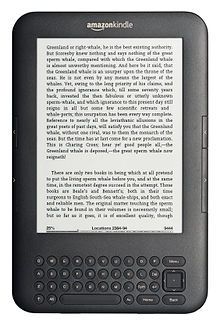
As brick-and-mortar bookstores bemoan the loss of business to megalithic online entities (Amazon, etc.), encounters like these only encourage consumers to seek out alternatives that are less inconvenient, i.e. internet buying. Listen up, literature vendors: If you want to sell books, stop sitting around sipping lattes and whining about how the big, bad capitalist machine is eating up your sales. Stock your shelves, know your stuff, and offer service with a smile. For today, I’m ordering the Kindle version of the book I needed — cheaper, faster, and easier.

Uncategorized

Birthdays and self-imposed deadlines

Interesting thing about inching closer to the big 4-0: It really makes you put on the afterburners as a writer. After all, when that magic number arrives, one is no longer considered a “young” writer anymore — you’re supposed to know your chops, demonstrate proficiency, and be well on your way to bigger and better things. As it is, I have not fulfilled the goals I set out for myself back in my early 30s, and so now especially, I’m feeling the tug and pull of age beckoning me to “Carpe Diem.” Many of the men and women who are finding success in the literary world are younger than I am now, and if I’m going to do this thing, then it’s time to do it right and truly. As this birthday arrives, I pledge myself to devotion to my craft and its ambitions. No longer will I passively go about the business of writing. It is time to seize the horns of destiny and lead it where I want it to take me. 40 draws near, and so, it is time to stand up and be counted. Get ready, readers — my time to shine is on its way.

Uncategorized

Of Book Covers and Photographs

Soon, I will be doing a photo shoot for potential shots to grace the cover of my upcoming book. I have a dilemma in this area: I’ve never been the most photogenic person, at least in my opinion. I have, as the old-timers would say, “a face for radio.” This is not some statement of false modesty — I’ve honestly just never looked that great in photos (see my “about” page for evidence). So, as I prepare for this shoot, needless to say I’m somewhat hesitant.

My main concern is concealing my incessant double-chin, which, no matter how little I weigh, always seems to push itself outward in photos, making me look like a modern-day Boss Hogg. In addition, my eyes always seem to disappear in photographs, morphing into black lines that are almost indiscernable from the eyebrows above them. I’ve always been a little vain about my eyes, as I believe they’re better features of mine. And yet, pictures always seem to minimize them. Alas.

Finally, there’s the glasses vs. no-glasses issue: I wear glasses irregularly because I have only slight astigmatism in one eye. When I really want to concentrate or focus intensely, out come the glasses. But if I’m doing everyday tasks, the glasses are nowhere to be found. I suppose that if I want to look “writerly,” I should really wear them, but then, I’d be playing to a stereotype that I’ve worked hard to avoid. (Deep sigh).

I suppose the answer in the end is just to do what the photographer says and hope for the best. I have a lot of confidence in the abilities of this camera-artist, so I guess I’ll just sit back and let her do the work. Expect photos posted here in the next week or so, and wish me luck, good readers…

poetry, Uncategorized

MFA residency overview

So, in case my readers haven’t noticed, I’ve been out of commission for a couple of weeks. I just completed the second residency in my MFA program, and I must say, the organizers are really starting to get things figured out. During the last residency, it seemed like we spent a great deal of time “spinning our wheels;” that is, we were in sessions and seminars that were remotely connected to our literary lives, but in some ways, felt distant or disconnected. Not this time. I can honestly say that each day was filled with relevant, rigorous, real events and activities that helped everyone there, whether they wrote fiction, nonfiction, or poetry. Some sessions were universal: They offered writing advice that spanned across all genres, and every writer walked away feeling inspired and refreshed by the voices of experience presented.

As our new batch of students arrived, old acquaintances and MFA novices got to share in several worthwhile excursions, from the literary history of the Don CeSar hotel to the surreal imaginings of Salvador Dali at the museum bearing his name in St. Pete. Readings given by guest authors varied in quality, as is usually the case. Some poets and writers brought a unique voice and a dynamic presence to the program, while others simply showed up to hear themselves talk.

All in all, however, the agenda this time was filled with worthwhile material — I walked away inspired to ply my craft in new and more refined ways, and am anxious to get going on another semester’s body of poetry. January waits!

poetry, Uncategorized

Preparing the MFA Mind

As I spend my last day at home before the big Master of Fine Arts (MFA) in Creative Writing residency, I’m taking a few last minutes to brush up on all the reading I’ve done before this point. Everything from Aristotle to Billy Collins has been thrown at me in preparation for this upcoming session, and I’m proud to say that I’m ready.

Which leads me to a bit of history: Prior to adulthood, I was not always the exemplary student. In junior high, high school, and even as an undergraduate, my performance was, shall we say, lackluster. It wasn’t that I couldn’t do the work; it was that I lacked motivation. If I didn’t see the need for learning something, then frankly, I didn’t learn it. Daniel Pink talks a great deal about motivation in his book Drive, and in many ways, I am the poster child for his theories: If I like it, if I want it, if I enjoy it, I’ll do it. Likewise, if I am given autonomy to perform tasks (academic or otherwise), then I am largely happy, and I will produce. However, the flip side of this coin also holds true. I’ve spent the better part of my life trying to overcome my own resistance to math, in particular. My mind simply does not operate in mathematical ways, even though I can be very logical and reasonable at times. Also as an adult, I have had to face the truth of maxims that my parents constantly threw at me: “You might not LIKE it, but you still have to do it,” and “We do what we HAVE to do so we can do what we WANT to do.” So, when an unpleasant task comes my way, I have learned to discipline myself, break chores into pieces, and do all those things that my mom and dad (for years) tried to persuade me to do. For me, changing required firsthand experience — all the idioms in the world don’t replace real-world encounters for learning purposes.

In my first graduate program, which was in education, I earned a 4.0 grade point average. Here again, it was subject matter that I enjoyed, and which I decided to pursue. In addition, I was paying for the education myself. Straight A’s were my own personal expectation and goal (not anyone else’s), and therefore, I fulfilled that aim. Now I find myself having to persist in this MFA reading, as well. While many of these reading selections are interesting, I notice that I have to force myself to stay aware and absorbent to the ideas presented on the written page (especially Aristotle). By steeling my mind to assimilate the learning that I personally want, I am preparing to reap the benefits of an education that I have tailored to my own interests and needs. My eventual goal is to teach at the college level, but to get there, I have to pay the piper first. I suppose now would be a good time to stop procrasti-blogging and hit the books. Brain, don’t fail me now!


poetry, Uncategorized

One writer’s addiction

It isn’t alcohol. It isn’t drugs. It isn’t even something more abstract like attention or recognition. No, it’s office supplies. That’s right — stores like Staples, Office Depot, OfficeMax, and the wealth of other such outlets are my Achilles’ Heel.
As I’m beginning to prepare for my next residency in the UT MFA program, I have now the perfect excuse for going on huge buying sprees at my local office supply stores. “I just know I’m going to need these (whatever they are that is usually unnecessary).” My wife, bless her heart, has endured my office supply addiction now for the last eleven years. She’s very understanding about the whole thing.
I think there’s a combination of factors working against me in stores like Staples: 1. I’m a very sensory person (see “poet”). The smell of fresh paper, pencils, pens, notebooks, and other such items brings back a range of pleasant memories, and for me, those happy recollections are absolute kryponite.
Next, there’s the happily-colored environment that makes you feel like you will have such great fun if you just buy one more ballpoint pen. Of course, you get the thing you bought home and inevitably, it isn’t the party that was promised, but you still have something tangible and enjoyable.
Finally, there’s genetics. My family line, consisting of professors, teachers, and writers, has always been one drawn to office supplies. My father collects fine writing instruments, and my mother will buy almost anything in “cute” packaging. So, from a hereditary standpoint, I guess I’m disadvantaged also.
This time around, I’m avoiding the big office supply warehouses. I have accumulated everything I need to be the student and writer I have envisioned myself becoming, and I know that, should I need another index card/binder clip/printer cartridge, those things will be available. Hopefully, my budget and my brain can begin to heal from this endorphin-crazed pattern of behavior. Pardon me while I go sharpen a fresh box of No. 2 pencils. More to follow…