poetry

On Poet Laureateship

I’ve written before about awards and prizes in the literary realm — some good, some bad. But today I’d like to talk about a very special kind of award; one that recognizes not only quality or quantity of work, but devotion to one’s community. Having recently been named poet laureate of Winter Haven, Florida, I feel a need to examine what such a title means, and what it means to others.

I first heard of poets laureate when I was in college; about that time, two Roberts, Robert Hass and then Robert Pinsky, were poets laureate of our country. And even though I wasn’t an English major, I knew that the title was something significant. I had dabbled in poetry myself even though I was pursuing a misguided career in journalism, and thought that anyone who received such a title must have an exceptional affinity for the written word. The office intrigued me.

The next poet laureate I knew, this time more personally, was Peter Meinke. As a student of Peter’s both in workshops and in my MFA program, I was privileged to see and learn what it took to become the poet laureate of a city. In Peter’s case, his city is St. Petersburg, and all one has to do is pay a visit there to see how St. Pete appreciates him and his work. While the “man on the street” might be unfamiliar with Meinke’s decades-long canon of literature, those who read widely and have been around the Tampa Bay area for a while know that, when it comes to poetry, Peter is king in Florida. In fact, he is currently under consideration to become the poet laureate of our state, a position that I hope he occupies soon. Peter knows what it means to love an area and portray its beauty, its scars, and its people in poetry.

After Billy Collins served the US as poet laureate in the early 2000s, bringing with him the Poetry 180 program to American high schools, I was equally excited when Natasha Trethewey, Southern poet extraordinaire, was named to the office. Her work, while examining issues like civil rights and racial hardships, drips with the resonance and the harmony of America’s southland. She can render an oxymoron so skillfully that it can rip your heart out, and in the next line she’ll have you laughing hysterically. Certainly our national poets laureate give up-and-comers something to aim for as a goal.

Meanwhile, here in Winter Haven, I am humbled by the title of local poet laureate. As my city’s first, I also hope to set the bar for those who may come after me. Whether it’s celebrating a groundbreaking, honoring fallen heroes, or inspiring the bright young minds of tomorrow, my poems are intended to be a positive addition to our city’s growing understanding of and emphasis upon the arts. I love this city that has served as my home for the last 14 years — a time span that has allowed me to evolve from a young photojournalist into an educator, a writer, a husband, a father, and now, a poet laureate. During my time in Winter Haven, I’ve earned two graduate level degrees, taught at two colleges and spoken at many others, and I’ve been allowed the freedom to pursue my craft in a natural setting comparable to none. May my words serve this community well and with the greatest of gratitude.

Here, for my readers, is the short piece I read to the city commission at their meeting Monday night after the poet laureate pronouncement was made:

End Weekend

Our lake is silver
on the cusp of evening
as it is waiting

for sunset, nightfall,
a thousand blind mosquitoes
making black blacker.

Here we are, a lone
boat trolling toward our dock
where God’s finger trails

and our wake both stop.
The surface cools to midnight
blue – that good-bye hue

preceding the stars
that navigate our earthbound
vessels to Monday.

This poem was first published in Saw Palm magazine (USF); included in my latest book Middle Class American Proverb (published by Negative Capability Press).

poetry, Uncategorized

The Awards Game

Award_imageIt’s that time of year again: Editors and publishers are nominating works from their magazines and bookshelves for a broad range of laurels. Most notably at this time of year, writers receive word of Pushcart Prize nominations. As a younger writer, I used to get all tingly when those nominations arrived by email — kindly journal editors who liked my work sent it on to that mystical committee that views thousands of submissions every year from literary journals all over. I am still honored to have my work nominated for the Pushcart (as it was again this year), but in speaking with mentors and writer-friends of mine, I’ve come to understand something: Poets “worth their salt” are nominated for the Pushcart almost annually. Venerated veterans of poetry take such nominations for granted, apparently, even though those of us who are still “emerging” think them a big deal. So, I’ve learned to cool my jets a little. Once my work is actually included in the honorable Pushcart anthology, I’ll certainly add that detail to my author’s bio. But for now, I suppose I should join the ranks of my fellow authors who see nominations as a nice thought, a kind gesture, but ultimately, little more than a tip of the hat toward one’s work.

I’ve learned also that the awards one reads about in other writers’ portfolios aren’t always as glamorous as they seem (take note, young writers). Certain awards may open some doors, they may add something to one’s CV, but outside the literary community, they don’t amount to a hill of beans. Robert Frost was a fan of the old saw “Fine words butter no parsnips,” and I suppose in the world of literary awards, a similar thought exists — shiny trophies, parchment certificates, and faux-wood plaques don’t make you a writer any more than a fancy hat does.

Recently a publisher friend of mine let me know that my book has been nominated for a couple of other awards, as well. If I win, it will be a wonderful experience, and I’m trying hard not to get my hopes up too much prior to the announcements. These awards are entered by many of my most respected fellow writers and their publishers, as well. To even enter the field is an honor unto itself. The danger, of course, in winning awards is the temptation toward stasis — many a great writer, after earning the Pulitzer or the National Book Award, has lain down his pen. The award was an end rather than a milepost on the journey. Writers, as awards season enters full swing, the temptation is great to see pinnacles where only plateaus exist. Gilded honors are stations on the path, not summits to be conquered. Let us be grateful and humbled, but let’s not be complacent. There’s writing yet to do. Stick that award on the shelf or on your book cover, and let’s keep going.


poetry, Uncategorized

When did you become a “real” writer?

220px-Stipula_fountain_pen The question above isn’t new. Literary magazines and writing guides have been debating it forever, it seems, and the general consensus among writers groups, workshop participants, and seminar-givers is this: people gets to call themselves writers when each individual decides it’s time. What a horribly unspecific and wishy-washy answer. That being said, all I can provide is my own experience in an attempt to help elucidate some sort of solution to this continuing conundrum.

For some people, becoming a full-time writer gives them the license to wear the title. For others, attaining a degree in writing allows them to introduce themselves with the phrase “I’m a writer.” Many novices don’t consider bringing up their writing unless they’ve published extensively. So, let’s be clear — going full-time, earning educational laurels and publishing are all nice components to a writer’s personal history. Yet none of those (by itself or in concert with the other factors) will magically bestow the name of “writer” upon anyone. What, then, does it?

An oversimplified answer would be to say, “Well, writers write.” That unfortunate phrase has become a cliche (if not a trope) that writing magazines and workshop providers have been uttering like a forged instrument for too many years. We know writers write; hence the name. But if writing is our only criteria for calling someone a “writer,” we’re losing something along the way.

Allow me to provide an example: Last night, my six-year-old son received a new art table from the store. He drew pictures of rockets and dragons and all sorts of things, and then put some words under them. Some of the words were correctly spelled, others were more phonetic. Does he then qualify for what we would call a “writer?” I’d like to say yes, but by societal and cultural standards, I’m afraid that the answer is a resounding negative.

Stephen King is a writer. Billy Collins is a writer. Even Danielle Steele (yeesh) is a writer. Why? Because they have been advertised, marketed, promoted and published as writers, and therefore the public has dubbed them “authors.” Does that mean that our names must be up in lights or on the front of Barnes and Noble before we can lay claim to such a noteworthy nomination? Not exactly.

Here’s what did it for me: Yes, I earned an MFA. Yes, I’ve published three books now. And yes, I’ve seen my name in a pretty good number of literary magazines over the years (gratefully). But honestly, it wasn’t until I finished this most recent book that other people began calling me a writer, and I suppose the reality sank in at last. You see, my first book was self-published (fodder for another post entirely), and my second was a shorter volume (chapbook). This third book was published by a respected and professional publisher, and it has been better received than either of my previous two. It has been advertised in newspapers, online, and in magazines, and friends of mine from various lit journals have promoted it fiercely. I have not one but two different launch events planned. Many of these efforts were self-initiated, and mostly because I have greater respect for this book than I’ve had for my others. That’s not to say the others were bad; it’s just that this volume kicks their cumulative butts.

So I suppose you could say that this most recent book, Middle Class American Proverb, was the magic ingredient that finally allowed me to admit to myself that I’m more than a schoolteacher. Because I’ve given it the respect, the time, and the investment that it truly deserves, it has allowed me to finally say to others, “Yes, I’m a writer.”

The lesson here: When we give our endeavors serious treatment, we will then be treated seriously by others, and more importantly, by our selves.

poetry, Uncategorized

Shhh….Don’t tell anyone

Loyal blog subscribers, I have a secret for you: Today you can order your pre-release copy of my newest book, Middle Class American Proverb. Here’s the link:

This is the definitive Florida poetry collection I’ve been writing about. Get your copy today!

johndaviscover (3)

poetry, Uncategorized

The Book Trailer: Just Say Yes

In contrast to my recent post about the triviality of “cover reveals,” this post deals with a technique that I and other authors find effective: The Book Trailer. Simple to produce, short enough to keep interest, and crazy affordable (you can’t beat FREE), the book trailer has a vast reach. Within the first hour of uploading the book trailer below, I had more than 100 views. I haven’t checked the stats today, but the trailer is probably one of the more popular marketing steps I’ve taken in preparing for the release of Middle Class American Proverb. The book has its own website, http://www.middleclassamericanproverb.com/, and its own Facebook page: https://www.facebook.com/middleclassamericanproverb?ref=bookmarks.

But none of these has received the attention that the book trailer did in such a short period. Maybe that’s my own fault — I could have pushed the website and the Facebook page harder, but at some point, marketing becomes annoyance. Anyway, without further ado, here’s the book trailer for my loyal blog followers:

poetry, Uncategorized

Launching the Chapbook

davis cover 1This Tuesday, I will launch my chapbook of poems entitled “The Boys of Men.” This volume, a collection of poems dealing with the topics of fatherhood and mentorship, is near and dear to me, as it was originally developed as a gift for my two sons. As the poems developed, though, I began to understand how this little assembly of verses might be useful to others beyond my family. The messages, after all, cross the boundaries of bloodlines.
Ideals of trust, loyalty, persistence, and courage are universal, after all, and these poems speak of all those and more. As a bigger book of poems waits for its release just around the corner, I want to take the time to celebrate this smaller milestone; this little get-together of poems that future generations can look to for fond reflection, family connection, and perhaps even a moment or two of guidance. My purpose in publishing this book was never to get rich — rather, I wanted those close to me to have a keepsake, something intimate and direct. In this volume, I feel that’s accomplished.

For those wishing to buy a copy, here’s the Amazon address: http://www.amazon.com/Boys-Men-John-Davis-Jr/dp/0692276874/ref=sr_1_1?s=books&ie=UTF8&qid=1411822481&sr=1-1&keywords=The+Boys+of+Men+by+John+Davis+Jr.

I hope that you gain as much from reading this as I gained from writing it. Your purchase is appreciated, and your attention to my work is always, always valued. Thank you.


poetry, Uncategorized

An Elegy for Booktraders

photo

Recently, one of our local traditions here in town closed its doors for good. Booktraders was a staple in downtown Winter Haven for decades, and after two different owners’ attempts at reviving its business, the used bookstore was decorated with deceptively happy-looking yellow signs in its big front windows: FREE BOOKS.

I entered just like dozens of times before, this time with less enthusiasm and curious optimism. The smell of old paperbacks, wood shelving and historical bindings filled me as it had during all those other prior visits, but this time, it was the scent of defeat. People were inside filling carts and boxes with books that they probably never would have “traded” their own used books for previously. During this glut of knowledge, it seemed to matter little whether the books had any real appeal to the hoarders or not. Books were free! The scene was not confrontational like the 1980s ugliness of Cabbage Patch Kid mania, or more recent consumer battles for the hottest items or gadgets. Nonetheless, it was an unseemly display of avarice at its basest: Humans turned hyenas by someone else’s loss.

The real sadness of the situation was its broader commentary upon our current culture. Thanks to electronic everything and a constant shove toward productivity, efficiency and expedience, Booktraders met its La Brea Tar Pits-style extinction, a slow and steady groaning descent into fossilization. I remember summers when my mother, an English teacher for our local public high school, would leisurely read through paperback after paperback. She instilled this love of pleasure-reading into all of her children, myself included. Her friends, more literate members of our community, likewise would consume books by the handful, especially during the summer. That type of leisure reading, however, seems more and more to be a thing of the distant past. Certainly, there are those select bibliophiles who consciously consume traditional texts, but the larger portrait of American reading habits paints a grim picture — one comprised of people engaged in more reading-like activities (texting, Facebook-checking, etc.) than in actual comprehension.

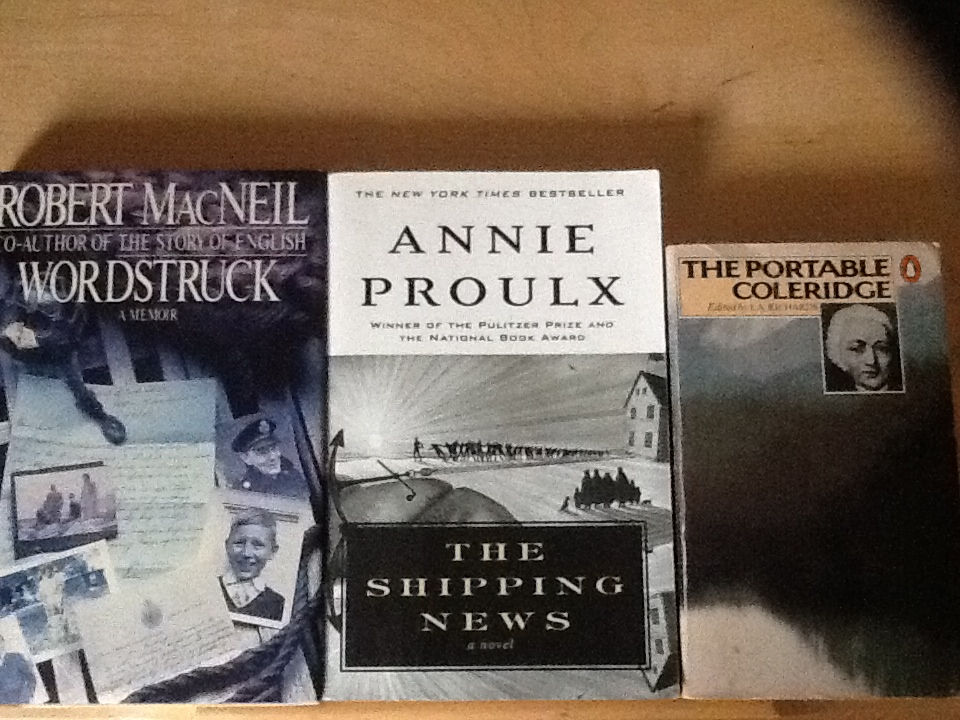
I admit it: I was not above the shuffle and scavenge of Booktraders’ end, I hate to say. I, too, walked away with three free books (pictured above) that actually piqued my interest. At least by saving these few volumes, I could promise them a good home rather than some cold resale. This act was a first for me as a lover of literature: walking away sorrowfully with books tucked beneath my arm. The creak and close of the store’s wooden doors behind me resonated like a casket’s final seal before burial.

The shuttering of Booktraders is a totem of a larger societal shift that is neither promising nor positive. When we are willing to prey on books but not give them our earnest attention and appreciation, we can no longer call ourselves a civilization. As publishing undergoes increasing transition, I suspect that real readers will become the  fulfillment of Ray Bradbury’s prophecies in the iconic novel Fahrenheit 451. We will be the outliers in a world walled in by electronic messaging and superficial relationships. Eventually, those of us who have bothered to memorize important passages will be glanced upon skeptically, even suspiciously. Perhaps this sounds extreme and even conspiracy-nuttish, but history paints a picture of prior societies who have fallen under similar strains. When we lose our love of literature, we lose our humanity.

For now, Booktraders does not rest in peace. It rests in pieces — fragments of disheveled disarray, the byproduct of mindless consumerism. It deserves better. It deserves honor. It deserves love. Farewell old friend, and thank you.


poetry, Uncategorized

On Acceptances and Patience

OsceolaTurkeyGobblerinColorAs a much younger writer, I once composed a short story based upon one hunting trip I took with my grandfather. On that trip, I shot a young jake (turkey) with almost no beard, and moments later, a huge flock of larger turkeys came strutting by, including one with an earth-dragging beard. As hunting camp guests, we were limited to one bird, and these bigger ones had long spikes on their legs and weighed nearly double what my quarry did. The point of the story was supposed to be “good things come to those who wait,” but in retrospect, the amateur creative nonfiction probably missed its mark.

I thought back on that story today, though, as I received an acceptance for my manuscript Middle Class American Proverb. The book is an 85-page collection of poems based upon rural life in old Florida and its highs and lows, among other topics. Understand: I graduated from the MFA program at University of Tampa in January, and since that time, I’ve been waiting for a publisher to accept this hard-worked collection of poems which I produced as my creative thesis. I had widely submitted it  long before I graduated, starting last fall. It’s been entered into contests, shopped around to academic and small presses around the country, and generally plastered everywhere I could find a spot for it in the literary community.

Many of my fellow writers wait far longer than just a few months to receive those magic words, “Your manuscript has been accepted.” In today’s market especially, poetry is not a big seller, as it is purchased mostly by other poets, literary critics, and academics. To get a volume of poetry accepted by a press, even a small one, is a near-miraculous feat. Making the process worse is that seemingly interminable period between submission and the yea or nay of publishers. As the old song says, waiting is the hardest part. Indeed.

Now, as the manuscript has found a home and the edits begin, I can breathe a little easier. Colleges and universities smile more favorably on applicants with a book or two under their belt, and the old notion of “publish or perish” still thrives at serious institutions around the country. I am incredibly grateful to my publisher, Negative Capability Press of Mobile, Alabama, for their interest in and attention to what I consider my masterpiece (thus far).

It is incredibly gratifying when editors and publishers recognize the labor and serious thought that you as an artist have invested into a work. And certainly this collection, by far, has received the best parts of my work and creativity. As the edits fall into place and the book comes to life from its manuscript form, I can hardly wait to see it emerge as the book I’ve always dreamed it to be. The process, I know, will be long. It will require the patience of a seasoned turkey hunter — or maybe that of a more experienced writer. Either way, I’m ready. This time, the first offer is one worth taking. Bigger “birds” might be out there, but this one is just right.

negcappress

poetry, Uncategorized

Business and the Personal

Image borrowed from terraverdeonline.com

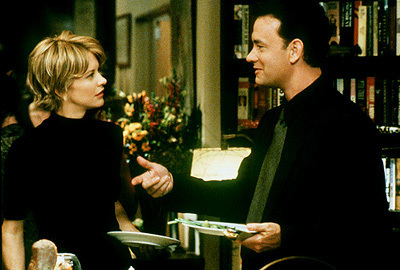
In the movie You’ve Got Mail, Joe Fox, multi-millionaire chain bookstore owner (played by Tom Hanks), advises small bookstore owner Kathleen Kelly (Meg Ryan): “It’s just business. It’s not personal. … Recite that to yourself.” Ryan’s character responds with, “Whatever something else is, it should begin by being personal.”

I see the merit in Kathleen Kelly’s sentiment, but having been in the rough-and-tumble world of publishing recently, I think I’m inclined to lean more toward Joe Fox’s approach. Yes, poetry, writing, and book-making are all endeavors that involve a person’s heart, even the soul. However, when it comes time to negotiate about matters like royalties, author’s copies, and similar factors, it’s time to put away the purple prose and break out the spreadsheets and graphs.

Lots of writers don’t want to hear this. They’d rather live in their sheltered creative Xanadu, pondering air castles and planning their next great narrative. On the other hand, rarely does one find publishers who can’t distinguish pragmatics from the emotional. Publishers, for the most part, are able to put aside their feelings and prejudices in favor of their latest project. I recently dealt with a publisher (name omitted intentionally) whose approach to book production was seen not as a creative-commercial enterprise, but rather, as an extension of her/his inner self. The publisher in question viewed the relationship with the writer as an deep emotional bond rather than seeing it primarily as a business arrangement. This person also slammed the work of similar publishers, some of whom he/she had worked with in the past.

As things became increasingly unprofessional, I politely declined the services of this publisher. I attempted to word the rejection softly, as I too have had my fair share of let-downs. In response, I was told that seeking a traditional or academic publisher was “insulting.” There were hurt feelings, apparently, despite my best attempts to avoid such ugliness. As a recent MFA grad seeking an experienced and respected publisher for my creative thesis (a mighty fine collection, if I do say so myself), I really don’t need a business partner who is affronted by every minor exchange.  It’s great to be invested in your craft, whatever that may be. Likewise, it’s necessary to differentiate between an expression of intellect and an expression of love. A consumer decision is not a romance.

Yes, creating (be that writing or publishing) is showing the world a piece of yourself. But when that creation crosses the transom into product, it’s time to evolve into strategist. Even for those of us who’d rather “dwell in possibility,” there must come a time when strictly cognitive and logistical decisions predominate. Once the art is done, business belongs in its proper perspective. Let’s keep it professional.

poetry, Uncategorized

How tactile-kinesthetic readers may save print

oldbooks Having just returned from my next-to-last MFA residency, I’ve had time to give some thought to the future of print books. At University of Tampa’s Book Arts Studio, I was given the opportunity to physically assemble a print book — in this case, a reprint of T.S. Eliot’s essay, Tradition and the Individual Talent. Our class learned the folding, punching, and binding techniques that go into the creation of a holdable text.

There exists a great hue and cry in publishing right now, as small and independent booksellers continue to bemoan the e-giants’ monopoly over popular reading (see prior posts for more on this topic). As humans reach for their devices rather than paper, bookstore owners and publishers alike begin biting their nails.

Here’s something, though, that has gone largely unconsidered: Bibliophiles of every generation enjoy the feeling associated with reading. When a book is especially well-produced — its cover embossed, its spine ridged, its pages delightful to turn — that experience becomes a large part of readers’ motives. They want to engage that part of their brains that makes connections with things touched rather than simply seen. For these tactile-kinesthetic learners (Gardner, 1983), reading is a complete sensory immersion, not merely a placing of text in the mind’s coffers.

I think back to my childhood, when my sister used to climb our old barn door and recline on the barn roof with her worn copy of Margaret Mitchell’s Gone With the Wind. The escape and engagement of those moments became something that has stayed with her forever. Part of the book’s mental and emotional perseverance resides within the format of the book she selected, and of course the “getaway” it provided. Had we owned e-readers at the time (long, long ago), I do not believe that the text would have been as meaningful. It would have become just another series of letter impressions, relegated to the same mental vault as USA Today headlines.

I admit it — I have an e-reader or two. I’ve even published my own 2005 print volume in the Kindle format. But when I want to read for pleasure and not just information, inevitably I turn toward traditional print books. I’ve tried reading poetry in the electronic format; it loses the organic intimacy that a print text elicits. Reading, for those who seek to enjoy it, needs to be a complete set of sensations, not just fonts hitting retinas. And it is precisely these touch-influenced readers who truly want to “suck out all the marrow” of a book. They may be print’s salvation in an age of expedient electronics. The future will tell.