Recently I’ve had the privilege of providing feedback to a budding poet whose work has been compiled into a chapbook. I see a lot of my own history in this poet’s words — as he has been exploring the tools of the trade, there’s the occasional overuse of alliteration (we both love the smart rhythm and happy repetition of consonant sounds), but there’s also this vibrant joy that comes with writing for writing’s sake.
This gentleman’s work has reminded me of my own roots as a fledgling poet. Before any fancy MFA programs, before any acceptance letters or awards, there I was — that beginner who scribbled out potent images and happily entangled words for the sake of seeing and hearing their interplay with one another. At some point along the writing journey, as I learned more of the “rules” and what to expect from diverse audiences and editors, somehow a little bit of that word-joy vanished. Writing poetry became about using literary devices and styles that others dictated were “the right way.” And while others’ perspectives are always helpful (even when they’re hurtful), at some point we as poets must step back from others’ voices and ask ourselves, “Is this really ME?” We would be wise to adhere to the admonition that Polonius gives to his son Laertes in Shakespeare’s Hamlet: “This above all else: to thine own self be true.”
That doesn’t mean that we shouldn’t consider others’ points or feedback; indeed, if we want to excel as writers, listening to credible responses will strengthen our work greatly. But when that advice begins to fly in the face of one’s own vision, then it’s time to gain some distance for the sake of clarity. In a few days, I will be headed over to Tampa for my summer MFA residency. While there, I will be engaged in workshops and seminars, many of which are intended for the critique and strengthening of my poems. As I listen to my peers and hear their thoughts (positive and negative) about my creations, I hope that I can keep that beginning-writer passion alive. When the bliss of writing is gone, nothing remains but sheer mechanics and accumulated letters. And when writing becomes the equivalent of intellectual ditch-digging, it’s time to stop.
Blog followers and fans, THANK YOU. Because of your loyal support and great word-of-mouth promoting poetjohndavisjr.com, I am proud to announce that this weekend, my 2005 collection, Growing Moon, Growing Soil, will be available FREE on Kindle to those who would like a copy. The promotion begins on Friday and ends on Sunday, so grab a copy while you can! The site, at last count, has 257 followers, well above my initial hopes of 200. With your continued support and avid readership, my hope is to make this site into something that every artist, writer, and creative can enjoy. Plans for the future include video clips of readings, audio files of certain pieces, poetry prompts, and lots more. Thank you again for your confidence; please see below for a link to the Kindle version of my book for your complimentary use:
Also, if any technical issues arise with the promotion, please provide feedback here. Happy reading!
This is just a quick post to say that poetjohndavisjr.com has almost reached 200 followers! If I can pass the 200 follower mark by Friday, I will offer all of my blog followers free Kindle copies of my first book. The second collection is currently under consideration and should find a home soon. For now, spread the word about my site, and you can get a free Kindle copy of Growing Moon, Growing Soil!
Once in a great while, a poet has the chance to meet with someone who has “been there, done that” many times over. Such was the case over my recent spring break. My family and I had gone to north Georgia to visit my dad’s sheep farm and do the tourist routine. While there, my father suggested we visit with local writing legend Mildred Greear. I must admit, I was hesitant about the engagement. Stopping by the home of an 87-year-old woman wasn’t really on my itinerary amid mini-golfing, mountain climbing, and snowball fights, but I figured, what the heck — vacation means no real schedule, and who knew? It might turn out a piece of writing or two.
As it turned out, Mildred’s home wasn’t too far away from where we were staying; just “up the hill,” to be exact. My father and I arrived and were greeted at the door. Mildred offered to put on some coffee for us, but we had just gone by the Sweetwater Coffeehouse and were good to go, we replied. So we sat down at her big dining table and began to talk literature. Mildred was especially interested in my literary endeavors, and asked if I’d ever submitted to the Atlanta Review, in particular. I told her I’d sent them a few pieces many years ago (pre-undergrad, let alone MFA), and she encouraged me to submit again.
“The editor there,” she said, “always sends back the most personal responses. Even if he rejects your work, you can expect to get something from it.”
Then she began to speak of her work in the local schools: “I get the boys and girls to think about Emily Dickinson,” she explained. “We look at poems and ask three questions — What, so what, and then what. Every poem has to answer those three questions, and the boys and girls really like it.”
So far, I’d gotten pieces of valuable advice for both of my fields of expertise: writing and teaching. But she wasn’t done yet. The next lessons were the best of all, as they dealt with literary life in general. Like me, Mildred self-published some years ago, and was disconcerted by the work’s treatment by others in the poetry and book community.
“They’ll say, ‘it’s not a real book,'” she recalled, “but you and I know different. Our books are better than a lot of that stuff (traditional publishers) publish.” She looked over a poem of mine from my first volume, Growing Moon, Growing Soil: Poems of my Native Land, and gave it both praise and refinement. “These words — isolation and anticipation — they throw me off a little,” she stated candidly. “Everything else is so peaceful and beautiful, and these words are jarring, kind of out-of-place.” She made me wish I’d met her before I went to press with that first volume back in 2005. Even at 87, her editorial eye hadn’t faded a bit.
She spent a little time recalling her science professor husband Phillip, bragging on his groundbreaking work regarding walnuts and other topics. Her pride shone behind a great smile as she thought of walnut trees returning all over the nation, largely because of Phillip’s influence and experiments. Modern scientists use much of his research even today in modern laboratories, she bragged. Yellowed articles about Prof. Greear’s work were pinned to her wall nearby, lasting reminders of an academic life well-lived.
My father spoke with her a little about local politics and old friends, and Mildred had opinions on all, of course. Asked about legendary north Georgia poet Byron Herbert Reese, she recalled the day of his death: “He was supposed to come by here for dinner,” she remembered. “I’d made fried chicken and we had several people over. … The time passed, and he hadn’t shown up. I just suddenly had this feeling that he wasn’t going to make it. … Somehow I just knew. I had set the table, and I told (someone in the family), ‘you can take that plate off. He’s not coming tonight.’ A moment later, the phone rang, and we found out that (Byron Herbert Reese) had shot himself.”
The memory of that night still haunts Mildred Greear. A pair of boys, Reese’s pupils, had stopped by minutes before his death, and Byron was playing a sad song on the Victrola in his office, the story goes. He seemed very depressed, and the students attempted to cheer him up before heading out. As they proceeded down the hallway, they allegedly heard Reese’s fatal gunshot. The boys ran back to find their good professor dead. Mildred said she encountered one of the young men years later and asked him if he was one of the students who visited Reese that infamous evening. The gentleman she inquired of, now a full-fledged adult, said he was indeed. They consoled one another all over again, remembering Reese’s spirit and work.
Mildred, my dad and I talked a little longer, mostly small, innocuous chit-chat, and then she completed our visit with a hearty thank-you to both of us for stopping by. She wished me well, and implored me to keep in touch. She also asked for a copy of my book, which I’ll be sending soon. Mildred, like so many other elder writers, offered me a keen sense of what value can be added to a life by simply “sticking around.” Her history, her perspectives, and her sound sense of good writing made our visit not only an unexpected pleasure, but a real privilege as well. Thank you, Mildred.
Hello, loyal readers. This is just a quick post to let you all know that my book, Growing Moon, Growing Soil: Poems of my Native Land, is now available as a Kindle edition. The digital version is far less expensive than the original paperback, but it maintains the character and artistry of the printed page. Please see the link below, and purchase your copy today! All proceeds will go toward advancing the literary arts in central Florida. Thank you as always for your support!
Yesterday, in the midst of national mourning over Newtown, CT, America quietly lost one of its brightest young poetry stars. Jake Adam York, author of A Murmuration of Starlings and other great books, passed away after a stroke. The thing that makes this so difficult for me is not that I was close to Jake as some of my friends were, but the fact that he and I share so many similar “markers” in our lives. We’re roughly the same age (he was a little older than I), we both write “Southern” literature, although in very different ways, and we have followed fairly similar professional paths within higher education. His accomplishments far surpass my few little awards and recognitions, but we both shared similar goals and ambitions, as well. His voice was unique and upbeat, and I found myself going to his work frequently as a guide, especially for my regional work.
People who knew him well described him as kind, open, warm, and fun to be around. As I was telling a friend of mine who befriended Jake early on his career, I knew his work and his voice primarily through reading his stellar poetry. But secondarily, I felt like I understood him as a person through his seminars, workshops, and videos of his readings and speaking engagements. Granted, none of these media replace truly knowing a person. However, by gaining a sense of his perspectives, his vision, and his understandings, I felt like I was participating in life alongside him as a fellow poet. Maybe that statement is a little selfish, and certainly it isn’t intended to be.
His legacy should inspire writers and poets everywhere to produce their finest work. None of us knows when our last breath will be, and we should aspire to disseminate work that reflects the very best of ourselves. Jake did. As our country and the literary community continue to heal from tragedy, we owe it to ourselves to reflect on all our gifts and blessings, especially in this season. Pondering the bittersweet combination of loss and generosity should motivate us to use our talents for the betterment of our world at large. Our role models, no matter what field they may be in, always point us toward things higher, greater, and more important than ourselves. We owe it to their memories to preserve the spirit of excellence by doing our utmost.
Poets have slightly different holiday tastes than do Average Joe and Plain Jane. On my list this year, I have all sorts of things that the “normal” folks probably would not think to ask for, but then, eccentricity becomes an expectation once you’ve told people that you’re a writer. For better or worse, here’s a list of a few things I’d like to get, and probably, some of your writer friends would like also:
1. The Best American Poetry 2012: This year’s collection, compiled and edited with the help of Mark Doty, has quite a few poets I admire personally, including my own writing mentor, Erica Dawson. Reading good work often leads to writing good work.
2. The 6.5 Habits of Moderately Successful Poets. This is another book in the category of “things I’ve been meaning to read, but haven’t.” After reading the reviews, I’m pretty convinced I should at least familiarize myself with it.
3. Cool new bookends. I have this affinity for bookends — there’s a certain stability and finality that they convey, I suppose. Antique stores and online vendors alike offer great opportunities to pick up a piece of history while keeping one’s texts ship-shape. There’s also this air of refinement that bookends offer, and I suppose that’s another draw for me. I like classy touches, and bookends fall into that category often.
4. Fine writing instruments. My all-time favorite vendor for Waterman pens has to be Levenger. I don’t usually plug businesses here, but over the years, Levenger has provided me with reliable, aesthetically pleasing fountain pens and a plethora of cool “writer toys” that remain meaningful even today. The pen I typically use to start drafts (a Waterman Phileas) came from there probably about ten years ago, and the briefcase I use for all things writing-related is also a Levenger product. If you haven’t paid them a visit yet, I highly recommend it. The writer in your life will thank you.
5. Gift card #1: Staples. If you’ve been a regular reader of mine, you probably know by now about my unhealthy obsession with office supplies. My favorite store is definitely our local Staples. From paper clips to printer cartidges, Staples allows me to feed my fetish for writerly goods.
6. Gift card #2: B&N. Sorry, other booksellers. I’m a fan of Barnes and Noble’s brick-and-mortar establishments. Somehow, they’ve managed to preserve that certain air of old-school bookstores while staying current with technology and trends. And before my writer friends get upset with me for not patronizing my local small, independent bookstore, allow me to say that here in my location, we unfortunately don’t have such an animal. To use an old football idiom, here in my town you have to “go big or go home.” It’s BAMM or B&N, and the people under the green awning have better customer service skills and actual knowledge of their wares.
7. Gift card #3: Apple. I love my iPad. I like my apps, my games, my music, and my movies. I try not to write using my iPad, simply because it’s so recreational — there are too many distractions there. But for everything else in my life, the iPad is a wonderful tool. I use it in the classroom, at home, on vacations, and in workshops, seminars, and classes. For everything that’s NOT writing-related in my life, my iPad is the perfect companion. (No, I was not compensated for saying this — it’s just true).
8. Vinyl records: I love the sound of music on vinyl. There’s such a history and an art that goes with listening to an honest-to-goodness record. Mostly, I use my record player for classical music. I have all my other media players for more contemporary stuff — PC, iPad, etc. do a perfectly good job with modern music, but for Handel’s Messiah and Arthur Fiedler’s Boston Pops, I gotta have my vinyls. Call me antiquated if you will.
9. Coffee. Not the stuff in a blue can from the grocery store, the good stuff. Yes, I grind my own beans. And yes, I do have three separate coffeemakers in my house: French press, percolater (percolator?), and finally, Keurig single-serve. I typically use the big French press for company, the percolator for Sunday mornings when everyone is having coffee, and the Keurig for everyday, nothing-special single cups. That hackneyed expression about “a little blood in my caffeine stream” holds true here. Coffee is my gasoline.
10. Gift subscriptions to my favorite magazines. By keeping in touch with what’s happening on the literary front, I’m better equipped when sending out submissions and manuscripts. The great thing about getting subscriptions for Christmas is that the gift is enduring — every time a new issue arrives, I’m reminded of the person who kindly thought of me and my ambitions.
So, there you have it — one Florida poet’s guide to giving for the coming holiday season. If you’re out fighting the insane crowds today, good luck. And here’s hoping that you get everything on your wish list, as well.
I’ve never considered myself much of a salesman. As a kid, I sold a few candy bars and other fundraisers for school, but other than that, I’ve never had much of a knack for getting people to part with their money. Truthfully, it feels kind of dirty. Even when I’m selling a product that I firmly believe in (like my own writing), I find it difficult to persuade others to buy.
This past weekend, I had the benefit of participating in the Polk Authors and Illustrators Festival, a downtown marketplace-style gathering of writers and artists in Lakeland. There I was, hawking my wares to Joe Public, having the grandest of conversations about poetry, Florida, and a thousand other topics. I fell into sort of a groove at one point where people were buying books left and right, not because I was pushing my product on them, but because I engaged their natural desire to talk about themselves.
As they spilled their guts about their childhood or their daughter-in-law, I found some kind of remotely related tie-in to my work. I opened the book up, showed them a verse or two that had to do with our conversation, and by George, they bought the book. I’m sure that those of you in sales have a name for this kind of approach, but far be it from me to know such things — I remain a poet and schoolteacher at heart.
The lesson, I guess, was just this: If you show up to a place all worried about how many books you’re going to sell (or not), then you reap the results of your anxiety. If you just take it easy, talk to the people like a normal human being, and do your best to be a good listener, the sales take care of themselves. Events like the Authors and Illustrators Festival help me to remember my place in this world; I’m not a pitch-man or a carpetbagger, thank goodness. I do, however, know good-sounding words when I come across them, and I’m a pretty fair peddler of free knowledge. I might do the festival again next year, but for tonight, there’s writing to be done. Time to close up shop.
So, this post probably won’t win me many writer friends. Be warned.
I have found over the years I have written poetry and prose that I am different from my colleagues in one regard: I actually prefer to be interrupted from writing.
Now, before all you secluded-in-solitude writers go nuts, let me clarify: My writing room has no “doors” to speak of. My children can come in at any time and speak to me, get hugs, whatever. And in retrospect, those interruptions have actually made my writing stronger.
Here’s what I mean: My brain actually has to work harder to power through the static and the outside influences, and thereby comes up with things that my brain at total ease would never think. In fact, when I’ve tried to write in areas that are too quiet (the library, my local college study room, etc.), I find myself encountering greater difficulty. There has to be some background noise, and it can’t be something like music with lyrics or that artificial white noise garbage. The sounds in the environment have to be things I know are real: the drip of the rain beyond my window (like right now), the TV in the adjoining room mumbling about…I can’t tell what, the coffeemaker gently whirring forth a stream of fuel, my boys playing pirates in their bedroom down the hall. These noises actually help me to focus better. And while many of my poet friends would cringe at the thought of such “racket,” I’ve found that writing locales without these sensations rob me of something. Maybe it’s the familiarity, maybe it’s a degree of undiagnosed OCD — I’m not sure.
Whatever the cause of this scientific fact, the thing that matters most is its effect. I know how and where I write best, and life’s little interruptions are as necessary as pen and paper. Do I still fantasize about being that “lone wolf” author who has blackout blinds and acoustic paneling just to ensure that his thoughts aren’t “tainted?” I suppose. But given my druthers, I’ll take my boys’ imagination-chatter and the soft hum of life in the suburbs over celebrity sanctuary any day.
As a young journalist, one of the perks of my job I truly enjoyed was seeing my byline above the stories I had written, and my name beneath the photos I shot of everything from car wrecks to disgraced public officials. That joy lingers today, but in a slightly different form: When I see my poetry appear in literary journals and other venues, there remains that sort of pride that goes with seeing one’s name in a place seen by many. I guess it continues to appeal to my ego, among other things, but no matter what the psychological explanation, seeing my name in print continues to be a thrill even after all these years.
Of course, publication credit has fallen from its former #1 spot on my list of writing needs over the years — as family and home have superseded the other areas of my life, seeing my byline is less joyful than receiving a healthy check for my work, for instance. Likewise, I’d much rather have a dinner on the town or a free “date night” with my spouse than be able to boast my literary accomplishments to others who most likely don’t care in the first place. I suppose this is what adulthood does to us, in some respects: It steals away our adolescent and young-adult pleasures and replaces them with the docile and common expectations of a relatively humdrum society and culture.
Nonetheless, a certain part of us, a less mature part perhaps, knows that recognition is indeed still on our Maslow’s hierarchy, albeit in a somewhat different place. Indeed, the receipt of credit for something well-written continues to be a source of inspiration, motivation, and aspiration for every writer, no matter how young or how old.
 FLteacherpoet555
 Recently I’ve had the privilege of providing feedback to a budding poet whose work has been compiled into a chapbook. I see a lot of my own history in this poet’s words — as he has been exploring the tools of the trade, there’s the occasional overuse of alliteration (we both love the smart rhythm and happy repetition of consonant sounds), but there’s also this vibrant joy that comes with writing for writing’s sake.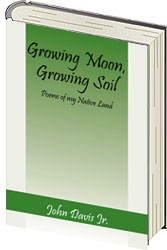


 John Davis Jr. -- Author