poetry

Against Obviation of the Abstract

colorful-abstract-face-chris-bradleyIn just a few short weeks, I’ll be speaking to the graduating class of my alma mater’s MFA program. I’m supposed to be addressing “Life after the MFA,” a subject that I’ve become intimately familiar with over the last year and a half. In preparation for this talk, I’ve been looking over some of the notes I once took in MFA workshops, seminars, and synthesis sessions, and I’ve found that, while apart from the academic structure of the program, I’ve developed a discerning sensibility about some of the issues presented by professors in grad school.

One subject is that of using the abstract vs. using the concrete. Not one, not two, but three different professors in the MFA program at different times encouraged students to eschew abstraction in favor of concrete images. This is a good idea for beginning writers like the ones I teach, as their poetry is often littered with pathos in the form of notions like love, jealousy, rage, and abandonment.

But to lay down as a rule the idea that anything abstract or intangible must be omitted is incorrect, or at the very least, in need of refinement. The truth that I’ve found is this — using the abstract in poetry is much like using anything else in art: too much, and the work will become imbalanced; too little, and the work will lack relatability. This is especially true in the use of one of my favorite literary devices, the zeugma. For the unfamiliar, a zeugma is a combination of something concrete with something abstract in a line of poetry (or literature): “She spoiled her honor and her Sunday dress,” for example. Using too many zeugmas cheapens a poem and casts the image that the author must prevail upon parlor tricks to wow the audience rather than solid content.

But the right zeugma in the right place can make a piece sing. Just like similes, metaphors, oxymorons, and the whole array of other literary devices, the zeugma too carries its weight. And without abstraction, the zeugma is relegated to the status of a single image, a single item. Abstraction is necessary for this device and so many others to work.

“Everything in moderation,” the old saying goes, and in poetry as in life, this cliche actually holds true. Plenty of concrete imagery mixed with the right amount of abstract language can produce beauty, truth. Will I, like my former professors, prescribe my advice to near-graduates?  Probably not. I’ll probably discuss the pragmatics of literary life — the necessity of staying in touch with fellow writers and readers, the merits of continuing to submit work, and possibly the necessity of overcoming rejections.

As for using the abstract, my students and I will continue to ply the often-holistic, qualitative language in our everyday writings. Rather than removing a tool from the writer’s toolbox, we will use it as a carpenter uses a plane — the write tool for the right job at the right time.

poetry

On Poet Laureateship

I’ve written before about awards and prizes in the literary realm — some good, some bad. But today I’d like to talk about a very special kind of award; one that recognizes not only quality or quantity of work, but devotion to one’s community. Having recently been named poet laureate of Winter Haven, Florida, I feel a need to examine what such a title means, and what it means to others.

I first heard of poets laureate when I was in college; about that time, two Roberts, Robert Hass and then Robert Pinsky, were poets laureate of our country. And even though I wasn’t an English major, I knew that the title was something significant. I had dabbled in poetry myself even though I was pursuing a misguided career in journalism, and thought that anyone who received such a title must have an exceptional affinity for the written word. The office intrigued me.

The next poet laureate I knew, this time more personally, was Peter Meinke. As a student of Peter’s both in workshops and in my MFA program, I was privileged to see and learn what it took to become the poet laureate of a city. In Peter’s case, his city is St. Petersburg, and all one has to do is pay a visit there to see how St. Pete appreciates him and his work. While the “man on the street” might be unfamiliar with Meinke’s decades-long canon of literature, those who read widely and have been around the Tampa Bay area for a while know that, when it comes to poetry, Peter is king in Florida. In fact, he is currently under consideration to become the poet laureate of our state, a position that I hope he occupies soon. Peter knows what it means to love an area and portray its beauty, its scars, and its people in poetry.

After Billy Collins served the US as poet laureate in the early 2000s, bringing with him the Poetry 180 program to American high schools, I was equally excited when Natasha Trethewey, Southern poet extraordinaire, was named to the office. Her work, while examining issues like civil rights and racial hardships, drips with the resonance and the harmony of America’s southland. She can render an oxymoron so skillfully that it can rip your heart out, and in the next line she’ll have you laughing hysterically. Certainly our national poets laureate give up-and-comers something to aim for as a goal.

Meanwhile, here in Winter Haven, I am humbled by the title of local poet laureate. As my city’s first, I also hope to set the bar for those who may come after me. Whether it’s celebrating a groundbreaking, honoring fallen heroes, or inspiring the bright young minds of tomorrow, my poems are intended to be a positive addition to our city’s growing understanding of and emphasis upon the arts. I love this city that has served as my home for the last 14 years — a time span that has allowed me to evolve from a young photojournalist into an educator, a writer, a husband, a father, and now, a poet laureate. During my time in Winter Haven, I’ve earned two graduate level degrees, taught at two colleges and spoken at many others, and I’ve been allowed the freedom to pursue my craft in a natural setting comparable to none. May my words serve this community well and with the greatest of gratitude.

Here, for my readers, is the short piece I read to the city commission at their meeting Monday night after the poet laureate pronouncement was made:

End Weekend

Our lake is silver
on the cusp of evening
as it is waiting

for sunset, nightfall,
a thousand blind mosquitoes
making black blacker.

Here we are, a lone
boat trolling toward our dock
where God’s finger trails

and our wake both stop.
The surface cools to midnight
blue – that good-bye hue

preceding the stars
that navigate our earthbound
vessels to Monday.

This poem was first published in Saw Palm magazine (USF); included in my latest book Middle Class American Proverb (published by Negative Capability Press).

poetry, Uncategorized

The Awards Game

Award_imageIt’s that time of year again: Editors and publishers are nominating works from their magazines and bookshelves for a broad range of laurels. Most notably at this time of year, writers receive word of Pushcart Prize nominations. As a younger writer, I used to get all tingly when those nominations arrived by email — kindly journal editors who liked my work sent it on to that mystical committee that views thousands of submissions every year from literary journals all over. I am still honored to have my work nominated for the Pushcart (as it was again this year), but in speaking with mentors and writer-friends of mine, I’ve come to understand something: Poets “worth their salt” are nominated for the Pushcart almost annually. Venerated veterans of poetry take such nominations for granted, apparently, even though those of us who are still “emerging” think them a big deal. So, I’ve learned to cool my jets a little. Once my work is actually included in the honorable Pushcart anthology, I’ll certainly add that detail to my author’s bio. But for now, I suppose I should join the ranks of my fellow authors who see nominations as a nice thought, a kind gesture, but ultimately, little more than a tip of the hat toward one’s work.

I’ve learned also that the awards one reads about in other writers’ portfolios aren’t always as glamorous as they seem (take note, young writers). Certain awards may open some doors, they may add something to one’s CV, but outside the literary community, they don’t amount to a hill of beans. Robert Frost was a fan of the old saw “Fine words butter no parsnips,” and I suppose in the world of literary awards, a similar thought exists — shiny trophies, parchment certificates, and faux-wood plaques don’t make you a writer any more than a fancy hat does.

Recently a publisher friend of mine let me know that my book has been nominated for a couple of other awards, as well. If I win, it will be a wonderful experience, and I’m trying hard not to get my hopes up too much prior to the announcements. These awards are entered by many of my most respected fellow writers and their publishers, as well. To even enter the field is an honor unto itself. The danger, of course, in winning awards is the temptation toward stasis — many a great writer, after earning the Pulitzer or the National Book Award, has lain down his pen. The award was an end rather than a milepost on the journey. Writers, as awards season enters full swing, the temptation is great to see pinnacles where only plateaus exist. Gilded honors are stations on the path, not summits to be conquered. Let us be grateful and humbled, but let’s not be complacent. There’s writing yet to do. Stick that award on the shelf or on your book cover, and let’s keep going.


poetry, Uncategorized

When did you become a “real” writer?

220px-Stipula_fountain_pen The question above isn’t new. Literary magazines and writing guides have been debating it forever, it seems, and the general consensus among writers groups, workshop participants, and seminar-givers is this: people gets to call themselves writers when each individual decides it’s time. What a horribly unspecific and wishy-washy answer. That being said, all I can provide is my own experience in an attempt to help elucidate some sort of solution to this continuing conundrum.

For some people, becoming a full-time writer gives them the license to wear the title. For others, attaining a degree in writing allows them to introduce themselves with the phrase “I’m a writer.” Many novices don’t consider bringing up their writing unless they’ve published extensively. So, let’s be clear — going full-time, earning educational laurels and publishing are all nice components to a writer’s personal history. Yet none of those (by itself or in concert with the other factors) will magically bestow the name of “writer” upon anyone. What, then, does it?

An oversimplified answer would be to say, “Well, writers write.” That unfortunate phrase has become a cliche (if not a trope) that writing magazines and workshop providers have been uttering like a forged instrument for too many years. We know writers write; hence the name. But if writing is our only criteria for calling someone a “writer,” we’re losing something along the way.

Allow me to provide an example: Last night, my six-year-old son received a new art table from the store. He drew pictures of rockets and dragons and all sorts of things, and then put some words under them. Some of the words were correctly spelled, others were more phonetic. Does he then qualify for what we would call a “writer?” I’d like to say yes, but by societal and cultural standards, I’m afraid that the answer is a resounding negative.

Stephen King is a writer. Billy Collins is a writer. Even Danielle Steele (yeesh) is a writer. Why? Because they have been advertised, marketed, promoted and published as writers, and therefore the public has dubbed them “authors.” Does that mean that our names must be up in lights or on the front of Barnes and Noble before we can lay claim to such a noteworthy nomination? Not exactly.

Here’s what did it for me: Yes, I earned an MFA. Yes, I’ve published three books now. And yes, I’ve seen my name in a pretty good number of literary magazines over the years (gratefully). But honestly, it wasn’t until I finished this most recent book that other people began calling me a writer, and I suppose the reality sank in at last. You see, my first book was self-published (fodder for another post entirely), and my second was a shorter volume (chapbook). This third book was published by a respected and professional publisher, and it has been better received than either of my previous two. It has been advertised in newspapers, online, and in magazines, and friends of mine from various lit journals have promoted it fiercely. I have not one but two different launch events planned. Many of these efforts were self-initiated, and mostly because I have greater respect for this book than I’ve had for my others. That’s not to say the others were bad; it’s just that this volume kicks their cumulative butts.

So I suppose you could say that this most recent book, Middle Class American Proverb, was the magic ingredient that finally allowed me to admit to myself that I’m more than a schoolteacher. Because I’ve given it the respect, the time, and the investment that it truly deserves, it has allowed me to finally say to others, “Yes, I’m a writer.”

The lesson here: When we give our endeavors serious treatment, we will then be treated seriously by others, and more importantly, by our selves.

poetry, Uncategorized

Shhh….Don’t tell anyone

Loyal blog subscribers, I have a secret for you: Today you can order your pre-release copy of my newest book, Middle Class American Proverb. Here’s the link:

This is the definitive Florida poetry collection I’ve been writing about. Get your copy today!

johndaviscover (3)

poetry, Uncategorized

The Book Trailer: Just Say Yes

In contrast to my recent post about the triviality of “cover reveals,” this post deals with a technique that I and other authors find effective: The Book Trailer. Simple to produce, short enough to keep interest, and crazy affordable (you can’t beat FREE), the book trailer has a vast reach. Within the first hour of uploading the book trailer below, I had more than 100 views. I haven’t checked the stats today, but the trailer is probably one of the more popular marketing steps I’ve taken in preparing for the release of Middle Class American Proverb. The book has its own website, http://www.middleclassamericanproverb.com/, and its own Facebook page: https://www.facebook.com/middleclassamericanproverb?ref=bookmarks.

But none of these has received the attention that the book trailer did in such a short period. Maybe that’s my own fault — I could have pushed the website and the Facebook page harder, but at some point, marketing becomes annoyance. Anyway, without further ado, here’s the book trailer for my loyal blog followers:

poetry, Uncategorized

The “Cover Reveal:” Just Say No

A word of warning before I begin here: This post is probably going to upset a number of my creative and socially inclined readers. But what you see below must be said.

I will not be holding a “cover reveal” for my upcoming book. If you want to know what the cover looks like, here it is:

johndaviscover (3)

There. It’s revealed. And as happy as I am with this cover (isn’t it COOL?), I don’t feel anything further is warranted. After all, the real meat of this work lies between the covers, and that’s where I’m hoping you’ll look when this volume hits the bookstore shelves soon.

“Why the snarky attitude about cover reveals?” you might ask. Well, here’s the thing: I am a husband, a father, a teacher, and a writer. I serve as a community volunteer and as an active member of my church. My weekends are most often consumed with birthday parties for other people’s kids, lawn maintenance, and the peripheral tasks of education — grading papers, preparing lesson plans, and so forth. My time is valuable, and honestly, unnecessary and entangling social engagements are nothing more than a gigantic time-suck.

Now before my readers accuse me of being some selfish, antisocial hermit, allow me to say that I love a good get-together as much as the next person. Just recently (as you may have read here), I hosted my own chapbook launch for “The Boys of Men,” and it was thankfully well-attended. The food was delicious, the company was wonderful, and the reading was fun and interactive. I sold lots of copies, and was able to make a modest donation to one of my favorite charities who helped host the event.

Why, then, am I against the notion of a cover reveal, in particular? I oppose cover reveals for the same reason that I oppose “gender reveal” events for babies that have not yet arrived: It’s one more thing. That’s right — one more space on the calendar filled with pointless banter and oddly colored punch. We’re all very happy you’re having a boy/girl, but isn’t your fourth baby shower (also inappropriate, might I add) enough? Must you subject us to yet another inane occasion to stand about, idly discussing the weather until you drop a curtain or pop a balloon? Seriously, stop. No more, please.

Authors: Please don’t consume the valuable time of those you know with the literary equivalent of the gender reveal. We know your book has a cover. We’re ecstatic for you, and proud to call you our friend. But to hold people hostage while you unveil a placard is both ludicrous and disrespectful, even if you provide finger sandwiches and fruity beverages. By all means, launch your book. Hold readings. Give lectures and seminars. I’ll be there. It’s an opportunity to learn something, hear something new, and culturally engage. Reveal something more than a shiny piece of plastic, some crackers and a “TA-DA!” Give us your words, give us your work, give us your heart.

poetry, Uncategorized

The Catharsis of Found Poetry

FoundPoetry1It was the end of the first week of school. Students in my creative writing classes had been pounded all week with Strunk & White, William Zinsser, and the thousand and one unofficial “rules” of good writing. It was time for expression. It was time to put the “creative” back in creative writing.

I thumped a load of TIME magazines down on the table at the front of the classroom along with scissors, glue sticks, tape, and construction paper.  Then I began explaining found poetry: that crazy-but-sometimes-deep hodgepodge of discovered, connected everyday language. My challenge to this group: “Take seemingly disparate words and phrases from these publications and bring them together in a way that appeals to your mind.” No limitations other than that. Just cut and paste. Form something that makes a semblance of sense to you — that’s it.

Then something magical happened. Students began to string together words and phrases in unexpected ways, forming verses about topics ranging from racial prejudice to missing class because of nature’s call. Some were expectedly cliche, but others struck a nerve, both in their authors and in me as their teacher. It was splendid. It was creative. It was (pardon the triteness) inspiring.

This was not the first time I’d seen the “cut and paste” exercise used — teachers have known about newspaper poetry and similar tricks for years. And of course, I’d been fortunate enough to have a grad school professor who encouraged us to use this exercise to loosen up our own creative muscles before. But when these high schoolers were set loose on the project, there was an unusual fervor in the air — it was as though they were finding treasures that would help display their souls. After a long week of reading the advice of the old, the dead, and the mundane, found poetry was just what the doctor ordered.

For us as writers, the occasional dabble into arts and crafts can likewise be a refresher.  When faced with being stuck, the switch to tactile-kinesthetic arranging of words like refrigerator magnet poetry or word tiles can allow another part of the brain to do the work for a while. And sometimes, when monotony brings us down, colorful paper and scissors and paste can also remind us of a simpler time — one that perhaps inspired us to undertake the writer’s journey in the first place.

For more examples of my students’ awesome work: https://sites.google.com/site/harrisoncreativewriters/


poetry, Uncategorized

An Elegy for Booktraders

photo

Recently, one of our local traditions here in town closed its doors for good. Booktraders was a staple in downtown Winter Haven for decades, and after two different owners’ attempts at reviving its business, the used bookstore was decorated with deceptively happy-looking yellow signs in its big front windows: FREE BOOKS.

I entered just like dozens of times before, this time with less enthusiasm and curious optimism. The smell of old paperbacks, wood shelving and historical bindings filled me as it had during all those other prior visits, but this time, it was the scent of defeat. People were inside filling carts and boxes with books that they probably never would have “traded” their own used books for previously. During this glut of knowledge, it seemed to matter little whether the books had any real appeal to the hoarders or not. Books were free! The scene was not confrontational like the 1980s ugliness of Cabbage Patch Kid mania, or more recent consumer battles for the hottest items or gadgets. Nonetheless, it was an unseemly display of avarice at its basest: Humans turned hyenas by someone else’s loss.

The real sadness of the situation was its broader commentary upon our current culture. Thanks to electronic everything and a constant shove toward productivity, efficiency and expedience, Booktraders met its La Brea Tar Pits-style extinction, a slow and steady groaning descent into fossilization. I remember summers when my mother, an English teacher for our local public high school, would leisurely read through paperback after paperback. She instilled this love of pleasure-reading into all of her children, myself included. Her friends, more literate members of our community, likewise would consume books by the handful, especially during the summer. That type of leisure reading, however, seems more and more to be a thing of the distant past. Certainly, there are those select bibliophiles who consciously consume traditional texts, but the larger portrait of American reading habits paints a grim picture — one comprised of people engaged in more reading-like activities (texting, Facebook-checking, etc.) than in actual comprehension.

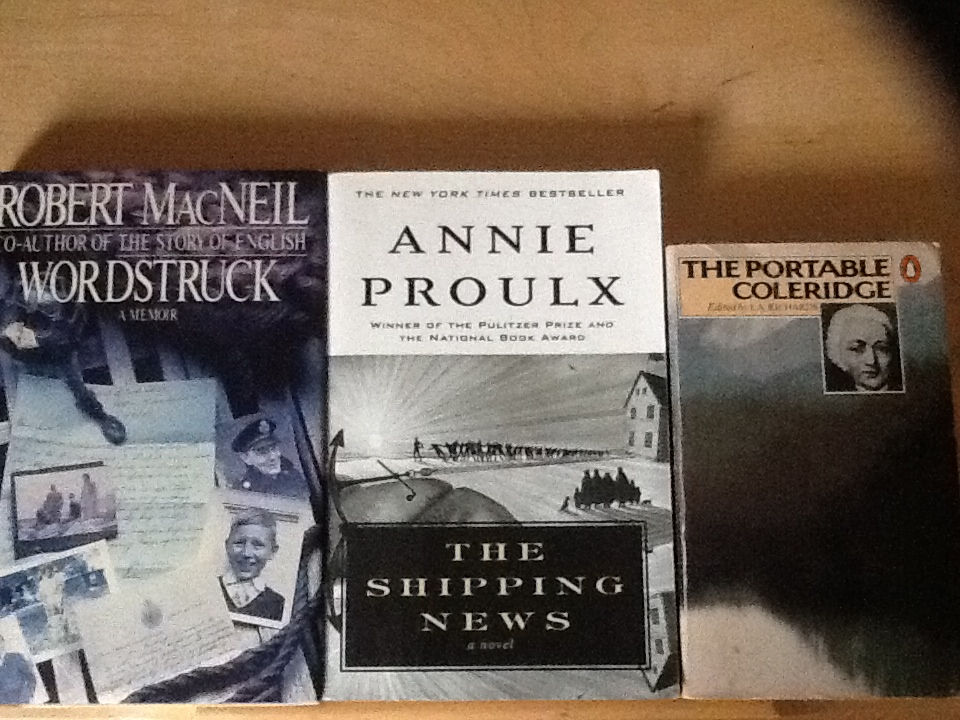
I admit it: I was not above the shuffle and scavenge of Booktraders’ end, I hate to say. I, too, walked away with three free books (pictured above) that actually piqued my interest. At least by saving these few volumes, I could promise them a good home rather than some cold resale. This act was a first for me as a lover of literature: walking away sorrowfully with books tucked beneath my arm. The creak and close of the store’s wooden doors behind me resonated like a casket’s final seal before burial.

The shuttering of Booktraders is a totem of a larger societal shift that is neither promising nor positive. When we are willing to prey on books but not give them our earnest attention and appreciation, we can no longer call ourselves a civilization. As publishing undergoes increasing transition, I suspect that real readers will become the  fulfillment of Ray Bradbury’s prophecies in the iconic novel Fahrenheit 451. We will be the outliers in a world walled in by electronic messaging and superficial relationships. Eventually, those of us who have bothered to memorize important passages will be glanced upon skeptically, even suspiciously. Perhaps this sounds extreme and even conspiracy-nuttish, but history paints a picture of prior societies who have fallen under similar strains. When we lose our love of literature, we lose our humanity.

For now, Booktraders does not rest in peace. It rests in pieces — fragments of disheveled disarray, the byproduct of mindless consumerism. It deserves better. It deserves honor. It deserves love. Farewell old friend, and thank you.


Uncategorized

On Slow Progress

Image
photo credit: NCSU

Once when I was fifteen years old, I climbed a waterfall. To be precise, I climbed the rock facing underneath the waterfall. My family and I were in north Georgia at the time, and the trail leading to the falls had ended at a wooden deck-style overlook some distance back, but I was not to be restrained by man-made barriers. As a young man full of vigor and adventure, I knew I could get closer. I had no idea how close I would get…to dying.

At the base of the falls well off the path, I began my steep ascent. The hard rock underbelly of the falls was covered in algae and ferns, and my fingernails dug up green with each new handhold. My hiking boots were not designed for this type of climbing, but they held fast to the slick and treacherous surface. Their cleats, too, ripped into the carpet of greenery. Each move was a calculated, deliberate decision. My pulse was racing, my stomach flooded with adrenaline. Still, I was too deep into the task to go back, and had I wanted to, I probably couldn’t have. I decided to see this venture through with discernment and strength. Even with caution, though, bad things happen.

As I neared the top of the falls, the gush and roar of the waters above me became near-deafening. I knew I’d have to veer to one side of the overflow or the other. The problem I now faced was inexperience — as an untrained and unfamiliar climber, I knew how to go up, but beyond that one direction, my movement was limited. I’d have to go straight through the water to reach the top. I summoned my most courageous breath, and felt the current strike the crest of my scalp. I pushed upward, caught a face full of water, and fell backward.

It was a surprisingly short fall — unlike those dreams where one seems to descend for eternity before waking with a jolt, this fall scraped my chin and chest on the rock outcropping, and in the midst of the peril, my fingers and boot-treads made one last grasp to the surface. I had enough purchase to shove my way up the right side of the falls, and eventually, I found myself standing at their apex, looking back down the long trail of white and the brutal path beneath it. Around me, mountain laurel were in bloom, and I could see our campsite in the distance. The victory at last was mine, and a hard lesson was learned. My chin was still bleeding. I covered it with my bare hand, and walked in the direction of camp.

I thought of this experience recently as I was growing impatient with other life circumstances. As regular readers know, I have a book forthcoming this summer, and my career is in a state of flux as I attempt to transition from secondary to post-secondary teaching. The end of the school year is upon us, and I’m generally discontent with waiting. The waterfall climb of my youth was one made with persistence, care, decisiveness, and bravery. As I think back on it, I recognize traits that I now need as the next chapter of my biography is only a few pages away. And while I may experience a “slip” or two along the way, I understand that, like surmounting any great obstacle, judicious patience remains key.