poetry, Uncategorized

Keeping the Writing Window Clean

Every writer needs an inspirational view.

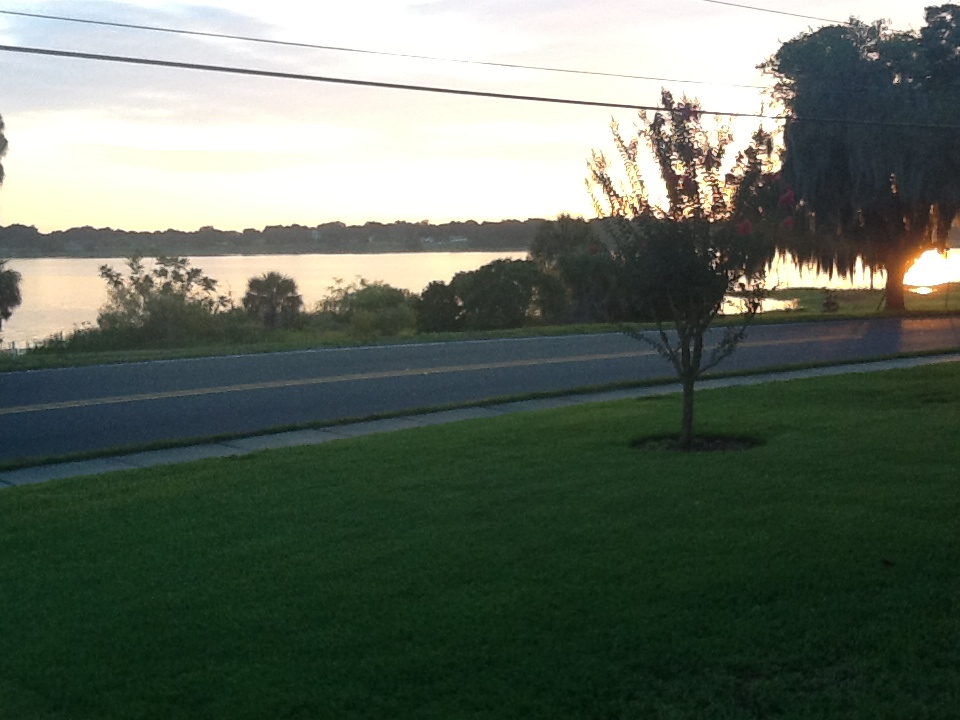
Those who’ve followed my blog for a while know that I have a “writing room.” Back in the seventies, this room was the formal living room, and after my second son was born, I transformed it into my studio (since I had willingly transformed my previous study into a nursery). In this room, we installed a large picture window that looks out across Lake Elbert. I do most of my writing in view of the lake.

But today’s post is less about the room itself and more about that window — the one that allows me to clear my head of other outside influences and reach a state of creative clarity. This morning, you see, I had to go outside to clean the window. Living on a lake means tolerating the Daddy Longlegs, dirt dobbers, and other occasional creepy crawlies that want to claim your open porch as home. But when they start to encroach on my view, then the gloves are off. As I was scrubbing, I realized, as many poets have, the metaphorical power of windows. Granted, this was not some new, earth-shaking revelation, but simply a restatement of prior knowledge: windows in literature have served as eyes, symbols of transparency or opacity, and they have taken on a wide range of other meanings, depending on the work’s needs.

For us as writers, however, our window on the world (both literally and figuratively) must always remain unclouded. If we allow streaks or stains in the form of distractions, worldly worries, or doubts about our abilities, then the inspiration stops. Just as the window works best when clean, so too, does our writerly vision work best when we free it from the dust of politics, society, career, and finances. Maybe your window is clouded with something else — grief or glee, negative or positive stress. No matter what the “smudges,” we as creatives must get out our mental Windex, and keep the view inspirational. Clean your window, reader. Your work will thank you for it.
poetry, Uncategorized

Experiential Education for Writers

In the middle of the twentieth century, critical theorist John Dewey put forth his then-radical idea that experiences equal education. Dewey, considered the father of the progressive movement, posited that interaction and continuity were the two key traits that made up an educational experience. Even today, while educators use different names for those same ideas (interaction=engagement, continuity=structure), Dewey’s legacy lives on. But it’s not just for those of us in the classroom. Dewey’s experiential education model is undergoing a renaissance of sorts at the post-secondary level, with more colleges and universities touting that they believe in it and use it to provide students with memorable learning.   Even for working writers and parents, the thoughts that Dewey developed have implications that can provide lasting benefits to us in our average, non-academic lives.

To begin, experiences form the foundation upon which all truly great literature is built. Even if those experiences are imagined or exaggerated, they nonetheless constitute the building blocks of fiction, poetry, and plays around the world. For those of us in the everyday world, the small experiences can generate great writing.

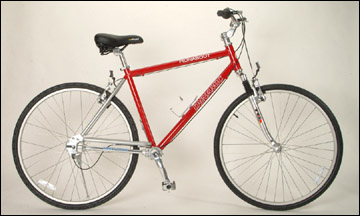
bikeThis summer, I’ve been riding bikes with my sons. We started small, with a few laps around our block here, and recently, we sojourned to their grandmother’s house about a mile away. The bike riding sessions have given rise to those metaphorical, time-transcending conversations that parents have always found meaningful: learning to ride a bicycle safely is a parallel to one’s larger life, after all. Lessons in persistence, balance, confidence, care, and initiative can all be heard when one is teaching others about basic cycling. Uphill grades can’t be conquered without perseverance, and the reward is always that downhill gust of face-breeze. Bicycles and their allegorical implications have been used by writers for years, and so, I haven’t bothered to write a poem about this experience yet. I feel that it’s been covered entirely too well by others before me. The poem that this experience generates will probably not be the old cliche about “letting go of the baby bird” or some similar tripe, but I sense that something from our time together will mold itself into poetry before the summer’s out. It just needs some time for creative gestation.

kayak 1Last summer, my oldest son and I spent almost every day kayaking. There are lakes all over our town, and we would set out on Lake Martha, carving a trail to the park across the lake from our launch point. The park made for some great play time, and afterward, we would paddle back. This experience also bore a number of universal lessons that later worked themselves into poetry — the landmarks around the lake were particularly symbolic of different stages in life: the park being childhood, the high weeds being adolescence, the tall offices being adulthood, and finally, the hospital just before home. As you might have guessed, the experiences of our kayaking journeys lent themselves toward poetry.

I relate these two examples to reinforce the larger point: Yes, experience equals education, but more than that, experience equals life equals literature. Only by living can we truly write in a way that will relate to others. Until next time — to write great, live great.

poetry, Uncategorized

Embracing the Shel Silverstein moment

Shel, looking especially Whitman-esque.

As a child, my mother and grandparents read a good mixture of genres to me. About once a week, usually on Fridays, my mom made a special effort to expose me to poetry. Sometimes it came from the Childcraft series, a collection of gilt-spined hardcover books that were like thin encyclopedias of primary knowledge. Sometimes, it was the inimitable Dr. Seuss, with his nonsensical rhymes and his worlds of whimsy and fantasy. And then, there were the nights before bed that I was privileged enough to be exposed to the great Shel Silverstein, an author whose work had been slammed by public school districts throughout the south because of Shel’s past career choices (artist for Playboy, among them) and his shocking use of words like “butt” and “pee.”

The thing I really liked about Shel’s work is that, often, it would start with a simple premise (having to do the dishes, preparing to clean one’s room, etc.) and by the end, the poem had morphed into something totally unusual and unexpected. I find my own poetry doing this more and more these days. A poem will start with something pretty standard, but by the end, an entire other world or scenario will have emerged on the page.

At first, I was troubled by this occurrence, thinking that structure and form demanded I stick to the original idea and pursue it to its most logical and rational conclusion. I should persist, in other words, to do justice to my work’s inspirations. After letting the “distracted” works rest, though, I came back to them with fresh perspective. It was then I recognized that, even though the poem had taken the road less traveled somewhere along the way, it still held merit. Revision would still be necessary, but the original form — weirdness and all — warranted its own continued existence. Not unlike Shel’s digressions into crazy landscapes, my own poetry is sometimes fueled by what my fiction friends would call “the not-knowing.”

No doubt the Beats would approve of this editorial decision, reiterating their “first thought, best thought” mantra. Not every poem has to show up for work in a starched oxford shirt and presidential-looking tie. Still, I can’t help feeling that words without boundaries are somehow lost. Frost’s misgivings about free verse resonate even today in the minds of poets everywhere, mine included. I feel that certain limits and strictures make poetry stronger, and poems without rules, even self-imposed ones, often fail the test of relevance. Call me a “new formalist” if you will. Many of my peers disagree, asserting the wildness of words renders a poetic experience that is exclusive and unique. Too often such justifications provide fodder for “artists” who want to assign depth to drivel, however. “It’s not that I can’t write; it’s that I find meaning in error and ugliness,” they’ll say, as if ignorance plus garishness equals enlightenment. Rubbish.

Giving in to occasional rabbit-trails along a poem’s path may be acceptable, even artful. But when diversion turns to disruption, it’s time to get out the old poets’ toolbox and get to work. Accepting moments of Seussian whimsy and Silversteinish play can make work more human, and add an element of fun to otherwise serious poetry. It remains up to the poet, however, to know when and where those moments are beneficial. For today, I think I’ll do a few re-writes and see what happens. Wish me luck, respected reader.


poetry, Uncategorized

A Writer-Teacher’s Birthday

typewriter-cakeIn looking back over my site here, I noticed that last year I also posted on my birthday. I thought that by doing so again this year, it might make a nice little tradition of sorts. I promise, however, not to wax eloquent about my resolutions or grand goals for the year ahead. That’s what New Year’s posts are for, after all.

What I do know is this: Having made it through well more than a third of a century now, I feel an increasing compulsion to strengthen my legacy. An awful lot of my writing heroes were far better known and more respected than I before they were my current age. But with that said, an equally great number of authors I look up to weren’t even map dots on the literary landscape until they were much older. I’m increasingly thankful for those men and women who “bloomed late.” Their stories are consolations and reassurances when I, like another poet, find myself “in disgrace with fortune and men’s eyes.”

In my twenties, I still didn’t possess the maturity and experience necessary to produce respectable literary work. Plenty of great writers have produced meaningful literature in their twenties, but I hadn’t even begun figuring out life. Even if I had attempted a graduate-level program or “the great American novel,” I probably would have done the bare minimum to get by, and spent most of my time dwelling in pseudo-angst that I associated with “the writer type.”

In other words, I would have adopted the persona of a writer — some weird hybrid of Edgar Allan Poe and Ernest Hemingway, no doubt — and become a self-fulfilling prophecy of bad habits and dramatic life choices. I would have been concerned with acting out a tragic and memorable biography rather than the actual writing of excellent work. In some ways, I did exactly that: During my post-college years as a journalist, I sought out dangerous assignments, got shot at, had broken bottles hurled at my head, drove through a wall of fire, and gained my fair share of other brushes with mortality. I felt like I had something to prove. My lifestyle made for great coffeehouse stories, but I wasn’t making any real difference. Police scanner on my hip, the only thing I sought was juicy headlines and personal adventure. My time in journalism was devoted almost exclusively to my own selfish desires. Employers were merely means to the end of front-page byline glory.

There is a distinct benefit in having more life behind me: Having evolved into a husband, father, educator, and community member, I’m able to see my place in the universe with a little greater clarity. Selfish concerns over identity and others’ perceptions are subordinate to the demands of family, work, school, and faith. Living through most of my thirties has allowed me to gain richer exposure to the world, and to better understand what it means to earnestly make a lasting impact. Maybe my writing won’t be the major part of my legacy; it could be that the students I’ve engaged are a bigger part of my future memoirs than my experiences in the literary realm. And I’m okay with that. In fact, more than okay. I’d like one day to say that I’ve measured my life, not in coffee spoons like Eliot, but in student successes (excuse the cliche). And if my poetry and my other words happen to find a place in the public consciousness while I’m at it, then so much the better.

Sure, I’m going to keep pushing my writing. Absolutely, I’m going to continue to submit and publish (hopefully) with regularity. Whether my printed words or my classroom creativity will become my greater contribution, I don’t know. And for right now, that’s perfectly fine. The next chapter is still waiting to be written.

poetry, Uncategorized

How tactile-kinesthetic readers may save print

oldbooks Having just returned from my next-to-last MFA residency, I’ve had time to give some thought to the future of print books. At University of Tampa’s Book Arts Studio, I was given the opportunity to physically assemble a print book — in this case, a reprint of T.S. Eliot’s essay, Tradition and the Individual Talent. Our class learned the folding, punching, and binding techniques that go into the creation of a holdable text.

There exists a great hue and cry in publishing right now, as small and independent booksellers continue to bemoan the e-giants’ monopoly over popular reading (see prior posts for more on this topic). As humans reach for their devices rather than paper, bookstore owners and publishers alike begin biting their nails.

Here’s something, though, that has gone largely unconsidered: Bibliophiles of every generation enjoy the feeling associated with reading. When a book is especially well-produced — its cover embossed, its spine ridged, its pages delightful to turn — that experience becomes a large part of readers’ motives. They want to engage that part of their brains that makes connections with things touched rather than simply seen. For these tactile-kinesthetic learners (Gardner, 1983), reading is a complete sensory immersion, not merely a placing of text in the mind’s coffers.

I think back to my childhood, when my sister used to climb our old barn door and recline on the barn roof with her worn copy of Margaret Mitchell’s Gone With the Wind. The escape and engagement of those moments became something that has stayed with her forever. Part of the book’s mental and emotional perseverance resides within the format of the book she selected, and of course the “getaway” it provided. Had we owned e-readers at the time (long, long ago), I do not believe that the text would have been as meaningful. It would have become just another series of letter impressions, relegated to the same mental vault as USA Today headlines.

I admit it — I have an e-reader or two. I’ve even published my own 2005 print volume in the Kindle format. But when I want to read for pleasure and not just information, inevitably I turn toward traditional print books. I’ve tried reading poetry in the electronic format; it loses the organic intimacy that a print text elicits. Reading, for those who seek to enjoy it, needs to be a complete set of sensations, not just fonts hitting retinas. And it is precisely these touch-influenced readers who truly want to “suck out all the marrow” of a book. They may be print’s salvation in an age of expedient electronics. The future will tell.

poetry, Uncategorized

Latest publication: The Wayfarer

What a beautiful journal! The free e-edition is very nice, but I would encourage my readers to purchase the print edition — it’s worth the price, and small presses can use all the support they can get in these times! Thank you to the editors of The Wayfarer, whose skills and sharp eyes made this edition a visual feast as well as a fulfilling reading experience.The Wayfarer magazine

poetry, Uncategorized

Latest publication: Steel Toe Review

Just as I was beginning to question my regional work, along came a lovely acceptance letter in my inbox. Steel Toe Review, a journal of Southern arts and literature, has published a piece of mine entitled “Tongue Economics:”

http://steeltoereview.com/2013/06/06/tongue-economics-by-john-davis-jr/

I love Grit Lit publishers! What an awesome way to start my summer vacation!

poetry, Uncategorized

Lessons learned while editing

pencil_redRecently I’ve had the privilege of providing feedback to a budding poet whose work has been compiled into a chapbook. I see a lot of my own history in this poet’s words — as he has been exploring the tools of the trade, there’s the occasional overuse of alliteration (we both love the smart rhythm and happy repetition of consonant sounds), but there’s also this vibrant joy that comes with writing for writing’s sake.

This gentleman’s work has reminded me of my own roots as a fledgling poet. Before any fancy MFA programs, before any acceptance letters or awards, there I was — that beginner who scribbled out potent images and happily entangled words for the sake of seeing and hearing their interplay with one another. At some point along the writing journey, as I learned more of the “rules” and what to expect from diverse audiences and editors, somehow a little bit of that word-joy vanished. Writing poetry became about using literary devices and styles that others dictated were “the right way.” And while others’ perspectives are always helpful (even when they’re hurtful), at some point we as poets must step back from others’ voices and ask ourselves, “Is this really ME?” We would be wise to adhere to the admonition that Polonius gives to his son Laertes in Shakespeare’s Hamlet: “This above all else: to thine own self be true.”

That doesn’t mean that we shouldn’t consider others’ points or feedback; indeed, if we want to excel as writers, listening to credible responses will strengthen our work greatly. But when that advice begins to fly in the face of one’s own vision, then it’s time to gain some distance for the sake of clarity. In a few days, I will be headed over to Tampa for my summer MFA residency. While there, I will be engaged in workshops and seminars, many of which are intended for the critique and strengthening of my poems. As I listen to my peers and hear their thoughts (positive and negative) about my creations, I hope that I can keep that beginning-writer passion alive. When the bliss of writing is gone, nothing remains but sheer mechanics and accumulated letters. And when writing becomes the equivalent of intellectual ditch-digging, it’s time to stop.


poetry, Uncategorized

Figuring Out Audience

AudienceThis past semester, I admittedly struggled quite a bit in my Master of Fine Arts (MFA) in Creative Writing program. I attempted an essay I cared little (if any) about, changed directions two or three times in regards to the essay topic, and constantly received negative feedback on poems that I thought exceeded standards. Now that this past semester’s experience is over with, I do have one positive take-away from the whole experience: I know exactly who my audience ISN’T.

That being said, I hadn’t given a great deal of specific thought to my audience prior to this point. I always kind of thought that I wrote for the masses; people who work 9-5 shifts in average jobs, and who pretty much represent the American status quo. This semester, however, I figured out the precise people for whom my work is truly intended. Here they are:

I write for high school English teachers around this country. This notion is a bit selfish, perhaps, as I too am included in that demographic. But whenever I write something, I find myself giving it the English Teacher Litmus Test: If this piece were being taught to a group of 11th or 12th graders, would the teacher be able to point out interesting and relevant material? Would there be literary devices that the teacher could elaborate upon, imagery that is striking enough to deserve comments, and maybe some ambiguity that the students could be left to figure out? If I can picture teachers I know really delving into the poem and engaging in Socratic inquiry about it with their students, then my job is complete. Hopefully, the poem can be taught similarly at the college or graduate level with equal dexterity, just with slightly different vocabulary and greater critical analysis.

Had I not been forced to write for someone that disliked my work and often disparaged it adamantly without concrete reasons, I would not have been able to pinpoint the other side of the issue — that is, my truest target audience. People who know and appreciate the classics, people who have advanced understandings of the great literary traditions, and people who admire work that values history and beauty will probably enjoy the poems I produce. Proficient English teachers, those who love the language and its literature, fill this bill well. As a new semester is about to begin in just a matter of weeks, I look forward to writing for someone else who may or may not be my biggest fan. Either way, I expect that the feedback I receive on my work will help make my work stronger. Derogatory comments will be validated by credible, experienced, and informed perspectives rather than personal tastes and whims. Expectations will be communicated with explicit clarity and specificity rather than vague notions and glittering generalities. And maybe, just maybe, this mentor will see my work through the lens of my real intended audience — that 21st Century educator who really GETS poetry, and who equally inspires students to love it, as well.

poetry, Uncategorized

Pick Five: A Burnout Prevention Strategy

handfiveIt’s that magical time of the academic year when teachers and professors are thoroughly sick and tired of everything school-related, and unfortunately, that also sometimes includes students. I know, I know. Those in the pedagogical arts are supposed to be compassionate souls who never tire of their charges — that doesn’t stop us from being human, however. Every year about this same time, when I feel the negative vibes besetting me daily, I have a little routine that I choose to follow that also serves me well as a writer. I pick five.

Here’s what I mean: I teach juniors and seniors in high school. Among my juniors, I pick out five or so that I know I can and will make a meaningful difference to in the school year yet to come, when they are seniors. My seniors, of course, are graduating, so it becomes my priority to begin thinking ahead for the next go-round. Who among those 11th graders will I impact in a way that makes me their most unforgettable teacher? How will I reach them profoundly, leaving my impression on their future? By “picking five,” I find a reason to stick around for yet another year. Even if I’m only there for those selected few, I know I will have achieved a purpose that is greater than succumbing to my stress and shucking the whole thing in favor of real estate sales or marketing (not that there’s anything wrong with those professions; they’re just the first couple that sprang to mind).

For writers (and poets especially), this strategy requires a little tweaking: Pick five writing goals that you haven’t achieved (realistic ones), or choose five poetic forms that you haven’t yet mastered. I’m still trying to write a reasonably decent villanelle, for example. Don’t try to force words into those forms of course — that never works — but allow those forms to become subconscious targets. When inspiration next strikes, see if one or more of those forms might be fitting for the topic. For writers of other genres, maybe your “five” can be some new narrative devices or dialogue tricks that you haven’t tried out. In any event, identifying five goals can be beneficial for just about anybody.

So, as summer vacations await and beautiful weather beckons beyond your window, don’t quit your day job. Think of five reasons to do what you do best. Maybe those five things, whatever they happen to be, will keep you in the game a little longer and preserve your sanity.