poetry, Uncategorized

A Writer-Teacher’s Birthday

typewriter-cakeIn looking back over my site here, I noticed that last year I also posted on my birthday. I thought that by doing so again this year, it might make a nice little tradition of sorts. I promise, however, not to wax eloquent about my resolutions or grand goals for the year ahead. That’s what New Year’s posts are for, after all.

What I do know is this: Having made it through well more than a third of a century now, I feel an increasing compulsion to strengthen my legacy. An awful lot of my writing heroes were far better known and more respected than I before they were my current age. But with that said, an equally great number of authors I look up to weren’t even map dots on the literary landscape until they were much older. I’m increasingly thankful for those men and women who “bloomed late.” Their stories are consolations and reassurances when I, like another poet, find myself “in disgrace with fortune and men’s eyes.”

In my twenties, I still didn’t possess the maturity and experience necessary to produce respectable literary work. Plenty of great writers have produced meaningful literature in their twenties, but I hadn’t even begun figuring out life. Even if I had attempted a graduate-level program or “the great American novel,” I probably would have done the bare minimum to get by, and spent most of my time dwelling in pseudo-angst that I associated with “the writer type.”

In other words, I would have adopted the persona of a writer — some weird hybrid of Edgar Allan Poe and Ernest Hemingway, no doubt — and become a self-fulfilling prophecy of bad habits and dramatic life choices. I would have been concerned with acting out a tragic and memorable biography rather than the actual writing of excellent work. In some ways, I did exactly that: During my post-college years as a journalist, I sought out dangerous assignments, got shot at, had broken bottles hurled at my head, drove through a wall of fire, and gained my fair share of other brushes with mortality. I felt like I had something to prove. My lifestyle made for great coffeehouse stories, but I wasn’t making any real difference. Police scanner on my hip, the only thing I sought was juicy headlines and personal adventure. My time in journalism was devoted almost exclusively to my own selfish desires. Employers were merely means to the end of front-page byline glory.

There is a distinct benefit in having more life behind me: Having evolved into a husband, father, educator, and community member, I’m able to see my place in the universe with a little greater clarity. Selfish concerns over identity and others’ perceptions are subordinate to the demands of family, work, school, and faith. Living through most of my thirties has allowed me to gain richer exposure to the world, and to better understand what it means to earnestly make a lasting impact. Maybe my writing won’t be the major part of my legacy; it could be that the students I’ve engaged are a bigger part of my future memoirs than my experiences in the literary realm. And I’m okay with that. In fact, more than okay. I’d like one day to say that I’ve measured my life, not in coffee spoons like Eliot, but in student successes (excuse the cliche). And if my poetry and my other words happen to find a place in the public consciousness while I’m at it, then so much the better.

Sure, I’m going to keep pushing my writing. Absolutely, I’m going to continue to submit and publish (hopefully) with regularity. Whether my printed words or my classroom creativity will become my greater contribution, I don’t know. And for right now, that’s perfectly fine. The next chapter is still waiting to be written.

poetry, Uncategorized

Lessons learned while editing

pencil_redRecently I’ve had the privilege of providing feedback to a budding poet whose work has been compiled into a chapbook. I see a lot of my own history in this poet’s words — as he has been exploring the tools of the trade, there’s the occasional overuse of alliteration (we both love the smart rhythm and happy repetition of consonant sounds), but there’s also this vibrant joy that comes with writing for writing’s sake.

This gentleman’s work has reminded me of my own roots as a fledgling poet. Before any fancy MFA programs, before any acceptance letters or awards, there I was — that beginner who scribbled out potent images and happily entangled words for the sake of seeing and hearing their interplay with one another. At some point along the writing journey, as I learned more of the “rules” and what to expect from diverse audiences and editors, somehow a little bit of that word-joy vanished. Writing poetry became about using literary devices and styles that others dictated were “the right way.” And while others’ perspectives are always helpful (even when they’re hurtful), at some point we as poets must step back from others’ voices and ask ourselves, “Is this really ME?” We would be wise to adhere to the admonition that Polonius gives to his son Laertes in Shakespeare’s Hamlet: “This above all else: to thine own self be true.”

That doesn’t mean that we shouldn’t consider others’ points or feedback; indeed, if we want to excel as writers, listening to credible responses will strengthen our work greatly. But when that advice begins to fly in the face of one’s own vision, then it’s time to gain some distance for the sake of clarity. In a few days, I will be headed over to Tampa for my summer MFA residency. While there, I will be engaged in workshops and seminars, many of which are intended for the critique and strengthening of my poems. As I listen to my peers and hear their thoughts (positive and negative) about my creations, I hope that I can keep that beginning-writer passion alive. When the bliss of writing is gone, nothing remains but sheer mechanics and accumulated letters. And when writing becomes the equivalent of intellectual ditch-digging, it’s time to stop.


poetry, Uncategorized

A Quick Thank-you and A Longer Thought

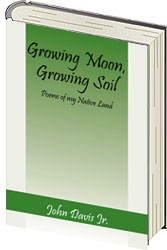
notebook2red To those of you who have eagerly taken advantage of my free book weekend offer, I offer my deep gratitude. Your acceptance of my work shows that you believe it has potential. For this vote of faith, I thank you. Other followers who have not yet seized the opportunity to get your free Kindle copy of Growing Moon, Growing Soil: please do so! I’d hate to tell my writer friends that I couldn’t even GIVE AWAY my poems…how embarrassing.

On a separate note, I’ve been reading a lot of advice lately from writers who encourage others  to “write about those things that you would never want to write about.” This near-cliche is usually followed by an admonition to confess fears, secrets, undisclosed parts of one’s past, etc. in the name of soul-cleansing and “honest art.”

Here’s where I disagree with these well-meaning pseudo-sages: Writing poetry is supposed to make the world a little better, a little more beautiful, or a little more meaningful. Some things simply don’t need exploration in poetry, however. Remember how, in junior high writing classes, they taught us to “consider our purpose and our audience?” That rule hasn’t changed. What audience is going to want to read about how you wouldn’t wear sandals to the beach because of toenail fungus? More broadly, why write about the baser matters of life when there’s so much beauty, so much history, so much grander inspiration to seize?

Maybe my gripe here comes from a biblical background: Philippians 4:8 comes regularly to my mind while writing. I use it as a test to see if my poetry bears relevance and worth. That verse reads,  “Finally, brothers and sisters, whatever is true, whatever is noble, whatever is right, whatever is pure, whatever is lovely, whatever is admirable–if anything is excellent or praiseworthy–think about such things.” I feel an obligation as a poet to produce work that causes people to contemplate life using these criteria. Mind you, this doesn’t mean that my poetry always is autobiographical or just about the “warm fuzzies.” But, if I can get people to think in a way that this verse speaks of, even if it’s using something made up (like Christ’s parables), I’ve done my job.

Often, contemporary poetry elicits thoughts that meet some of these qualifications, but certainly not all. Keats’s Grecian Urn aside, truth is not always beauty. I know that’s unpopular talk in our culture today, with Facebook and other social media serving as conduits of over-sharing and gross uber-transparency. Where, however, is the beauty in rape? In murder? In cannibalism? This series of questions beckons back to undergraduate courses in ethics and philosophy, but no matter what school of thought you follow, you must confess: Some factual things do not pass the test for beauty, even if “beauty” is subjective (or, to quote an old aphorism, “in the eye of the beholder.”) If beauty is a matter of perspective, then certainly some twisted minds will find reasons to admire all forms of ugliness. Still, “Truth is beauty, beauty, truth” might make good verse, but too many great minds, both in and out of the humanities, have discredited it over the centuries.

Likewise (on the reverse side of this same coin), something can be lovely without necessarily being pure — think about those intricate bacteria you viewed beneath a microscope during high school science labs. Beautiful? You bet. Pure? Not in the least. My theological friends will tear apart this argument, no doubt, noting that human or scientific truth, beauty, nobility, etc. are not the issues about which Paul was writing. His aims were higher than enlightening our temporary mortal existence. I get that, but his words make a pretty great checklist for poets to strive toward also. In fact, it wouldn’t hurt for artists of every genre to contemplate the audience effect achieved in Paul’s terms. Imagine the renaissance we could ignite if painters, sculptors, dancers, writers, photographers, and other creatives used Philippians 4:8 as their common assessment rubric. What bright, radiant, vibrant works could result!

I’ll step down off my soapbox now. Some things just need airing, and tonight, this little rant happened to be one of them. I hope, once again, I haven’t distanced too many of my fans or followers with this post. I would love to hear opposing or coinciding viewpoints in comments below, and PLEASE remember to take advantage of FREE BOOK WEEKEND (details below). Good night, dear readers.

poetry, Uncategorized

An honest offer

cover

This is just a quick post to say that poetjohndavisjr.com has almost reached 200 followers! If I can pass the 200 follower mark by Friday, I will offer all of my blog followers free Kindle copies of my first book. The second collection is currently under consideration and should find a home soon. For now, spread the word about my site, and you can get a free Kindle copy of Growing Moon, Growing Soil!

poetry, Uncategorized

The First Line Epiphany

shakes

Scholars might argue with me, but I would be willing to bet that an awful lot of William Shakespeare’s writing began when he had a sudden realization of a great first line.

We poets know how it is: You’re mowing your yard, taking out the trash, or doing some other mundane chore when suddenly WHAM-O — a great first line just sort of strikes like lightning. You write it down in your pocket notebook, and when you come back to it later, that first line serves as a catalyst for some much bigger piece.

Sometimes these first lines survive in the final draft, sometimes they don’t. No matter why those primary words strike us as they do, they almost always reap great rewards. Even if those initial ideas get culled, the work they produce tends to be refreshing, inspired, and original.

Sometimes the first lines occur because of weird word combinations; things like “nuclear neurology” or “concrete coffee” tickle our fancy. Other times, it may be a random statement from a stranger that rings with a certain poetic something.

One time, a student of mine informed me that “The ice cream trucks in our neighborhood only play Christmas carols.” While the exact iteration of his words didn’t survive in my later poem’s final draft, the concept of a summertime ice cream truck tooling about playing “Jingle Bells” was too irresistible to refuse. It became “Merry Summer,” a sonnet-like piece written from the perspective of a boy waiting to hear the warbled yuletide tunes of the dirty, somewhat questionable ice cream truck.

First line epiphanies are some of my favorites. There’s always such a bright hope and a brilliant promise that comes with an entire line coming into consciousness. When we have a start, we’re obliged to build toward an end. Think I’ll go mow the lawn and see what strikes…

poetry, Uncategorized

Lawful and Profitable?

thinkingboy_outlineRecently, my mind has been consumed by choices. As many of my readers know, I just had my paperback transformed into a Kindle edition, and I’ve also been interviewing for various higher education positions in my area. In addition, my financial situation has recently encountered some modification as well. In all of these matters, however, some words of advice from the apostle Paul keep popping to mind:

I Corinthians 10:23: “All things are lawful, but not all things are profitable.”

In other words, I can do anything, but that doesn’t mean I should do everything. With the pleasure of increased choices comes the burden of amplified responsibility. I can choose to market my Kindle edition through any number of means, but only a few of those are actually going to work. It becomes my job to decipher which methods are not only permissible, but will result in the greatest outcome. Likewise, I can pursue any number of jobs within academia, but only that job that best fits my abilities and life calling should earn the “brass ring” of my acceptance.

Now before my friends judge my limited interpretation of Paul’s words above, allow me to elaborate a bit. In my current workplace, we’ve recently been exploring the notion of “getting to yes.” In a nutshell, that idea states that businesses should inform customers that “we can do anything, but we can’t necessarily do everything.” So when I encountered Paul’s echo of this sentiment (only in a more spiritually minded fashion), the correlation between my “worldly” situation and a more supernatural piece of wisdom organically began to bridge with one another. I’m not advocating a “prosperity gospel;” instead, I’m simply tying two areas of my life together with a common thread of philosophy.

As I’ve gone along life’s path lately, this little scripture has returned again and again, rearing its head everywhere from the boardroom to the dining room table. It has influenced my decisions daily, and caused me to cast new light on old issues. Paul’s test of worthiness causes one to pause and analyze, examining each set of options with a magnifying lens of overall benefit: Which choice is not only going to be allowable, but will also provide the biggest or best return? Please don’t think I see this from a strictly monetary perspective — “returns” come in both intrinsic and extrinsic forms, and research time and again has shown us that the most intrinsic rewards are the best for us as humans.

And certainly, there are other religious tomes out there that equally advocate balanced decision-making. However, for my purposes in my daily life, Paul continues to speak truth into my everyday practices. Something as simple as flipping a light switch can become a moment for reflection, and something as complex as intelligent investing can be critically viewed equally well using this tiny phrase of ancient proverbage. Give it a try yourself — who knows what great decisions wait right around the corner?

poetry, Uncategorized

The Obligatory “Writing Resolutions” Blog Post

notebooknpenIt’s a bit of cliche to write a post entirely about “what I resolve to do in 2013.” However, that’s not stopping me from doing it. Disappointing, I know. But all the cool kids are doing it. So, here you have it: John Davis Jr.’s list of writing resolutions for the new year:

1. I have a book manuscript that has been sitting on my hard drive now for the better part of a year. I’ve submitted it around to various publishers and contests, revised it and polished it countless times, but still haven’t landed any “bites” yet. I resolve to get this book published in 2013.

2. In connection with resolution #1, I resolve NOT to self-publish said manuscript. Been there, done that, friends. It wasn’t a positive experience the first time around, so why would I intentionally subject myself to that negative encounter a second time?

3. One magazine publication per month, or at least 12 publication credits total in (fairly) reputable outlets. Sure, some months are more publication-heavy than others, and expecting to publish in at least one journal like clockwork every month would be unrealistic. However, seeking to publish at least 12 times over the course of an entire year is doable. Last year, I garnered about 10 publication credits total in magazines and online zines that are pretty good, so this year, I plan to up the ante a bit. If I fall short of the goal, it won’t be for lack of trying.

4. Enter at least six writing contests. My general rule is this: for every five magazine submissions I send out, I try to enter one contest. Some of these are respected and renowned competitions, others are fledgling. But no matter the prestige or the status, entering contests yields its own rewards: subscriptions to magazines, feedback from judges, and name placement are just a few of the perks that come with contest participation.

5. Build the network. By being in the MFA program, I have a number of great associates who provide candid, well-thought-out responses to my work. With that being said, I like hearing from people from all walks of life within the literary field. Editors, publishers, and professors are just a few of the folks whose opinions and thoughts I would like to encounter more. So, with that in mind, I plan to build out my writing network to include more people whose critical eyes are sharpest.

I think five resolutions should about do it — some believe in more, others believe in fewer. For my purposes at this juncture, however, these five goals should give me plenty of work for 2013. Here’s hoping that all my readers have a wonderful new year, as well. May it be filled with the pleasures and wonders that our world has to offer: Faith, Family, Friends, and incredible experiences. Happy New Year!

poetry, Uncategorized

Laura’s line breaks: A guide to the writing life

ridingl

As both a connoisseur and writer of poems, I spend some of each day reading work by poets both canonized and contemporary. Recently, my daily reading included the works of Laura Riding (Jackson). Riding’s poem, “The Troubles of a Book” seems on its surface to be a meditative piece. It examines the life of one book, its pros and cons, and the psychology and humanity that effects texts’ perception by readers.

A more analytical look at this piece, however, yields some interesting messages. Particularly, the line breaks of the poem give some sage advice, no matter how unintentional this effect may have been. From the outset of the poem, the reader is greeted with “be nobody unwritten unread” as the final words of the first four lines. This little full-word acrostic makes a fine admonition to anyone pursuing a literary life. Certainly, authors of any genre should aspire to be both well-read and well-written. Did Riding mean for us to use these “power position words” in such a way? Maybe not, but you can bet that she recognized them as meaningful terms, and knew they fit well where they were when she wrote them.

Moving forward in the piece, the reader will notice the last three lines ending with “liveliness with bookishness,” yet another good maxim for those in the literary realm. History is full of examples of authors whose work flourished, not because they sat brooding behind a desk somewhere, but because they took Carpe Diem to heart. Hemingway ran with bulls in Spain, London froze in the Yukon, Frost absorbed culture in England, Dickinson…. oh, wait. Never mind about that last one. Maybe not every author has to mix their bookishness with liveliness, but it’s still a good idea.

One other example of Riding’s line breaks and their instructional insinuations can be found in her piece, “The World and I.” About halfway through the poem, Riding ends three lines with “sense! meaning knowing,” a statement that can be interpreted infinitely if given enough cognition. Authors of every genre should aspire for their writing to make sense, of course, and their work should provide both meaning and knowing, but beyond that checklist, this line-break message could also be seen as something of an instruction to writers: For our work to truly shine, we have to be sensitive to meanings and knowledge that others take for granted. A crooked exit sign, for example, is something more to the poet than to the electrician. Whereas Joe Average sees a problem to be fixed, the poet sees symbolic potential and possible warning.

Admittedly, I may be “stretching” the capacity of Riding’s diction here, but if we as writers can gain guidance, even if it’s unscrambled from the letters on a bubble gum wrapper, then we are better for it. Maybe Laura didn’t mean for us to read her poems like a map, but sometimes the best directions are ones that we decipher all by ourselves.

poetry, Uncategorized

Christmas Remembrances — Friend or Foe?

Pull-up-Christmas-Tree-with-LightsOne of the best things about being a poet around the holidays is the reflection that generates so many great memories. Ideas spurred on by recollections of past Christmases or realizations that take place here in the present are equally powerful motivations to write.

The one cautionary admonition I would issue to my fellow writers, however, falls into that dreadful category of avoiding bathos — that ripe sentimentality (see prior posts) which lessens the power of our words. Holidays become great cliche fodder; all the old pieces of language from carols and cards come flooding back to our brains, and if we aren’t careful, they’ll seep their way into our writing and stink it up like expired egg nog.   

With that word of sufficient warning, allow me to make one slight allowance — writing work that alludes to Christmas carols or other seasonal cultural icons is entirely different. Starting a poem with “Silent Night, Holy Night” and then altering it to convey a completely different message than the old hymn is  okay. Moreover, it’s a world apart from describing one’s past family celebrations as “holly jolly” or simply “merry.” Yuck!

The challenge for writers of all genres is finding new ways to express the oldest of great notions. When Dickens penned A Christmas Carol so long ago, you can bet that he knew his message was not novel — “greed bad, generosity good” had been a maxim for generations before Ebenezer Scrooge existed. But through memorable characterization, engaging dialogue (who doesn’t know “Bah! Humbug!”) and other tools of the trade, Dickens was able to render a masterpiece that has been adapted and enjoyed for more than a century.

As writers, the greatest gift we can give ourselves this season is new perspective. Let’s leave the old wrapping paper of holiday hackney in the dark recesses of our mental attics, and erect the fresh green boughs of our modern perceptions and expressions. As our memories and our current situations blend warmly in the glow of the holidays, let us task ourselves with the duty of renewal and re-purpose. The ghost of Christmas yet to come will thank us for it.

poetry, Uncategorized

Hemingway’s Distance

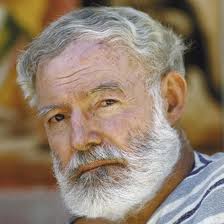
 When the great author of The Old Man and the Sea was in Michigan, he wrote about Paris. Likewise, when he was in Paris, he wrote of Michigan. In speaking with other poets and writers, I have found there to be a common link among creative types: The farther (in every sense of that word) we are from our dearest subjects, the stronger our writing about it becomes.

For instance, when I return to my family homestead many miles south of here, I am not automatically inspired to compose lines about it. The spirit of the place is too strong, too close. Also, the peace I experience there is too great for the fevered activity of poetry composition. The old place’s effect is soporific on my muse, but once I’ve left and I’m on the road or even back at my current suburban home, then the poetic flood begins to rise. Images, sensations, memories, and the whole of the family farm experience (past or present) sets itself heavily on my writing mind.

Time also serves as a literary “distance” filter: Consider Wordsworth’s famous lines above Tintern Abbey, written five years after the visit took place. By having hindsight, the truest and most poem-worthy elements of an experience can rise like sweet cream to the surface of our consciousness. The traumas and impressions of the present are intensified by having some chronological separation. Only the strongest details remain after delay. Sometimes this separation can be mere hours, other ideas may require years for processing. It all depends upon the severity and sincerity of the inspiration in question.

I am not advocating the idea that writers shouldn’t “strike while the iron is hot,” however. If one is overcome by the NEED to write at a moment, then by all means, don’t let that desire cool in apathy. The Beats would tell us that our first thoughts are our best thoughts, but the discerning voices before and after that generation would advise us to refine those first thoughts into something far more elegant.

The big picture is just this: If you want to create truly reflective writing, then some form of distance is necessary. It doesn’t always have to be as radical as Michigan to Paris, but stepping back from the subject is advisable for any creative endeavor. If you don’t believe me, just ask “Papa.”